No Parking Anytime — Traffic Restriction and Road Safety Sign
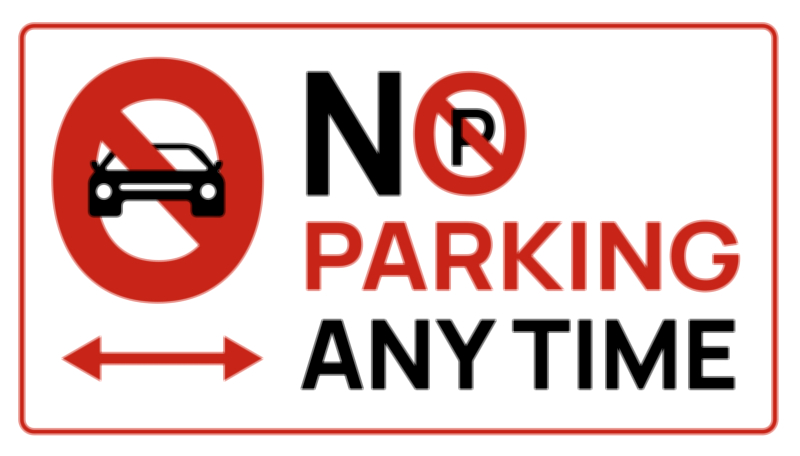
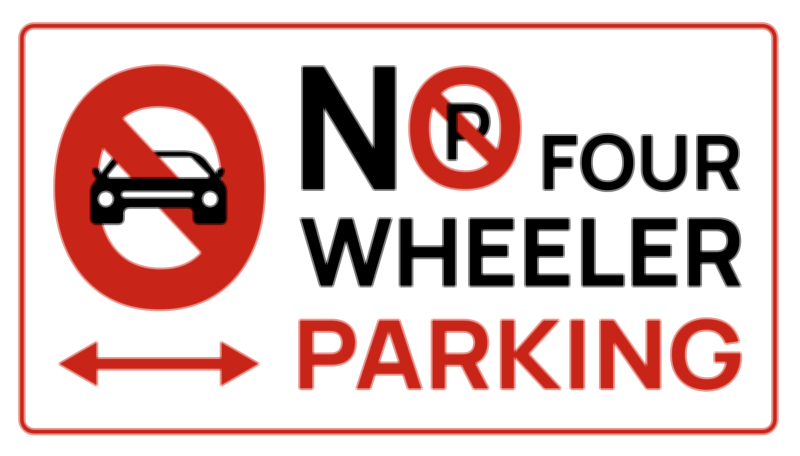
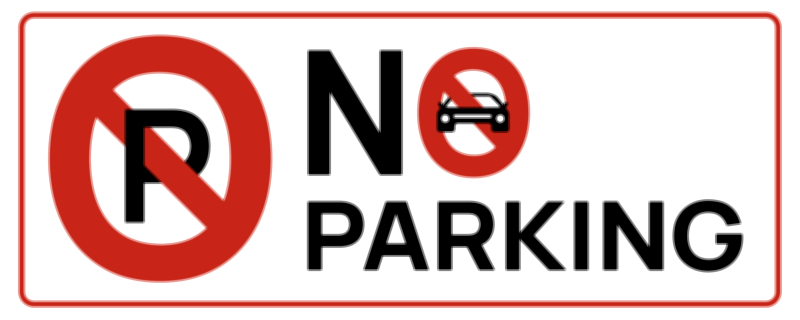
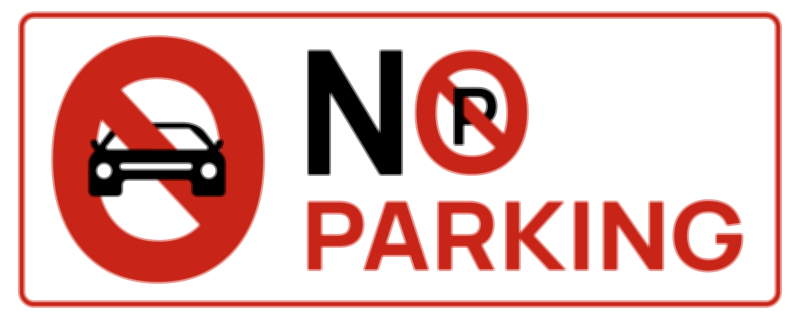
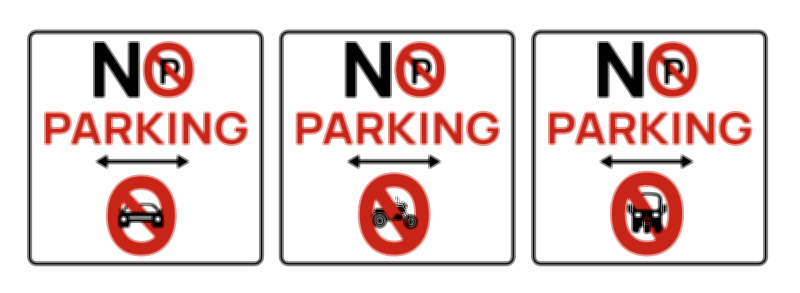
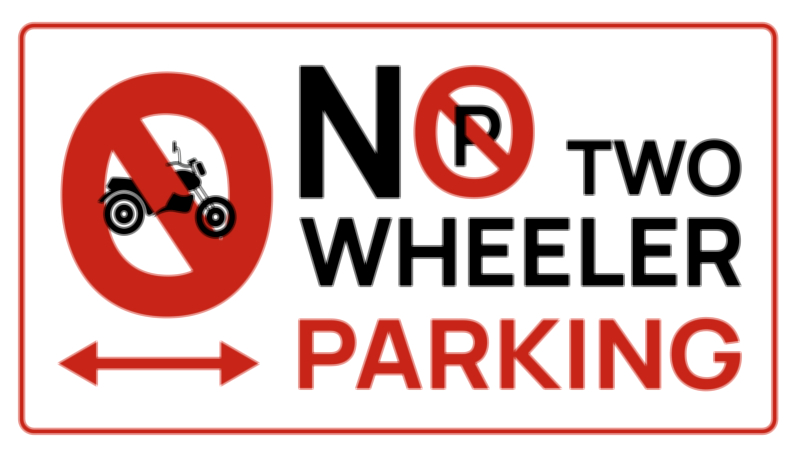
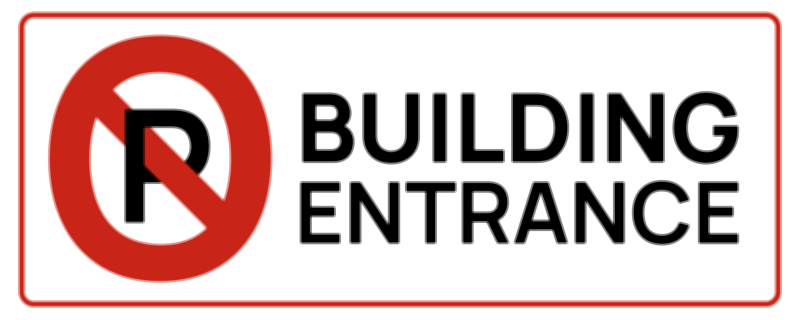
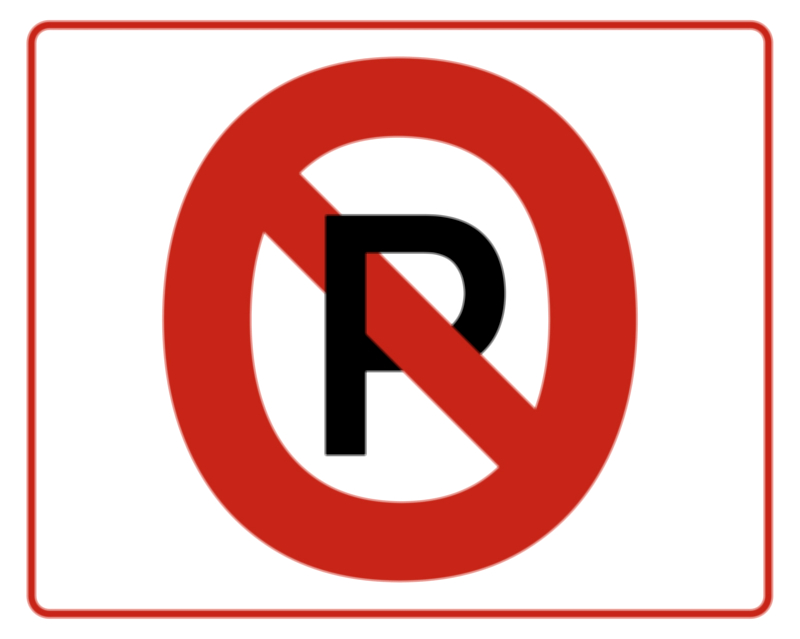
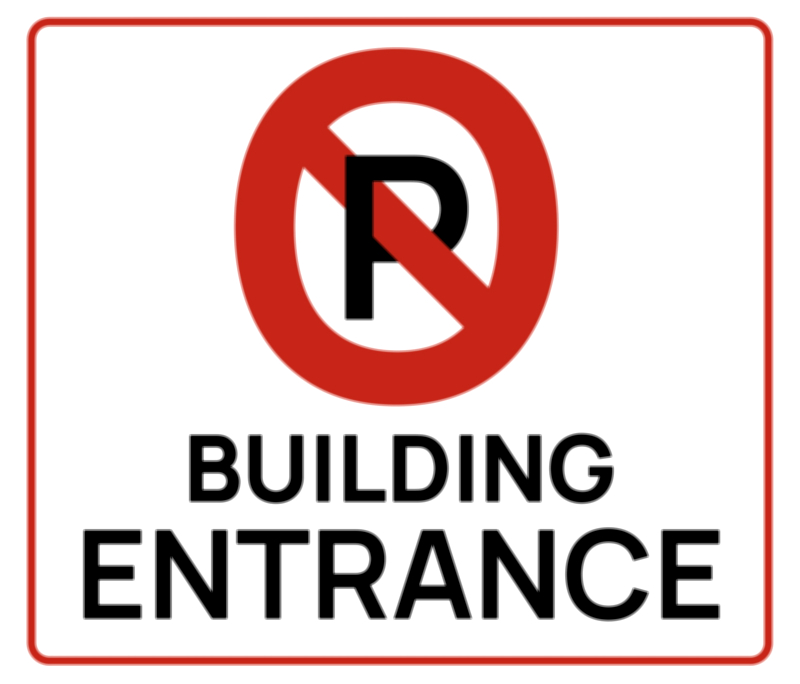
A No Parking Anytime sign is one of the strongest and most decisive traffic restriction symbols used in urban and suburban environments to ensure that certain stretches of roadway, access points, and public spaces remain completely free of stationary vehicles under every condition, at every hour of the day. In a vector illustration, the sign is typically represented using a bold red prohibition circle or rectangle framing the words “No Parking Anytime,” sometimes accompanied by a diagonal slash over the letter “P” or the silhouette of a four-wheeler. Unlike signs that restrict parking only during certain hours or under specific rules, this symbol declares an absolute and uninterrupted ban, leaving no window of allowance for drivers to stop and leave their vehicles for even a short duration. Its graphic design follows the internationally recognized visual language of roadway regulation: red to signal prohibition, white or bright contrasting color for the background to ensure visibility, and firm uppercase lettering to signify authority. The simplicity and assertiveness of the design ensure instant comprehension without requiring drivers to slow down to interpret the message. Even from a distance, the red framing and prohibition styling communicate a clear instruction — stopping a vehicle here is not permitted at any time.
The need for an all-hours No Parking restriction arises from specific safety and mobility concerns. In many locations, even a single parked vehicle can instantly disrupt the intended flow of traffic, reduce sightlines, or obstruct access. School zones, busy commercial districts, public transport hubs, highway shoulders, sharp curves, hospital entrances, fire lanes, narrow market roads, and locations near major intersections are examples of places where parking a vehicle — even momentarily — introduces unacceptable levels of danger. A sharp curve becomes exponentially riskier when a car obstructs the visual field available to oncoming drivers. A junction becomes chaotic if parked vehicles force buses or trucks into opposing lanes. A lane used by ambulances becomes useless if private cars block it, even for a minute. Because such areas cannot tolerate unpredictable stoppages, the No Parking Anytime sign establishes nonnegotiable rules that protect road users from hazards that appear instantly when a vehicle is left stationary.
This absolute restriction plays an important role in the smooth functioning of public transportation networks. Bus bays, taxi stands, and designated drop-off locations are engineered to move passengers safely and efficiently. If a private car occupies these spaces under the false assumption that “it will only take a minute,” entire lines of buses can be delayed, passengers may be forced to board in unsafe areas, and the predictable rhythm of public transport can collapse. Congested urban locations amplify these problems — a blockage that slows a single vehicle can quickly build into a queue affecting hundreds of commuters. The No Parking Anytime sign ensures that designated mobility corridors remain protected from vehicle storage, preserving the time-sensitive flow that modern cities rely on.
The sign also plays a major role in pedestrian protection. People on foot are the most vulnerable group in traffic environments, especially children, senior citizens, visually impaired individuals, and those using mobility aids. A parked vehicle near a crossing or walkway immediately narrows the field of view between pedestrians and drivers, transforming an otherwise safe crossing into a risk zone. Children hidden behind parked cars can step into the road unexpectedly. Elderly individuals may not have the strength or confidence to navigate around an obstructing car. People with disabilities may lose access to tactile guiding surfaces, accessible curbs, or ramps intended for safe transition between pathways and streets. By eliminating the uncertainty that comes with even brief or occasional parking, the No Parking Anytime sign stabilizes visibility, space, and predictability for pedestrians whose safety depends on having a clear and uninterrupted area around them.
One of the most significant safety imperatives behind this sign involves emergency response and public safety operations. Fire trucks, police vehicles, ambulances, and towing services rely on guaranteed speed and direct access. A driver stopping illegally for a few minutes may never see the consequences of that decision, but the chain reaction is immediate for emergency professionals during an active crisis. When the designated lane or curb — marked by a No Parking Anytime sign — is obstructed, hoses cannot be extended, stretchers cannot be unloaded, personnel cannot gain immediate entry, and evacuation or rescue procedures are delayed. Because emergencies cannot be predicted and response must be instantaneous, there can be no ambiguity about parking availability. The sign functions as a round-the-clock preservation of that access. Residential buildings, schools, fuel stations, warehouses, and industrial plants depend heavily on this predictability, and the sign becomes part of a hidden life-safety system, ensuring that emergency personnel never lose precious seconds fighting through preventable obstructions.
Commercial districts and logistics-heavy zones also rely on this signage for uninterrupted operations. Deliveries, pickup schedules, supply networks, and loading and unloading routines operate on strict timing. When a driver parks illegally in a No Parking Anytime zone, trucks must double-park, block traffic, or unload from unsafe distances, triggering delays and additional risk for workers handling heavy loads. Restaurants, retail stores, markets, and industrial facilities face cascading disruptions when congestion builds because an access zone has been blocked. The absolute restriction encoded in this sign is not about controlling personal behavior arbitrarily but about maintaining a reliable foundation for business efficiency and citywide commercial flow.
Accessibility considerations further reinforce the need for this sign’s visibility and enforcement. All modern public buildings must include ramps, wide entry spaces, and access corridors to support disabled individuals, and many of these routes are positioned near curbs. If the space this infrastructure depends on is blocked by even a temporary parking-stop, the independence of wheelchair users, the safety of visually impaired pedestrians, and the comfort of people using mobility devices are instantly compromised. The No Parking Anytime sign protects this space constantly, not only when accessibility demand is expected. Maintaining the freedom of movement for vulnerable users requires rules that do not bend to convenience.
Neighborhood harmony and shared space etiquette are also preserved by the sign. In residential areas, parking disputes often escalate when drivers leave their vehicles in front of private driveways or community gates under the assumption that “it’s only for a few minutes.” For the family, resident, or community trying to enter or exit, those minutes can result in frustration, conflict, and access denial. The No Parking Anytime sign removes ambiguity, providing a clear boundary that helps maintain respectful coexistence among neighbors. When rules are unambiguous, misunderstandings diminish, and fairness increases.
The digital landscape has expanded the significance of this symbol beyond physical signage. GPS applications, parking management apps, delivery mapping systems, and autonomous navigation platforms now mark No Parking Anytime zones to prevent drivers — human or automated — from entering areas where stopping is prohibited. High-precision vector illustrations of the sign appear in digital interfaces exactly the way they appear on roadsides, eliminating confusion and reinforcing the same visual identity across technology and physical infrastructure. Smart parking and enforcement cameras are programmed to identify this symbol and respond automatically to violations, creating continuity between old-world signage and new-world automated mobility systems.
At its core, the No Parking Anytime sign expresses a principle of shared responsibility. It represents the understanding that the convenience of stopping a car cannot come at the expense of the safety, mobility, or peace of others. Obeying the sign protects vulnerable pedestrians, sustains emergency response reliability, supports business logistics, reduces traffic conflict, preserves accessibility, and contributes to smoother and safer cities. Violating it shifts risk and inconvenience onto strangers — the ambulance delayed, the child endangered at a blocked crossing, the cyclist forced into traffic, or the building resident unable to exit safely. The sign therefore has moral meaning disguised in visual regulation: it reminds drivers that their actions influence not only their own comfort but the safety and experience of every person using the road.
Although the vector illustration typically contains nothing more than the words “No Parking Anytime,” a prohibition ring, and perhaps the silhouette of a car or “P” struck through by a diagonal slash, those simple shapes communicate an enormous hierarchy of reasoning about mobility, safety, and social harmony. Through its clarity and decisiveness, the sign ensures that the protected spaces it marks remain safe and functional every hour of the day — for drivers, pedestrians, emergency workers, businesses, families, and communities alike.