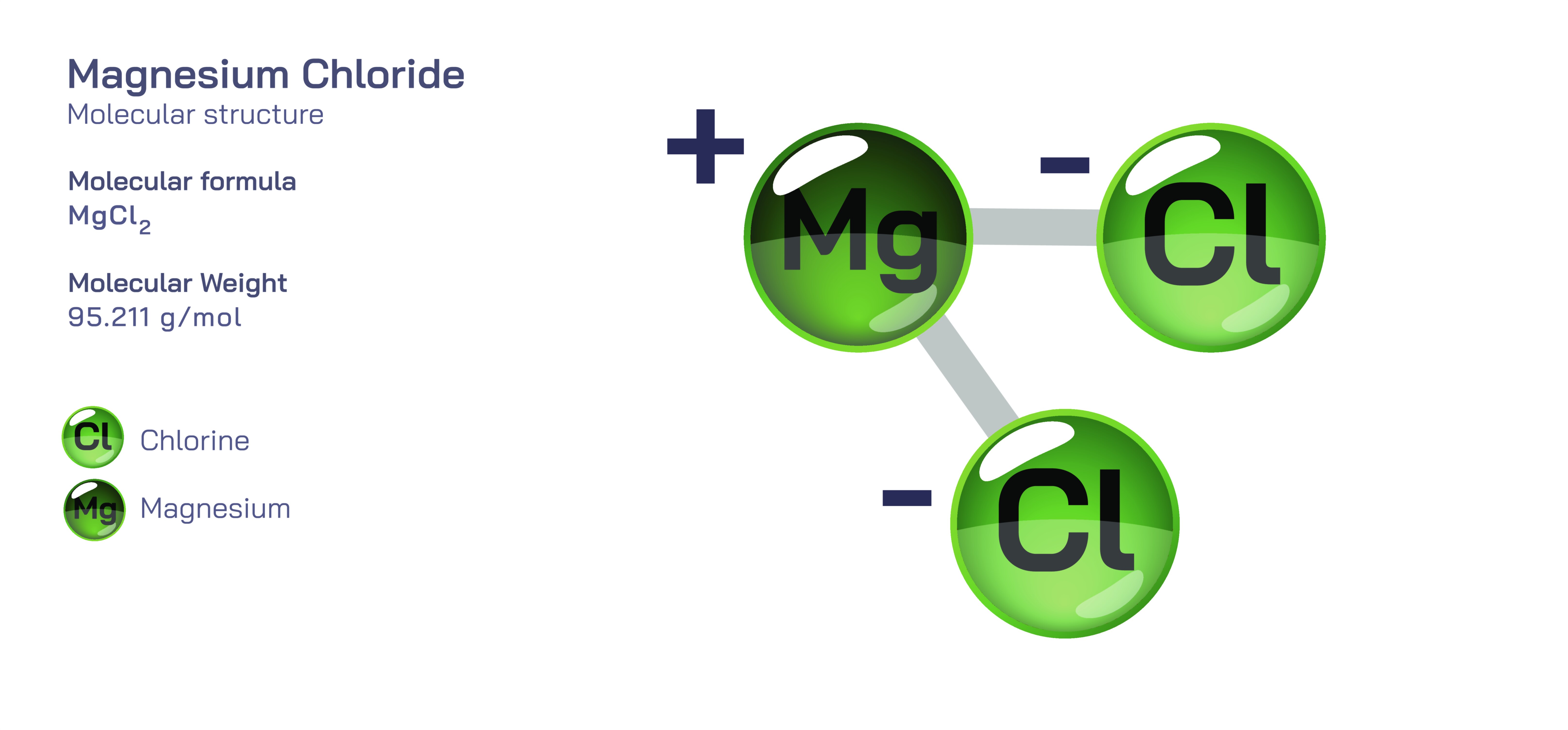
Magnesium Chloride
Magnesium chloride is one of the most important inorganic compounds used across industrial processes, biological functions, environmental applications, and medical care, making it a subject of interdisciplinary significance in both scientific study and practical life. It is primarily known as a highly soluble and readily absorbable source of magnesium, an element essential for human survival, plant development, and numerous chemical reactions. The compound is commonly derived from seawater, salt lake deposits, and brine solutions, allowing large-scale extraction that supports various manufacturing sectors. Its role extends from supporting cellular processes inside the human body to preventing ice formation on winter roads, which makes magnesium chloride a rare material with meaningful utility in both health and heavy industry. Although it is chemically simple at its core, its effects and uses stretch across far-reaching domains that continue to expand as science uncovers deeper insights into mineral biochemistry and sustainable resource management.
Magnesium chloride holds particular value in human physiology because it introduces magnesium to the body in a form that can be absorbed with minimal resistance. Magnesium is vital for muscular movement, neural signaling, digestion, detoxification, protein synthesis, and energy production within cellular cycles. Deficiency in magnesium has become common due to processed food consumption, stress, soil mineral depletion, and poor absorption in individuals with gastrointestinal disorders. Magnesium chloride has been widely studied for its ability to restore mineral balance by contributing magnesium ions efficiently, which can gradually improve sleep quality, calm the nervous system, support cardiac rhythm stability, and ease muscle tension. In therapeutic contexts, it is available in oral supplements, liquid drops, topical oils, bath flakes, and intravenous solutions, each tailored for a specific absorption route and speed. This versatility has made magnesium chloride a highly accessible mineral aid in modern health routines without requiring complex medical intervention.
Beyond wellness and biochemistry, magnesium chloride demonstrates significant industrial advantages because of its physical and chemical behavior. Due to its strong solubility and deliquescent nature, it absorbs moisture effectively and interferes with the freezing point of water, which has made it a preferred agent for de-icing and dust control on roads and construction sites. Unlike conventional rock salt application, magnesium chloride creates a humid film that traps airborne particles and allows longer-lasting suppression of dust, particularly useful for mining operations, large parking areas, and high-traffic road systems. Its capacity to bind soil particles also improves unpaved road stability by reducing erosion. Industries that require stable humid conditions, such as textile production or paper manufacturing, also use magnesium chloride as a hydrating agent because of its predictable moisture-regulating behavior.
Magnesium chloride plays a meaningful role in environmental and agricultural sustainability. In soil science, agricultural regions increasingly face nutrient depletion and salinity challenges caused by overuse of chemical fertilizers and irrigation with mineral-rich water supplies. Small, controlled applications of magnesium chloride provide magnesium required for chlorophyll development in plants, assisting in photosynthesis, sugar formation, and natural disease resistance. While excessive use must be avoided to prevent salt accumulation, targeted replenishment helps improve crop resilience in regions where soil magnesium loss affects yields. In water treatment contexts, magnesium chloride assists in removing impurities and adjusting chemical balance for safe purification, and in aquaculture systems it supports mineral balance for marine organisms that rely on stable saline conditions to thrive.
In specialty manufacturing processes, magnesium chloride contributes to a unique set of products and techniques. It is an essential coagulant used in producing tofu, where it curdles soy milk to form a smooth and firm protein matrix, especially in traditional Japanese tofu-making practices. It is also used in producing magnesium-based cement, a material increasingly examined as a possible sustainable alternative to conventional Portland cement, thanks to its lower carbon emissions and rapid setting behavior. Furthermore, magnesium chloride supports the production of lightweight fire-resistant boards, catalysts for organic synthesis, fabric softeners, and even certain battery components under research for energy storage applications. The breadth of its applicability reflects an ever-evolving industrial landscape that continues to explore the potential of magnesium-rich materials.
The environmental impact of magnesium chloride has earned growing attention due to its role in road ice removal. Compared to sodium chloride, magnesium chloride generally causes lower corrosion on infrastructure and vehicles, reduces harmful runoff impact on plants, and works at lower temperatures where standard salt becomes ineffective. However, no de-icing agent is completely free of ecological cost, and responsible application remains necessary to avoid long-term soil salinity issues. This has led to a global push toward more scientifically informed dosing systems for winter road management, supporting safer transportation without unnecessary ecological burden. Researchers continue to evaluate magnesium chloride within broader sustainability planning, and many transportation agencies now prefer blended solutions that balance performance and environmental safety.
In consumer markets, magnesium chloride has gained widespread adoption within daily wellness culture. Topical sprays marketed as “magnesium oil” use a concentrated magnesium chloride solution applied directly to the skin to bypass digestive absorption barriers, offering relief for individuals who experience digestive discomfort from oral supplementation. Bath salts made from magnesium chloride are widely reported to promote relaxation and muscle relief after exercise or stress. With rising awareness around holistic health, sleep quality, and stress management, magnesium chloride products have become common in homes, gyms, physiotherapy centers, and wellness spas. Interest in mineral balancing continues to widen as individuals seek alternatives to stimulant-based energy solutions and emphasize naturally regulated metabolic wellbeing.
From a scientific standpoint, magnesium chloride continues to be studied for its influence on cellular biochemistry, cardiovascular health, glucose metabolism, neuromuscular functioning, and inflammation responses. It plays a role in enzyme activation pathways that regulate energy conversion inside mitochondria, and it participates in DNA and RNA maintenance processes crucial to healthy aging. Magnesium is also one of the few minerals that affect both the sympathetic and parasympathetic nervous systems, offering a foundation for relaxation and mental clarity. Although scientists stress that no single mineral is a universal cure, magnesium chloride’s ability to support the body across multiple systems makes it a compelling area of long-term biomedical interest.
Overall, magnesium chloride stands as a powerful example of a compound whose importance spans human health, industrial functionality, environmental sustainability, and scientific innovation. From improving biological well-being to securing winter road safety and supporting new directions in sustainable construction materials, its impact continues to evolve. As research progresses and industries transition toward more eco-conscious methodologies, magnesium chloride will likely grow in importance both as a wellness resource and as a versatile material shaping solutions for a world that increasingly values efficient minerals, balanced ecosystems, and resilient technologies.