Reflector Telescope vs Refractor Telescope — Optical Astronomy Instruments
Telescopes stand among the most transformative inventions in the history of science, allowing humanity to extend its vision far beyond the limits of the naked eye and to explore the celestial realm with clarity, precision, and depth. At the heart of optical astronomy lie two foundational telescope designs: the refractor telescope, which uses lenses to bend and focus light, and the reflector telescope, which uses mirrors to gather and redirect light toward a focal point. Although both instruments serve the same overarching purpose—collecting light from distant astronomical objects and forming magnified images—the principles behind their operation, their structural design, and their strengths and limitations differ profoundly. These differences have shaped the evolution of observational astronomy, influenced the architecture of modern scientific observatories, and defined how astronomers approach studying planets, stars, galaxies, and the vastness of the cosmos.
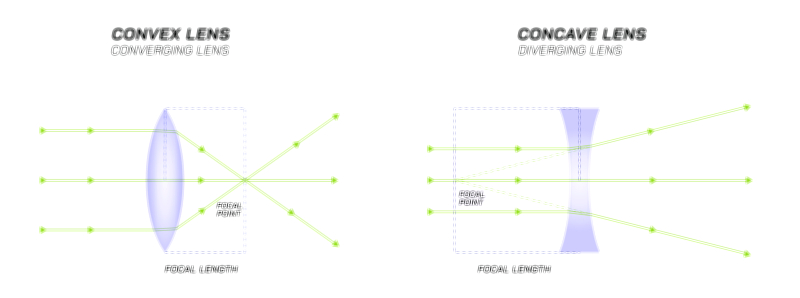
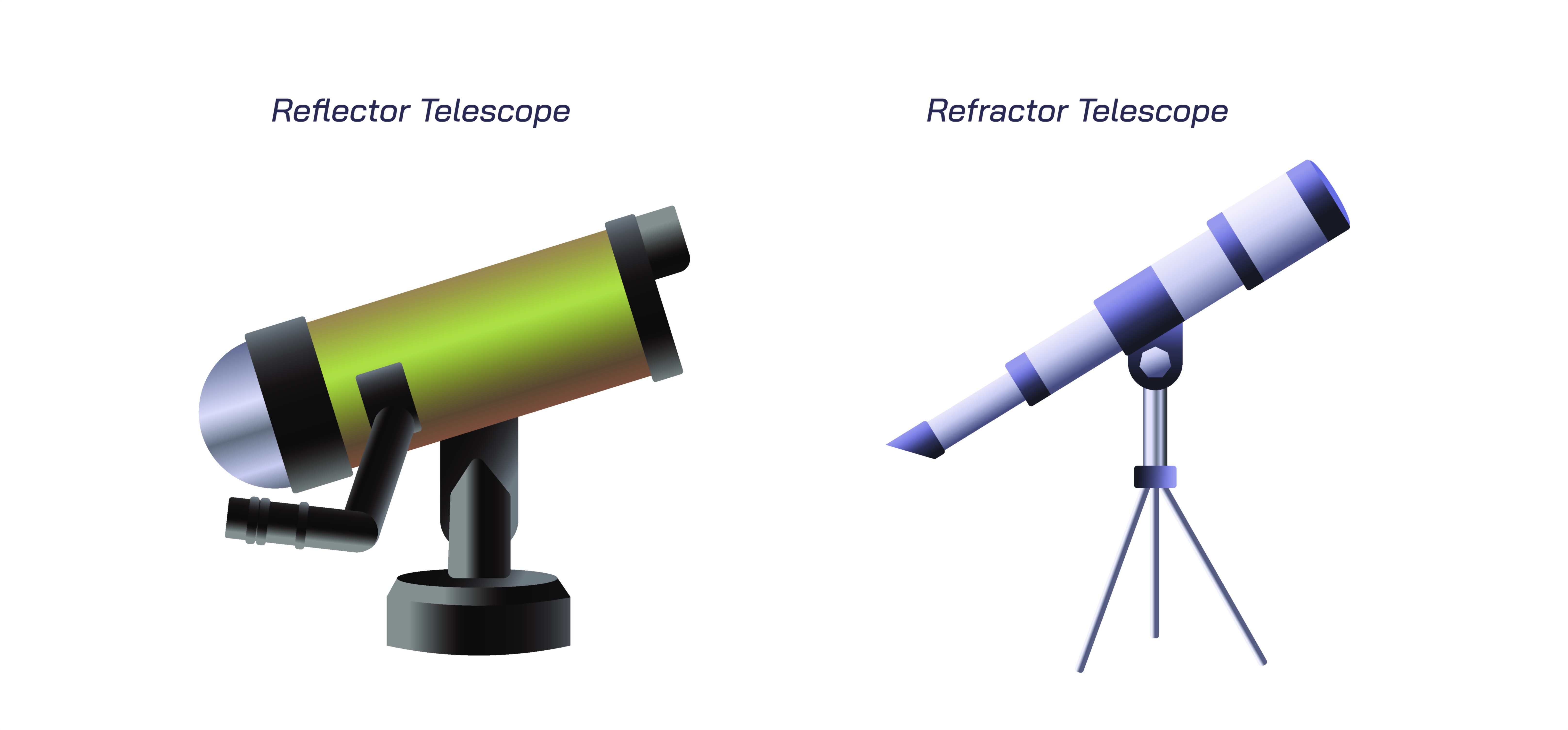
A refractor telescope operates based on the principle of refraction, the bending of light as it passes through a lens. In this design, light from a distant object enters through a large front lens called the objective lens, which converges incoming rays to a focal point. An eyepiece then magnifies the focused image, allowing the observer to see a bright, sharp representation of the celestial object. Refractors were the earliest telescopes to be developed, famously used by Galileo to observe the moons of Jupiter, the phases of Venus, and the craters of the Moon. Their simple, sealed-tube design provides several inherent benefits. Because the optical path is enclosed, the interior is protected from dust, turbulence, and temperature fluctuations that can distort images. The lenses provide crisp, high-contrast images that make refractors especially prized for observing objects such as the Moon, planets, double stars, and terrestrial scenes. These telescopes excel at producing stable images with minimal maintenance and alignment requirements, as their lenses are fixed in place and do not require frequent adjustment.
However, refractor telescopes also face significant limitations, primarily due to the physics of lenses. One of the most serious challenges is chromatic aberration, a phenomenon caused by the fact that different wavelengths of light refract at slightly different angles. As a result, colors do not all converge at exactly the same focal point, leading to unwanted color fringes around bright objects. Although modern refractors use special combinations of glass types—achromatic and apochromatic lenses—to reduce chromatic aberration, these advanced lenses are expensive and difficult to manufacture, particularly at larger sizes. Moreover, large objective lenses become heavy and thick, which causes them to sag under their own weight, distorting the image. Because lenses can only be supported around the edges, refractors become increasingly impractical as their size increases. This restriction limits the aperture of refracting telescopes, making them unsuitable for gathering extremely faint light from distant galaxies or nebulae.
In contrast, a reflector telescope uses mirrors instead of lenses to collect and focus light. The primary mirror, usually shaped as a concave parabola or sphere, reflects incoming light onto a secondary mirror, which then redirects the light to an eyepiece or camera. This design was pioneered by Isaac Newton, giving rise to the Newtonian reflector, one of the most widely used telescope types among amateur astronomers. The fundamental advantage of reflectors lies in their immunity to chromatic aberration. Because mirrors reflect light rather than refract it, all wavelengths behave identically, eliminating the color distortions inherent in refractors. This property allows reflectors to achieve large apertures efficiently, enabling them to gather significantly more light. Light-gathering power is critical for observing deep-sky objects such as star clusters, galaxies, nebulae, and faint distant structures. As a result, virtually all of the world’s largest professional telescopes—both ground-based and space-based—utilize reflecting designs. The Hubble Space Telescope, Keck Observatory telescopes, and the upcoming James Webb Space Telescope exemplify the dominance of reflector designs in modern astronomy.
Reflector telescopes also benefit from the fact that mirrors can be supported from behind, allowing much larger diameters than lenses ever could. This structural advantage makes it possible to construct mirrors many meters across, dramatically increasing the telescope’s ability to collect light. In turn, this enhances resolution, enabling astronomers to examine fine details in distant galaxies, observe faint objects billions of light-years away, and detect subtle features in planetary atmospheres or star-forming regions. Additionally, reflector designs can be compact, making them easier to transport and set up, especially for amateur astronomers using Dobsonian mounts, which offer large apertures at relatively low cost.
Yet reflectors bring their own challenges. Because the optical tube is open, air currents and temperature differences inside the telescope can create turbulence, reducing image clarity. Mirrors require precise alignment, known as collimation, which must be performed regularly, especially in portable reflector telescopes. Dust and dirt can accumulate on the mirror surface more easily than on sealed refractors. The secondary mirror, placed in the path of incoming light, causes a central obstruction that reduces contrast and introduces diffraction spikes—characteristic flare patterns around bright stars. Although these effects do not significantly impede scientific observations, they can be visually noticeable, particularly for planetary viewing where contrast is valued. Reflectors may also suffer from surface degradation over time, as mirror coatings oxidize or tarnish and require recoating to maintain their reflective efficiency.
Despite these differences, both telescope types share the common goal of collecting and magnifying light to reveal details invisible to the unaided eye. Their distinctions are not matters of superiority but rather of suitability for different observational purposes. Refractors excel in clarity, sharpness, and contrast, making them ideal for studying the Moon, planets, star clusters, and double stars. Their minimal maintenance and sealed design appeal to users who desire consistent performance without regular adjustments. They are also favored for astrophotography of planets due to their crisp image quality. Reflectors, on the other hand, offer unmatched aperture sizes for a given cost, making them ideal for exploring faint deep-sky objects such as nebulae and galaxies. Their absence of chromatic aberration and immense light-gathering power make them indispensable for professional research in cosmology, stellar evolution, and galactic structure.
Historically, the evolution of telescopes reflects the shifting priorities of astronomical exploration. Early astronomers relied on refractors because they were easier to construct with then-available technology. However, as the desire to observe fainter and more distant objects grew, the limitations of refractors became increasingly restrictive. The invention of reflecting telescopes opened a new era, allowing mirrors to expand in size as glassmaking and coating technologies advanced. Today, professional observatories overwhelmingly use reflectors because they permit wide apertures, adaptive optics, segmented mirror systems, and multi-instrument configurations. Meanwhile, refractors continue to flourish in specialized fields like amateur astronomy, planetary science, and precise optical research.
On a conceptual level, the comparison between reflectors and refractors highlights how different optical strategies harness the same basic laws of light to achieve distinct advantages. Refractors manipulate the speed and direction of light through transparent media, while reflectors redirect it using shaped reflective surfaces. These two approaches illustrate the versatility of optical principles and the ingenuity of human engineering, revealing how subtle adjustments in design open new windows into the universe.
Ultimately, the contrast between reflector and refractor telescopes demonstrates that astronomy is both a scientific discipline and a technological art. Each telescope type offers a unique perspective, shaping how astronomers see the cosmos and how discoveries unfold. Together, they symbolize humanity’s enduring quest to understand the night sky, transforming faint, distant photons into images and insights that deepen our comprehension of the universe and our place within it.