Hypochlorite Ion Structure — ClO⁻ Chemical Diagram and Properties Explained
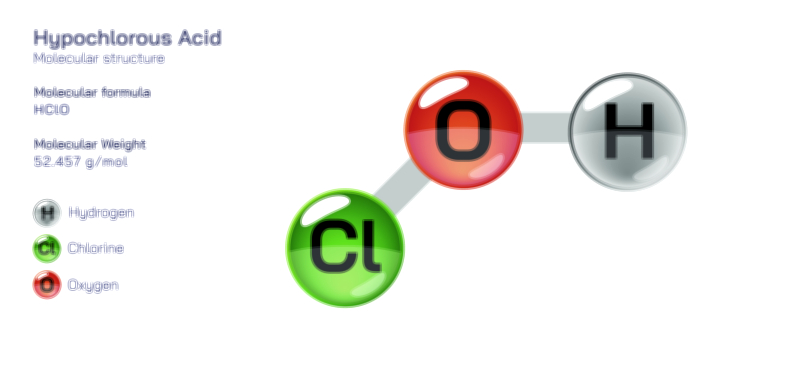
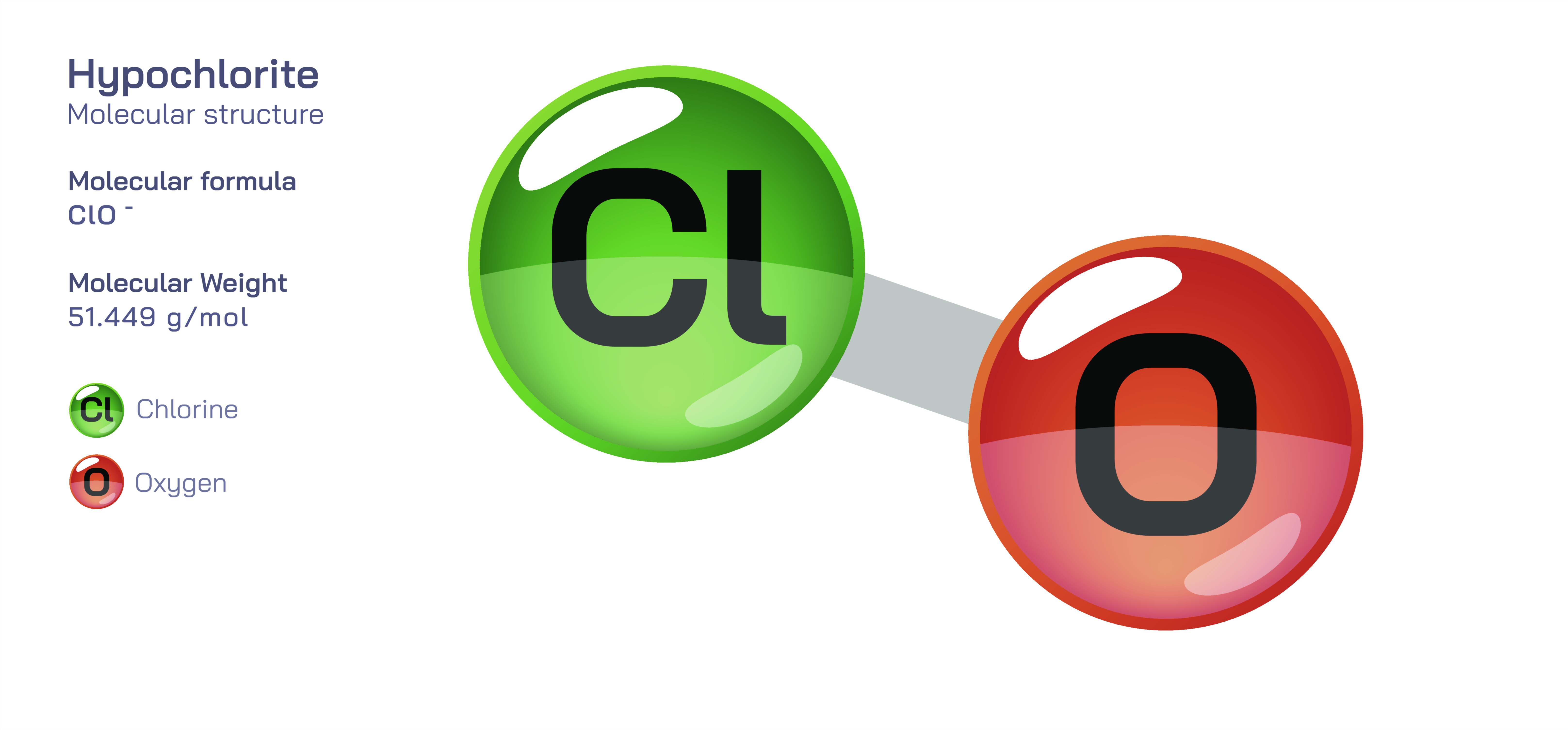
The hypochlorite ion, written chemically as ClO⁻, is a deceptively simple species whose molecular identity forms the foundation of modern disinfection, sanitation, bleaching chemistry, and oxidative reactions in both engineered and biological systems. Although its formula consists of only one chlorine atom bonded to one oxygen atom, the deeper chemistry of ClO⁻ emerges from the way electrons are distributed between these atoms and from the negative charge that the ion carries. Hypochlorite is best understood as the conjugate base of hypochlorous acid (HOCl), a weak acid widely known for its antimicrobial power. When HOCl donates its hydrogen as a proton (H⁺), the resulting species is the hypochlorite ion. This structural change does not simply remove hydrogen; it alters the electron configuration, stability, polarity, and chemical reactivity of the molecule. While HOCl acts as a selective oxidizing acid, ClO⁻ behaves differently because the loss of the proton leaves behind a negative charge centered largely on the oxygen atom. That single electron change is enough to modify how the molecule interacts with organic molecules, how it behaves across different pH environments, and how it influences the behavior of chlorine-based disinfectant systems in water and industrial settings.
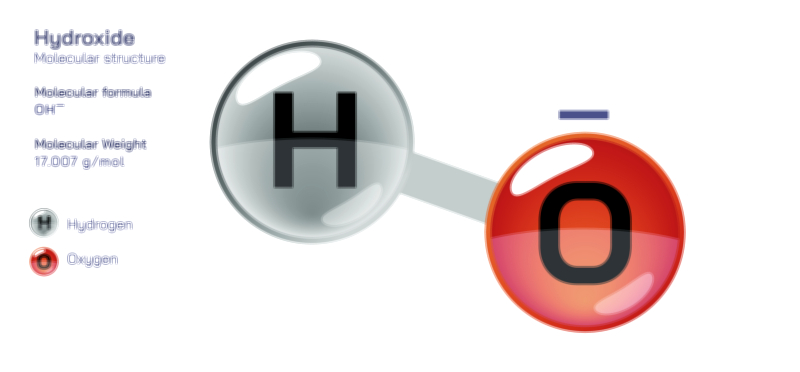
Structurally, the hypochlorite ion consists of a covalent bond between chlorine and oxygen. Oxygen is more electronegative than chlorine, meaning it pulls electron density toward itself. As a result, the Cl–O bond is polarized, and the negative charge of the ion resides mainly on the oxygen atom. This electron-rich oxygen site is responsible for the strong nucleophilic and oxidizing nature of hypochlorite. Unlike many other anions that passively associate with cations, ClO⁻ carries intrinsic reactivity due to the arrangement of electron density. When hypochlorite enters solution, water molecules immediately form hydration shells around it, allowing the ion to move efficiently through the liquid by constant reorganization of hydrogen bonds. This hydration is also what gives hypochlorite solutions their ability to diffuse rapidly and interact with organic matter, cellular membranes, and bacterial proteins. In chlorine-based sanitizing systems, the concentration of ClO⁻ relative to HOCl depends heavily on pH. At lower pH values, HOCl dominates, while at higher pH values, hypochlorite becomes the prevailing form. This balance is essential to the overall chemistry of disinfection, because HOCl is the more reactive antimicrobial agent, while ClO⁻ is more stable and persists longer in solution. The equilibrium between these species demonstrates that even a simple acid–base transformation can profoundly influence chemical performance.
Because of its electron-rich nature and high redox potential, the hypochlorite ion functions as a strong oxidizing agent. When ClO⁻ reacts with organic molecules, it tends to break down chemical bonds by abstracting electrons, replacing functional groups, chlorinating nitrogen-containing compounds, and disrupting sulfur-containing amino acids. These reactivity patterns explain why hypochlorite is so effective in destroying microorganisms. Proteins denature, membrane lipids become oxidized, and metabolic enzymes lose functionality when exposed to ClO⁻. In this way, hypochlorite contributes to the breakdown of cellular structures, making survival impossible for bacteria, viruses, fungi, and many parasites. The core of this disinfecting action can be traced directly to the molecular structure: the polarized bond between chlorine and oxygen leaves chlorine highly electrophilic, ready to accept electrons from biological targets. When electrons are transferred to hypochlorite, chlorine shifts to lower oxidation states, generating chloride and other harmless byproducts. The reactivity of ClO⁻ therefore involves both the release of oxidative energy and the stabilization of the chlorine center through reduction — a process that effectively destroys biological matter while returning chlorine to a relatively low-energy form.
In addition to its biological effects, hypochlorite plays a major role in industrial chemistry. In household bleach (typically sodium hypochlorite), the ClO⁻ ion is responsible for breaking down colored organic compounds through oxidative cleavage of conjugated chromophores — the structures that create visible color. When hypochlorite reacts with pigments in fabrics, paper, and stains, it disrupts the bonds responsible for absorbing light, causing the disappearance of color. The same chemical mechanism supports water treatment, paper pulp bleaching, textile manufacturing, sterilization of medical equipment, and industrial sanitation. In wastewater and sewage treatment, hypochlorite neutralizes pathogens while breaking down biodegradable organic contaminants. The ion is reactive enough to oxidize complex molecules but not so aggressive that it behaves uncontrollably under typical working conditions. This balance — power combined with predictability — explains why hypochlorite became a cornerstone disinfectant in global public health and sanitation.
However, despite its tremendous benefits, the hypochlorite ion must be handled with awareness and caution because its reactivity is indiscriminate. The same oxidative mechanism that breaks down pigments and disinfects surfaces can damage biological tissue. Contact with concentrated hypochlorite solutions can burn skin and eyes by degrading cellular proteins and lipids, while inhalation of vapors can irritate respiratory tissue. Hypochlorite also reacts vigorously with acids, producing chlorine gas — a corrosive and potentially lethal inhalation hazard. This reactivity arises because lowering the pH forces hypochlorite to reform hypochlorous acid and then liberate chlorine gas when excess protons are available. Hypochlorite also reacts dangerously with ammonium and amine-containing compounds, forming chloramines and nitrogen trichloride, both toxic respiratory irritants. These hazards are not arbitrary but arise directly from the molecular structure of ClO⁻ and from the chemical pathways it follows as an oxidizing agent. Safety with hypochlorite is therefore not merely procedural but deeply linked to its molecular identity.
The environmental chemistry of hypochlorite shows another facet of its dual nature. In natural waters, hypochlorite does not persist indefinitely. It decomposes into chloride and oxychlorine species depending on temperature, sunlight, and pH. This decomposition is both beneficial and challenging: it means hypochlorite does not accumulate indefinitely, but it also means that residual chlorine levels must be managed carefully in aquatic environments to avoid harm to fish and microorganisms. Organic matter reacts readily with hypochlorite, sometimes forming halogenated byproducts that can persist in the environment. For this reason, modern water treatment systems use hypochlorite with monitoring to ensure effective pathogen control while minimizing formation of unwanted reaction products.
What makes the hypochlorite ion particularly fascinating from a chemical perspective is how its entire identity arises from the simple arrangement of atoms and electrons. The polarity of the Cl–O bond determines the reactivity of chlorine; the localization of the negative charge on oxygen determines the ion’s basicity and nucleophilic character; and its hydration behavior determines its mobility and effectiveness in water. The hypochlorite ion is not powerful because chlorine is universally destructive — instead, it is powerful because the electron structure of ClO⁻ is ideally positioned to transfer oxidative energy to molecules that contain electron-rich sites. Every major application of hypochlorite — disinfection, bleaching, sanitation, waste treatment, and oxidation chemistry — emerges from this molecular mechanism.
In its deepest interpretation, the ClO⁻ ion is an example of how structure defines chemical destiny. A single chlorine atom bonded to a single oxygen atom with a negative charge produces a molecule that changes the world: protecting drinking water, maintaining public health, sanitizing environments, and supporting industrial processes that depend on clean, controlled oxidation. At the same time, that same molecular identity demands respect because its reactivity can be harmful if mismanaged. Understanding hypochlorite means seeing beyond its presence in household bleach and recognizing a broader truth: even the simplest chemical ions can shape biology, technology, and society when their internal structure allows them to interact strongly with the molecules of life and the environment.