Hexane — Molecular Structure, Properties, and Industrial Uses Explained
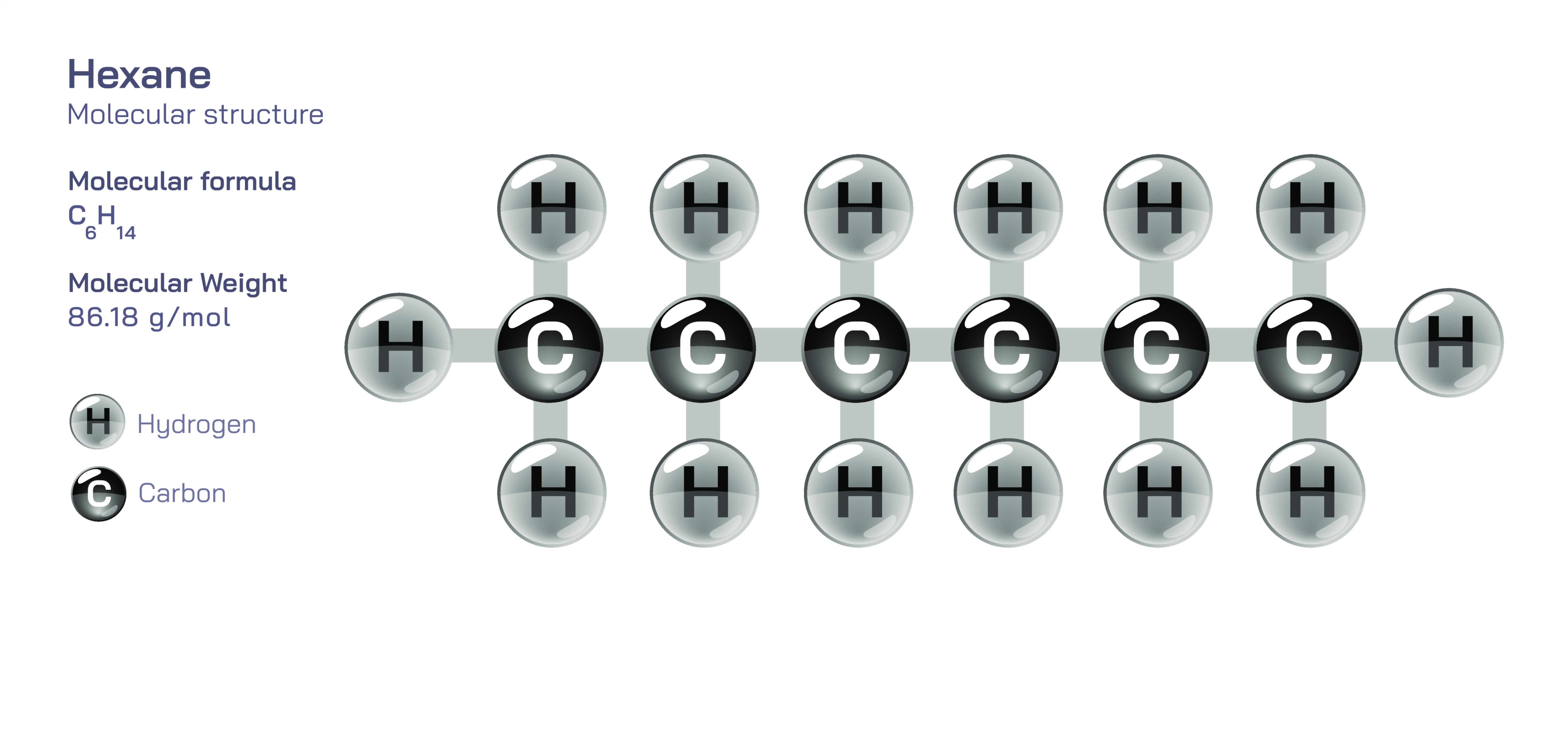
Hexane is one of the most important organic compounds in industrial chemistry, petroleum refining, and solvent technology, and although it first appears as a simple hydrocarbon commonly listed as C₆H₁₄, its true significance becomes much clearer when examined through the combined lenses of molecular structure, physical properties, and practical applications. Hexane belongs to the family of alkanes, a class of saturated hydrocarbons composed only of carbon and hydrogen atoms joined by single covalent bonds. While the six-carbon formula may seem straightforward, the way these carbon atoms are arranged determines everything about how hexane behaves. It is not a single compound but a group of structural isomers — molecules that share the same molecular formula but have different connectivity. The most familiar form is n-hexane, a straight-chain hydrocarbon whose six carbon atoms link end-to-end, but there are several branched isomers such as 2-methylpentane and 2,3-dimethylbutane. The simple appearance of the straight chain disguises the chemical and physical roles that chain length, geometry, and intermolecular forces play in the real-world usefulness of hexane.
In n-hexane, the carbon skeleton forms a linear arrangement surrounded by hydrogen atoms that saturate all available bonding sites. This produces a molecule that is nonpolar, hydrophobic, and highly flexible, able to adopt multiple conformations because of free rotation around the carbon–carbon single bonds. Since the molecule has no strongly electronegative atoms and no permanent dipole moment, it does not engage in hydrogen bonding or strong dipole–dipole interactions. Instead, hexane molecules interact mainly through London dispersion forces, weak attractions that increase with molecular size and surface area. These interactions are strong enough to keep hexane in the liquid state at room temperature, but weak enough to let the molecules separate easily into the gas phase. As a result, hexane evaporates quickly, shows low viscosity, and has a distinctly low boiling point range, a feature amplified when considering mixtures of hexane isomers in petroleum distillates. These subtle molecular forces explain why hexane spreads rapidly across surfaces, dissolves oily substances so effectively, and produces vapors that dissipate readily into air.
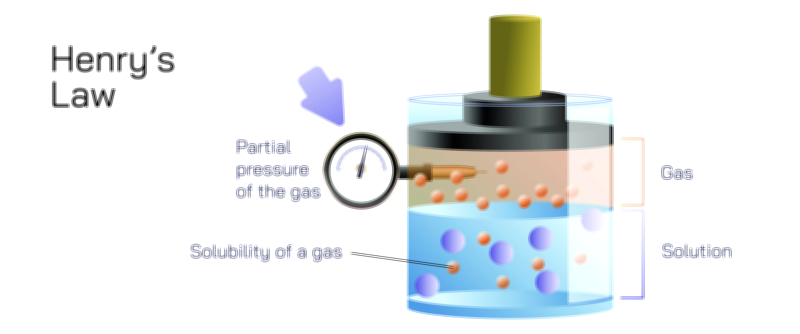
The hydrophobic nature of hexane — its intense chemical affinity for nonpolar substances — makes it an exceptional solvent for oils, fats, lipids, waxes, and hydrophobic organic compounds. Hexane does not mix with water because water molecules are strongly attracted to one another through hydrogen bonding. Nonpolar hexane cannot compete with that attraction, so it separates instead of dissolving. But nonpolar molecules such as fatty acids, grease, paraffin, resins, and long-chain hydrocarbons dissolve extremely well in hexane because similar intermolecular forces operate in both. This tendency is summarized in the famous chemical intuition “like dissolves like,” and hexane is one of the best real-world demonstrations of that principle. The solvent strength of hexane arises not from reactivity — the molecule is chemically inert under most conditions — but from its structural compatibility with nonpolar organic matter.
The industrial significance of hexane becomes especially visible in oil extraction, where it is used to separate edible oils from seeds and plant materials. Soybean, sunflower, canola, peanut, and cottonseed oils are commonly obtained using hexane extraction, where crushed seeds are washed with hexane so that the oil dissolves into the solvent. Once extracted, the hexane is evaporated and recovered, leaving purified oil. This process is favored because hexane dissolves oils thoroughly while leaving behind proteins, carbohydrates, and other polar components that remain insoluble. The evaporation step requires relatively little energy because of hexane’s low boiling point, making the process efficient and economical. In this way, a molecular feature — weak intermolecular attractions — translates directly into cost-effective food production on a global scale.
Hexane’s role as a laboratory and industrial solvent continues across many fields. It is widely used in chromatography because it evaporates cleanly without leaving residues. It acts as a degreasing agent to remove oils from metal surfaces before coating or welding. In polymer and adhesive manufacture, hexane provides a medium for dissolving rubbers and resins before drying to form films and coatings. Shoe and leather industries rely on hexane-based adhesives because the solvent evaporates rapidly, allowing fast bonding and assembly. Even in pharmaceutical manufacturing, hexane is used in purification steps to separate nonpolar impurities from desired compounds. The underlying reason in every case remains the same: hexane’s nonpolarity and volatility enable it to dissolve oily materials and then vanish through evaporation without chemically altering the system.
In petroleum refining, hexane plays a dual role: it is both a useful solvent and a product of fractional distillation. Crude oil contains a wide spectrum of hydrocarbon chains, and hexane emerges in the gasoline fraction because its volatility and energy content are consistent with fuel performance requirements. When blended with gasoline, hexane contributes to combustion energy and influences ignition behavior. Its branched isomers, such as isohexane and 2,3-dimethylbutane, are particularly valuable because branched molecules generally burn more smoothly and contribute to higher octane ratings. This link between molecular geometry and engine performance underscores how even small variations in carbon connectivity — straight versus branched — produce different macroscopic outcomes.
Although hexane is chemically stable, its flammability is one of its defining characteristics. Hexane vapors ignite easily and burn with a hot flame because of rapid hydrocarbon oxidation. This property is central to its use as a fuel component, yet it also demands strict safety control in industrial settings. Hexane’s low flash point and rapid vapor spread make it capable of forming flammable air mixtures at normal temperatures. Ventilation, vapor recovery systems, and explosion-proof equipment are used to prevent accumulation. The molecule itself is not toxic in the chemical sense like strong acids or reactive electrophiles, but prolonged inhalation of concentrated vapors can affect the nervous system. This reinforces an important concept in industrial chemistry: harmless molecular structure does not guarantee harmless exposure, especially when volatility, flammability, and occupational concentration come into play.
Hexane’s physical characteristics also influence its environmental behavior. Because it evaporates rapidly, spilled liquid hexane does not persist long on soil or water surfaces, but its vapors can contribute to air pollution and ozone formation in industrial regions. Modern regulations emphasize recovery and recycling of hexane during extraction and solvent processes to reduce emissions and waste. Advances in technology have made closed-loop hexane extraction highly efficient, minimizing solvent loss and making the compound both economically viable and environmentally manageable when handled responsibly.
One of the most intriguing aspects of hexane lies in the contrast between its chemical simplicity and practical complexity. As a saturated hydrocarbon with only single bonds, hexane is not involved in many of the dramatic reactions associated with reactive organic chemistry. It does not readily add across double bonds, form polymers on its own, or serve as a strong acid or base. Yet the very absence of reactivity makes hexane valuable. It provides a neutral medium that supports reactions without participating in them. A predictable, nonreactive solvent becomes essential for studying other chemicals in pure environments. In this respect, hexane demonstrates that chemical inertness can be just as useful as chemical reactivity, depending on the goal.
Hexane also illustrates an important conceptual lesson in molecular science: structure determines behavior and behavior determines application. The straight chain of six carbon atoms gives hexane exactly the right balance of volatility, hydrophobicity, stability, and energy content to function as a solvent, a fuel component, and an extraction medium. A chain shorter than six carbons would evaporate too quickly or dissolve oils less efficiently. A chain longer than six would become too viscous or too slow-evaporating for many applications. The six-carbon structure represents a sweet spot in physical properties, showing how a numerical arrangement of atoms translates into industrial practicality.
Viewed from a broad scientific perspective, hexane is more than just a hydrocarbon solvent; it is a case study in how simple molecules support global systems. It drives oil extraction that feeds millions, forms an invisible foundation for adhesive and polymer manufacturing, helps laboratories separate and purify organic mixtures, contributes energy to transportation fuels, and plays an unseen role in the coatings, plastics, automotive, electronics, and leather industries. All of these applications exist not because hexane is chemically active but because its molecular structure provides exactly the right combination of solubility, volatility, and stability.
Understanding hexane deeply shows how the smallest details of atomic arrangement ripple outward into large-scale industrial impact. It stands as a reminder that simplicity in composition does not imply simplicity in function — and that the logic of molecular structure continues to shape technology, manufacturing, and modern life in profound ways.