Horizontal and Vertical Lines — Definitions, Properties, and Applications
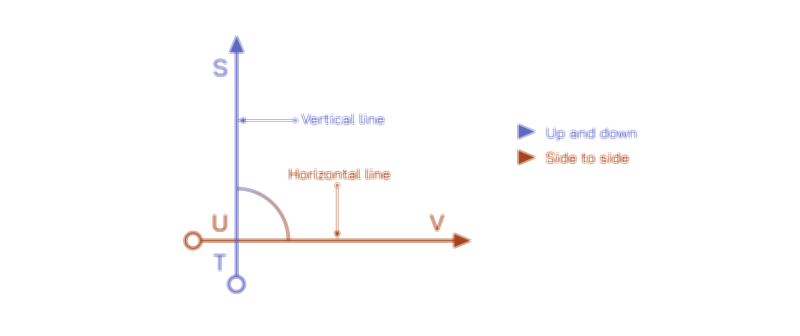
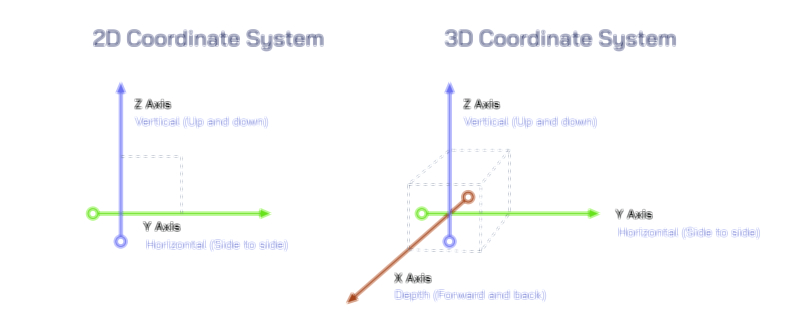
Horizontal and vertical lines are fundamental concepts in geometry, mathematics, and graphing. A horizontal line runs parallel to the x-axis on a coordinate plane and has a slope of zero. This means there is no change in the y-coordinate as the x-coordinate changes, resulting in a flat, level line. Horizontal lines are used in geometry to represent level surfaces, alignments, and boundaries where no vertical variation exists. In real-life applications, horizontal lines can be observed in shelves, roads, building floors, and water surfaces.
In contrast, a vertical line runs parallel to the y-axis on a coordinate plane and has an undefined slope. Vertical lines have a constant x-coordinate while the y-coordinate changes, creating a straight up-and-down line. Vertical lines are essential in geometry for representing boundaries, walls, or structures with no horizontal movement. Real-life examples of vertical lines include walls, poles, trees, and elevator shafts.
The differences between horizontal and vertical lines are clear in terms of slope, orientation, and equation representation. Horizontal lines can be expressed with equations of the form y = c, where c is a constant, while vertical lines are expressed as x = k, where k is a constant. Understanding these lines is essential for graphing linear equations, analyzing slopes, constructing geometric figures, and solving coordinate geometry problems.
Both horizontal and vertical lines have practical applications beyond mathematics. They are used in engineering, architecture, design, and mapping to establish reference points, boundaries, and layouts. Graphical representation of these lines helps students and professionals understand linear relationships, symmetry, and spatial alignment. Recognizing horizontal and vertical lines enhances visualization skills and provides a foundation for advanced topics like slopes, parallelism, and perpendicularity.
In conclusion, horizontal and vertical lines are basic geometric constructs with distinct properties and orientations. Horizontal lines are flat with zero slope, while vertical lines are upright with undefined slope. Both play crucial roles in coordinate geometry, mathematical problem-solving, and real-world applications in design, architecture, and daily life. Understanding and identifying these lines is fundamental to learning geometry and interpreting visual structures accurately.