Explorable General Physics — Fundamental Concepts, Laws, and Applications
Physics is the study of how the universe behaves, and through its most fundamental concepts it provides a pathway to understand matter, energy, motion, forces, space, and time. Although individual physics topics are often divided into separate subjects such as mechanics, thermodynamics, electromagnetism, optics, and modern physics, all of them are unified by the underlying goal of describing how natural phenomena arise, why they follow patterns, and how those patterns can be applied to real-world technology, scientific discovery, and human innovation. What makes physics so powerful is that it takes observations of the world—an object falling, a metal heating, a magnet attracting iron, light bending through glass—and interprets them not as random events but as predictable outcomes of universal laws. By deeply exploring physics concepts, one begins to see the invisible structures that shape natural behavior and learns to recognize that every motion, interaction, and transformation is part of a coherent and interconnected physical framework.
One of the earliest foundations of physics lies in the study of motion and forces, established through classical mechanics. Here, the work of scientists such as Galileo and Newton revealed that forces cause changes in motion and that motion continues unless interrupted by an external influence. Newton’s laws of motion create the conceptual rules that explain how objects accelerate, why friction eventually slows moving bodies, and how momentum and energy govern collisions and impacts. These laws are not limited to laboratory settings; they reveal why a thrown ball curves back to Earth, why a vehicle requires braking distance, why planets orbit the Sun, and why engineering structures must be designed to withstand forces. Classical mechanics becomes the first window that physics provides into the orderly nature of the universe by showing that what appears chaotic is governed by consistent rules once underlying forces are understood.
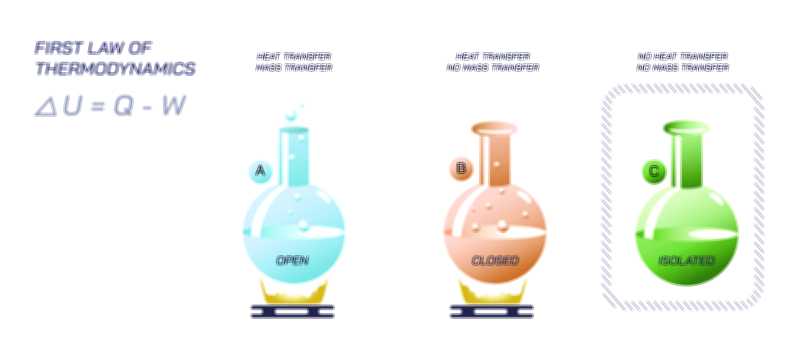
Beyond motion, the physics of energy introduces a deeper level of understanding by highlighting that energy cannot be created or destroyed but only transformed from one form to another. The conservation of energy and the first law of thermodynamics show that heat, motion, and work are interchangeable expressions of the same fundamental quantity. This principle explains why engines convert heat into mechanical motion, why refrigerators move heat rather than eliminate it, why chemical fuels release energy when bonds are rearranged, and why biological organisms survive by transforming food into usable energy. The exploration of energy also leads into the second law of thermodynamics, which expresses the natural tendency toward increasing disorder and explains why energy spreads out rather than concentrating spontaneously. This law illuminates why heat flows from hot to cold, why perpetual motion machines are impossible, why time has a forward direction, and why all real processes involve some degree of inefficiency. Thermodynamics therefore expands physics beyond motion and reveals the directionality of natural changes in every system.
The study of waves and vibrations introduces yet another layer of physical behavior, explaining how energy can travel without transporting matter. Sound waves propagate through air by compressing and expanding molecules, water waves travel across oceans as ripples, and seismic waves reveal the internal layers of the Earth. Wave phenomena also explain interference patterns, resonance, and the behavior of musical instruments, architectural acoustics, sonar, and many technologies that rely on sound. The understanding of waves then progresses into electromagnetic waves, where electric and magnetic fields interact to form light, radio waves, microwaves, X-rays, and gamma rays. Physics shows that visible light is only one small portion of the vast electromagnetic spectrum and that every form of electromagnetic radiation obeys the same wave principles. This discovery opened the door to modern telecommunications, satellite mapping, radio broadcasting, medical imaging, laser systems, fiber optics, astronomy, and nearly all forms of wireless communication.
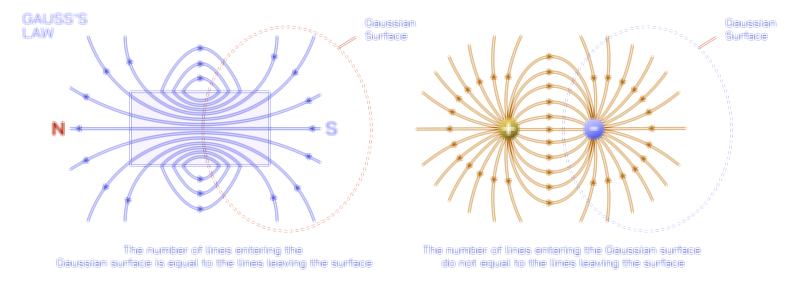
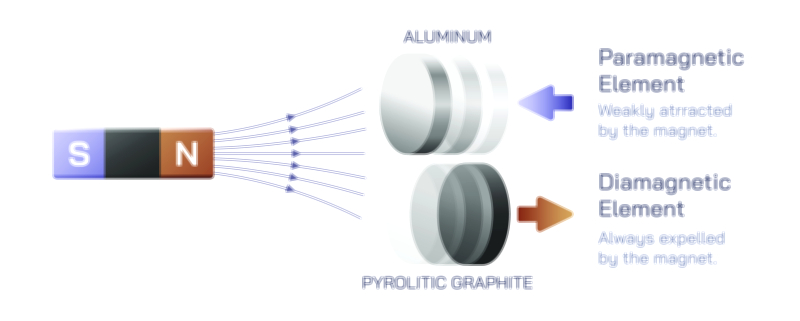
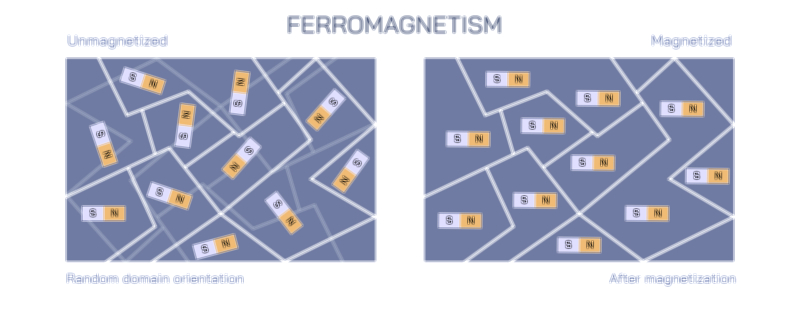
Another monumental advance in physics arises from the study of electricity and magnetism, unified through Maxwell’s equations. These concepts reveal that electric charge creates electric fields, moving charges generate magnetic fields, and changing magnetic fields induce currents. Electric power generation, motors, transformers, electronics, computing, and electrochemical storage are all applications of electromagnetic principles. The idea that invisible fields exist in space and can influence matter at a distance fundamentally reshaped the way scientists interpret physical forces. Electric charge gives rise to the structure of atoms, determines chemical bonding, and controls the behavior of materials. Magnetic fields drive particle motion in space, guide compasses used in navigation, protect Earth from solar radiation, and participate in the operation of fusion reactors. Through electromagnetism, physics explains why electrical signals move through nerves in biological systems and why technological devices can manipulate electricity with precision.
The next turning point in physics emerged through the desire to understand heat, sound, electricity, and light under more extreme conditions. This led to the development of relativity and quantum physics, which uncovered the deeper foundations of matter and energy. Relativity revealed that time and space are not fixed but interconnected and influenced by motion and gravity. At everyday scales, these effects are subtle, but at high speeds and large masses they become essential, explaining why GPS satellites require relativistic corrections to remain accurate and why cosmic objects such as black holes and neutron stars exhibit extreme gravitational effects. Meanwhile, quantum theory showed that matter is built from particles that behave differently from everyday objects, interacting through probability and exhibiting both wave-like and particle-like properties. Quantum physics explains the structure of atoms, the formation of molecules, the behavior of semiconductors, the phenomenon of superconductivity, and the mechanisms behind lasers and transistors. It is the foundation of modern electronics, computing, chemistry, nanotechnology, and much of current scientific research.
As physics expanded to explore the smallest and largest scales, it also strengthened its connection to technology and engineering by demonstrating that the same laws govern systems everywhere. Fluid dynamics explains the flow of water and air, predicting weather patterns, enabling flight, optimizing pipelines, and guiding biomedical design in the study of blood flow. Optics explores how light interacts with matter, enabling the creation of lenses, microscopes, telescopes, cameras, and advanced optical technologies such as holography and fiber-optic communication. Material science, rooted in physics, reveals how atomic structure determines strength, elasticity, conductivity, and thermal characteristics, enabling the design of everything from spacecraft alloys to flexible electronics. Nuclear physics explains the forces inside atomic nuclei and leads to applications ranging from nuclear power to medical radiation therapy and carbon-dating techniques used in archaeology.
Through all of these concepts, physics also maintains a deeply empirical connection to the natural world through measurement and scientific experimentation. Observing patterns, creating hypotheses, testing predictions, refining understanding, and discovering unexpected phenomena form the core of the physics method. This approach not only explains how nature behaves but also drives the creation of predictive models that allow humans to design, innovate, and explore. Physics makes it possible to study the motion of galaxies while also investigating the movement of electrons inside circuits. It provides predictive power to forecast eclipses centuries in advance and to design nanometer-scale transistors that operate billions of times per second. No matter how complex the phenomenon, physics reveals that behavior arises from laws that are universal, stable, and consistent across time and scale.
Ultimately, the exploration of general physics reveals a coherent network of ideas in which motion, energy, waves, electricity, magnetism, relativity, and quantum behavior are not isolated topics but interconnected components of one unified understanding of nature. Every branch of physics builds on the others, just as every physical system combines multiple laws simultaneously. From falling objects to orbiting planets, from lightning to wireless communication, from sound to lasers, from heat engines to superconductors, from subatomic particles to galactic clusters, physics shows that the universe follows patterns that can be explored, understood, and applied. Its concepts become tools not only for interpreting natural events but also for shaping the world through technology, engineering, medicine, environmental science, space exploration, and countless other applications. In this way, physics stands as both a fundamental science that reveals the workings of reality and a practical discipline that empowers humanity to transform understanding into innovation.