Explosion vs Implosion — Energy Release and Compression Processes Compared in Physics
Explosions and implosions represent two dramatically different physical processes, yet both belong to the same broader theme of energy transformation and rapid structural change in matter. They appear as opposites, but their differences extend far beyond the simple notion that one moves outward and the other moves inward. To understand explosion and implosion with depth and clarity, it is necessary to explore how energy is stored, how it is released or absorbed, how pressure gradients form, how matter responds to extreme forces, and how these processes manifest in natural, industrial, biological, and cosmic environments. Explosions capture attention through their violent outward expansion, while implosions intrigue by collapsing structures inward under overwhelming external forces. Together, they form a dual conceptual pair that helps reveal how pressure, energy, stability, and imbalance shape the physical changes that occur throughout the universe. Describing these phenomena in richly detailed narrative form allows their underlying physics to be understood beyond quick definitions or symbolic diagrams, offering insight into why these processes happen and how they influence everything from engineering to astronomy.
An explosion occurs when stored energy is suddenly released in a rapid, outward-moving wave. This release can come from chemical energy, nuclear energy, electrical discharge, mechanical compression, or even accumulated pressure within confined gases or liquids. The defining feature of an explosion is that the energy release causes matter to expand outward violently, displacing the surrounding environment. The speed at which this expansion occurs determines the type of explosion. Slow expansions produce less intense events, such as the bursting of a balloon, while fast expansions create shockwaves, high-temperature plasma, and destructive force, as seen in combustion or detonation. What triggers an explosion is typically a sudden imbalance: internal pressure rises far beyond what the containing structure (or surrounding environment) can withstand, and once this threshold is exceeded, the material ruptures or separates violently. The outward motion of gases, fragments, and shockwaves is fueled by the rapid increase in volume as energy transforms into kinetic motion.
Explosions can arise in numerous contexts. Chemical explosions occur when substances undergo rapid reactions that produce expanding gases and significant heat. The rapid formation of gaseous products, combined with sudden temperature increases, produces intense pressure that pushes outward violently. Combustion engines rely on controlled explosions inside cylinders to move pistons and generate mechanical work. Natural gas leaks, when ignited, can cause destructive explosions due to swift oxidation reactions producing expanding energy fronts. In nuclear explosions, the process is profoundly different: energy originates not from chemical bonds but from changes in atomic nuclei, producing intense bursts of heat, radiation, and rapidly expanding plasma. Even astrophysical explosions, such as supernovae, follow the same principle: a star’s internal environment becomes unstable, energy accumulates, and once the balance collapses, matter is blasted outward into interstellar space in a catastrophic release.
In contrast, an implosion is governed not by the release of internal energy but by the overwhelming force of external pressure collapsing inward on a structure or region. Where an explosion pushes matter outward due to excessive internal force, an implosion pulls matter inward because internal pressure becomes too low relative to the surrounding environment. The cause of an implosion is often the removal or failure of internal structural support. This may happen when the inside of a sealed container is evacuated, creating a vacuum or near-vacuum. If the external air pressure is greater than the internal resistance, the container collapses inward suddenly. The force of atmospheric pressure alone is enormous, and when there is no internal pressure pushing outward to counter it, even a slight imbalance can cause a violent collapse.
Implosions occur frequently in engineering, nature, and even star formation. On Earth, a classic example involves a metal drum: if the air inside is heated and then sealed before cooling, the internal pressure drops as the air contracts. The surrounding atmosphere then crushes the drum inward with surprising power. Deep-sea implosions are among the most dramatic because the water pressure at great depths is immense. Submarines or underwater vessels must withstand crushing forces far greater than surface atmospheric pressure. If their structural integrity fails, the external water pressure forces the vessel inward with extraordinary speed. Such implosions are typically instantaneous, as the force of the surrounding water obliterates internal space before any recovery can occur.
In physics and astrophysics, implosion is often associated with gravitational collapse. Massive stars, nearing the end of their life cycles, experience an implosion when nuclear fuel is exhausted. Gravity pulls the star’s outer layers inward, compressing the core into a dense state. The inward collapse of the core can trigger an outward explosion in the star’s outer layers, resulting in a supernova. Thus, in cosmic processes, implosion and explosion often occur sequentially: one triggers the other due to extreme imbalances in gravitational and thermal forces. Black holes form through implosive collapse as well, although in this case the collapse continues until matter becomes compressed to densities beyond the scale of ordinary understanding. These stellar events demonstrate that implosion and explosion are intertwined processes driven by energy, pressure, and gravity acting on astronomical scales.
The key difference between explosion and implosion lies in the direction of force and the balance of pressure. Explosions result from internal pressure surpassing external resistance. Implosions occur when external pressure overwhelms internal support. Pressure itself is invisible, but its consequences become obvious when these extreme imbalances occur. In an explosion, gas molecules or energetic particles push outward with ferocity, creating shockwaves and expanding debris. In an implosion, external forces compress inward, sometimes violently, pulling structures or matter in toward the center. Both processes achieve a sudden shift toward equilibrium, but through opposite mechanisms: explosions relieve excess internal energy, whereas implosions correct internal deficiency by allowing external forces to dominate.
The energy interaction in explosions and implosions also differs significantly. Explosions release energy rapidly, and this energy transforms into heat, light, sound, and expanding motion. Implosions, however, absorb or redistribute energy into the collapsing region. In many implosions, the energy is not created internally but transmitted from the outside inward. This makes implosions appear quieter or less dramatic from a distance, yet they can be far more destructive because the forces involved concentrate instead of disperse. A collapsing submarine, for example, experiences crushing forces focused inward on a confined space. This concentrated force often leads to catastrophic destruction in an instant, leaving little opportunity for escape or survival.
When comparing explosion and implosion, it is important to consider the role of containment. Explosions often begin inside a confined space—like a boiler, pressure vessel, engine cylinder, or chemical container. As the internal pressure increases, the surrounding walls resist outward expansion until they fail. Once containment is breached, the explosion propagates outward, sending fragments and shockwaves in every direction. Implosions also depend on containment, but in the opposite sense. In these cases, the container must resist external pressure. If the container is compromised or internal pressure drops too low, the surrounding environment pushes inward, collapsing the structure. In both processes, containment acts as the boundary between two pressure regions, and failure of this boundary leads to rapid energy-driven change.
Explosions create shockwaves—rapid pressure fronts that move outward through air, water, or solid material. Shockwaves are responsible for much of the destructive power of explosions. They can shatter windows, rupture organs, demolish buildings, or fracture rock formations. These waves travel faster than normal sound waves because they involve sudden, extreme changes in pressure and density. Implosions, however, do not create traditional shockwaves moving outward. Instead, the movement of material is inward, and the surrounding medium rushes in to fill the collapsing volume. The resulting sound or physical effects are often muffled but intensely focused. This difference further highlights how energy disperses in explosions but concentrates in implosions.
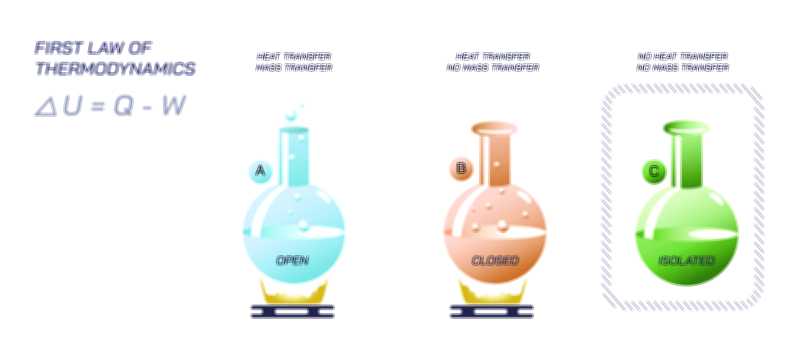
The physics of explosions and implosions also connects deeply with thermodynamics. Explosions represent a rapid conversion of potential energy into kinetic energy and thermal energy. They often occur when unstable chemical bonds break or when pressure gradients push outward. Implosions relate more closely to mechanical instability and external work. They highlight how systems must maintain pressure balance to remain stable, and how reducing internal energy or volume can create vacuum-like conditions that trigger collapse. These thermodynamic principles show how physical systems seek equilibrium; explosions and implosions are extreme ways for systems to return to balance.
In everyday life, explosions are easier to observe than implosions. The breaking of a container filled with compressed air, the popping of popcorn as steam expands inside kernels, the burst of a champagne cork, or the backfiring of an engine are all forms of small explosions. Implosions are less common but no less fascinating. The collapse of a plastic bottle after hot air inside cools and contracts, the crumpling of a vacuum-sealed container, or the collapse of a building during controlled demolition—where explosives remove structural support so gravity can cause the inward fall—are examples of implosive behavior. In many demolition strategies, implosion is intentionally engineered to bring large structures down in controlled, inward collapse, minimizing outward debris spread.
The balance of forces in explosions and implosions also influences how materials are designed. Pressure vessels in chemical plants must withstand internal pressure to prevent explosions. Deep-sea submersibles must withstand external pressure to avoid implosions. Engineers design structures with precisely calculated tolerances because even small deviations from expected pressure distributions can lead to catastrophic failure. Understanding the distinction between outward and inward failure modes is essential in safety engineering, architecture, aerospace design, and industrial systems.
Explosions and implosions also have deep symbolic and conceptual meaning in human thought. They represent opposite extremes of release and collapse, expansion and contraction, liberation and compression. These symbolic contrasts reflect real physical characteristics: explosions spread matter outward into greater volume, while implosions condense matter inward into smaller volumes. In nature, these processes frequently pair with one another. Stars explode after their cores implode. Geological formations collapse inward after volcanic chambers empty during eruptions. Caverns implode under surface pressure while eruptions explode outward when underground pressure accumulates. Nature continually shifts between expansion and compression in a dynamic interplay that shapes landscapes, ecosystems, and cosmic structures.
Ultimately, explosion and implosion are two sides of the same fundamental principle: pressure imbalance drives rapid change. One results from too much internal pressure, the other from too little. One releases energy outward, the other channels force inward. Both dramatically illustrate how the physical world responds when equilibrium fails. By examining explosion and implosion not just as mechanical events but as deep phenomena rooted in energetic and structural principles, the contrast between them becomes a window into understanding pressure, stability, structure, and energy across physics, engineering, geology, and cosmology.