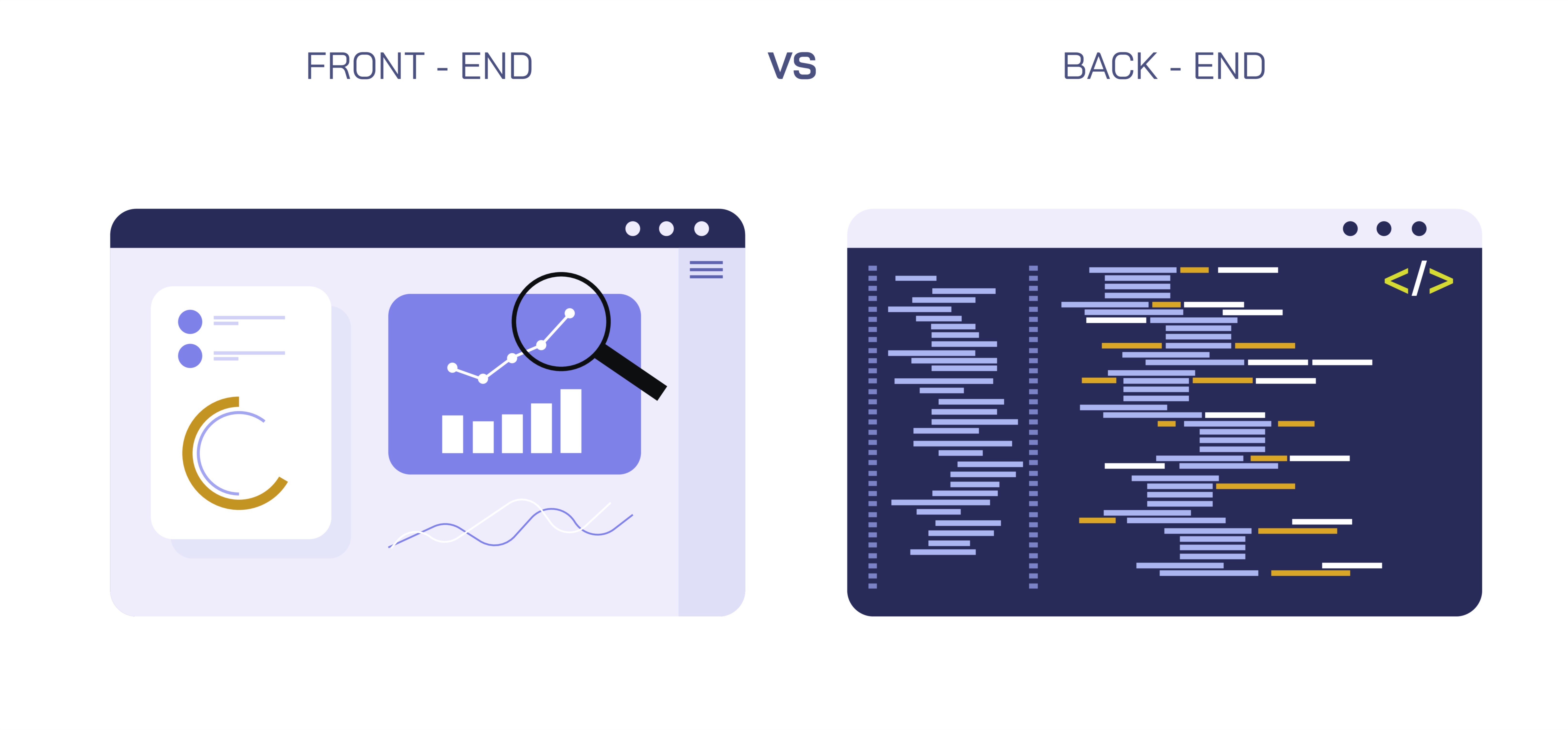
Frontend vs Backend Development — A Deep Conceptual Exploration of How Modern Web Systems Work Together
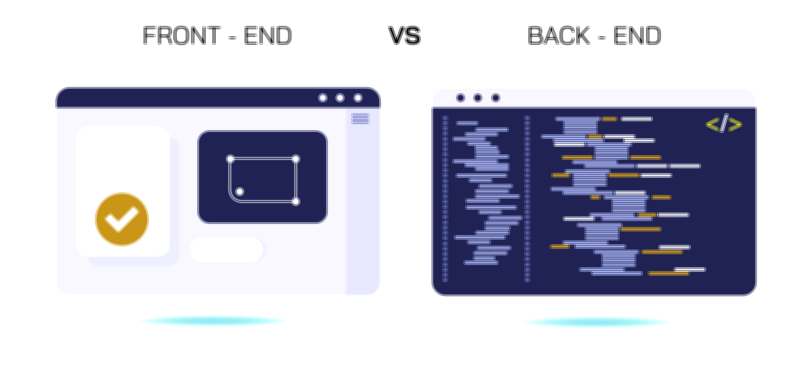
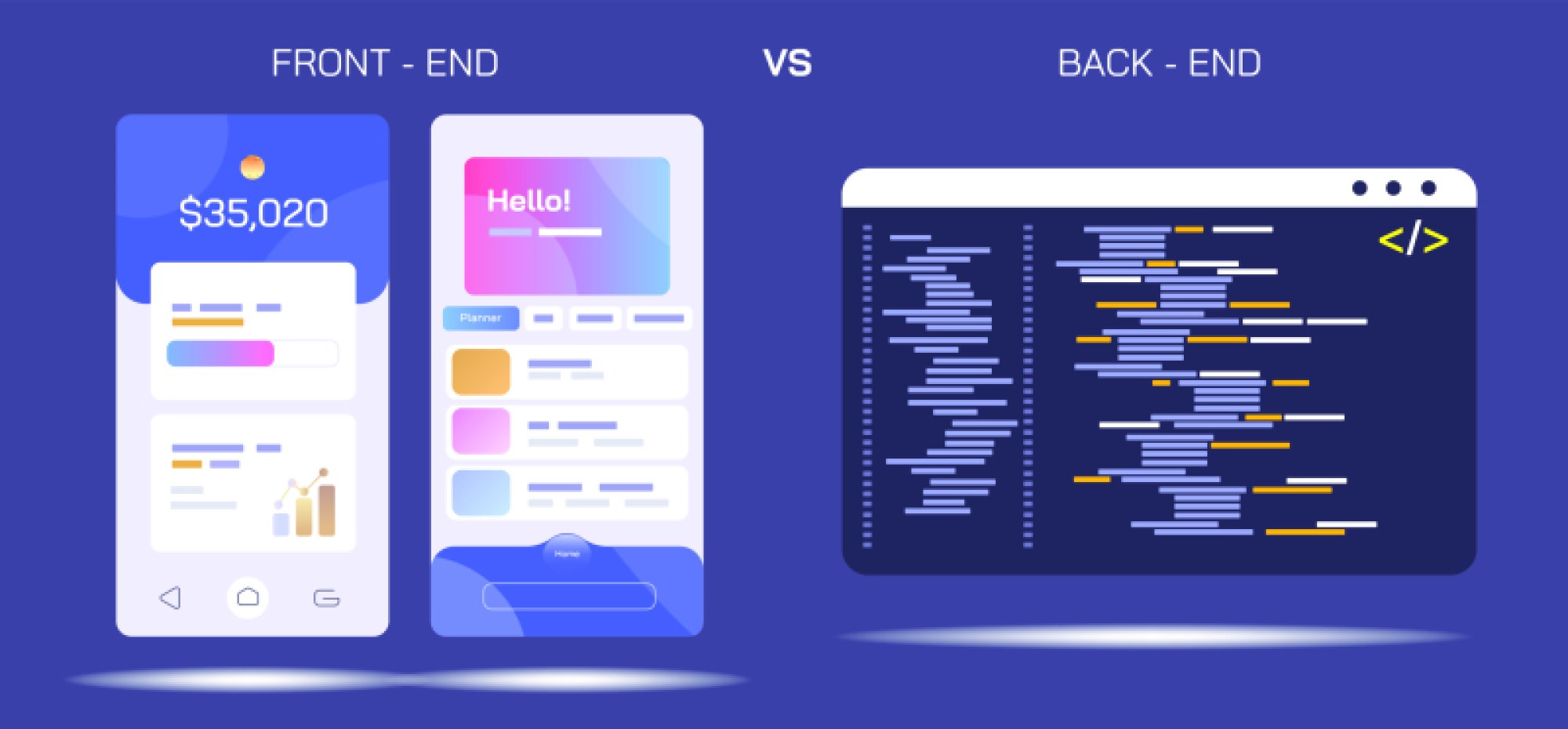
Frontend and backend development represent two interconnected realms of modern web architecture, each playing a crucial but distinct role in how digital experiences are created, delivered, and interacted with by users. Although these terms are often summarized with simple descriptions—frontend as what users see and backend as what happens behind the scenes—the true depth of their difference and interdependence becomes clear only through a detailed examination of the responsibilities, internal processes, design philosophies, and collaborative dynamics that shape each domain. The divide between these two worlds is not a rigid separation but rather a functional specialization that allows complex systems to feel seamless, responsive, intuitive, and secure. Understanding frontend and backend development through an expansive conceptual lens provides insight not just into the technical layers of websites and applications, but also into the broader principles of user interaction, data management, system reliability, and digital experience creation.
Frontend development focuses on everything the user directly experiences when interacting with a website or application. This includes the visual layout, color schemes, typography, buttons, navigation menus, animations, transitions, and every other component of the user interface. Yet frontend development extends far beyond creating visually appealing designs. It is fundamentally concerned with transforming static concepts—design mockups, interface sketches, or brand guidelines—into interactive, functional digital experiences. At the core of this lies the challenge of ensuring that users can intuitively understand how to navigate a site, access information, perform actions, and feel a sense of responsiveness and clarity. The frontend is therefore the surface layer of the digital ecosystem, where human expectations meet computational logic. Its tools are typically HTML for structure, CSS for presentation, and JavaScript for interactivity. However, modern frontend development involves far more than mastering these foundational languages; it includes the use of frameworks, component-based architectures, state management systems, responsive design techniques, browser optimization strategies, accessibility standards, and seamless integration with backend services.
Within the frontend domain, user experience is deeply influenced by interface responsiveness—the perceived speed and smoothness with which elements react to user input. When buttons highlight on hover, when forms validate input instantly, or when content loads dynamically without a page refresh, the frontend is translating backend data into immediate and meaningful feedback. This responsiveness is essential because users expect instantaneous reactions with minimal friction. Achieving such fluidity requires careful handling of browser rendering, asynchronous operations, caching strategies, and performance optimization. Concepts like lazy loading, code splitting, image compression, and script minification all contribute to the efficiency of the frontend layer. Even small delays or poorly designed layouts can disrupt engagement, making frontend engineering a complex balance of aesthetics, usability, speed, and accessibility.
By contrast, backend development operates behind the scenes, forming the structural core and functional intelligence of a web system. While the frontend interacts with the user, the backend interacts with data, logic, servers, databases, authentication systems, APIs, and the internal workflow of the application. It is responsible for processing requests, performing calculations, retrieving information, storing records, validating credentials, enforcing security policies, and ensuring that everything runs correctly beneath the surface. The backend is the engine room of a digital system—unseen by the user but essential for every action they take. If a user clicks a button to submit a form, the backend receives the request, checks the data for security purposes, communicates with the database, performs relevant business logic, and sends back a response for the frontend to display. Every operation that involves data persistence or manipulation depends on the backend’s reliability and structure.
The backend also encompasses server environments, including how applications are hosted, scaled, deployed, and maintained. It is responsible for load balancing, job scheduling, background processes, logging, monitoring, caching layers, and failover systems. Backend developers work with languages such as Python, Java, Node.js, PHP, Ruby, or Go, and they design architectures ranging from monolithic applications to microservices. They also manage databases—both relational and non-relational—ensuring that information is stored efficiently, retrieved quickly, and protected against corruption or unauthorized access. While the frontend determines how an application looks and feels, the backend determines how it thinks and behaves. Together, they create the entirety of the digital experience.
Whereas the frontend is user-facing, the backend is data-facing. A frontend developer needs to understand layout, user psychology, design systems, accessibility guidelines, and the limitations of browser environments. A backend developer needs to understand algorithms, data structures, network protocols, authentication flows, version control systems, database design, and server-side security. The divide between the two is often conceptualized as the difference between “client-side” and “server-side,” with the client side running code directly in the user’s browser and the server side handling logic remotely on machines optimized for processing, storage, and control. Yet neither domain can function independently. The frontend cannot display information if the backend does not supply it, and the backend cannot fulfill its logic if no users interact with the interface that triggers its processes.
The collaboration between frontend and backend development forms the essence of full-stack development, where both sides are treated as complementary components of a larger system. When users log into an application, the frontend gathers the login details through a user-friendly form and sends them securely to the backend. The backend checks whether the credentials exist and whether the account is valid. If successful, the backend generates a token or session and passes it forward. The frontend then uses this token to fetch personalized content, display the user’s profile, update the interface, and preserve the login state. In this simple scenario, each layer has a crucial role to play: the frontend ensures that users can interact comfortably, and the backend ensures that the interaction is legitimate, logical, and meaningful.
Another key distinction lies in scalability. Backend systems must handle potentially millions of operations, often across distributed infrastructure. They deal with concurrency, load spikes, and data integrity. Frontend systems must handle varying screen sizes, browser capabilities, interaction patterns, and rendering constraints. Both must optimize performance, but they do so differently. A frontend developer optimizes page load time and interface responsiveness. A backend developer optimizes database queries, caching strategies, API response times, and resource allocation. Together, these efforts determine whether an application feels fast, stable, and reliable across all environments.
Security is another area where frontend and backend diverge conceptually. In the frontend, developers focus on preventing insecure interactions, such as avoiding exposing sensitive logic in the browser and ensuring safe handling of form inputs before they reach the backend. In the backend, developers enforce robust security controls such as rate limiting, authentication systems, input sanitization, encryption, access control, and secure storage of sensitive data. The backend is responsible for protecting the core logic and sensitive information, but the frontend plays a vital role in preventing malicious attempts from ever reaching the server. This partnership is essential because modern security threats often target both domains simultaneously.
Even the concept of “state” differs in meaningful ways across frontend and backend development. For the frontend, state refers to what the user sees and what is happening at the moment—whether a dropdown is open, what text is entered in a field, or which items appear in a list. For the backend, state refers to persistent information stored in databases, user roles, account details, permissions, session data, and the long-term history of operations. Managing state requires coordination between both layers, ensuring consistency between what the user sees and what the system stores.
Modern development has also blurred the lines between frontend and backend roles. Frontend developers work more frequently with APIs, asynchronous data loading, state management libraries, virtualization techniques, and performance profiling. Backend developers often work with templating engines, server-rendered pages, and output formatting for frontend consumption. Technologies like React, Vue, Angular, Node.js, and Next.js blend the boundaries further by allowing JavaScript to operate on both client and server. Nonetheless, the conceptual distinction remains because each domain solves different categories of problems, grounded in how humans interact with machines and how machines manage data.
Ultimately, the difference between frontend and backend development is rooted in perspective. The frontend sees the world through the user’s eyes and translates human actions into meaningful digital commands. The backend sees the world through the lens of logic, rules, data, and structure, ensuring that every action has a secure and correct outcome. Together, they form the complete ecosystem of modern web development, each specializing in different layers of the digital experience yet relying on one another to create cohesive, powerful, and user-centered systems. Through a richly detailed conceptual understanding of both domains, one gains a clear picture of how websites and applications function at every level—from the surface the user touches to the deep architecture that makes everything work.