Emulsification — Mixing of Immiscible Liquids
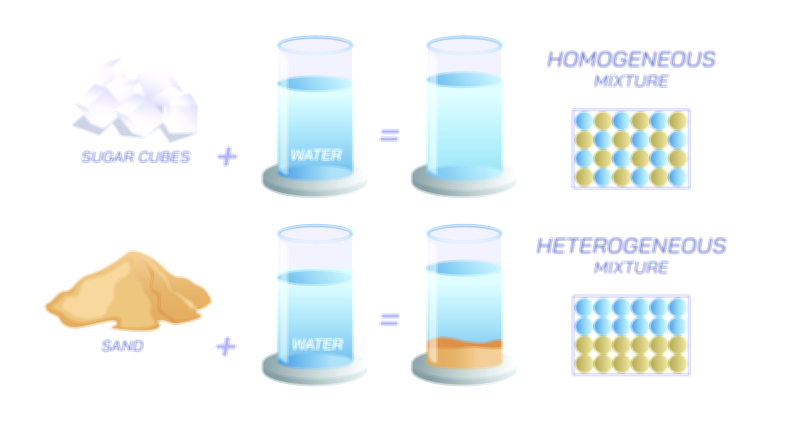
Emulsification is a fascinating and essential process that allows two liquids that normally do not blend—such as oil and water—to form a stable, unified mixture. In everyday experience, these liquids naturally separate because their molecular structures and interactions differ so greatly that they resist mixing, with each preferring to remain within its own kind. Yet through emulsification, a system that would otherwise divide itself into layers can be transformed into a smooth, consistent dispersion in which countless tiny droplets of one liquid are suspended within the other. This transformation lies at the heart of numerous natural processes, culinary techniques, industrial formulations, and biological functions. Understanding how emulsification works involves examining the forces that normally prevent mixing, the role of emulsifying agents that overcome these forces, the formation of droplets and interfaces, and the countless applications that rely on stable emulsions to function effectively. Exploring this process in rich descriptive detail reveals how emulsification bridges physical chemistry with practical necessity, turning incompatible substances into harmonious mixtures.
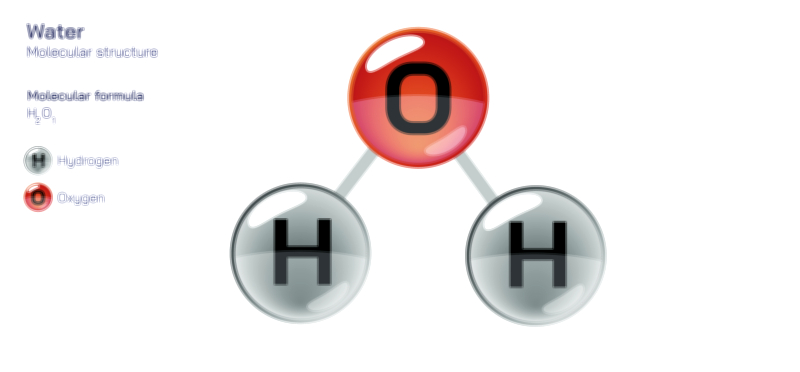
The natural resistance between oil and water arises from their distinct molecular preferences. Water molecules are strongly attracted to one another because of their polar nature; they possess regions of partial positive and negative charge that create tight intermolecular bonding. Oil molecules, by contrast, are nonpolar and lack charged regions, making them incompatible with water’s structured, hydrogen-bonded environment. Because of these differences, water molecules cluster together, pushing oil molecules away, while oil molecules similarly coalesce with their own kind. This mutual avoidance ensures that when oil and water are combined, they separate into layers—oil floating on top due to its lower density. In this default state, no amount of gentle stirring will keep them mixed for long, as the natural forces quickly sort them apart again. Emulsification must therefore interfere with this separation by creating conditions that trap one liquid within another in a stable and finely divided form.
The first step in emulsification involves breaking one of the liquids—typically oil—into extremely small droplets. Physical agitation such as whisking, shaking, blending, or pressing forces the larger oil masses to fracture repeatedly until they become tiny spheres that can be more easily suspended within a continuous phase, usually water. These droplets, however, would quickly reunite and separate again without additional help. Their natural tendency is to merge, because doing so reduces the total surface area between the two liquids, which is energetically favorable. The energy at the interface where oil meets water is known as interfacial tension, and emulsification works by manipulating this tension to prevent droplets from merging back together. Lowering the interfacial tension makes it easier for droplets to remain dispersed, and this is achieved through the introduction of emulsifying agents.
An emulsifier is a substance with a unique molecular structure that allows it to interact with both water and oil, bridging the gap between them. These molecules contain two distinct regions: one that is attracted to water (hydrophilic) and another that is attracted to oil (hydrophobic). When emulsifiers are added to a mixture of oil and water, they migrate to the boundary where droplets of one liquid meet the other. They position themselves so that their hydrophobic ends embed within the oil droplets while their hydrophilic ends extend outward into the surrounding water. This creates a protective layer around each droplet, preventing them from colliding and merging. The emulsifier’s presence lowers the interfacial tension and stabilizes the emulsion by providing a physical and chemical barrier that resists coalescence. In this way, a mixture that once separated rapidly becomes stable and uniform.
Emulsifiers come from a wide variety of natural and synthetic sources. In cooking, substances like egg yolk, mustard, honey, and lecithin serve as effective emulsifiers. Egg yolk contains phospholipids that provide strong emulsifying power, which is why it is essential in making mayonnaise or hollandaise sauce. Mustard seeds contain compounds that stabilize vinaigrettes. Honey’s complex sugars also assist in emulsion formation. In industrial and pharmaceutical contexts, synthetic emulsifiers or surfactants are used to ensure consistency and shelf stability. In biological systems, cell membranes rely on lipid molecules with hydrophobic and hydrophilic ends to maintain stable boundaries between the cell interior and exterior. Even saliva acts as a natural emulsifier in the digestive system, helping to disperse fats during the early stages of digestion. These examples demonstrate that emulsification is not confined to one field but is deeply embedded in life and technology.
Once an emulsion is formed, its stability depends on several physical factors, such as droplet size, temperature, concentration of emulsifier, and the nature of the liquids involved. Smaller droplets create smoother, more stable mixtures because their increased surface area allows more contact with emulsifier molecules. This is why high-speed mixing equipment creates finer, more stable emulsions than gentle stirring. Temperature influences stability as well, since heat increases molecular movement and can disrupt the protective layer around droplets if the emulsifier loses its structure. In some cases, chilling an emulsion strengthens its stability, while excessive heat causes separation. The concentration of emulsifier is equally important: too little may not adequately coat all droplets, while too much may create an unnecessarily thick or sticky texture.
Emulsions can take different forms depending on which liquid forms the continuous phase. The most common type is an oil-in-water emulsion, where oil droplets are dispersed in water. Examples include milk, salad dressings, creams, lotions, and many cosmetic products. The opposite form, water-in-oil emulsions, occurs when water droplets are dispersed within oil, resulting in thicker, richer textures. Examples include butter, some ointments, and certain types of margarine. The difference in structure significantly affects how each type behaves, looks, and feels. An oil-in-water emulsion tends to be lighter and more fluid, while a water-in-oil emulsion feels heavier and more resistant to spreading. These differences influence everything from airflow around droplets to the way substances hydrate or moisturize skin, demonstrating how crucial emulsification is in product formulation.
Emulsification also plays a key role in natural processes. The human digestive system relies on emulsification to break down dietary fats into tiny droplets that enzymes can digest more efficiently. Bile salts produced by the liver act as natural emulsifiers, dispersing large fat globules into smaller droplets that intestinal enzymes can process. Without this emulsification step, fats would pass through the digestive tract largely undigested. In environmental science, emulsification plays a role in the breakdown of oil spills, where natural or introduced surfactants help disperse oil to accelerate biodegradation. Marine organisms also produce natural emulsifiers that influence the behavior of organic materials in oceans. The persistence and movement of many pollutants depend on whether they form stable emulsions in water, affecting environmental impact and remediation strategies.
In industrial production, emulsification enables the creation of paints, inks, adhesives, pharmaceuticals, and cleaning agents. Paint, for instance, often relies on emulsified mixtures that provide smooth application, even coverage, and long-term stability. Cleaning detergents contain surfactants that emulsify grease and oils on surfaces, allowing them to be rinsed away with water. Cosmetics such as moisturizers, sunscreens, and makeup rely on emulsification to deliver active ingredients evenly, enhance texture, and ensure absorption. Pharmaceuticals use emulsions to improve the delivery and absorption of drugs that are not easily dissolved in water. These diverse applications reveal how emulsification allows engineers and chemists to design materials with precise characteristics, tailored to specific functions.
While emulsions can be highly stable, they may eventually break down through various processes. One common cause is coalescence, where droplets gradually merge over time until the phases separate. Another form is flocculation, where droplets cluster loosely without merging fully. In some cases, creaming occurs, meaning droplets rise or fall depending on density differences, although the emulsion may still be reversible with stirring. Complete phase separation is known as breaking, which often cannot be reversed. Manufacturers carefully design emulsions to resist these processes by choosing appropriate emulsifiers, adjusting pH, optimizing viscosity, and controlling storage conditions. The science of stabilizing emulsions is therefore just as important as forming them, ensuring consistency over shelf life or during intended use.
Emulsification also reveals deeper lessons about the nature of mixtures and interactions. It shows that even substances that seem completely incompatible can be brought together under the right conditions. It demonstrates how microscopic behavior influences macroscopic properties, how molecular structure directs physical behavior, and how subtle interactions between hydrophobic and hydrophilic forces can be harnessed to create smooth, stable blends. It highlights the usefulness of interfaces—the boundaries between substances—and how controlling these boundaries leads to innovative materials and products. In fields ranging from food science to medicine, emulsification illustrates the power of applied chemistry to shape everyday life.
Ultimately, emulsification is far more than the simple mixing of two incompatible liquids. It is a sophisticated interplay of molecular interactions, energy dynamics, surface behavior, and structural organization. By breaking one liquid into tiny droplets and stabilizing them within another, emulsification transforms the natural tendency of separation into a stable, functional, and often desirable mixture. It underpins countless natural processes, supports essential industrial products, enriches culinary experiences, and exemplifies how understanding the invisible forces at work within materials allows humans to manipulate and enhance the world around them. Through emulsification, science turns incompatibility into harmony, creating mixtures that not only persist but perform in ways that pure substances alone never could.