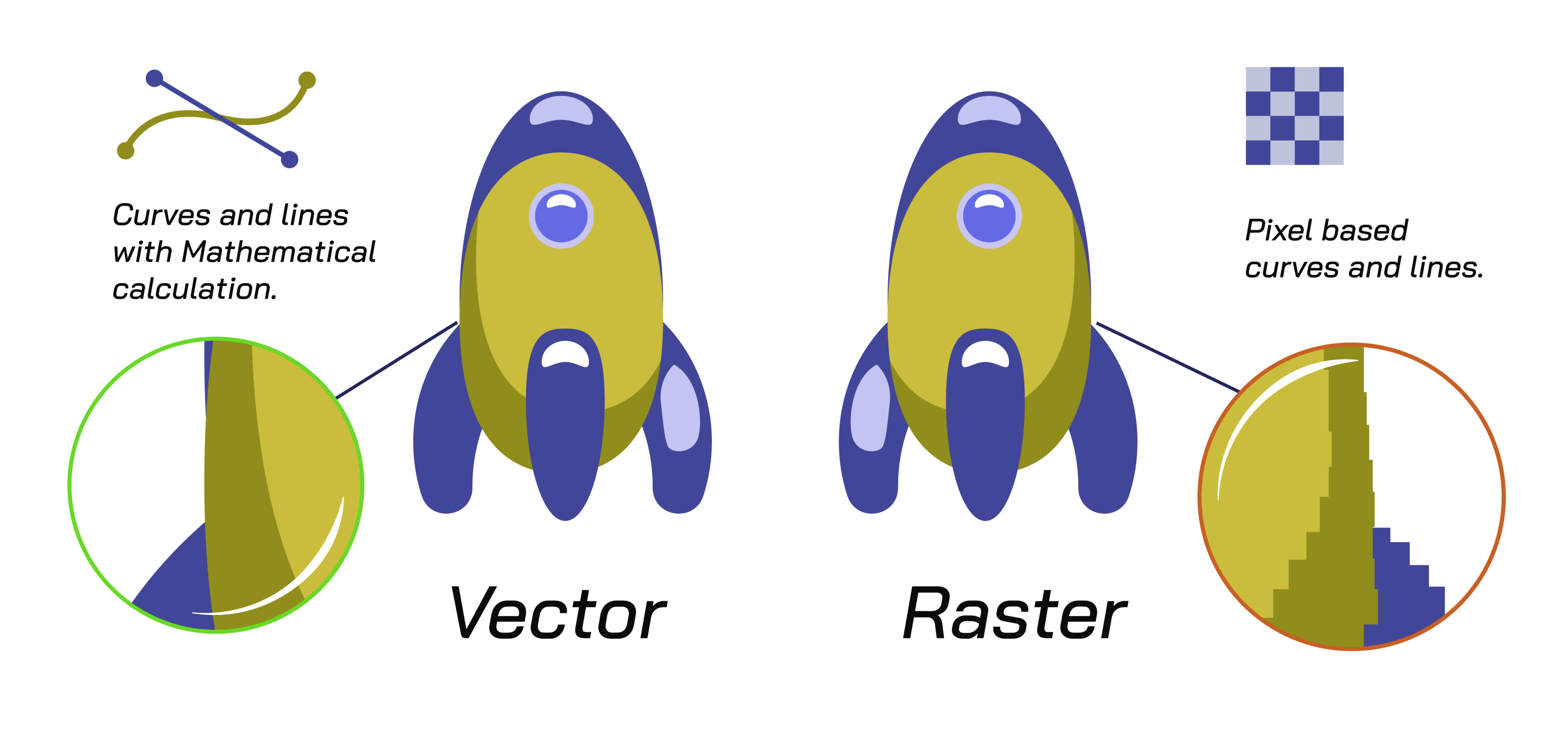
Vector vs Raster — Digital Image Format Comparison
In the world of digital graphics, the distinction between vector images and raster images forms one of the most fundamental structural differences in how visual information is created, stored, edited, and displayed. Although both belong to the overarching family of digital image formats, they represent two entirely different philosophies of image construction. Understanding the conceptual divide between them requires an exploration of how each category encodes visual information, how this encoding influences image quality, how scalable or editable the result becomes, and how each format fits into the workflows of design, printing, animation, digital interfaces, and high-resolution media environments. By examining these ideas in depth without resorting to shorthand technical symbolism or mathematical presentation, the essence of each format becomes clear through a narrative exploration of their nature and behavior.
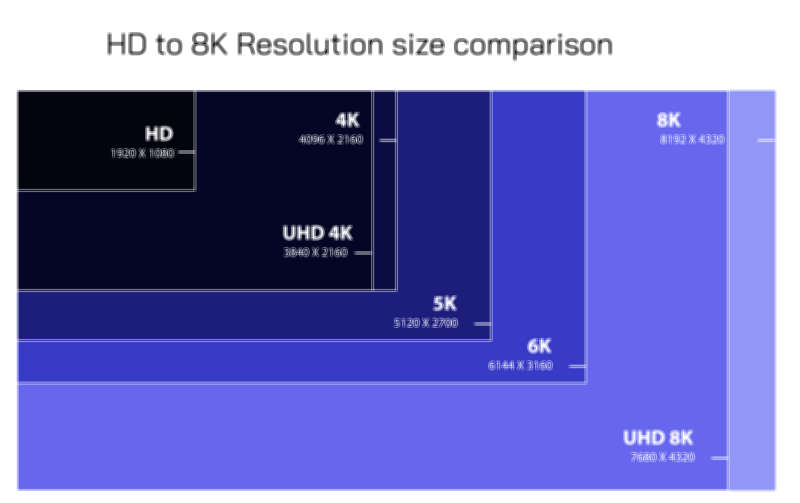
Raster images are rooted in the idea of a digital canvas built from countless tiny units known as pixels. Each pixel carries a specific color value, and the collection of all these colors arranged in both horizontal and vertical directions forms the full image. In this sense, raster images mimic the structure of printed photographs or painted surfaces, where the overall picture emerges only from the cumulative presence of many small bits of color. Because of this dependence on individual pixel data, raster images reflect a fixed resolution. Every image has a defined width and height measured in pixel count, and that resolution dictates how crisp or blurred the image appears when scaled. This characteristic gives raster images a natural affinity for photographs, detailed tonal gradients, and complex textures, since the pixel model is ideally suited for capturing minute variations in color and light.
However, this pixel-based foundation also creates limitations. When a raster image is enlarged beyond its original resolution, it starts to show unwanted artifacts such as blurriness or blockiness. This happens because the image is being forced to display more visual space than it contains actual pixel information for, causing software to invent or interpolate new pixel values. Although interpolation algorithms can smooth or sharpen certain transitions, they cannot recreate fine details that were never captured in the first place. Thus, raster images are inherently tied to their original resolution and cannot be scaled freely without compromising quality. This constraint becomes particularly problematic in design contexts where graphics must be reproduced in multiple sizes, such as logos, print layouts, or scalable user interface elements.
In contrast to pixel-based construction, vector images rely on a different philosophy. Instead of storing color information for every small area of the image, vector graphics define shapes, lines, curves, and fills using descriptive instructions. These instructions tell a rendering engine how to draw the image by describing paths, edges, and regions in a way that preserves their relationships regardless of scale. As a result, vector images are not made from pixels but from outlines and mathematical relationships, even though the physical manifestation on a screen ultimately becomes a raster representation at the moment of display. This conceptual difference grants vector graphics their celebrated ability to scale indefinitely without losing clarity. A vector shape remains perfectly sharp whether displayed on a tiny mobile screen or expanded onto a large billboard.
The scalability of vectors makes them invaluable for logos, branding materials, illustrative graphics, infographics, icons, and any design element that must exist in multiple sizes. Whether enlarged a thousand times or reduced to a minute thumbnail, the underlying shapes remain crisp because they are recalculated rather than stretched. This gives vectors a unique durability and flexibility across media formats, allowing designers to maintain consistency and sharpness at every stage of a project. Furthermore, vector images allow easy editing since each element exists as an independent object. Designers can modify shapes, alter colors, adjust strokes, or revise layouts without worrying about pixel damage or resolution loss.
Despite these strengths, vector graphics have limitations when it comes to representing highly detailed or naturalistic scenes. Photographs, for example, contain millions of subtle gradients, shadows, and textures that would be impractical to describe through vector shapes. Although vector tools can simulate gradients and shading, they cannot naturally reproduce the chaotic complexity of real-world imagery. For this reason, photographs and richly textured digital art remain domains dominated by raster formats. Raster images excel at capturing smooth tonal transitions and subtle variations in detail because every pixel can differ slightly from its neighbors. This granularity provides a level of realism that vector formats cannot achieve through abstracted shape descriptions.
The difference in editing behavior between raster and vector images further emphasizes their philosophical divide. Editing a raster image is akin to painting on a canvas where every stroke alters individual pixels. The changes are often permanent unless undone through software history or layered file formats. Raster editing tools give artists the ability to manipulate fine details with precision, making them ideal for photo retouching, digital painting, and textural enhancements. Vector editing, on the other hand, resembles sculpting or diagram construction, where shapes remain manipulable objects. This object-oriented nature means vectors can be repositioned, reshaped, recolored, or reorganized without affecting neighboring elements. This predictability and structural clarity make vector editing efficient for clean, organized design workflows.
Different industries rely on each format depending on the nature of the content they produce. In print design, vectors dominate areas such as typography, logos, diagrams, and scalable layout elements because printers reproduce these forms with consistent sharpness. In photography, advertising, and digital art, raster formats prevail because they can capture photorealistic textures and complex light interactions. In web design, both formats coexist: raster images are used for photos and artwork, while vector images, often in the form of SVG files, are used for icons, illustrations, and interface elements that must remain crisp on screens with varying resolutions, including high-density displays.
Another dimension of comparison involves file size and performance. Raster images can become very large when they contain high resolutions or extensive color information. A single large photograph may occupy significant storage space due to the vast number of pixels it contains. Vector files, on the other hand, often remain relatively small because they store instructions rather than individual pixel data. However, vector files can grow larger if they contain extremely complex scenes with numerous shapes, effects, or layered elements. Still, for most practical purposes, vectors remain efficient in scenarios where scalability and storage are priorities.
Compatibility considerations also shape the roles of raster and vector formats in digital workflows. Raster formats such as JPEG, PNG, TIFF, and GIF are universally supported across devices, operating systems, browsers, and editing software. Their widespread use ensures easy distribution. Vector formats such as SVG, AI, EPS, and PDF also enjoy broad support, though certain advanced vector editing features may be preserved only in specific native applications. When shared across platforms, vectors may sometimes require conversion or flattening for consistent display, especially if transparency, advanced gradients, or embedded fonts are involved. Despite these nuances, the use of scalable vector formats continues to grow as digital interfaces evolve toward resolution-independent design standards.
The conceptual contrast between the two formats highlights how digital imagery can be understood through two complementary lenses: one grounded in discrete visual units and the other in abstract geometrical descriptions. Raster images celebrate the richness of detailed surfaces, while vector images celebrate clarity, scalability, and structural simplicity. Neither format replaces the other; instead, they coexist as specialized tools optimized for different types of visual communication. As technology continues to advance, high-density screens, responsive interfaces, interactive media, and cross-platform design have all reinforced the importance of understanding when to use each format to achieve the best visual and functional results.
When reflecting on the digital landscape as a whole, the distinction between vector and raster images becomes more than a technical classification. It embodies two different ways of representing the visual world: one rooted in the natural complexity of continuous scenes and the other rooted in the deliberate construction of shapes and symbolic forms. Designers, artists, engineers, and content creators must navigate these differences to ensure that the images they produce maintain quality, clarity, and consistency across the rapidly expanding spectrum of digital devices and print outputs. This comparison provides a conceptual foundation for recognizing the inherent strengths and limitations of each, guiding the choice of format according to the nature of the content and the intended medium of display.