Open and Closed States Illustrated with Examples for Conceptual Understanding
The concepts of open and closed states are fundamental across multiple disciplines, including physics, biology, electronics, chemistry, and computer science, representing whether a system, pathway, or entity is in a condition that allows or restricts flow, communication, or activity. Open states generally indicate accessibility, interaction, or activation, whereas closed states denote inactivity, isolation, or blockage. A vector illustration explaining open and closed states typically integrates diagrams, labeled examples, directional arrows, and contrasting visual indicators, providing a clear and intuitive representation for conceptual understanding. By combining symbolic representations and real-world examples, such illustrations help learners quickly grasp abstract principles and apply them across different contexts.
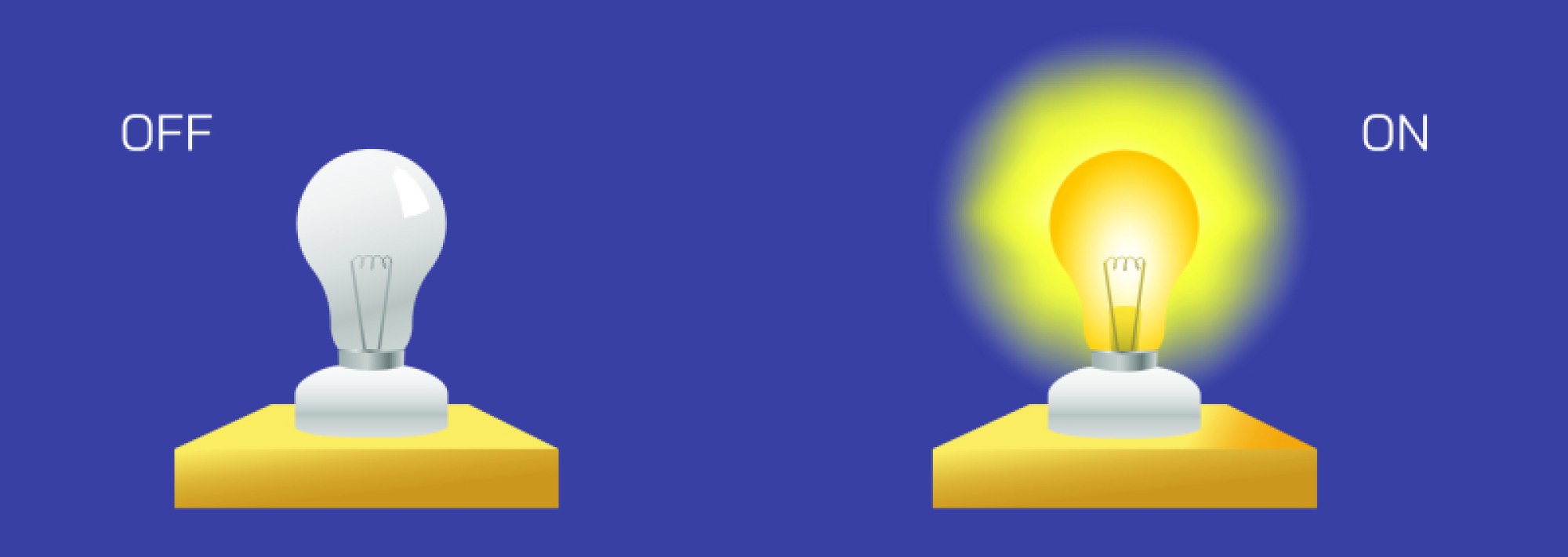
At the center of the illustration is a dual-panel comparison, showing open and closed states side by side for direct visual contrast. In the open state panel, arrows and labels indicate permitted flow, active interaction, or accessibility. For example, in electrical circuits, an open switch shows a completed path allowing current to flow, with arrows representing electron movement. In biological systems, an open ion channel is illustrated with ions passing through the membrane, labeled to indicate selective permeability and active transport. Color coding, such as green or bright tones, may signify active or open pathways, reinforcing intuitive recognition.
The closed state panel illustrates restricted or blocked flow, inactivity, or isolation. In electrical circuits, a closed switch (or open switch in some conventions) interrupts current flow, with arrows halted at the break. In biological systems, a closed ion channel prevents ion movement across the membrane, maintaining resting potential or preventing signal transmission. Color coding, such as red or muted tones, visually differentiates the inactive state from active, open conditions. Labels highlight the consequence of closure, such as lack of current, blocked diffusion, or interrupted communication, linking structure to functional impact.
Real-world examples are incorporated for clarity and practical understanding. In mechanics, an open valve allows fluid or gas to pass through a pipe, while a closed valve blocks flow; arrows indicate fluid direction and highlight operational differences. In computer science, open and closed states may represent software file accessibility—an open file can be read or modified, whereas a closed file is inaccessible, visually represented with file icons and lock symbols. In chemistry, open and closed container states may illustrate vapor escape, reaction initiation, or containment of gases, with arrows showing molecule movement. Magnified insets may illustrate molecules or particles transitioning through open states or being confined in closed states.
Vector diagrams often include interactive pathways with arrows showing transitions between open and closed states. For instance, an open door may allow people to pass (arrows indicating movement), while a closed door halts passage (arrows stopped at the barrier). Labels indicate conditions triggering state changes, such as switches, ligands binding to channels, valves turning, or user commands in software. Color-coded gradients reinforce transition dynamics, visually representing activation, deactivation, or selective opening.
Additional educational features may include hierarchical examples, showing systems where open and closed states operate simultaneously at multiple levels. For example, in a neural network, an open synaptic connection allows neurotransmitter flow while neighboring connections remain closed; arrows indicate signal propagation and blocked pathways. Similarly, in a pipeline network, one valve open while others remain closed illustrates selective routing of flow. Labels identify structural features and functional consequences, emphasizing the principle of controlled accessibility.
Vector illustrations may also include timing or sequence diagrams, showing how open and closed states alternate over time. Examples include pulsating heart valves, gated ion channels during action potentials, or sequential switches in electronic circuits. Arrows indicate temporal transitions, while labels highlight cause-effect relationships, helping learners understand dynamic state changes rather than static conditions.
By combining dual-panel comparisons, real-world examples, arrows indicating flow, color-coded states, magnified insets, and temporal sequences, a vector illustration of open and closed states provides a thorough and intuitive understanding of the concept. Contrasting colors, directional arrows, and labeled examples allow learners to immediately recognize functional differences, visualize transitions, and relate abstract principles to tangible scenarios.
Ultimately, an open and closed state vector illustration demonstrates the fundamental principle of accessibility versus restriction, linking structural configurations to functional outcomes across multiple disciplines. Through labeled examples, flow diagrams, state transitions, and comparative panels, the diagram transforms abstract concepts into an educational, visually engaging, and intuitive tool for learning physics, biology, electronics, chemistry, and computational systems.