Discrete Math — Logic, Sets, and Combinatorics Concept
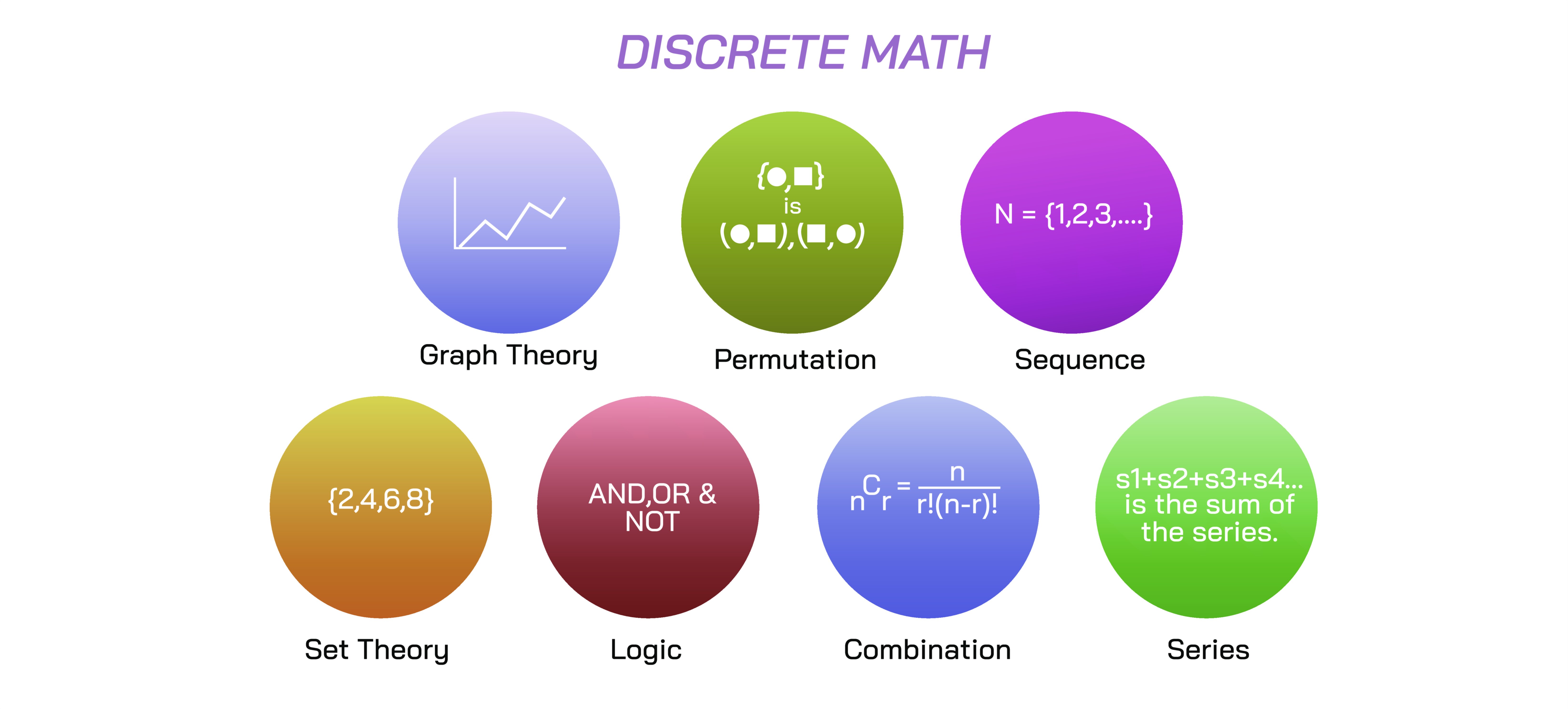
Discrete mathematics stands as one of the foundational pillars of modern scientific thought, shaping the intellectual framework of computer science, cryptography, information theory, data analysis, and countless technological systems that define the contemporary world. Unlike continuous mathematics, which deals with smooth curves, real numbers, and infinitesimal changes, discrete mathematics focuses on distinct, separable values, structures, and relationships. It investigates systems built from individual building blocks rather than flowing quantities, making it ideally suited for digital technologies, algorithms, and logical reasoning. Within this broad and intellectually rich field, three primary domains—logic, sets, and combinatorics—form the conceptual core upon which most other discrete topics are constructed. Logic provides the foundation for reasoning, truth evaluation, and formal argument structures. Set theory offers the language for describing collections, relationships, and mathematical objects. Combinatorics reveals the methods for counting, arranging, and analyzing possibilities across finite systems. Together, these areas shape how mathematicians and computer scientists analyze problems, design solutions, and understand structural patterns in both abstract and applied contexts.
Logic, the bedrock of discrete mathematics, centers on the nature of truth, the structure of reasoning, and the systematic evaluation of statements. It enables the construction of precise arguments free from ambiguity, a necessity for mathematical proofs, programming languages, and algorithmic designs. At its core, logic deals with propositions—statements that can be identified as true or false. These propositions can be combined using logical connectors such as “and,” “or,” “not,” and “implies,” forming complex expressions whose truth depends entirely on the truth values of their components. This framework guides the formation of mathematical reasoning, allowing one to derive conclusions from given premises through valid inference rules. Logical equivalence, argument validity, and truth preservation underpin everything from proving theorems to designing microprocessors. In computer science, logic defines the rules of conditional execution, the behavior of circuits, and the construction of algorithms. Boolean logic, which operates on binary true–false or on–off states, is the backbone of digital systems, demonstrating how abstract logical principles manifest in real-world technologies.
Beyond basic propositions, logic extends into predicate logic, where statements involve variables and quantifiers such as “for all” or “there exists.” This richer system allows more expressive statements and deeper reasoning, forming the basis for programming languages, database queries, and formal verification systems. Predicate logic enables precise descriptions of data structures, algorithmic conditions, and problem constraints. Whether defining the behavior of an algorithm, modeling a database schema, or describing a mathematical theorem, logic gives discrete mathematics its structural rigor and expressive power. It transforms intuitive reasoning into a disciplined system governed by rules that guarantee consistency and clarity.
Set theory forms the language through which discrete mathematics describes collections of objects, relationships, structures, and operations. A set is simply a well-defined group of elements, and despite its apparent simplicity, the concept governs nearly every mathematical system. Sets describe data, represent states in computation, and define relationships among objects. Understanding sets involves exploring membership, subset relationships, unions, intersections, and complements. These operations describe how collections combine, overlap, or differ from one another. Such concepts appear everywhere in programming, where sets represent groups of values, states in algorithms, or event categories in software systems. In database systems, set-based operations underpin query languages, enabling efficient retrieval and manipulation of information. In theoretical contexts, sets create the framework for defining functions, relations, sequences, probability spaces, and algebraic structures. Even the number systems taught in basic arithmetic—natural numbers, integers, rational numbers, and more—are constructed as sets with specific properties and relationships.
Relationships between sets become critical when studying functions, mappings, and relations. A function describes a relationship between inputs and outputs, assigning each element of one set to a specific element of another. This simple but powerful idea forms the foundation of computation, where algorithms transform input data into output results. Relations, which generalize functions, describe how elements of different sets relate without requiring a one-to-one mapping. These relations model adjacency in graphs, orderings in data structures, or compatibility conditions in logic systems. The power of set theory lies in its universality, providing a unifying language for describing virtually any discrete structure. Whether defining a domain of values for a computer algorithm or classifying data attributes in a database, sets provide the conceptual building blocks that support broader mathematical analysis.
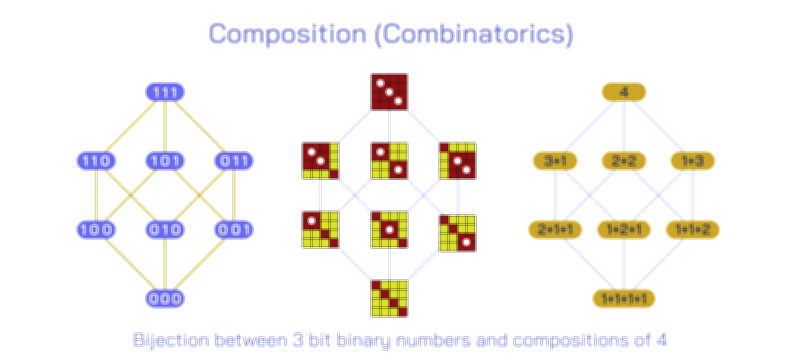
Combinatorics, the third major component of discrete mathematics, focuses on counting, arranging, and analyzing the number of ways objects can be selected or organized. While counting may seem like a simple task, combinatorics reveals extraordinary depth in understanding patterns, possibilities, and constraints. It asks questions such as: How many possible passwords can be created from a given set of characters? How many ways can students be assigned to groups? How many distinct paths exist through a network? These questions do not merely involve arithmetic but require structured reasoning about permutations, combinations, arrangements, and selections. Combinatorics provides methods for evaluating these possibilities systematically, avoiding inefficient enumeration and revealing deeper structural insights. The discipline supports algorithm design, probability modeling, optimization, and cryptographic security. For instance, secure encryption schemes depend on combinatorial complexity—the idea that the number of possible keys is so vast that brute-force guessing becomes infeasible. In algorithm analysis, combinatorics helps predict the growth of possible states or operations, informing decisions about efficiency and design.
Within combinatorics, the study of permutations examines how objects can be arranged in ordered sequences, while combinations investigate the selection of objects regardless of order. These principles extend into partitions, where sets are divided into distinct groups, and into graph-based combinatorics, which explores connections, paths, and networks. Graphs, although not explicitly covered yet, are built from combinatorial relationships and often analyzed through combinatorial methods. The ideas extend into recursive structures, generating functions, and constructive counting strategies, enabling mathematicians to analyze patterns that expand far beyond simple calculations. Whether predicting the behavior of large networks, analyzing possible moves in a game, or evaluating the number of solutions to a computer problem, combinatorics provides the analytical tools for navigating complexity.
The interconnectedness of logic, sets, and combinatorics gives discrete mathematics its unique strength. Logic ensures that reasoning within systems is sound and unambiguous. Set theory provides the vocabulary for describing objects and relationships. Combinatorics analyzes the possible ways those objects and relationships may be arranged. Together, they form the intellectual foundation of computer science, where algorithms must be logically correct, operate on structured data, and manage potentially vast combinations of possible states. In programming, logical expressions guide decision-making; sets define data collections and event groups; combinatorial reasoning helps optimize choices, manage resources, and evaluate algorithmic complexity. In cryptography, logical rigor ensures that encryption procedures are valid, set-based reasoning defines key spaces and message domains, and combinatorial complexity provides security through large search spaces. In artificial intelligence and machine learning, these principles guide decision structures, state transitions, and the exploration of discrete solution spaces.
The practical relevance of these concepts extends into daily life and applied fields. Routing algorithms in navigation applications depend on combinatorial optimization. Search engines use logical structures to filter and classify massive sets of data. Communication protocols apply set relationships and combinatorial designs to ensure data reliability. Even social networks represent relationships through sets of connections and graph-based combinatorial patterns. Discrete mathematics forms the conceptual architecture behind these modern systems, demonstrating its role not only in theoretical structures but in the functional technologies that shape contemporary society.
Beyond applications, the philosophical depth of discrete mathematics is equally compelling. It challenges one to think precisely, reason systematically, and recognize patterns in abstract structures. Studying logic trains the mind to evaluate truth with discipline and clarity. Set theory cultivates an understanding of how abstract objects relate and how mathematical universes are constructed. Combinatorics fosters creativity in problem-solving, encouraging new approaches to counting, structuring, and analyzing complexity. These skills transcend mathematics and influence fields such as law, linguistics, cognitive science, and analytical decision-making.
Ultimately, discrete mathematics—with its core components of logic, sets, and combinatorics—stands as one of the most intellectually powerful frameworks for understanding modern science and technology. It reveals how complex systems emerge from simple, well-defined rules. It shows how structure, reasoning, and combinatorial patterns shape everything from algorithms to encryption. It bridges abstract thought and practical innovation. Most importantly, it teaches that clarity, structure, and precise reasoning are not merely academic ideals but essential tools for navigating both mathematical challenges and real-world problems. Through the lens of discrete mathematics, one sees that the digital age is built not only on circuits and processors but on the conceptual foundations of logic, structured sets, and combinatorial complexity that make advanced computation possible.