Dihydrogen Monoxide — Water Molecule Chemical Structure
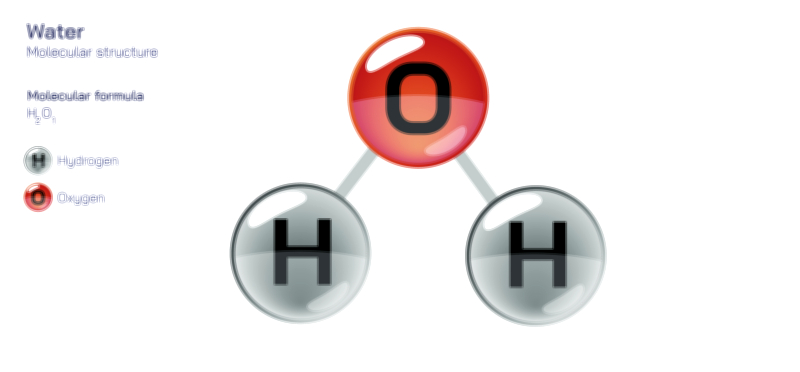
Dihydrogen monoxide, better known simply as water, stands as one of the most essential and extraordinary chemical substances in the natural world. Although its common name conveys familiarity, its chemical structure and molecular behavior reveal a depth of complexity that influences everything from the shape of life to the dynamics of weather, the behavior of materials, and the balance of ecological systems. The molecular identity of water arises from the bonding arrangement of two hydrogen atoms and one oxygen atom, forming a bent, asymmetrical structure that endows the molecule with remarkable physical and chemical properties. This simple composition—two atoms of hydrogen attached to one atom of oxygen—gives rise to a system so intricate that entire fields of science revolve around understanding its behavior. The structure of the water molecule influences how it interacts with itself, how it dissolves substances, how it changes phase, how it moderates temperature, and how it supports biological processes. Although the systematic name “dihydrogen monoxide” emphasizes the stoichiometric structure of the molecule, the familiar name “water” encompasses a vast and unique range of characteristics that stem directly from its fundamental chemical architecture.
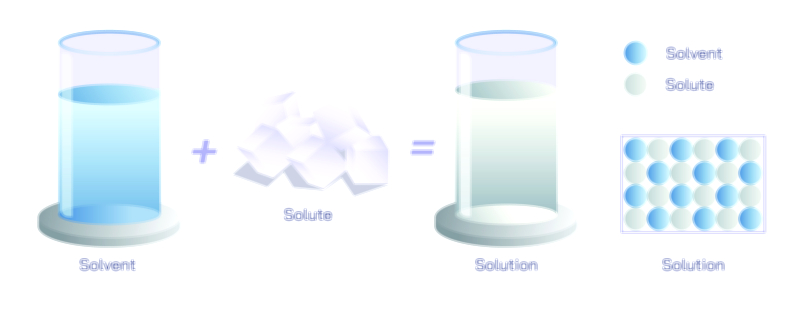
The key to understanding the chemical behavior of water lies in its bent molecular geometry, which creates an uneven distribution of electrical charge across the molecule. This arises because oxygen, being more electronegative than hydrogen, attracts bonding electrons toward itself. As a result, the oxygen end of the molecule carries a partial negative character, while the hydrogen ends carry partial positive character. This asymmetry generates polarity, making water a polar molecule capable of interacting strongly with ions, charged species, and other polar molecules. It is this polarity, derived directly from the molecule’s structure, that enables water to dissolve an astonishing variety of substances. Salt dissolves because its ions separate and become surrounded by water molecules. Sugar dissolves because the polar functional groups in the sugar molecules interact favorably with water. Even large biological molecules, such as proteins and nucleic acids, rely on the polarity of water to fold, function, and remain stable. The polarity of dihydrogen monoxide acts as the foundation for its solvent properties, which are so powerful that water is frequently described as a “universal solvent,” a phrase that reflects the extraordinary range of solutes it can incorporate into solution.
Beyond solubility, the bent molecular structure of water influences its internal cohesion and its interaction with neighboring molecules. Because each water molecule carries a partially positive and partially negative region, water molecules attract one another in a phenomenon known as intermolecular hydrogen bonding. These attractive interactions give water many of its unusual physical characteristics. Water has a relatively high boiling point compared to other molecules of similar size, meaning that a significant amount of energy is required to separate water molecules from one another during vaporization. This high energy requirement reflects the strength of hydrogen bonding networks, which constantly form and break on a microscopic scale but collectively exert strong cohesive forces. The presence of these hydrogen bonds explains why water remains liquid over a wide range of temperatures, why it has a high heat capacity, and why it functions as an effective thermal buffer for organisms and climates. Without these intermolecular forces, water would behave more like a light gas at normal temperatures, and life as we know it would not be possible because biological processes depend on stable, liquid water environments.
Hydrogen bonding also contributes to water’s remarkable surface tension, allowing it to form beads on surfaces, support small organisms such as water striders, and pull itself through narrow plant vessels during transpiration. The capacity of water to climb through capillaries arises from the dual interactions of adhesion—water’s attraction to other materials—and cohesion—its attraction to itself. These properties enable water to move upward through soil, deliver nutrients through plant roots, and transport dissolved minerals throughout plant tissues. This movement is crucial in sustaining entire ecosystems, from forests to grasslands, and it depends fundamentally on the hydrogen bonds formed between individual water molecules. The chemical structure of dihydrogen monoxide therefore extends its influence far beyond simple liquid behavior, reaching into biological transport systems and ecological cycles that maintain life across the planet.
Another extraordinary characteristic of water, directly tied to its molecular structure, is the unusual behavior it exhibits upon freezing. Most substances contract when they solidify because particles become more closely packed in the solid state than in the liquid state. Water behaves differently: as it freezes, its molecules arrange into a crystalline structure that maximizes hydrogen bonding by spreading the molecules farther apart. This expansion makes ice less dense than liquid water, causing it to float. The consequences of this seemingly simple structural phenomenon are profound. If ice were denser than liquid water, lakes and oceans would freeze from the bottom up, trapping aquatic life under solid masses of ice and disrupting global climate regulation. Instead, the formation of a floating layer of ice insulates the water below, preserving aquatic ecosystems during cold seasons and contributing to the stability of Earth’s climate. All of this stems from the particular way water molecules orient themselves when locked into the crystalline lattice of ice, a direct reflection of their bent molecular geometry and hydrogen bonding tendencies.
The structure of dihydrogen monoxide also plays a central role in Earth’s hydrological cycle, influencing the behavior of clouds, rain, humidity, and condensation. The polarity and hydrogen bonding capabilities of water govern how it transitions between gas, liquid, and solid phases in the atmosphere. Water vapor, although invisible, contains molecules that are continually moving and interacting with one another. When vapor molecules cool sufficiently, their kinetic energy decreases, allowing hydrogen bonds to form and leading to condensation. This process produces clouds, fog, dew, and eventually precipitation. The ability of water to exist naturally in all three physical states under Earth’s normal conditions arises from the balance between intermolecular forces and kinetic motion, a balance deeply rooted in the molecular architecture of the water molecule. Through this dynamic interplay, water participates in weather systems, shapes landscapes, and sustains ecosystems across the planet.
The structure of dihydrogen monoxide also influences its role in living organisms at the cellular level. Water participates in biochemical reactions not merely as a passive medium but as an active component. Many reactions within cells involve the addition or removal of water molecules, indicating that chemical processes depend on water’s structural compatibility with biological molecules. Water stabilizes proteins by influencing their folding patterns, helps assemble lipid membranes by driving hydrophobic molecules together, and ensures that DNA maintains its helical structure through hydration shells that surround the molecule. The versatility of water in these roles stems from its ability to form transient interactions, adjust its orientation, and participate in networks of hydrogen bonds that adapt to biological environments. These microscopic interactions create stability, flexibility, and reactivity within the cell, demonstrating how vital the molecular structure of water is in supporting the very architecture of life.
Water’s structure also influences its physical behavior in terms of density, heat transfer, and compressibility. Liquid water is one of the least compressible substances known, meaning that it resists changes in volume even under high pressure. This incompressibility supports the integrity of aquatic environments at great depths and enables hydraulic systems—both natural and engineered—to function effectively. Water’s high heat capacity, another consequence of hydrogen bonding, allows it to store large amounts of thermal energy without undergoing rapid temperature changes. This property stabilizes ocean temperatures, moderates coastal climates, and ensures that organisms with high water content maintain relatively constant internal temperatures even when external environments fluctuate. The high heat of vaporization, which means water absorbs a large amount of energy as it evaporates, enables evaporative cooling mechanisms such as perspiration in animals and transpiration in plants. These thermal properties reflect the deep interplay between water’s molecular structure and its macroscopic roles in maintaining homeostasis and regulating temperature across ecosystems and climates.
The solvent capabilities of dihydrogen monoxide extend into industrial, environmental, and technological contexts as well. Water dissolves minerals, salts, gases, and numerous organic compounds, making it central to processes such as corrosion, nutrient transport, wastewater treatment, and chemical synthesis. Its ability to dissolve gases like oxygen and carbon dioxide supports aquatic life and influences atmospheric chemistry. In industry, water serves as a medium for reactions, a coolant in machinery, a cleaning agent, and a transport fluid. Each of these roles arises from its chemical structure and intermolecular interactions, which dictate how water behaves when combined with different substances and under different conditions. The delicate balance of polarity, hydrogen bonding, density, viscosity, and volatility—all determined by the geometry of the water molecule—makes dihydrogen monoxide indispensable in both natural processes and technological applications.
Even the environmental challenges associated with water, such as flooding, erosion, or pollution transport, reflect water’s structural properties. Its ability to dissolve contaminants means that pollutants can travel through water systems, influencing ecosystems far from their source. At the same time, water’s role in shaping geological formations reflects its persistent ability to weather rocks, carry sediments, and carve landforms through the steady action of flowing molecules. These processes remind us that water’s power does not come from brute strength but from the persistent cumulative effects of countless molecular interactions acting over time. This combination of gentle individual interactions and dramatic collective impact exemplifies the broader theme of water’s molecular behavior shaping the physical world.
Perhaps the most remarkable aspect of dihydrogen monoxide is the way its simple formula belies the enormous influence of its structural features. The arrangement of atoms within the water molecule determines its polarity, its hydrogen bonding capacity, and its interactions with other molecules. These microscopic characteristics give rise to macroscopic phenomena that shape every aspect of life on Earth. The ability of water to support biological function, regulate climate, dissolve substances, transport materials, and form ecosystems emerges from the structural rules that govern how hydrogen and oxygen bond and interact. Water, in its essence, demonstrates how the organization of matter at the smallest scales determines the behavior of the world at the largest scales.
Ultimately, dihydrogen monoxide stands as one of the most profound examples of how molecular structure dictates chemical behavior and how chemical behavior shapes the natural world. Its bent architecture, its polarity, and its ability to form hydrogen bonds make water not merely a common liquid but a fundamental medium for life, climate, geology, chemistry, and technology. Through its molecular structure, water becomes a connector between disciplines, environments, and systems, influencing everything from cellular activity to global weather patterns. The story of water is the story of how a simple molecule can underpin the complexity of life and the stability of an entire planet, revealing the powerful relationship between structure and function that defines the science of chemistry.