Decimal Place Value — Mathematics Number System
Decimal place value is one of the most fundamental concepts in the entire number system, forming the backbone of how we read, write, interpret, and manipulate numbers in everyday life, scientific calculations, financial transactions, measurements, and technological processes. Although many people first encounter place value in early schooling, its significance extends far beyond simple counting. Place value represents a brilliantly organized system for expressing quantities using a small set of symbols, each symbol acquiring its meaning through its position within the number. This positional structure allows the decimal system to scale smoothly from extremely tiny values to enormous magnitudes while maintaining clarity and efficiency. Because of this positional logic, we can represent fractions, whole numbers, and very large values using the same structure. Decimal place value, therefore, is not just a formatting rule; it is the conceptual architecture upon which modern numerical communication rests.
To understand decimal place value intuitively, consider that each digit in a number carries meaning only because of where it is placed. A digit that appears in one position holds a completely different significance when placed somewhere else. This shifting meaning allows the decimal system to operate with remarkable precision. The system is built around powers of ten, which means that every move to the left multiplies the value of a digit by ten, and every move to the right divides its value by ten. Without referring to formulas, one can describe this pattern as a continuous scaling effect where position determines importance. A digit that seems simple when viewed alone becomes part of a larger structure when integrated into a number. The decimal system thus becomes a highly flexible language for expressing quantities, enabling humans to communicate measurements, prices, distances, temperatures, populations, and countless other numerical concepts.
One of the most important features of decimal place value is its ability to represent both whole numbers and fractional quantities seamlessly. Whole numbers grow by increasing positional significance as you move left, while decimal fractions shrink by decreasing positional value as you move right. In the whole-number part, the first position indicates units, the next indicates groups of ten, then groups of one hundred, and so on, forming an ever-expanding scale. In the fractional part to the right of the decimal point, each position represents progressively smaller divisions. This dual direction—left for increasing magnitude and right for decreasing magnitude—creates a symmetrical structure that allows endless scaling in both directions. Whether representing the thickness of a strand of hair or the distance between stars, the decimal system retains the same basic logic, making it universally adaptable.
The usefulness of decimal place value shines through in daily life in ways most people hardly notice because the system feels natural. When reading prices, weights, lengths, or time durations, we instinctively understand that the position of each digit tells us how much it contributes to the total. For example, the digit appearing just after the decimal point in a price represents tenths of a unit, which is why an item priced slightly differently can feel significantly cheaper or more expensive even when the digits themselves look similar. People rely on decimal place value when comparing salaries, interpreting fuel efficiency, calculating interest rates, preparing recipes, or reading medical dosage labels. Behind these everyday interactions lies a deeply structured understanding of how digits scale and combine through their positions. Without this intuitive sense of place value, basic economic, scientific, and social communication would become far more complicated.
Decimal place value is equally crucial in scientific contexts, where precision matters greatly. Scientists often work with extremely large or extremely small quantities, such as the speed of light or the diameter of a microorganism. The decimal system allows these values to be expressed clearly without requiring new symbols or separate structures for large and small values. Even when scientific notation is used to express very large or small numbers, the foundation is still place value. The notation simply restructures the number to highlight its significant digits while indicating how far those digits must shift along the scale of place values to reach their full value. This reliance on decimal place value reinforces the idea that the entire system of modern measurement and science depends on this positional structure. It also highlights why the decimal system has become globally dominant: it offers unmatched flexibility and consistency.
In financial and economic systems, decimal place value supports a wide range of operations. Banks, businesses, and governments rely on precise numerical representation for taxes, interest rates, exchange rates, investments, budgeting, and payroll. The decimal structure ensures that these values can be expressed accurately and interpreted easily across languages and cultures. When someone receives a paycheck, calculates a loan payment, analyzes a business profit, or reads an invoice, they rely on place value to interpret the digits correctly. Without the positional value system, economic calculations would become unreliable or ambiguous. Decimal precision is also essential in currency systems, where fractional units such as cents or paise rely on the first two or three decimal places. This uniform structure ensures that financial transactions remain fair, accurate, and transparent.
Another important aspect of decimal place value is the concept of zero as a placeholder. Zero ensures that the position of a digit remains correctly interpreted even when certain positions contain no value. This placeholder function allows numbers like one hundred five to differ clearly from fifteen or one thousand five, even though all three use similar digits. Zero holds space so that the digits that follow retain their intended meaning based on their position. This seemingly simple idea represents one of the most powerful conceptual innovations in the history of mathematics. Without zero’s role as a placeholder, the decimal place value system could not function properly, and numerical expression would become chaotic and inconsistent. Zero allows the system to maintain structure even when certain value groups are absent.
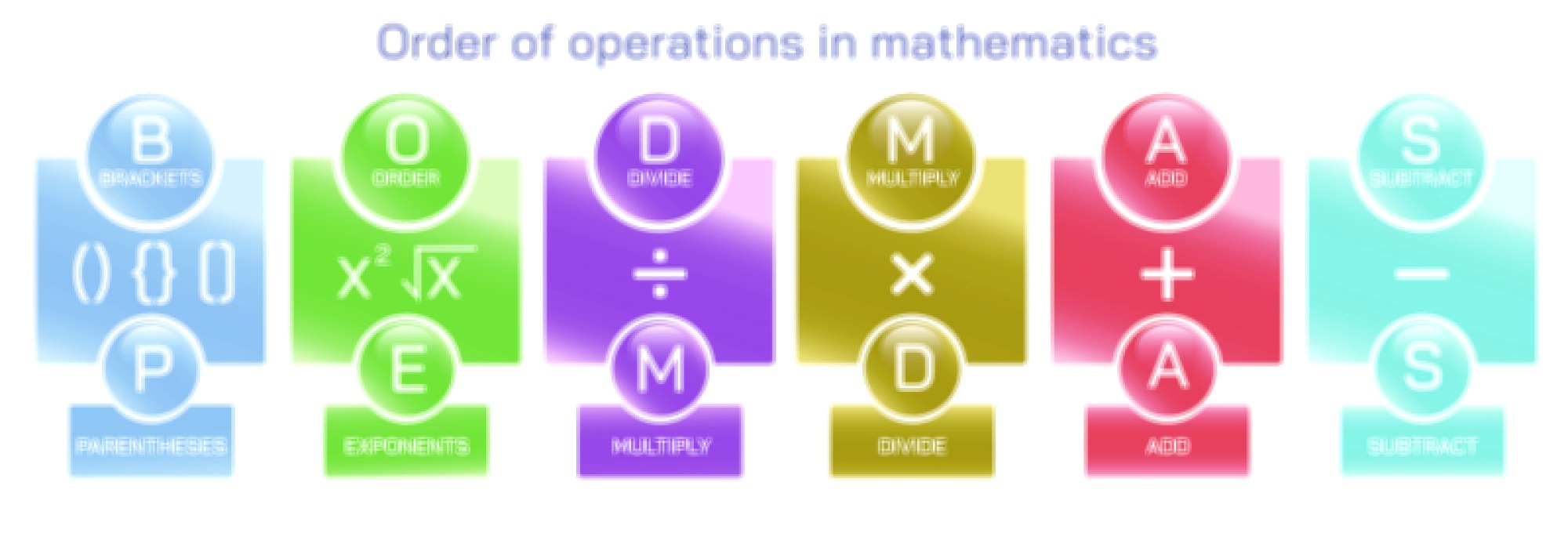
Decimal place value also supports logical understanding in mathematics, enabling learners to grasp operations such as addition, subtraction, multiplication, and division more effectively. When adding numbers, for example, aligning digits by place value ensures that quantities of the same magnitude are being combined. Subtraction requires the same alignment so that borrowing can occur correctly. Multiplication becomes simpler when broken into parts based on place value, demonstrating how smaller partial results contribute to the overall product. Division relies on distributing a quantity across place values to determine how many times one number fits into another. Each of these operations functions smoothly because place value organizes numbers into meaningful units. Without this structure, arithmetic would become inefficient and overly complicated.
Beyond basic arithmetic, decimal place value underlies concepts such as rounding, estimation, and measurement accuracy. Rounding involves deciding which place value is significant for the purpose of comparison or estimation. Estimation allows a person to form a quick numerical judgment by focusing on the most significant digits. Measurement tools such as rulers, clocks, thermometers, and digital meters use decimal values to express readings accurately. Engineers, architects, surveyors, and scientists rely on precise decimal measurements to design structures, perform calculations, and analyze data. All of these tasks depend on the ability to interpret the magnitude of a number based on the position of its digits.
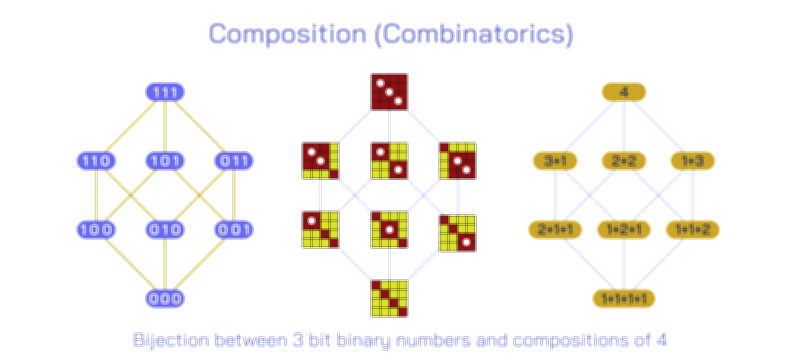
In the digital age, decimal place value remains essential, even though computers operate internally on binary systems. When humans input data, read results, program algorithms, or interpret numerical output, they rely on decimal representation. Decimal place value therefore functions as the bridge between human understanding and machine operations. Even when values undergo conversion from decimal to binary and back, the meaning assigned to each digit remains grounded in the decimal system’s positional logic. Programmers write conditions, store values, manipulate floats, and interpret data structures based on decimal representations that carry place value significance. Software interfaces, spreadsheets, databases, sensors, and financial systems all convert inputs and outputs into decimal forms for human readability.
Cultural and historical aspects also highlight the importance of decimal place value. The system has roots in ancient civilizations but gained widespread adoption because it aligns with human intuition—ten fingers provide a natural counting base. Over time, the efficiency of a base-ten positional system led to its adoption in commerce, science, education, and governance. Compared to earlier numeral systems that relied on symbols for every distinct value, the decimal system drastically simplified computation and communication. Its adoption helped accelerate advances in mathematics, navigation, engineering, and technology. The place value system enabled societies to record large quantities, perform consistent calculations, and preserve numerical knowledge across generations.
From a conceptual standpoint, decimal place value teaches a profound lesson about structure and meaning. Numbers are not merely random symbols; they form a layered system where each position plays a role in interpreting magnitude. This system helps people think more clearly about proportions, comparisons, and scales. Whether determining the nutritional content of food, the dosage of a medicine, the value of an investment, or the odds of an event, place value provides the mental framework that allows numbers to be understood logically. Without this positional structure, reasoning about quantities would be far more difficult, and numerical literacy would be severely limited.
Ultimately, decimal place value stands as one of the most powerful conceptual tools in the entire history of mathematics. It allows numbers to expand infinitely in both directions, enabling precision, clarity, and efficiency. It supports arithmetic, measurement, science, commerce, technology, and everyday reasoning. It transforms simple symbols into meaningful quantities and gives shape to the numerical world we navigate daily. Through decimal place value, we gain the ability to express, analyze, and understand the vast range of numerical ideas that shape modern life, revealing how deeply this seemingly simple concept underlies our entire framework of knowledge and communication.