Diatomic Bromine — Molecular Structure of Halogen Element
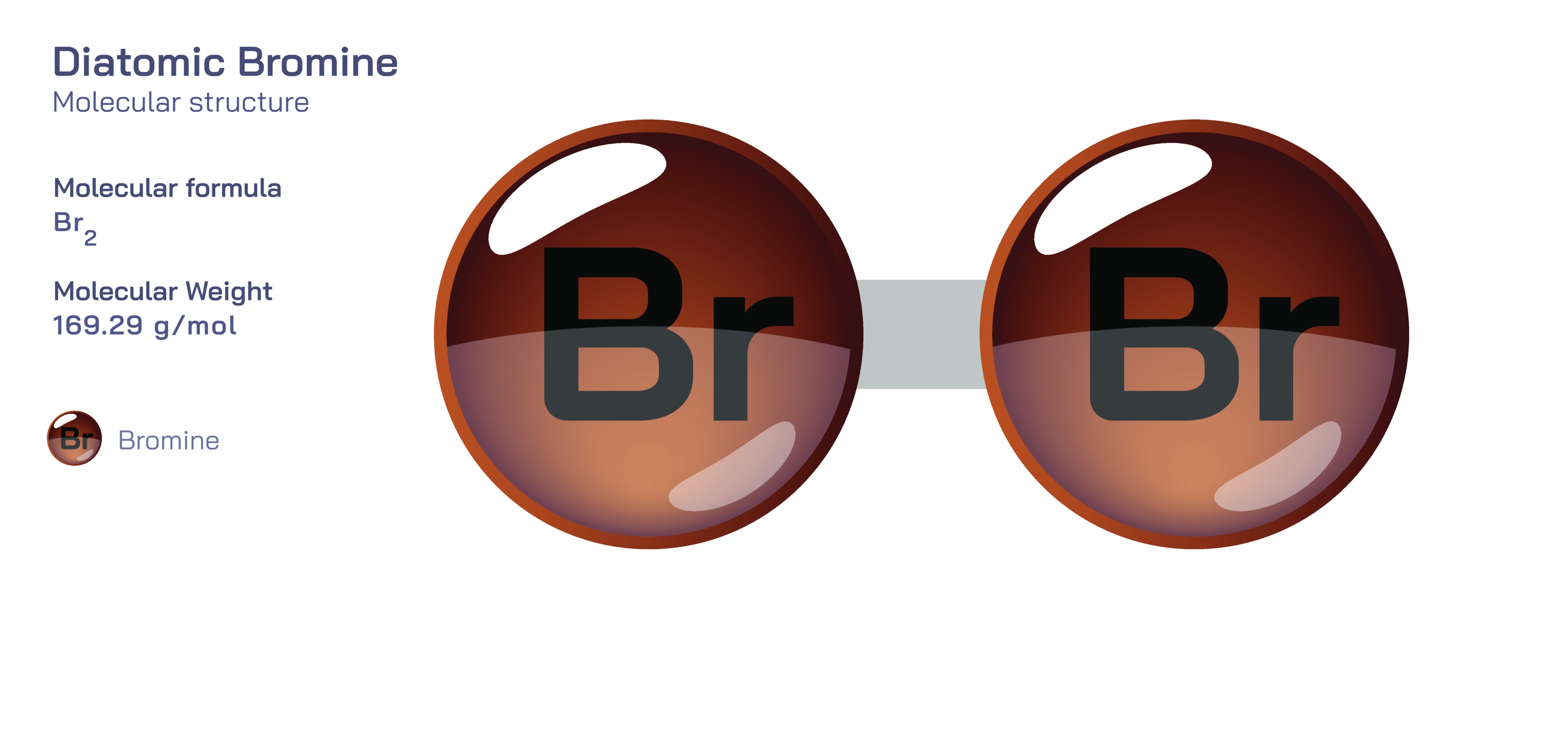
Diatomic bromine represents one of the most recognizable and scientifically important elemental forms within the halogen family, embodying the characteristic reactivity, bonding patterns, and molecular behavior that define halogens as a group. Unlike the metals and gases that populate much of the periodic table, elemental bromine exists as a diatomic molecule under normal conditions, meaning that each stable unit of bromine consists of two atoms bound together. This diatomic nature is not an arbitrary feature but a direct expression of the halogen tendency to achieve stability by pairing their unpaired electrons through covalent bonding. In its elemental state, bromine forms a dense, reddish-brown liquid at room temperature and produces reddish vapors that are easily recognizable, making it the only nonmetal that is a liquid under standard conditions. The pairing of bromine atoms into Br₂ molecules shapes its physical behavior, chemical reactivity, phase transitions, and interactions with other substances. The molecular structure of diatomic bromine serves as a gateway to understanding not only the element itself but also the broader principles of molecular bonding, halogen chemistry, and how atomic interactions determine material properties.
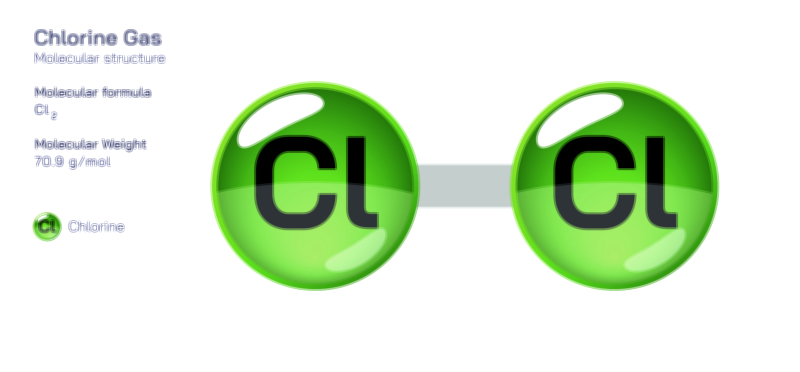
The diatomic nature of bromine arises from the electronic structure of halogens, all of which possess seven electrons in their outermost shell. With one electron short of a full outer shell, each bromine atom tends to form a single covalent bond by sharing one of its electrons with another bromine atom. This sharing produces a stable diatomic molecule, Br₂, in which the electron pair holds the two atoms together. Although no mathematical representation is needed to understand this, the concept can be viewed as two bromine atoms seeking stability through mutual cooperation, forming a molecule that is far less reactive than either atom would be on its own. At the same time, the molecule remains reactive enough to participate in a wide variety of chemical transformations because its bond can be broken under the right conditions. This delicate balance between stability and reactivity reflects the broader behavior of the halogen group, which includes fluorine, chlorine, bromine, and iodine—each of which forms diatomic molecules through similar bonding patterns. Among them, bromine occupies a middle ground in terms of physical properties, falling between chlorine, which is a gas, and iodine, which is a solid at room temperature.
One of the most visually striking properties of diatomic bromine is its liquid state at standard temperature and pressure. The deep reddish-brown color and the heavy, volatile character of liquid bromine distinguish it from nearly all other elements. Its physical state can be understood through the interactions between Br₂ molecules. Although the bond within each molecule is strong, the forces between different Br₂ molecules, which arise through temporary shifts in electron density, are moderate in strength. These intermolecular forces are strong enough to hold the substance together as a liquid but weak enough to allow significant volatility. This intermediate strength of attraction helps explain why bromine evaporates quickly, producing vapors that carry the same reddish tone as the liquid. The volatility of bromine is also why it must be handled carefully; even at room temperature, it releases fumes that are corrosive, toxic, and irritating to eyes, skin, and respiratory tissues. The physical characteristics of the element stem directly from its diatomic molecular identity, which shapes how individual molecules interact and how the substance transitions between phases.
The molecular structure of bromine influences its chemical reactivity as well. As a halogen, diatomic bromine is eager to participate in reactions that allow each atom to achieve a more stable electronic configuration by forming new chemical bonds. This often involves bond-breaking processes in which the Br–Br bond is cleaved, allowing individual bromine atoms to attach to other atoms or molecules. Because breaking the bond requires energy, bromine is not as explosively reactive as fluorine or chlorine, but it is still highly reactive and participates in substitution, addition, and oxidation reactions. In many reactions, bromine acts as an oxidizing agent by accepting electrons from other substances. The process typically involves splitting the Br₂ molecule into two bromine atoms, each capable of forming a new bond. This reactivity is central to the role of bromine in organic chemistry, where it is used to add bromine atoms across double bonds or substitute hydrogen atoms in hydrocarbons. The diatomic nature of bromine ensures that every molecule entering a reaction contributes two reactive atoms, doubling the potential impact of each molecular interaction.
Diatomic bromine also plays a major role in environmental chemistry. Bromine compounds can participate in atmospheric processes, particularly those involving ozone. Certain bromine-containing molecules can release bromine atoms under sunlight, allowing those atoms to react with ozone and contribute to its depletion. Although chlorine-containing compounds have historically received more attention for their role in ozone destruction, bromine can be even more effective on a per-atom basis. The reactivity of bromine in the atmosphere stems from the same fundamental behavior that defines its reactions in the laboratory: the ease with which the Br₂ molecule can split into highly reactive atoms. In marine environments, bromine exists in various forms and participates in cycles involving seawater, biological organisms, and atmospheric transport. Understanding these cycles requires recognizing the molecular characteristics of diatomic bromine and how they influence the stability, volatility, and transformation of bromine species in nature.
The molecular structure of bromine also influences its behavior in industrial applications. Bromine and its compounds are used in flame retardants, pharmaceuticals, photographic chemicals, dyes, agricultural chemicals, and water treatment agents. In each of these applications, the reactivity of bromine is harnessed to create new chemical bonds or alter the behavior of existing molecules. For example, bromine-containing flame retardants work by interfering with radical chain reactions in fires, reducing flame propagation. This effect ties back to bromine’s ability to interact strongly with reactive intermediates, a feature rooted in the behavior of the bromine atom when freed from the Br₂ molecule. Bromine compounds in pharmaceuticals often enhance the stability, reactivity, or biological activity of drug molecules. In water treatment, bromine acts as a disinfectant, similar to chlorine but with different reaction pathways and stability characteristics, again highlighting how diatomically structured bromine influences practical outcomes in real-world systems.
In the laboratory, diatomic bromine serves as an essential reagent for characterizing the behavior of other compounds. Because bromine reacts readily with unsaturated hydrocarbons, it is often used in tests to determine whether a substance contains carbon–carbon double bonds. The disappearance of bromine’s reddish-brown color indicates that the Br₂ molecules have reacted with the compound being tested. This color change provides a visual method to probe molecular structure. The reliability of this test stems from bromine’s predictable behavior as a diatomic molecule whose bond breaks under specific conditions to form new attachments. Chemists also use bromine to synthesize brominated derivatives of organic molecules, which serve as intermediates in more complex syntheses or as control molecules in experiments. Bromine’s diatomic molecular structure influences how it interacts with solvents, reaction partners, and catalysts, shaping the outcomes of laboratory processes.
Diatomic bromine’s presence in geologic systems reflects similar principles. Although bromine is less abundant than chlorine, it is widely distributed in seawater, salt deposits, and groundwater. In nature, bromine is typically found in ionic form rather than as Br₂, but understanding the diatomic form helps explain how bromine behaves during extraction, purification, and chemical transformation. Bromine is often produced industrially by oxidizing bromide ions from seawater or brines, a process that involves forming diatomic bromine at an intermediate stage. The extraction process depends on the stability and volatility of Br₂ molecules, demonstrating once again the importance of molecular identity in practical chemical operations.
The appearance of diatomic bromine in discussions of bonding theory and molecular structure provides deep insight into the nature of covalent interactions. Because bromine atoms share electrons equally in the Br₂ molecule, the bond is considered nonpolar, despite bromine being a relatively electronegative element. This nonpolarity affects how bromine dissolves in various solvents and interacts with other nonpolar molecules. Bromine’s solubility in organic solvents and limited solubility in water reflect its molecular polarity characteristics. The behavior of the Br₂ molecule in different solvent environments highlights broader concepts of solubility, molecular interaction, and chemical affinity that are essential for understanding solution chemistry.
Perhaps the most profound conceptual value of studying diatomic bromine lies in the way it illustrates universal principles of molecular behavior. The Br₂ molecule demonstrates how atoms with similar electronic needs pair in a predictable way to achieve stability, how covalent bonds form through shared electrons, how molecular shape and symmetry influence physical properties, and how intermolecular forces determine phase and volatility. These principles apply broadly across chemistry, but bromine’s unique position—liquid at room temperature, vividly colored, highly reactive yet stable enough for controlled use—makes it a particularly vivid example. Studying bromine helps learners connect theoretical ideas with visible, measurable properties in a concrete and memorable way.
Ultimately, diatomic bromine stands as a compelling model of how atomic structure, molecular bonding, and chemical behavior intertwine. Its reddish-brown liquid form, its diatomic bond, its reactivity patterns, its environmental significance, and its industrial utility all stem from the same underlying molecular identity. Through diatomic bromine, one gains insight into the broader world of halogen chemistry, the nature of covalent molecules, and the way molecular structure determines the physical and chemical characteristics of matter.