Tensile Test vs Compression Test — Material Strength Comparison
The comparison between tensile testing and compression testing forms one of the most fundamental pillars of material strength evaluation, shaping the way engineers, designers, and material scientists understand the behavior of metals, polymers, concrete, ceramics, composites, and countless manufactured products. Although both tests examine how a material responds to externally applied forces, they reveal different aspects of strength, deformation, and failure mechanisms. Tensile testing focuses on how a material behaves when pulled apart, highlighting its capacity to resist stretching, elongation, and eventual fracture. Compression testing, on the other hand, examines how a material reacts when squeezed, compacted, or pressed, illustrating its ability to withstand crushing forces without collapsing, buckling, or deforming uncontrollably. Together, tensile and compression tests offer a complete picture of material performance, guiding the selection of materials for structural components, mechanical systems, load-bearing assemblies, safety-critical applications, and products subjected to complex and varying forces throughout their service lives.
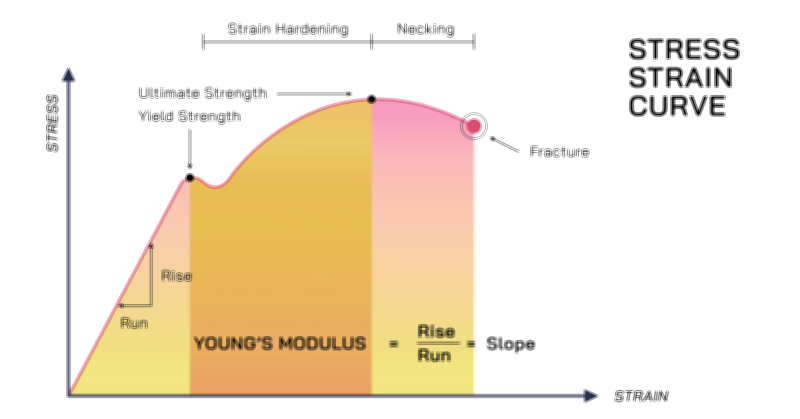
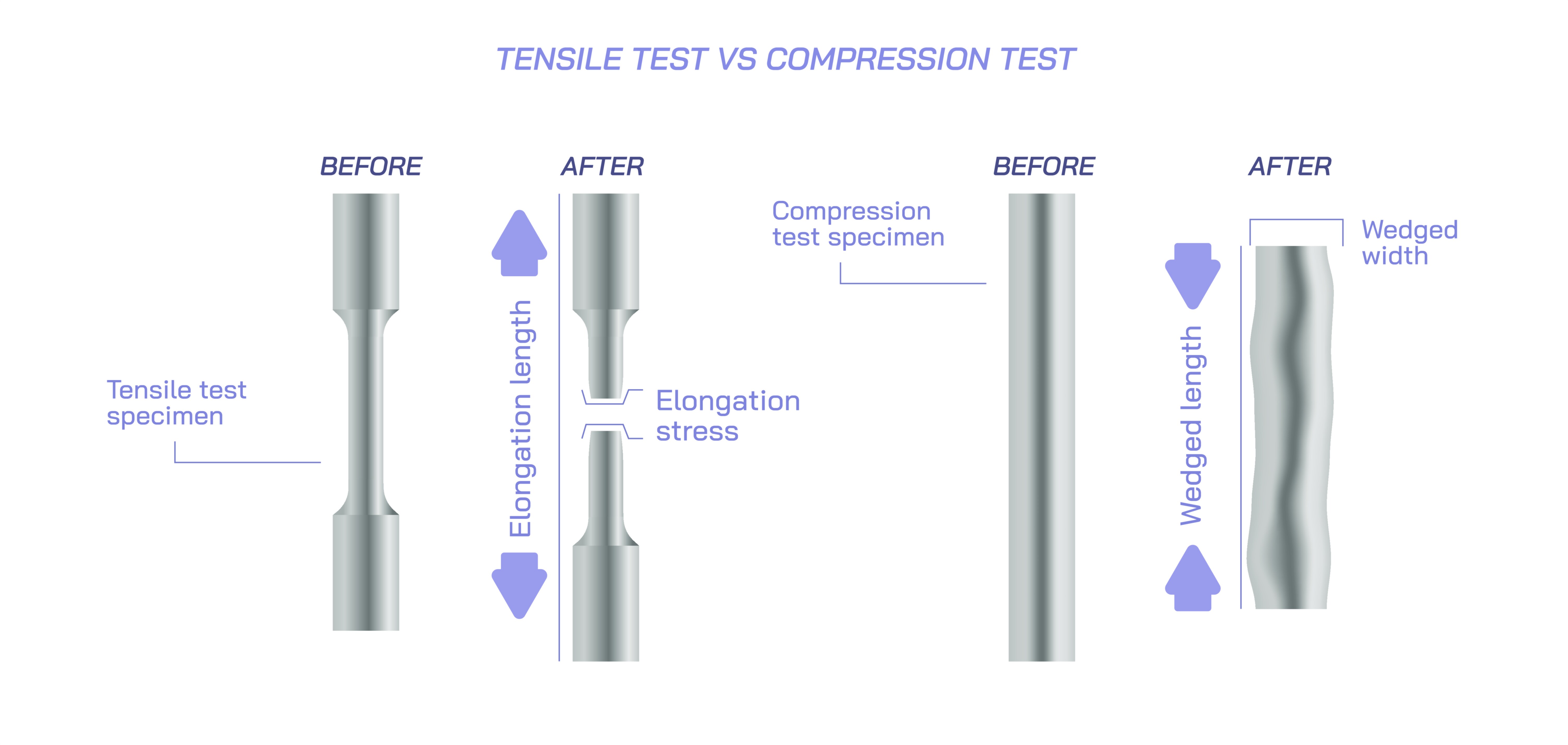
A tensile test involves gripping a specimen at its two ends and gradually pulling it in opposite directions until it deforms and eventually breaks. This process allows engineers to study how the material elongates, how it behaves under growing tension, and how it transitions from elastic to plastic deformation before reaching its ultimate breaking point. The initial stage of a tensile test typically shows linear, reversible behavior where the material returns to its original shape when the load is removed. This elastic phase reveals how stiff or flexible the material is, providing insight into its resistance to deformation. As the load increases further, the specimen passes from elastic behavior into plastic behavior, where permanent deformation occurs. This stage is especially important for understanding ductility, toughness, and the material’s capacity to undergo significant deformation before failure. Near the end of this test, materials display their ultimate tensile strength, a value that indicates the maximum load they can sustain before necking and eventual rupture. Tensile tests therefore provide information about elasticity, ductility, strength, toughness, and failure modes, all of which guide how materials are chosen for parts that must resist stretching or pulling.
Compression testing, in contrast, subjects the material to forces that push inward, typically using loading plates that squeeze the specimen until it shortens, cracks, buckles, or crushes. Compression testing is essential for materials that primarily experience weight, pressure, or other compacting forces, such as concrete in columns, soils supporting foundations, metals in bearing assemblies, and polymers used in cushioning or packaging. Unlike tensile tests, which often emphasize elongation and ductility, compression tests reveal how resistant the material is to crushing, how it behaves under high compressive stresses, and whether it fails by cracking, fracturing, bulging, or buckling. Many materials, particularly brittle ones such as concrete, masonry, rocks, and ceramics, show remarkably high compressive strength despite having limited tensile strength. This makes compression testing indispensable for evaluating the performance of materials that are naturally strong under pressure but weak when stretched. In compression, materials do not elongate but instead shorten and thicken, showing how they accommodate compressive loads without collapsing. The way a material distributes internal stresses, dissipates loads, and manages deformation under compression determines its suitability for pillars, walls, blocks, foundations, and other load-bearing components.
One of the most profound differences between tensile and compression behavior relates to how materials fail. Ductile materials such as most metals undergo significant deformation before breaking in tension, absorbing large amounts of energy and giving clear warning signs before failure. In compression, however, these same materials may deform plastically until they bulge or buckle, depending on geometry. Brittle materials behave differently. When pulled in tension, they exhibit very little deformation and fail abruptly, often cracking without warning. Under compression, the same brittle materials may sustain high loads with minimal deformation until they reach a crushing point. This contrast explains why concrete structures rely on steel reinforcement: concrete, strong in compression but weak in tension, benefits from steel’s high tensile performance to create a balanced composite material. The interplay between tensile and compressive strengths is therefore fundamental to reinforced concrete design, masonry construction, and composite engineering.
Tensile tests provide extensive information about ductility—how far a material can stretch before fracturing. This property is crucial for applications like structural steel frames, bridges, aerospace alloys, automotive bodies, and any component where energy absorption, elasticity, or flexibility matters. Designers rely on tensile test data to predict how a material will behave under fluctuating or cyclic loads, evaluate its risk of fatigue, or understand its suitability for resisting vibration, impact, or shock. Tensile performance influences weldability, formability, and manufacturability, playing a large role in determining how easily a material can be shaped into final products without cracking. It also defines the safety margins engineers adopt to prevent catastrophic failure when materials are placed under tension in real structures.
Compression tests, on the other hand, provide indispensable insight into stability. Compressive behavior determines whether columns buckle, whether materials crumble under load, and how structural members distribute weight. Compressive performance guides the design of concrete pillars, load-bearing walls, pavements, dams, tunnels, embankments, and foundation systems. Even metals, although strong in tension, must show adequate compressive resistance to avoid buckling or instability when slender shapes are used. Compressive strength dictates how much weight a column can carry, how soil reacts under building loads, and how robust a ceramic or composite component is when used in crushing or supporting roles. In industries such as construction, mining, geotechnical engineering, and civil infrastructure, compression testing is more relevant than tensile testing because real-world conditions often impose compressive rather than tensile stresses.
Despite their differences, tensile and compression tests are deeply interconnected. Many materials demonstrate markedly different behavior in tension versus compression. Some materials show symmetric stress responses, meaning they behave roughly the same under pulling or pushing, but others exhibit strong asymmetry. This asymmetry has major implications for design. For instance, metals may have similar tensile and compressive strengths but deform differently depending on loading conditions, whereas concrete’s compressive strength can be more than ten times greater than its tensile strength. Polymers may exhibit high tensile flexibility but may fold or buckle easily under compression. Composites may behave differently depending on fiber orientation, with fibers providing strong tensile resistance along their direction but varying compressive resistance depending on matrix properties. Understanding these nuances allows engineers to design structures that effectively balance materials according to expected forces.
Another key difference between tensile and compression tests lies in how geometry affects results. Slender specimens under compression tend to buckle before crushing, producing behavior that depends not only on material properties but also on shape. Tensile specimens, by contrast, usually fail due to material characteristics rather than geometric instability. This means tensile tests provide more direct insight into intrinsic material behavior, while compression tests may require careful interpretation to separate geometric influences from material properties. For engineers, this distinction matters greatly when designing slender columns, long struts, thin-walled tubes, and other components where compression may lead to instability long before the material reaches its true strength.
Environmental factors also influence tensile and compressive behavior differently. High temperatures may soften a metal, reducing both tensile and compressive strengths, but the effects may differ in magnitude. Moisture may degrade polymers or woods more under tension than under compression. Concrete exposed to freeze–thaw cycles may lose compressive strength but remain somewhat stable in tension depending on reinforcement. These environment-dependent interactions highlight the importance of testing materials under realistic service conditions to better understand long-term durability.
The role of strain rate—how quickly the load is applied—is also important. Under rapid loading, materials may behave more brittle in tension, while in compression they may exhibit increased resistance due to the confinement effect or internal strengthening mechanisms. This becomes crucial in applications such as vehicle crash design, seismic engineering, and military equipment where materials must withstand impacts or blasts.
Ultimately, tensile and compression tests offer complementary insights. Tensile testing shines in evaluating ductility, elasticity, fracture behavior, and resistance to pulling loads. Compression testing excels in assessing crush resistance, stability, load support, and resistance to compaction. Together, they provide engineers with a complete understanding of how materials behave under opposing forces, enabling safe design and responsible material selection. By comparing tensile and compression test results, designers understand how a structure will respond to real-world forces, how components will deform, and how safety margins must be calibrated to prevent failure.
The interplay between tensile and compressive strengths guides fundamental engineering decisions in virtually every field. In choosing materials for high-rise buildings, bridges, aircraft frames, automotive structures, pipelines, machine components, and even everyday consumer products, engineers draw on data from these two essential tests. They ensure that a component strong in one loading direction is adequately supported in the other, creating systems that balance safety, performance, and durability. Through this relationship, tensile and compression testing not only reveal material properties but also shape the very foundation of modern engineering design.