Tensile Strength vs Hardness in Material Science – Understanding Mechanical Behavior, Microstructural Response, Failure Patterns, and Performance in Real-World Engineering
Tensile strength and hardness are two of the most significant mechanical parameters used to judge and compare materials in science and engineering, yet they often become confused because both relate to how strongly a material resists externally applied forces. In reality, each property describes a completely different type of resistance, and fully understanding the difference between them is essential for predicting how a material will behave under daily use, deformation, stress, wear, or environmental exposure. Tensile strength deals with a material’s ability to withstand stretching until the moment it ruptures, while hardness describes how well a material resists local surface deformation such as scratching, indentation, penetration, or wear. Together, these properties illustrate the dual nature of mechanical reliability: a material may be very hard and resistant at the surface but brittle and prone to fracture when stretched, or it may be able to stretch significantly before breaking yet still scratch easily. Exploring the differences between tensile strength and hardness teaches how the atomic structure, microstructure, and manufacturing history of a material determine its performance when interacting with external forces.
Understanding Tensile Strength and the Way Materials Respond to Pulling Forces
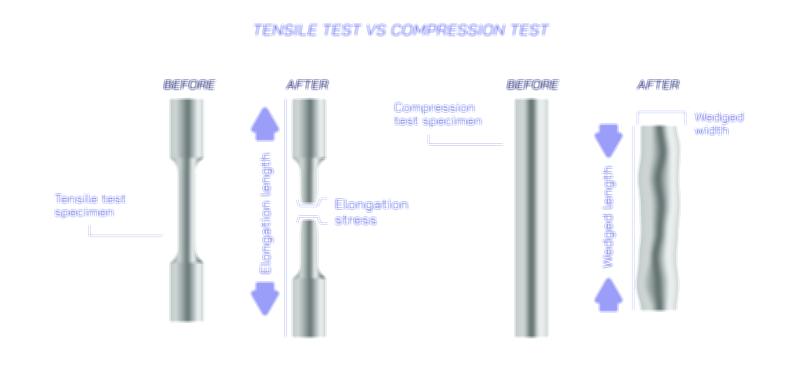
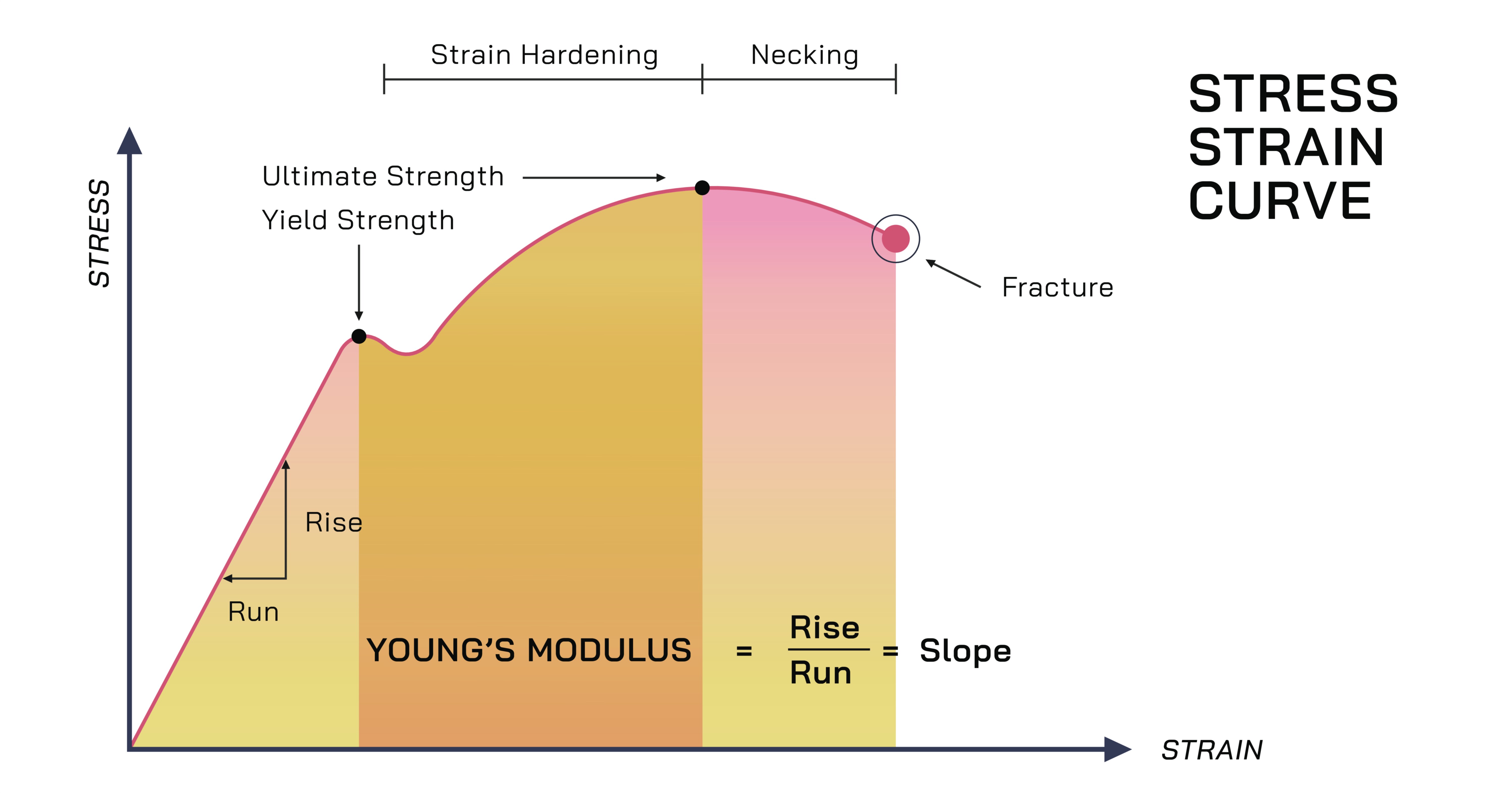
Tensile strength reflects how much pulling stress a material can withstand before it breaks. When a material is subjected to tension, its internal atomic bonds stretch, dislocations move within the crystal lattice, and its microstructure rearranges incrementally to absorb stress. Metals, polymers, ceramics, and composites all express these internal rearrangements differently. A material with high tensile strength can absorb a large amount of stretching and load before reaching the point of rupture. This property becomes critically important in applications where objects are suspended, lifted, pulled, stretched, or placed under heavy loads that act over long periods. Bridges, aircraft bodies, suspension cables, building reinforcements, heavy machinery, cranes, elevator mechanisms, high-performance ropes, and automotive structural components all rely on tensile strength as a core safety factor. When tensile strength is exceeded, failure is sudden and catastrophic because the load instantly crosses the material’s maximum threshold. A cable snapping, a rod breaking under load, a metal bar fracturing during construction, or a polymer strap tearing under force are all examples of tensile failure. The final point of breaking represents not only the strength of atomic bonding but also how effectively the material prevents micro-cracks from spreading. Therefore tensile strength depends on grain size, dislocation mobility, heat treatment, alloying elements, density of defects, internal stresses, and the geometry of the part being loaded. A deeper understanding reveals that tensile performance is not only about resisting force but also about how energy is distributed, absorbed, and eventually released through fracture.
Hardness as a Measure of Surface Resistance to Indentation and Wear
Hardness focuses on something entirely different: a material’s resistance to local plastic deformation at the surface when it is pressed or scratched by a harder object. It describes how firmly atoms are locked into their positions within the structure at very small regions, preventing them from moving aside when another material tries to penetrate or abrade the surface. Hardness becomes extremely important in situations involving friction, abrasion, contact, cutting, sliding, or repeated impact. Cutting tools, drill bits, bearings, gears, engines, glass screens, protective coatings, armor plates, turbine blades, and grinding components depend on high hardness to maintain functionality and long service life. A very hard material resists scratching and indentation because its internal atomic structure either blocks movement of dislocations or incorporates ceramic-like bonding that does not permit deformation. A diamond, for example, is extremely hard not because it stretches well under tension but because its crystal lattice does not allow atoms to slide relative to each other. Hardened steel, ceramics, tungsten carbide, and boron nitride all resist localized deformation and friction due to their rigid lattice structures. However, high hardness often makes a material brittle, meaning it resists indentation but can shatter or crack when stretched or struck abruptly. Hardness therefore tells us how a material behaves under immediate surface attack rather than under gradual stretching.
Why High Hardness Does Not Mean High Tensile Strength — and Vice Versa
The key educational idea emerges when comparing a hard ceramic and a strong metal: one may be extremely difficult to scratch yet easy to fracture, while the other may stretch considerably but mark easily. Ceramic tiles resist abrasion yet crack under tensile stress. Engineering steels can withstand great pulling force yet deform at the surface when rubbed or dented. This difference is rooted in microstructural mechanics. Hard materials prevent dislocations from moving within their structure, making surface deformation nearly impossible but offering no ability to absorb internal strain. Conversely, high tensile strength materials often allow dislocations to move in controlled ways, absorbing stress without fracturing but sacrificing surface resistance. This contrasting behavior demonstrates why one property cannot substitute for the other and why engineers must evaluate both independently depending on whether a part will undergo stretching, scratching, impact, friction, or a combination of stresses.
Manufacturing Processes That Modify Tensile Strength and Hardness Differently
Thermal treatments and mechanical methods illustrate how deeply these properties depend on microstructure. Quenching steel creates a hard, martensitic phase that strongly resists indentation but increases brittleness, reducing ductility and tensile capability. Tempering then partially reverses this brittleness, improving toughness while only slightly reducing hardness. Work hardening increases surface hardness in metals by forcing dislocation entanglement after repeated plastic deformation, yet excessive work hardening can lower tensile strength by increasing brittleness. Alloying elements such as carbon, chromium, molybdenum, vanadium, and nickel modify hardness and tensile strength differently depending on their roles in the lattice structure. All of these examples show that the treatment history of a material can dramatically change one property while affecting the other only partially or even inversely. Material selection in engineering therefore becomes a balancing act that aligns the processing of a material with the specific load conditions it will experience in service.
Engineering Significance and Why Distinguishing These Two Properties Matters
When engineers design parts, they do not choose a material simply because it is hard or simply because it is strong. Instead they analyze where the material will sit in a structure and what forces it must endure. A support beam requires tensile strength to stop a building from collapsing, yet its surface can tolerate scratching. A gear tooth, in contrast, requires high hardness to survive repeated contact and wear, while tensile performance is secondary. Products that require both surface durability and resistance to stretching combine layered or composite structures, coating techniques, case hardening, or surface treatments on top of a strong core. The intelligent use of tensile strength and hardness together reveals how modern engineering blends structure, function, microstructure, and performance. Protecting human safety and ensuring long-lasting mechanical reliability depends on knowing the difference between resistance to pulling and resistance to surface penetration, because the wrong assumption can lead to early wear, catastrophic fracture, or complete structural failure.
Tensile strength and hardness stand, therefore, not as competing metrics but as complementary lenses for understanding mechanical integrity. They prove that the behavior of a material is not defined by a single number but by an interconnected system of physical characteristics. The deeper one studies tensile strength and hardness, the clearer it becomes that the real beauty of material science lies not only in the materials themselves, but in understanding how their microscopic structure determines their macroscopic performance. Each property offers a chapter in the same story — a story about how the arrangement and mobility of atoms ultimately shape the tools, machines, structures, and technologies that sustain modern life.