Hooke’s Law — Elasticity, Force, and Spring Deformation Explained
Hooke’s Law represents one of the most elegant and intuitive principles in physics, explaining why objects stretch under applied forces and why they return to their original shape once that force is removed. Although often introduced through simple spring demonstrations in classrooms, Hooke’s Law provides a foundation for understanding the behavior of elastic materials, structural stability, engineering designs, biomechanics, seismic resilience, and even the molecular behavior of matter. At its heart, the law reveals a relationship between an externally applied force and the resulting deformation of a solid, forming a conceptual bridge between microscopic structure and macroscopic mechanical response. By exploring the details of elasticity, the restoring forces generated inside materials, and the limits of reversible deformation, Hooke’s Law becomes far more than a basic rule — it becomes a gateway into the mechanics that govern much of the behavior of the physical world.
To understand Hooke’s Law deeply, one must begin with the concept of elasticity itself. Every solid object is composed of atoms, ions, or molecules bonded together in a particular structural arrangement. When an external force stretches, compresses, bends, or twists a solid, the internal bonds between its particles act like miniature springs that resist deformation. They are displaced temporarily from their original equilibrium positions, storing potential energy in the process. As long as the deformation remains within a certain limit, these bonds generate a restoring force that attempts to pull the structure back to its original shape. This resistance is not arbitrary; it is directly connected to how far the structure has been stretched or compressed. Hooke’s Law expresses this proportional relationship: the greater the deformation, the stronger the restoring force that arises to counter it. The exclusive purpose of this force is to restore the material to its original state, reflecting a deep physical principle — systems naturally resist change from their equilibrium conditions.
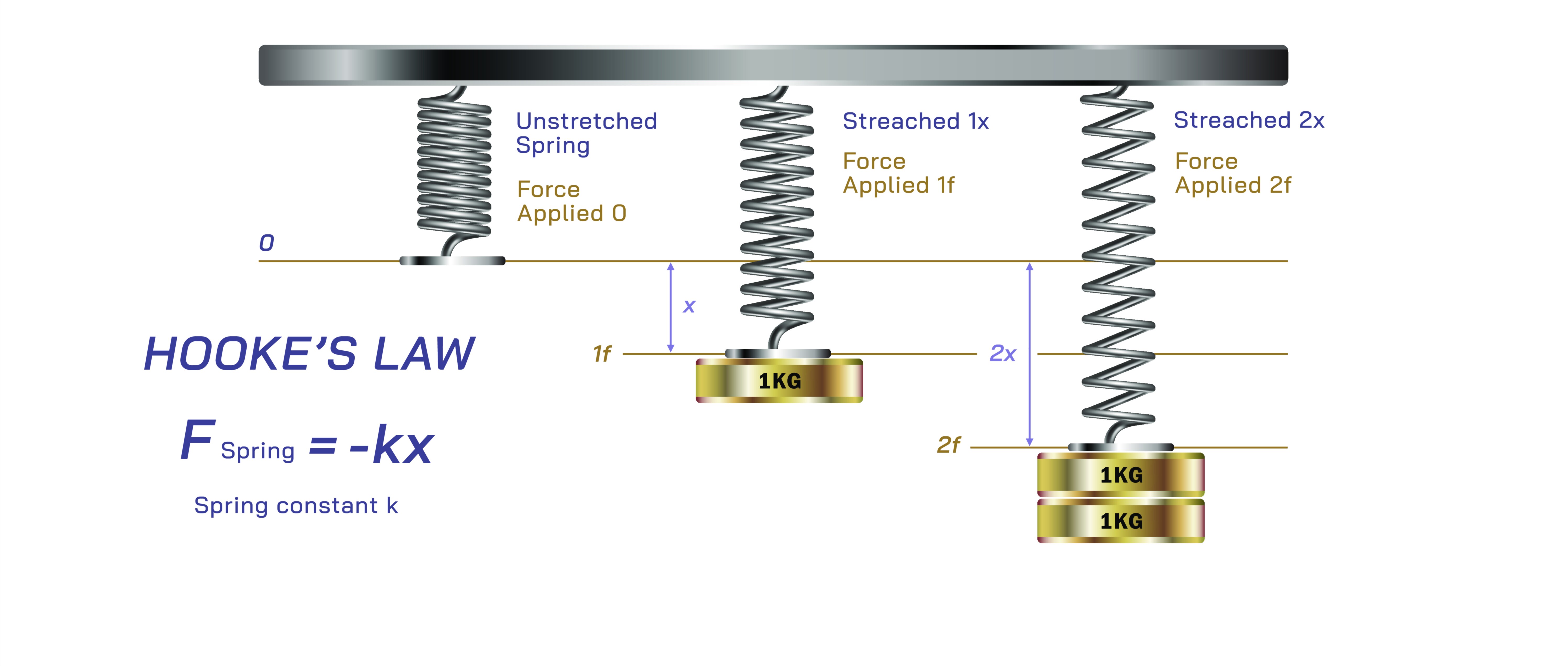
This relationship can be visualized by imagining a spring attached to a wall. When the spring is left untouched, it remains at its natural length. If someone pulls on the spring gently, the coils separate a small amount. If they pull harder, the stretching increases. As the displacement grows, the spring generates a stronger internal resistance that pushes back against the direction of this pull. Hooke’s Law states that, within the limits of elasticity, this force is proportional to the extension. What makes this concept profound is that it applies far beyond metal springs. Stone columns supporting buildings, steel beams in bridges, rubber bands, trampoline surfaces, and tendons in the human body all create restoring forces when deformed. This means that Hooke’s Law forms a universal mechanical language through which the response of elastic materials can be predicted and controlled.
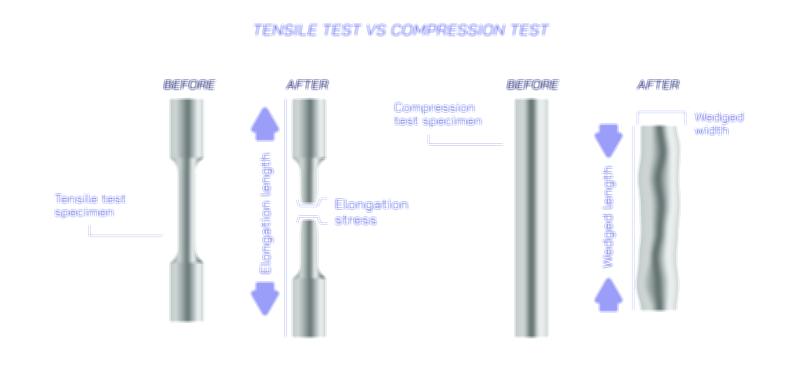
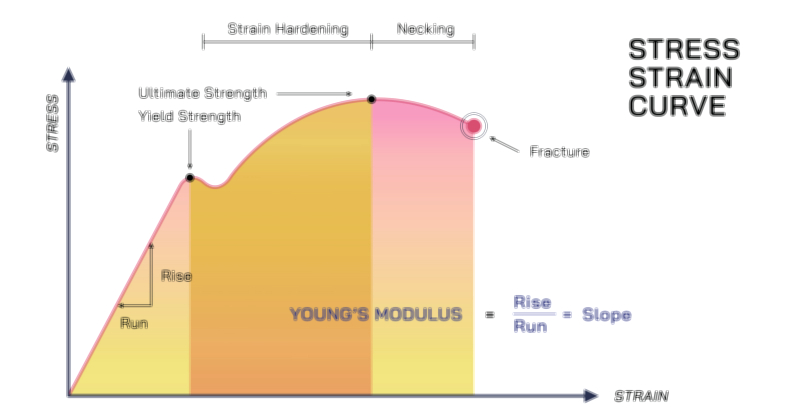
Elastic behavior reflects a form of temporary structural distortion. If a deformation remains small enough, the internal molecular forces can pull the substance back to its original configuration once the applied force is removed. This regime of behavior is known as the elastic region. Here, no permanent change occurs, the material retains memory of its initial state, and deformation can be repeated indefinitely as long as it stays within this boundary. In engineered systems, staying within the elastic limit is essential for safety and durability. A skyscraper swaying under wind loads, a bridge vibrating under traffic, or a vehicle frame responding to road bumps must all return to their designed form after experiencing force. Designers ensure that these forces do not exceed the threshold beyond which elasticity can no longer maintain recovery.
Beyond the elastic limit lies an entirely different regime of behavior. If a force becomes too large, the internal bonds deform beyond their capacity for recovery. The material begins to experience plastic deformation, meaning the new structural arrangement becomes permanent. A bent metal rod that does not straighten after the force is removed, a dented car bumper, or overstretched ligaments in the human body are examples of this irreversible change. In extreme cases, internal bonds fail entirely, resulting in fracture or breakage. Hooke’s Law applies only within the elastic region, but that region is where nearly all engineered design strives to operate, and where nature also maintains recurring, reliable resilience.
Beyond its intuitive aspects, Hooke’s Law provides deep insight into one of nature’s core tendencies — balance between energy storage and release. When a spring or elastic material is stretched, it stores potential energy distributed throughout its structure. This stored energy is released when the deforming force ends, generating motion and a restoring push toward equilibrium. The bow of an archer stores elastic energy when drawn, which transforms into kinetic energy when the arrow is released. A diving board flexes downward, accumulating energy that propels the diver upward. Even earthquake faults operate under a form of elastic potential buildup where tectonic plates shift against frictional resistance, storing mechanical strain that suddenly unleashes in seismic waves. These processes reveal that elasticity serves as a temporary bank of mechanical energy that time and forces may later withdraw.
Elasticity shaped by Hooke’s Law appears in ways far beyond springs and sports equipment. Human physiology depends on elastic materials working flawlessly. Tendons stretch slightly when muscles contract and then retract to maintain tension and movement control. Arteries expand subtly with each heartbeat, storing energy that helps maintain blood flow between pulses. Cartilage compresses under body weight in joints but springs back to maintain lubrication and mobility. Skin stretches to accommodate movement and returns to its original form to maintain structure. In all these biological systems, the principle remains consistent — deformation within safe limits allows flexible response to forces while always seeking recovery. When injuries occur, it is often because tissues are stretched beyond their elastic limit, breaking cell structures and creating lasting damage.
Structural and mechanical engineering also depend critically on elasticity governed by Hooke’s Law. Steel beams in buildings deform slightly under load, allowing structures to absorb stresses rather than crack. Suspension systems in vehicles rely on springs and shock absorbers to moderate disturbances from uneven terrain, ensuring both comfort and safety. Railway tracks expand and contract due to temperature changes, requiring precise engineering so that the elastic shifts do not cause permanent distortion. Airplane wings flex during flight to adjust dynamically to changing pressures, relying on predictable elastic behavior to avoid failure. In every system that undergoes cyclical stress, elasticity ensures reversible deformation and long-term functionality.
Hooke’s Law also lies at the foundation of vibrational motion. Springs provide the restoring force that creates oscillation in mechanical systems. Clocks, musical instruments, and countless machines rely on harmonic motion that arises specifically from the proportional response described by Hooke’s Law. A guitar string, when plucked, stretches slightly and the restoring force pulls it back toward equilibrium, creating sound waves through continuous oscillation. Seismographs measure ground movement through compressed and extended springs responding to vibrations. Even atomic bonds act like tiny springs, and the vibrational behavior of molecules can be interpreted through the same conceptual foundation. This leads into areas of physics such as acoustics and quantum mechanics, where elastic forces shape patterns of wave behavior.
What makes Hooke’s Law especially powerful is that it unites simple mechanical observation with the deeper molecular reality of matter. It demonstrates that even the most complex structural systems obey universal principles governing force and deformation. Although we never see atoms directly, Hooke’s Law allows us to infer their role in mechanical response. Every elastic system, from trampoline mats to bone tissues to architectural frameworks, exhibits behavior rooted in tiny interactions between matter’s building blocks. Through this principle, the reliability of the macroscopic world is predictable because the responses of countless microscopic particles align in uniform patterns.
Hooke’s Law also encourages thinking about safety margins. Engineers, architects, product designers, and biomechanical specialists must carefully measure how much deformation a system can tolerate without drifting into the dangerous plastic regime. Bridges that sway too far, ropes that stretch beyond endurance, unbalanced loads on machinery, and misaligned joints in the body can all cause irreversible structural change. The understanding of elasticity helps create guidelines for safe operation, rescue stabilization strategies, construction codes, sports safety equipment, medical braces, and ergonomic tools.
Ultimately, Hooke’s Law reveals that resilience — the ability of a system to recover from force — is built into the structure of materials themselves. The law shows that elasticity is not merely a convenience in our physical environment; it is a natural consequence of atomic forces maintaining equilibrium. The spring-like nature of matter ensures stability, supports movement, protects structures from failure, and provides energy storage that drives countless natural and engineered systems. Through Hooke’s Law, physics teaches us that every forced deformation has a response, every stretch invites a return, and every system strives toward a state of balance.
By examining Hooke’s Law through a deeply conceptual lens, one sees far beyond a simple proportional rule. It becomes a story about how nature resists change, how structures store energy, how systems maintain shape under stress, and how equilibrium always exerts its quiet influence. Whether in a coiled spring, a skyscraper’s frame, a musical string, or the tissues of the human body, Hooke’s Law serves as a reminder that force and deformation are always in dialogue — and that within the elastic realm, recovery remains the most powerful message of all.