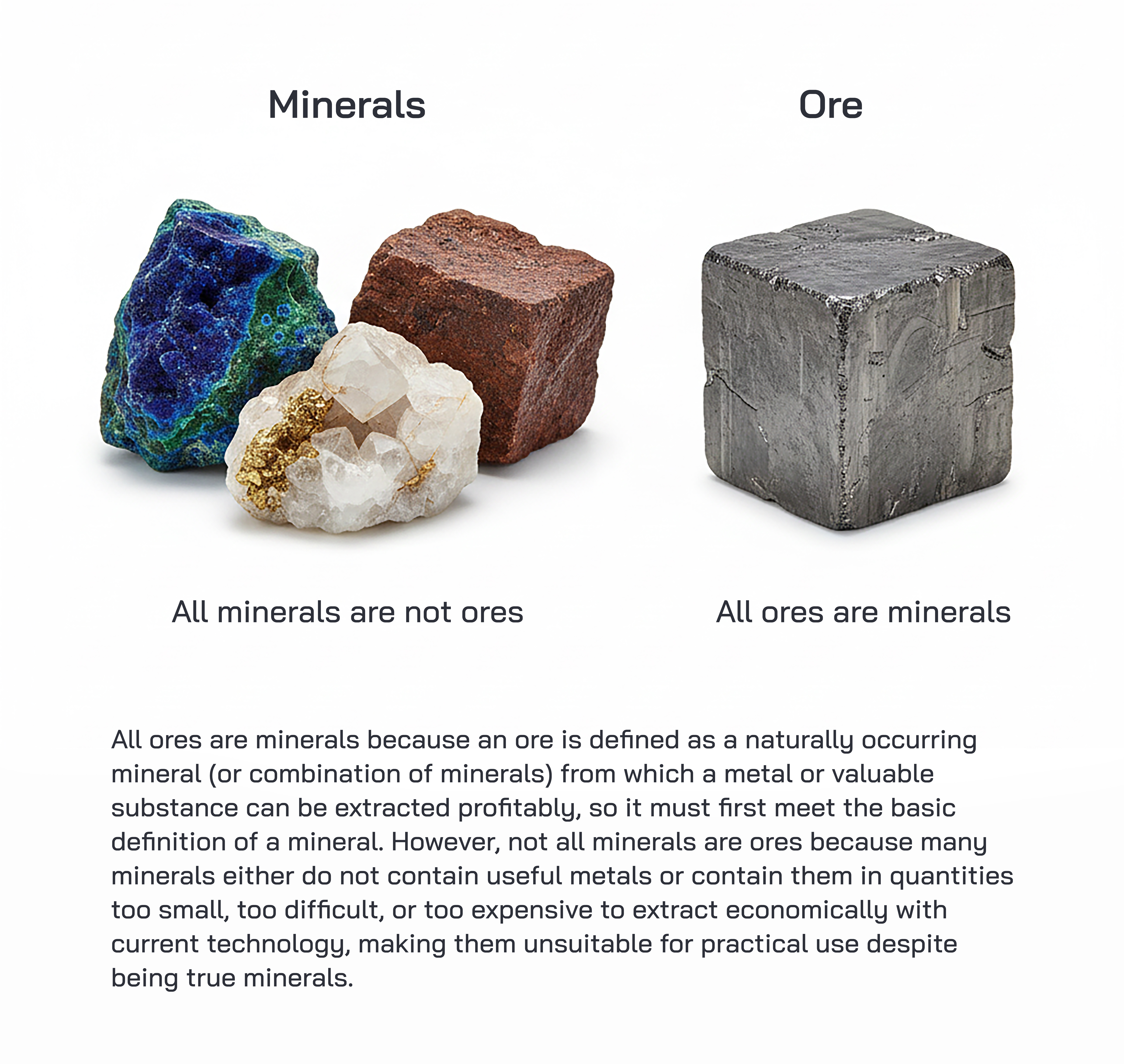
Minerals and ores are fundamental terms in geology and material science, often used interchangeably in everyday language but carrying very specific and distinct meanings in scientific and industrial contexts. While they are closely related, minerals and ores are not the same. A clear and important principle governs their relationship: all ores are minerals, but not all minerals are ores. Understanding this distinction is essential for comprehending how natural resources are formed, classified, and utilized by human society.
A mineral is a naturally occurring inorganic solid that possesses a definite chemical composition and an orderly internal crystal structure. Minerals are formed through natural geological processes without human intervention. They are the basic building blocks of rocks and are found throughout the Earth’s crust. Minerals exhibit consistent physical properties such as hardness, color, density, and crystal form, which allow them to be identified and classified. Examples of minerals include quartz, feldspar, mica, calcite, and many others that may or may not have economic value.
Minerals form through a variety of geological processes. Some crystallize directly from molten magma as it cools and solidifies beneath or above the Earth’s surface. Others form when minerals precipitate from solutions, such as when seawater evaporates or hydrothermal fluids cool within rock fractures. Still other minerals develop through metamorphism, where existing minerals are altered by heat and pressure deep within the Earth. These natural processes produce a vast diversity of minerals, each with unique chemical and physical characteristics.
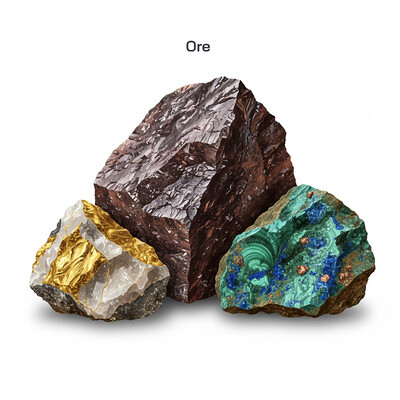
An ore, on the other hand, is a special category of mineral material. An ore is defined as a naturally occurring mineral or mineral aggregate that contains a valuable substance, usually a metal, in sufficient concentration to be extracted economically. The key factor that distinguishes an ore from a general mineral is economic viability. For a mineral to be considered an ore, it must be possible to extract the desired element using available technology at a profit. This means that the definition of ore can change over time as technology advances or market conditions shift.
The statement “all ores are minerals but all minerals are not ores” reflects this economic distinction. Every ore consists of one or more minerals that contain valuable elements. However, many minerals do not contain economically useful components or do not occur in concentrations high enough to justify extraction. For example, quartz is one of the most abundant minerals on Earth, but it is not an ore of silicon in most cases because extracting silicon from quartz is not economically practical for metal production under normal conditions. In contrast, bauxite is considered an ore because it contains aluminum-bearing minerals in concentrations suitable for profitable extraction.
Ores are typically associated with metallic elements such as iron, copper, aluminum, gold, silver, lead, and zinc. Iron ore, for instance, consists mainly of minerals such as hematite and magnetite, which contain high percentages of iron. Copper ore includes minerals like chalcopyrite and malachite that are rich in copper. These minerals are classified as ores because they meet the economic criteria for extraction and industrial use.
Minerals that are not ores still play important roles in nature and human activities. Many non-ore minerals are essential for construction, manufacturing, and daily life. Limestone, gypsum, and quartz are used in cement production, glassmaking, and building materials. Although they may not yield metals, they are valuable mineral resources. However, they are not classified as ores unless they contain extractable metals or other substances of economic importance under specific conditions.
The formation of ores involves processes that concentrate valuable minerals from a larger volume of rock. This concentration is necessary because metals are usually dispersed throughout the Earth’s crust in very small amounts. Geological processes such as magmatic differentiation, hydrothermal circulation, sedimentary deposition, and metamorphic transformation can increase the concentration of certain minerals, leading to the formation of ore deposits. Without these concentration mechanisms, metals would remain too scattered to be mined efficiently.
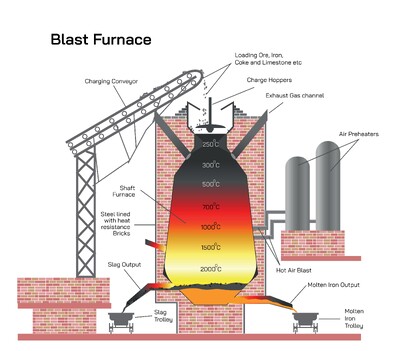
Mining is the process by which ores are extracted from the Earth. Once an ore is mined, it undergoes several processing stages to separate the valuable minerals from unwanted material known as gangue. This initial separation process is called beneficiation. After beneficiation, the concentrated ore is subjected to chemical or thermal treatment to extract the metal. These steps include smelting, refining, and purification, depending on the type of ore and metal involved.
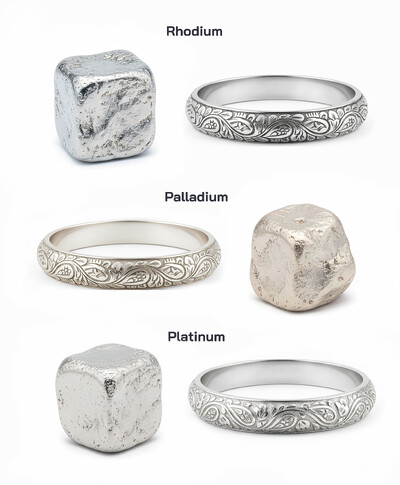
The usefulness of ores lies in their role as primary sources of metals that support modern civilization. Iron ore is essential for steel production, which forms the backbone of infrastructure, transportation, and machinery. Copper ore provides metal for electrical wiring and electronics. Aluminum ore contributes to lightweight structures used in aviation, packaging, and construction. Precious metal ores supply materials for jewelry, electronics, medical devices, and financial systems.
Minerals that are not ores still contribute significantly to human life by supporting industries such as ceramics, cement, fertilizers, and chemicals. They also play vital roles in natural ecosystems and geological processes. The distinction between minerals and ores does not reflect importance but rather economic function.
It is also important to note that a mineral that is not an ore today may become an ore in the future. Advances in extraction technology, increases in metal prices, or the discovery of new applications can transform previously uneconomic minerals into valuable ores. Similarly, an ore deposit may lose its status if extraction becomes too costly or if demand declines.
Beyond basic definitions, the distinction between minerals and ores becomes clearer when viewed through the concept of ore grade. Ore grade refers to the concentration of a valuable element within a mineral deposit. Even when a mineral contains a desired metal, it is only considered an ore if the concentration exceeds a minimum threshold known as the cutoff grade. This threshold is not fixed; it varies depending on mining costs, processing efficiency, energy prices, and market demand. A deposit with low metal content may be ignored for decades and later reclassified as an ore when extraction becomes economically favorable. This dynamic nature makes the classification of ores flexible and closely tied to human technological capability rather than purely geological factors.
Another important concept is gangue, the non-valuable material that occurs alongside ore minerals. In most ore bodies, valuable minerals form only a small fraction of the total rock mass. The remaining material has no direct economic value and must be separated during processing. The ease or difficulty of separating ore minerals from gangue strongly influences whether a mineral deposit qualifies as an ore. If separation requires excessive energy, water, or chemical reagents, the deposit may be deemed uneconomic despite containing valuable minerals.
Minerals and ores also differ significantly in how they are evaluated scientifically. Minerals are classified primarily based on chemistry and crystal structure, following strict mineralogical rules. Ores, however, are evaluated using economic, engineering, and environmental criteria in addition to geological ones. An ore deposit must be assessed for accessibility, depth, rock hardness, water conditions, and environmental risk. As a result, ore classification requires interdisciplinary analysis involving geologists, mining engineers, economists, and environmental scientists.
The relationship between minerals and ores is also deeply connected to technological evolution. Many metals used today, such as lithium, rare earth elements, and cobalt, were once considered minor or unimportant minerals. As modern technologies like batteries, renewable energy systems, and electronics emerged, these minerals gained strategic importance and became ores. This shift demonstrates that ore status reflects human needs as much as natural abundance. In contrast, some traditional ores may decline in importance if alternative materials replace them in industry.
Environmental considerations further distinguish ores from general minerals. Mining ores often involves large-scale excavation, waste generation, and landscape modification. As ore grades decrease globally, more rock must be mined to obtain the same amount of metal, increasing environmental impact. This reality has led to stricter regulations and growing interest in sustainable mining practices. Minerals that are not ores may remain undisturbed in nature, whereas ores are actively exploited, making their management a major environmental responsibility.
Recycling also plays an increasingly important role in the ore–mineral relationship. Metals originally extracted from ores can be reused many times without losing their properties. As recycling technology improves, some demand for primary ore extraction may decrease. However, recycling does not eliminate the need for ores entirely, as growing populations and emerging technologies continue to increase overall metal demand. Thus, ores remain essential even in a circular economy.
Geopolitical factors strongly influence which minerals are considered ores. Certain countries control large reserves of specific mineral resources, giving them strategic economic and political power. Minerals such as uranium, lithium, and rare earth elements are closely monitored because of their importance in energy, defense, and high-technology industries. When global supply chains shift, minerals in previously overlooked regions may suddenly gain ore status due to strategic necessity rather than abundance alone.
Another distinction lies in temporal value. Minerals exist independently of human timeframes, forming over millions or billions of years. Ores, however, are defined within short human economic cycles. A mineral deposit may be an ore for a few decades and then become uneconomic due to depletion or price changes. This temporal aspect emphasizes that ore classification is temporary and context-dependent, whereas minerals themselves remain permanent components of Earth’s crust.
Advances in mineral processing have blurred traditional boundaries between low-grade ores and waste rock. Techniques such as bioleaching, hydrometallurgy, and automated ore sorting now allow extraction from materials once considered useless. This has expanded the definition of ore and reduced waste, but it also increases energy consumption and technological complexity. As these technologies improve, the line between mineral and ore continues to shift.
From an educational perspective, understanding the difference between minerals and ores helps clarify misconceptions about natural resources. Students often assume that all minerals are valuable or that value is intrinsic. In reality, value arises from a combination of rarity, usefulness, accessibility, and economic demand. This understanding fosters more realistic expectations about resource availability and sustainability.
In the future, the mineral–ore relationship will become even more dynamic. As humanity explores deeper underground, the ocean floor, and even extraterrestrial bodies, materials previously irrelevant may become critical resources. Asteroid mining concepts already challenge traditional definitions of ore by removing Earth-based economic constraints. In such contexts, minerals may gain ore status based on entirely new criteria.
A deeper understanding of minerals and ores also requires examining the concept of resource versus reserve, which is central to economic geology. A mineral resource refers to a concentration of material with potential economic interest, whereas a mineral reserve represents the portion of that resource that can be economically extracted at present. This distinction highlights that not all identified mineral deposits qualify as ores immediately. Reserves are dynamic and fluctuate as prices, technology, and regulations change. A mineral deposit may exist as a known resource for decades before becoming classified as an ore reserve due to advancements in extraction methods or increased demand.
Exploration science plays a critical role in transforming minerals into ores. Geologists use advanced tools such as geophysical surveys, geochemical analysis, and remote sensing to identify subtle mineral signatures beneath the surface. These techniques allow scientists to predict the presence of valuable minerals long before excavation begins. However, discovery alone does not guarantee ore status. Detailed feasibility studies must confirm that mining the deposit is economically viable, environmentally permissible, and socially acceptable. Thus, ore classification is the final outcome of a long, multidisciplinary evaluation process.
Another unique dimension in the mineral–ore relationship is technological cutoff. Every extraction technology has limitations regarding depth, hardness, chemical complexity, and energy requirements. Minerals that are too deep, too finely dispersed, or chemically bound may remain unclassified as ores until new technology emerges. History shows many examples where technological breakthroughs, such as flotation methods or solvent extraction, suddenly elevated low-grade mineral deposits into economically viable ores. This demonstrates that ore status is often a reflection of engineering capability rather than natural richness alone.
Energy availability is another determining factor. Mining and processing ores are energy-intensive activities. If energy costs rise sharply, some ores may become uneconomic despite high metal content. Conversely, access to cheap or renewable energy can expand ore viability. This energy–ore relationship is increasingly important in the context of climate change and decarbonization, as industries seek lower-emission pathways for metal production. Minerals that require less energy to process may gain preference over traditionally dominant ores.
Environmental ethics further complicate the distinction between minerals and ores. Some mineral deposits are deliberately left unmined despite economic value because of ecological sensitivity, cultural significance, or legal protection. In such cases, minerals remain minerals rather than ores by choice rather than limitation. This reflects a shift in modern resource management, where environmental and social costs are weighed alongside financial benefits. As sustainability standards become stricter, the criteria for ore classification continue to evolve.
The concept of substitution also influences ore importance. When a metal becomes scarce or expensive, industries often seek alternative materials. This can reduce demand for certain ores while increasing demand for others. For example, lightweight alloys, composites, and synthetic materials can reduce reliance on traditional metal ores. As a result, the economic value of specific mineral deposits can rise or fall without any geological change, purely due to innovation in material science.
Depletion trends provide another unique perspective. High-grade ores are typically mined first because they are easiest and cheapest to extract. Over time, industries are forced to exploit lower-grade ores, increasing waste generation and processing complexity. This gradual decline in average ore grade worldwide has major implications for sustainability, resource efficiency, and environmental impact. Minerals that were once ignored are increasingly reassessed as potential ores to compensate for depletion of richer deposits.
The mineral–ore distinction also affects national resource policies. Governments classify certain minerals as strategic or critical based on economic security, defense needs, and technological dependence. Strategic minerals may receive special exploration incentives, subsidies, or export controls. In such cases, minerals gain ore-like importance even if they are not traditionally mined at large scale. This policy-driven reclassification highlights how geopolitical priorities can influence the economic identity of minerals.
From a long-term planetary perspective, minerals are finite but unevenly distributed. Ores represent concentrated points within this uneven distribution that humans exploit. As easily accessible ores diminish, future societies may rely more on deep mining, urban mining, or even extraterrestrial resources. This future-oriented view reinforces the idea that ores are a temporary classification shaped by human capability and necessity, while minerals remain permanent components of Earth’s geology.
Education and public understanding also benefit from recognizing this distinction. Confusing minerals with ores can lead to unrealistic expectations about resource availability and mining impacts. Understanding that value depends on concentration, accessibility, and economics helps clarify why some regions experience intense mining while others remain untouched despite similar geology. It also explains why mining activity fluctuates with global markets rather than remaining constant.
In essence, minerals represent Earth’s raw geological inventory, while ores represent humanity’s selective utilization of that inventory. The transformation from mineral to ore is governed not by nature alone but by a complex interplay of science, technology, economics, energy, ethics, and societal priorities. This relationship is continuously reshaped as civilization evolves, ensuring that the concept of ore remains fluid, adaptive, and deeply connected to human progress rather than fixed geological identity.
In summary, minerals are naturally occurring inorganic solids with specific chemical compositions and crystal structures, forming the basic materials of the Earth’s crust. Ores are a subset of minerals that contain valuable substances in concentrations high enough for economical extraction. This relationship explains why all ores are minerals, but not all minerals qualify as ores. Understanding this distinction is fundamental to geology, mining, and resource management and highlights the close connection between Earth’s natural processes and human technological development. Minerals and ores are connected but fundamentally different in purpose and evaluation. Minerals represent Earth’s natural chemical diversity, while ores represent humanity’s ability to harness that diversity for practical use. The distinction is not static; it evolves with technology, economics, environmental awareness, and societal needs. Recognizing this relationship provides a deeper understanding of how natural resources shape civilization and how human choices redefine what is considered valuable within the Earth’s crust.