Gold is one of the most valued natural elements known to humanity, admired for its distinctive appearance, physical stability, and enduring worth. Classified as a precious metal, gold has played a central role in shaping economic systems, cultural traditions, and technological progress across civilizations. Its naturally bright yellow color, combined with resistance to corrosion and tarnish, sets it apart from most other metals and contributes to its lasting appeal.
One of the most important characteristics of gold is its exceptional physical behavior. Gold is highly malleable, meaning it can be shaped into extremely thin sheets without breaking, and remarkably ductile, allowing it to be drawn into fine wires. These properties make gold unique among metals and allow it to be used in applications requiring precision and reliability. Its high density gives it substantial weight relative to size, reinforcing its perception as a substance of value and permanence.
Chemically, gold is highly inert, which means it does not easily react with air, water, or most chemicals. This resistance to corrosion ensures that gold retains its form and appearance over long periods of time. Because of this stability, gold artifacts recovered from ancient civilizations often remain intact, preserving their structure and brilliance even after centuries underground. This durability has reinforced gold’s association with longevity and timelessness.
Gold’s importance extends far beyond its physical traits. Historically, gold has been used as a medium of exchange, a store of wealth, and a foundation for monetary systems. Many early economies relied on gold coins and bullion to establish trust and facilitate trade. Even as modern currencies evolved, gold retained its role as a benchmark of value and financial security.
In the modern global economy, gold remains a critical reserve asset held by central banks and financial institutions. These gold reserves serve as a safeguard against economic instability, currency fluctuations, and inflationary pressures. Countries maintain gold holdings to strengthen confidence in their financial systems and to provide a stable asset during times of global uncertainty.
Gold reserves are distributed unevenly across the world, influenced by geology, historical mining activity, and national policy. Large quantities of gold are stored in secured vaults as part of national reserves, while significant natural deposits are found in specific regions with favorable geological conditions. These gold-rich areas have historically supported mining industries that contribute to local and national economies.
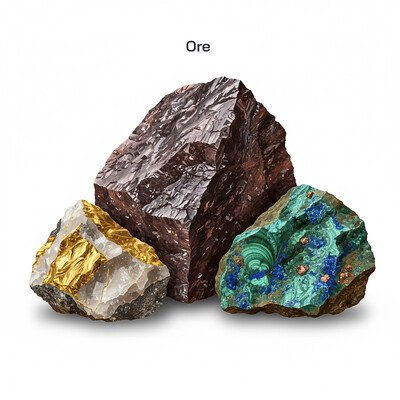
From a geological perspective, gold occurs naturally in the Earth’s crust, often associated with quartz veins and mineral-rich rock formations. Extracting gold requires careful mining and refining processes to separate the metal from surrounding material. Advances in extraction technology have improved efficiency while reducing environmental impact, allowing gold production to meet global demand.
Gold’s uses have expanded significantly beyond traditional ornamentation. While jewelry remains one of the most visible and culturally significant applications, gold is also essential in modern technology. Its excellent electrical conductivity and resistance to oxidation make it ideal for electronic components, where reliability and longevity are critical. Gold is used in circuit boards, connectors, and precision devices that support global communication and computing systems.
In medicine, gold plays a specialized role due to its biocompatibility. It is used in certain dental applications and medical treatments where stability and non-reactivity are essential. Gold-based materials have also found applications in advanced research fields, including targeted therapies and diagnostic technologies.
Gold’s role in space and engineering applications further highlights its importance. Its reflective properties and resistance to extreme conditions make it valuable in aerospace systems, where protection against radiation and temperature variation is required. These high-performance uses demonstrate gold’s relevance in cutting-edge innovation.
Culturally, gold holds deep symbolic meaning across societies. It is associated with wealth, power, achievement, and celebration. Gold has been used in religious artifacts, ceremonial objects, and artistic creations throughout history. These cultural associations reinforce gold’s status as more than a material, elevating it to a symbol of human aspiration and accomplishment.
The global popularity of gold is driven by a combination of tradition, trust, and utility. Investors view gold as a long-term safeguard that preserves value across generations. Consumers appreciate its beauty and craftsmanship, while industries rely on its reliability. This multi-dimensional demand ensures that gold remains relevant across economic cycles and technological change.
Gold also plays a key role in financial strategy as a hedge against inflation and economic volatility. During periods of uncertainty, demand for gold often increases as individuals and institutions seek stability. This behavior underscores gold’s unique position as both a commodity and a financial anchor.
Beyond its well-known malleability and resistance to corrosion, gold possesses several lesser-discussed characteristics that enhance its functional and symbolic value. One such trait is its exceptional reflectivity, particularly in the infrared spectrum. This makes gold highly effective as a protective coating in environments exposed to intense radiation or heat. Thin layers of gold can reflect thermal energy efficiently, which is why it is used in protective visors, architectural glass coatings, and advanced scientific instruments. This reflective behavior contributes to energy control and protection rather than aesthetics alone.
Historically, gold’s influence on human development extends into governance and power structures. Control over gold resources often determined political strength and territorial expansion. Empires that managed steady gold supplies were able to fund armies, infrastructure, and cultural projects, reinforcing authority and stability. Gold taxation, tribute systems, and trade routes shaped early international relations, linking distant regions through shared dependence on the metal. In this way, gold acted as a unifying economic language long before standardized global currencies existed.
Gold’s global importance is also tied to trust psychology. Unlike fiat currencies, which rely on institutional backing, gold derives value from universal human perception rather than policy. Across cultures with no shared language or belief system, gold has historically been recognized as valuable. This shared perception has allowed gold to function as a neutral asset in times of geopolitical tension, facilitating trade and negotiation when other forms of value exchange were unreliable or disputed.
When examining global gold reserves, it is important to distinguish between above-ground and below-ground holdings. A significant portion of all gold ever mined still exists in refined form, stored as bars, coins, or crafted objects. Unlike many natural resources that are consumed or degraded, gold is rarely destroyed. This accumulation of above-ground gold creates a unique supply dynamic where scarcity is shaped not by depletion alone but by circulation, hoarding behavior, and market sentiment. This enduring availability reinforces gold’s role as a long-term asset rather than a consumable commodity.
National gold reserves also carry symbolic weight beyond their financial function. Large reserves signal economic strength, independence, and preparedness. For emerging economies, increasing gold holdings is often viewed as a strategic move to reduce reliance on foreign currencies and external financial systems. This trend has grown in recent decades as global financial structures become more interconnected and vulnerable to systemic shocks. Gold thus serves as both a financial buffer and a statement of sovereignty.
In industrial use, gold’s reliability under extreme conditions continues to drive innovation. In precision manufacturing, gold coatings are applied to ensure consistent performance in micro-scale components where failure is not acceptable. Its predictable behavior under electrical load and environmental stress makes it invaluable in sectors such as aviation, defense, and advanced robotics. These applications prioritize performance stability over cost, reinforcing gold’s role as a premium functional material.
Gold’s expanding role in scientific research highlights its adaptability. In nanotechnology, gold particles are engineered at microscopic scales to interact with light and biological systems in controlled ways. These properties are being explored for imaging, sensing, and material science applications. Gold’s compatibility with living tissue has also positioned it as a promising material in experimental medical treatments, where precision and safety are critical.
From a social and cultural standpoint, gold’s popularity is reinforced by its intergenerational continuity. Gold objects are often passed down as heirlooms, preserving both material value and emotional significance. This practice strengthens gold’s role as a connector between past, present, and future, embedding it deeply within family histories and cultural memory. Unlike trend-driven assets, gold maintains relevance through continuity rather than novelty.
In global markets, gold’s pricing behavior reflects collective human response to uncertainty rather than simple supply-and-demand mechanics. Economic instability, geopolitical conflict, and shifts in monetary policy often influence gold demand more than industrial consumption alone. This sensitivity to human behavior makes gold a mirror of global confidence, rising in prominence when trust in other systems weakens.
Worldwide popularity of gold is further sustained by its accessibility across income levels. While large bars symbolize institutional wealth, gold is also available in small quantities through jewelry, coins, and micro-investment formats. This scalability allows individuals from diverse economic backgrounds to participate in gold ownership, reinforcing its universal appeal. Gold’s ability to represent both luxury and security contributes to its unmatched cultural reach.
Another dimension of gold’s uniqueness lies in its neutrality across technological transitions. Many materials gain importance during specific eras and then decline as innovation advances, but gold consistently integrates into new systems without losing its foundational relevance. As economies moved from barter to coinage, from metallic standards to digital finance, gold did not disappear; instead, its role shifted. This ability to remain relevant without direct dependence on a single economic model distinguishes gold from most other natural resources.
Gold’s interaction with global labor and craftsmanship traditions further enhances its importance. Across continents, specialized skills developed around gold working, refining, and artistry. These skills were often passed through generations, shaping regional identities and artisanal heritage. Even today, gold craftsmanship supports livelihoods in both traditional workshops and modern manufacturing environments. This continuity of skill preserves cultural knowledge while adapting to contemporary market demands.
In international relations, gold has often functioned as a stabilizing reference point during transitions of power. When nations undergo political change, restructuring, or conflict, gold reserves frequently act as financial anchors. Unlike infrastructure or currency systems that can be disrupted, gold’s physical portability and universal acceptance allow it to retain value across borders. This attribute has historically enabled governments, institutions, and even displaced populations to preserve wealth during periods of instability.
Gold’s environmental narrative is also evolving. While mining has traditionally been resource-intensive, modern approaches increasingly emphasize responsible sourcing, recycling, and traceability. A large proportion of gold used today originates from recycled materials rather than newly extracted ore. This recyclability aligns gold with circular economy principles, reducing pressure on natural ecosystems while maintaining supply. Unlike materials that degrade with reuse, recycled gold retains identical quality to newly mined gold.
The psychological appeal of gold is another factor that sustains its global demand. Humans are naturally drawn to materials that convey permanence and certainty. Gold’s visual warmth, weight, and resistance to decay create a sensory assurance that few materials provide. This perception influences behavior in subtle ways, shaping consumer choices, investment strategies, and cultural rituals. Gold’s appeal operates as much on emotional trust as on rational valuation.
In the digital age, gold has found new relevance through financial innovation. Digital representations of gold ownership allow individuals and institutions to hold value linked to physical gold without direct possession. This integration bridges traditional asset security with modern accessibility. By anchoring digital systems to a tangible resource, gold continues to provide confidence in increasingly abstract financial environments.
Gold’s educational value should not be overlooked. It serves as a foundational example in disciplines ranging from chemistry and geology to economics and history. Its clear properties make it an effective teaching material for understanding atomic behavior, mineral formation, and monetary theory. This educational presence reinforces gold’s role in shaping human understanding of both natural science and societal development.
Culturally, gold adapts to changing aesthetic preferences while maintaining symbolic strength. Design trends may influence how gold is shaped, combined, or presented, but its core meaning remains intact. Whether minimalistic or ornate, gold objects consistently signify importance and intentionality. This adaptability allows gold to remain fashionable without becoming trend-dependent, ensuring long-term cultural relevance.
On a global scale, gold’s popularity is reinforced by demographic shifts and expanding access to markets. As new populations gain financial inclusion, gold often becomes an entry point into asset ownership. Its recognizability and trustworthiness make it a preferred choice in regions where financial systems are still developing or rapidly changing. This expanding base of participation sustains gold’s worldwide demand.
Gold’s future relevance is also linked to uncertainty itself. As technological, environmental, and geopolitical systems grow more complex, assets that offer clarity and continuity gain importance. Gold does not promise growth through innovation but stability through consistency. This role complements rather than competes with modern advancements, positioning gold as a balancing force within global systems.
Ultimately, gold endures not because it resists change, but because it absorbs it. Its physical properties remain constant while its applications evolve. Its value persists not through novelty, but through reliability recognized across cultures and centuries. In a world defined by rapid transformation, gold stands as a material reminder that some forms of value are not created by speed or complexity, but by trust earned over time.
In a rapidly evolving global landscape, gold continues to occupy a unique position at the intersection of nature, economy, and human psychology. Its physical stability supports technological advancement, its historical legacy reinforces trust, and its cultural symbolism sustains demand across generations. Rather than being replaced by modern systems, gold adapts alongside them, maintaining relevance through reliability rather than reinvention. This enduring adaptability ensures that gold remains one of the most influential and respected elements in the world.
In summary, gold is a metal defined by rare physical properties, deep historical significance, and unmatched global importance. Its characteristics of durability, malleability, and chemical stability support a wide range of uses, from financial reserves and jewelry to advanced technology and medicine. With widespread global reserves, strategic importance, and enduring popularity, gold continues to stand as one of the most valuable and trusted resources in the world.