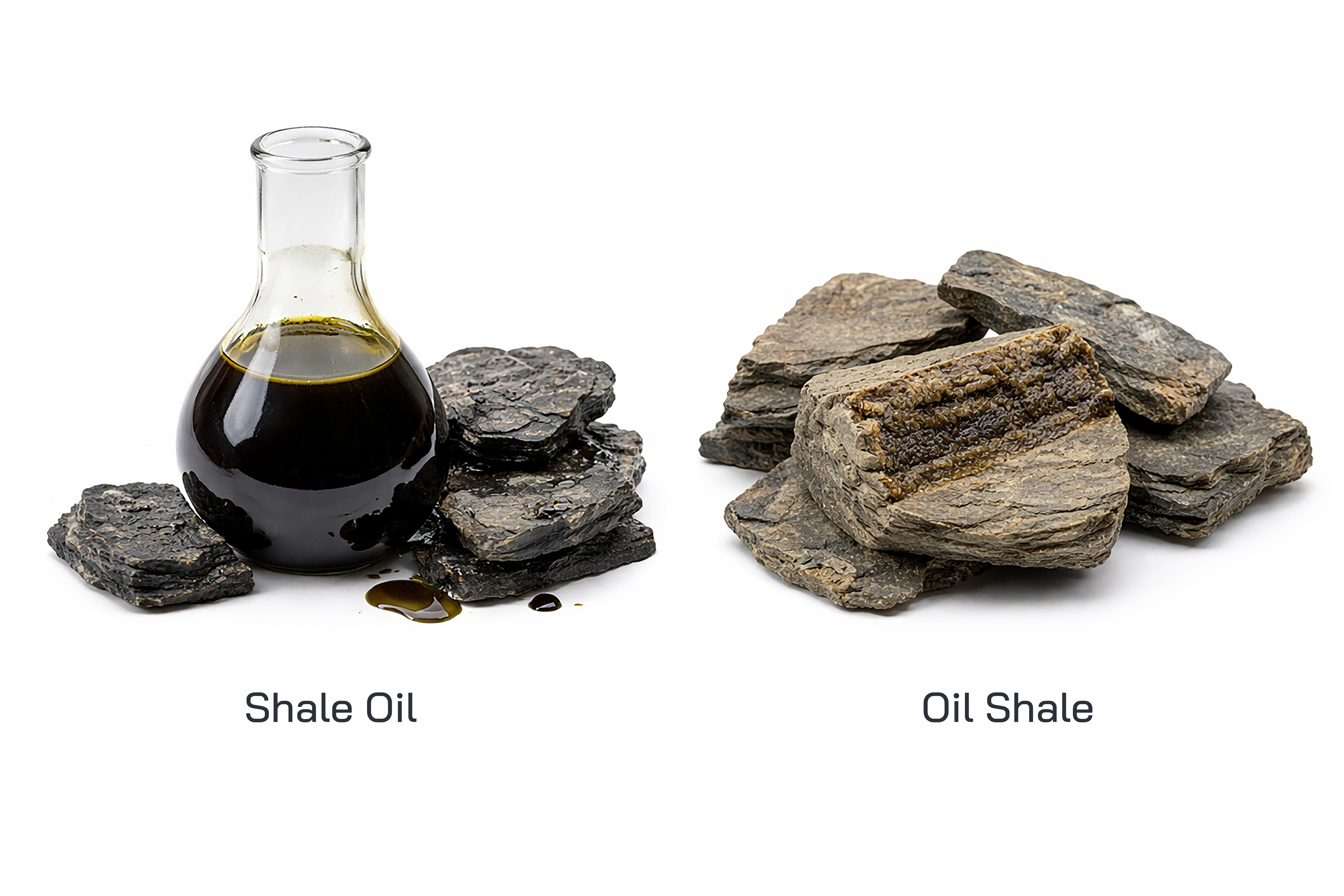
Shale oil and oil shale are two closely related but fundamentally different energy resources that are often confused because of their similar names. Both are associated with fine-grained sedimentary rocks known as shale, and both play a role in modern discussions about unconventional fossil fuels and energy security. However, shale oil and oil shale differ significantly in their physical state, geological formation, extraction methods, characteristics, and end uses. Understanding these differences is essential for grasping their importance in the global energy landscape.
Shale oil refers to liquid hydrocarbons that are extracted from shale formations. It is a type of unconventional crude oil found trapped within low-permeability shale or tight rock formations. Unlike conventional oil reservoirs, where oil flows easily through porous rock, shale oil is held within microscopic pores and fractures. Because of this, advanced extraction technologies are required to release it. Shale oil is already in liquid form when extracted and can be processed in refineries in much the same way as conventional crude oil.
Oil shale, on the other hand, is a fine-grained sedimentary rock that contains a solid organic material known as kerogen. Kerogen is not oil itself but a precursor that can be converted into oil when heated to high temperatures. Oil shale does not yield liquid oil directly through simple pumping. Instead, it requires additional processing to convert kerogen into usable hydrocarbons. This fundamental difference in physical state is the key distinction between shale oil and oil shale.
The geological formation of shale oil begins with the accumulation of organic matter such as algae and plankton in ancient marine or lake environments. Over millions of years, heat and pressure transformed this organic material into hydrocarbons trapped within shale layers. These shale formations are typically deeply buried and widespread across large regions. Oil shale forms in a similar sedimentary environment, but the organic matter did not experience sufficient heat and pressure to fully convert into oil. As a result, the organic content remained in the solid kerogen form within the rock.
In terms of characteristics, shale oil is a liquid fuel with properties similar to light crude oil. It generally has a lower density and higher proportion of lighter hydrocarbons, which makes it valuable for producing gasoline, diesel, and other transportation fuels. Shale oil flows only when stimulated by artificial fractures in the rock, but once extracted, it behaves like conventional oil. Oil shale, by contrast, is a solid rock with relatively low energy density until processed. It must undergo thermal treatment to release usable hydrocarbons.
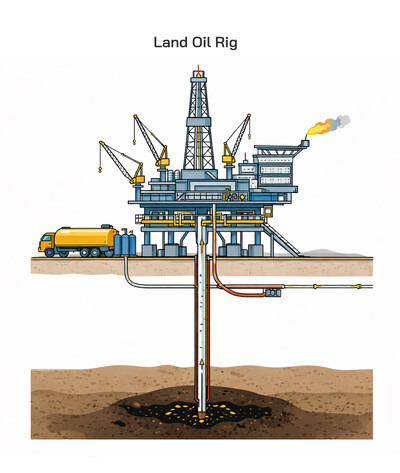
The extraction of shale oil relies primarily on horizontal drilling combined with hydraulic fracturing. Horizontal drilling allows wells to extend laterally through shale layers, increasing contact with the resource. Hydraulic fracturing involves injecting high-pressure fluid into the rock to create fractures, allowing trapped oil to flow toward the wellbore. This method has revolutionized oil production in several countries by unlocking vast reserves previously considered uneconomical. Shale oil extraction occurs underground and does not require large-scale mining of rock.
Oil shale extraction is more complex and energy-intensive. One method involves mining the oil shale rock and heating it in a facility known as a retort. This heating process breaks down kerogen into synthetic oil and gas, which can then be collected and refined. Another approach involves heating the oil shale underground using electric heaters or other thermal methods, allowing the converted oil to be pumped to the surface. Both methods require significant energy input and careful environmental management.
The uses of shale oil are similar to those of conventional petroleum. Once refined, shale oil is used to produce fuels for transportation, including gasoline, diesel, and aviation fuel. It also serves as a feedstock for the petrochemical industry, supporting the production of plastics, synthetic fibers, solvents, and other chemical products. Shale oil plays a major role in enhancing energy supply and reducing dependence on imported crude oil in some regions.
Oil shale has more limited and specialized uses due to the complexity of its processing. The synthetic oil produced from oil shale can be refined into transportation fuels and industrial oils. Oil shale can also be used directly as a fuel for electricity generation by burning it in power plants designed for this purpose. In addition, some oil shale deposits are used as a source of minerals and construction materials. However, widespread use of oil shale is constrained by economic and environmental considerations.
Environmental impact is an important aspect of the comparison between shale oil and oil shale. Shale oil production raises concerns related to water use, land disturbance, and potential groundwater contamination associated with hydraulic fracturing. Oil shale development often involves surface mining or extensive heating, leading to landscape alteration, higher carbon emissions, and waste material generation. Both resources require careful regulation and technological improvements to minimize environmental damage.
From an energy perspective, shale oil has gained greater commercial success because it can be integrated more easily into existing oil infrastructure. Its liquid nature and compatibility with conventional refining make it economically attractive when oil prices are favorable. Oil shale represents a much larger potential resource in terms of total volume, but its development is slower due to higher costs and technical challenges.
Shale oil and oil shale can be explored in even greater depth by examining their broader geological context, chemical composition, technological evolution, economic implications, and long-term role in global energy systems. Although both resources are grouped under the category of unconventional fossil fuels, they represent two very different stages in the natural transformation of organic matter and two contrasting approaches to energy extraction and utilization.
From a geological standpoint, shale oil is closely linked to mature petroleum systems. The organic matter within shale formations that host shale oil has already passed through the critical stages of thermal maturation. This means the kerogen originally present in the source rock has been converted into liquid hydrocarbons through natural heat and pressure over geological time. However, unlike conventional oil reservoirs, the oil did not migrate into porous reservoir rocks. Instead, it remained trapped within the same shale that generated it, locked in tiny pores and natural fractures. This geological characteristic explains why shale oil is widespread but difficult to extract and why advanced drilling techniques are required to make it commercially viable.
Oil shale represents an earlier stage in this geological transformation process. The organic matter within oil shale deposits was preserved in environments with limited oxygen, such as ancient lakes or shallow seas, but it did not experience sufficient burial depth or heat to fully convert into liquid oil. As a result, kerogen remains solid and chemically complex. Oil shale can be thought of as a “future oil” resource that requires artificial heating to complete the transformation process that nature did not finish. This distinction highlights a fundamental difference: shale oil is naturally formed oil that is difficult to access, whereas oil shale is not oil at all until it is processed.
The chemical nature of shale oil and oil shale further emphasizes their differences. Shale oil typically contains a higher proportion of lighter hydrocarbons, including paraffins and naphthenes, which makes it suitable for producing high-value fuels. Its chemical composition often results in higher yields of gasoline and diesel after refining, although it may also contain impurities such as sulfur or nitrogen that require treatment. Oil shale kerogen, on the other hand, is a complex macromolecule that breaks down into a mixture of oil, gas, and solid residue when heated. The synthetic oil produced from oil shale often requires extensive upgrading to meet fuel standards.
Technological development has played a decisive role in shaping the fortunes of these two resources. Shale oil remained largely inaccessible until the combination of horizontal drilling and hydraulic fracturing became economically feasible. These technologies transformed energy markets by enabling rapid, scalable production from shale formations. Oil shale technology has advanced more slowly because it involves either large-scale mining or prolonged heating of rock, both of which are capital-intensive and technically challenging. While pilot projects have demonstrated feasibility, widespread commercial adoption has been limited.
Economically, shale oil and oil shale respond differently to market conditions. Shale oil production is relatively flexible, allowing operators to increase or decrease drilling activity in response to oil prices. This flexibility has made shale oil an important factor in global oil supply dynamics, influencing prices and reducing the dominance of traditional oil-producing regions. Oil shale projects, in contrast, require long-term investment and stable prices to justify development. Once built, oil shale facilities are less adaptable to rapid market changes, making them riskier investments.
The energy return on investment also differs between the two resources. Shale oil generally offers a higher net energy return because the oil is already in liquid form and requires less processing after extraction. Oil shale has a lower energy return because significant energy must be input to heat the rock and convert kerogen into usable oil. This difference affects not only economic viability but also environmental footprint, as higher energy input often translates into higher emissions.
Water use and waste management present another area of contrast. Shale oil extraction requires water primarily for hydraulic fracturing, with concerns focused on water sourcing, wastewater disposal, and contamination risks. Oil shale development can require even larger volumes of water for mining, processing, and cooling, especially in arid regions where many deposits are located. In addition, oil shale processing generates large amounts of spent shale, a solid waste that must be managed carefully to prevent environmental harm.
From a strategic perspective, shale oil and oil shale play different roles in energy security planning. Shale oil has already proven its ability to rapidly boost domestic oil production, reducing reliance on imports and increasing geopolitical flexibility for producing countries. Oil shale represents a vast potential energy reserve that could become important in the long term if conventional and shale oil resources decline or if technological breakthroughs reduce costs and environmental impacts.
The environmental debate surrounding these resources also differs in emphasis. Shale oil development is often criticized for its localized environmental impacts, including land disturbance, seismic activity, and water-related issues. Oil shale raises broader concerns about landscape alteration, carbon intensity, and long-term waste disposal. Both resources highlight the trade-offs involved in meeting energy demand with fossil fuels in an era of increasing environmental awareness.
Looking to the future, shale oil is likely to remain an important component of the global energy mix as long as oil demand persists and extraction technologies continue to improve. Oil shale’s future is more uncertain and depends heavily on technological innovation, regulatory frameworks, and global climate policies. Some research focuses on developing more efficient in-situ conversion methods that reduce surface disruption and emissions, potentially making oil shale more viable.
In a broader energy transition context, shale oil and oil shale illustrate the extremes of fossil fuel development: one resource unlocked by innovation and market forces, the other constrained by technical and environmental challenges. Together, they provide valuable lessons about how geology, technology, economics, and environmental considerations interact to shape energy systems.
Shale oil and oil shale can be further distinguished and better understood by examining their historical development, regional distribution, regulatory challenges, technological risks, and their place in the long-term transition of global energy systems. These resources not only differ scientifically but also represent contrasting philosophies of energy extraction—one focused on unlocking trapped fluids, the other on artificially completing a natural geological process.
Historically, oil shale was known and used long before shale oil became commercially viable. In the nineteenth and early twentieth centuries, oil shale was mined and processed in several countries, particularly where conventional oil resources were scarce. Early industrial oil shale operations existed in parts of Europe, producing lighting oil and lubricants before the widespread availability of petroleum. These early uses demonstrate that oil shale has long been viewed as a strategic fallback energy resource during periods of fuel scarcity. Shale oil, by contrast, remained largely inaccessible until the late twentieth century, when technological advances transformed shale formations into economically productive oil sources.
The geographical distribution of shale oil and oil shale also differs significantly. Shale oil formations are widely distributed and often overlap with existing oil-producing regions. Major shale oil basins occur in North America, South America, parts of Eurasia, and the Middle East. These formations tend to be deeply buried and extend over vast areas, making them suitable for large-scale development using standardized drilling techniques. Oil shale deposits are often more localized and occur in specific sedimentary basins formed under unique geological conditions. Some of the largest oil shale resources are found in regions with limited water availability, which presents additional challenges for development.
From a regulatory standpoint, shale oil and oil shale face different oversight frameworks. Shale oil development is typically regulated under existing oil and gas laws, with additional environmental regulations addressing hydraulic fracturing, water management, and emissions. Oil shale development often falls under mining regulations as well as energy laws, requiring more complex permitting processes. The need to manage solid waste, land reclamation, and long-term environmental impacts makes oil shale projects subject to stricter scrutiny in many jurisdictions.
Technological risk profiles also differ between the two resources. Shale oil extraction relies on proven technologies that can be deployed rapidly and adjusted based on performance data. While risks exist, particularly related to subsurface behavior and well productivity, operators can mitigate these risks through drilling optimization and data analytics. Oil shale projects involve higher upfront capital investment and longer development timelines, increasing financial risk. The uncertainty associated with heating large volumes of rock underground or managing mined material makes oil shale development more technically complex and less forgiving of errors.
Another important distinction lies in scalability. Shale oil production can be scaled incrementally by drilling additional wells, allowing producers to respond quickly to market demand. Oil shale development typically requires large, integrated facilities that must operate continuously to be economical. This lack of flexibility makes oil shale less responsive to short-term market fluctuations and more dependent on long-term energy planning.
The carbon footprint of these resources further differentiates them. Shale oil production, while carbon-intensive, benefits from existing infrastructure and refining systems that can improve efficiency over time. Oil shale processing generally produces higher carbon emissions per unit of energy due to the additional heating required to convert kerogen into oil. This makes oil shale less attractive in a global context increasingly focused on reducing greenhouse gas emissions.
Social and land-use considerations also play a role. Shale oil development often involves dispersed well pads spread across large areas, which can coexist with other land uses if managed carefully. Oil shale mining and processing can result in concentrated industrial zones with significant landscape alteration. Public acceptance of oil shale projects is often lower due to visible environmental impacts and long-term land-use changes.
From a strategic energy security perspective, shale oil has already demonstrated its ability to alter global energy dynamics. It has increased supply diversity, reduced dependence on conventional oil exporters, and introduced greater price volatility due to rapid production changes. Oil shale represents a potential strategic reserve rather than an active supply source, held in reserve for future use if other resources decline or geopolitical conditions demand diversification.
Research and innovation continue to shape the future of both resources. Advances in drilling efficiency, reservoir modeling, and emissions control are improving shale oil sustainability. For oil shale, research focuses on reducing energy input, minimizing water use, and developing cleaner conversion technologies. While commercial breakthroughs remain limited, continued research suggests that oil shale may one day become more viable under specific conditions.
In the broader context of energy transition, shale oil and oil shale occupy an increasingly complex position. They provide energy security and economic benefits but also highlight the environmental costs of extending fossil fuel dependence. Their development raises important questions about how societies balance immediate energy needs with long-term sustainability goals.
In conclusion, shale oil and oil shale are not simply unconventional fuels but represent two distinct pathways in the utilization of Earth’s organic-rich sediments. Shale oil exemplifies how technology can unlock existing resources trapped by geological barriers, while oil shale illustrates the challenges of transforming immature organic matter into usable energy. Their differences in history, geography, technology, economics, regulation, and environmental impact underscore the multifaceted nature of modern energy development. Understanding these distinctions is essential for informed decision-making as the world navigates the future of energy production and resource management. While shale oil and oil shale share a linguistic similarity and a geological connection to shale rocks, they represent fundamentally different resources. Shale oil is a mature hydrocarbon resource that requires advanced extraction methods, while oil shale is an immature organic-rich rock that must be transformed through energy-intensive processing. Their differences in formation, chemistry, technology, economics, and environmental impact underscore the complexity of unconventional energy resources and their evolving role in meeting global energy needs.
In summary, shale oil and oil shale are distinct unconventional energy resources with different characteristics and uses. Shale oil is a liquid petroleum resource extracted from shale formations using advanced drilling techniques and used primarily for transportation fuels and petrochemicals. Oil shale is a solid rock containing kerogen that must be heated to produce synthetic oil, with applications in fuel production and power generation. Understanding the differences between shale oil and oil shale highlights the complexity of modern energy resources and the technological innovations required to utilize them effectively.