Platinum, rhodium, and palladium are among the rarest and most valuable metallic elements on Earth. They belong to a special family of elements known as the platinum group metals, which are characterized by exceptional resistance to corrosion, high melting points, and remarkable catalytic properties. These metals are not only prized for their appearance and durability but are also essential to modern industry, environmental technology, medicine, and advanced manufacturing. Understanding their texture, physical behavior, purposes, and uses provides insight into why these rare metals play such a critical role in both everyday life and high-level technological applications.
Platinum is a dense, silver-white metal with a smooth, matte to slightly glossy texture when in pure form. Its surface appearance is soft and understated rather than highly reflective, giving platinum a refined and elegant look. Unlike many other metals, platinum does not tarnish or oxidize when exposed to air or moisture. This exceptional resistance to corrosion gives platinum long-lasting surface stability, even under harsh chemical or thermal conditions. The metal feels heavy for its size due to its high density, which is one of its defining physical characteristics.
From a structural standpoint, platinum is highly malleable and ductile, allowing it to be shaped into thin wires or sheets without breaking. At the same time, it is extremely tough and resistant to wear. This combination of flexibility and strength makes platinum ideal for applications where both durability and precision are required. Platinum has a very high melting point, which allows it to perform reliably in environments involving intense heat.
The primary uses of platinum extend far beyond decorative purposes. One of its most important roles is in catalytic converters used in vehicles. In this application, platinum facilitates chemical reactions that reduce harmful exhaust gases by converting them into less toxic substances. This makes platinum a key material in pollution control and environmental protection. Platinum is also widely used in the chemical industry as a catalyst in processes involving petroleum refining, fertilizer production, and silicone manufacturing.
In addition to industrial applications, platinum is highly valued in jewelry. Its natural white color does not fade or require surface coatings, making it ideal for fine jewelry that maintains its appearance over time. Platinum is also hypoallergenic, which makes it suitable for individuals with sensitive skin. In medicine, platinum compounds are used in cancer treatments, and the metal itself is employed in surgical instruments and medical implants due to its biocompatibility.
Rhodium is one of the rarest and most reflective metals in the world. It has a brilliant, mirror-like silver-white texture that is noticeably brighter than platinum or palladium. Rhodium’s surface is extremely smooth and highly reflective, which makes it visually striking. This intense reflectivity is one of the reasons rhodium is often used as a surface coating rather than as a bulk material.
Rhodium is exceptionally hard and highly resistant to scratching, corrosion, and chemical attack. It does not react with oxygen, acids, or most chemicals, even at elevated temperatures. Because of this stability, rhodium maintains its surface finish over long periods without degradation. However, rhodium is also brittle in its pure form, which limits its use as a structural metal.
The most common use of rhodium is in electroplating, particularly in the jewelry industry. Rhodium plating is applied to white gold and silver jewelry to enhance brightness, improve scratch resistance, and prevent tarnishing. This thin coating significantly improves appearance and durability. Rhodium is also used in catalytic converters, where it plays a specialized role in reducing nitrogen oxide emissions from vehicle exhaust systems. Its catalytic efficiency makes it extremely valuable despite its limited availability.
In industrial settings, rhodium is used in high-temperature furnace components, optical instruments, and electrical contacts. Its rarity and difficulty of extraction make rhodium one of the most expensive metals on the global market, often surpassing the price of gold and platinum. The limited supply and high demand contribute to its exceptional value.
Palladium is another silver-white metal with a texture that is softer and more subdued than rhodium but brighter than platinum. Its surface appearance is smooth and slightly lustrous, making it visually appealing for both industrial and decorative uses. Palladium is lighter than platinum, which makes it easier to work with while still offering excellent corrosion resistance.
One of palladium’s most remarkable properties is its ability to absorb large amounts of hydrogen gas. This unique characteristic makes palladium extremely valuable in chemical reactions involving hydrogen, such as hydrogenation processes used in fuel production and chemical synthesis. Palladium’s high catalytic activity has made it one of the most important metals in automotive catalytic converters, particularly in gasoline-powered vehicles.
Palladium is widely used in electronics due to its excellent electrical conductivity and resistance to oxidation. It is found in multilayer ceramic capacitors, connectors, and circuit components. In dentistry, palladium alloys are used for crowns and bridges because of their strength, stability, and compatibility with the human body. Palladium is also used in jewelry as an alternative to platinum, offering a similar appearance with lower weight.
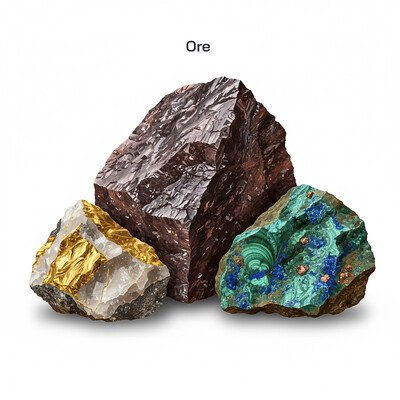
In terms of rarity, platinum, rhodium, and palladium are all extremely scarce in the Earth’s crust. They are typically found together in small concentrations within ore deposits and are often extracted as by-products of nickel or copper mining. Major sources of these metals include specific regions with unique geological conditions, making global supply limited and geographically concentrated. This scarcity significantly contributes to their high economic value.
All three metals play a critical role in environmental technology. Their catalytic properties enable the reduction of harmful emissions, support cleaner industrial processes, and improve energy efficiency. Without platinum group metals, many modern pollution control systems and advanced chemical technologies would not be possible.
From a materials science perspective, platinum, rhodium, and palladium represent the highest level of metallic performance. Their resistance to corrosion, ability to withstand extreme conditions, and chemical stability make them indispensable in applications where reliability is non-negotiable. Their textures and surface behaviors reflect these properties, ranging from the subtle elegance of platinum to the brilliant reflectivity of rhodium and the balanced versatility of palladium.
Beyond their visible texture and industrial usefulness, platinum, rhodium, and palladium exhibit unique atomic and crystallographic properties that distinguish them even among other noble metals. All three crystallize in a face-centered cubic lattice, a highly stable atomic arrangement that contributes to their strength, ductility, and resistance to structural failure. This tightly packed lattice allows atoms to slide without breaking bonds, explaining why platinum and palladium can be shaped extensively without cracking, while rhodium’s brittleness arises from stronger directional bonding within the same structure.
At the electronic level, these metals possess partially filled d-orbitals, which are responsible for their exceptional catalytic activity. These orbitals allow the metals to temporarily bind reactant molecules to their surface, weaken chemical bonds, and accelerate reactions without being consumed. This surface-level interaction explains why even microscopic quantities of platinum group metals can drive large-scale industrial chemical reactions with extraordinary efficiency.
Surface chemistry plays a crucial role in how these metals behave over time. Platinum develops a passive surface that resists chemical attack while still remaining catalytically active. Rhodium’s surface remains nearly unchanged even under extreme oxidation environments, which is why it retains its reflective finish for decades. Palladium surfaces can dynamically absorb and release hydrogen atoms, forming palladium hydrides, a process that occurs reversibly without damaging the crystal structure.
Thermal behavior further separates these metals from most others. Platinum and rhodium retain structural integrity at temperatures exceeding those of most industrial furnaces. Rhodium’s ability to maintain hardness at elevated temperatures makes it indispensable in glass manufacturing molds and thermocouple wires. Palladium, while having a lower melting point, exhibits exceptional thermal shock resistance, allowing it to survive rapid temperature changes without fracture.
From a metallurgical standpoint, platinum group metals exhibit extremely low diffusion rates. Atoms move slowly even at high temperatures, which prevents creep and deformation over time. This property is essential in precision instruments, aerospace sensors, and laboratory equipment where dimensional stability must be maintained for years or decades.
Economically, platinum group metals occupy a unique position distinct from traditional precious metals. Their value is driven less by ornamentation and more by industrial necessity. Demand fluctuates with automotive production, environmental regulations, and technological innovation rather than consumer sentiment alone. Rhodium, in particular, experiences dramatic price volatility because it has few substitutes and is essential for nitrogen oxide reduction in emission control systems.
Recycling plays a critical role in sustaining supply. Unlike many metals, platinum, rhodium, and palladium can be recovered and reused repeatedly without degradation of properties. Spent catalytic converters, electronic waste, and industrial scrap are major secondary sources. Advanced refining techniques allow recovery rates exceeding ninety percent, making recycling a cornerstone of platinum group metal economics and environmental sustainability.
Historically, these metals were among the last elements to be identified due to their resistance to traditional smelting techniques. Platinum was initially dismissed as an impurity by early gold miners, while palladium and rhodium were discovered only after advanced chemical separation methods were developed. Their late recognition underscores how unusual their chemical stability truly is.
In modern medicine, platinum group metals extend beyond structural uses into molecular-level applications. Platinum-based compounds interact with DNA to disrupt cancer cell replication. Palladium catalysts enable pharmaceutical synthesis with higher purity and lower waste. Rhodium complexes are explored for targeted drug delivery and diagnostic imaging, highlighting their growing biomedical relevance.
Future technologies continue to expand reliance on these metals. Hydrogen fuel cells depend heavily on platinum and palladium catalysts to enable clean energy conversion. Emerging research explores rhodium-based catalysts for carbon capture and synthetic fuel production. Nanostructured platinum group metals are being engineered to maximize surface area while minimizing material usage, addressing both cost and sustainability challenges.
From a materials engineering perspective, platinum, rhodium, and palladium represent the pinnacle of performance where chemical resilience, thermal endurance, and atomic stability converge. Their textures—whether the quiet density of platinum, the brilliant hardness of rhodium, or the adaptable smoothness of palladium—are physical manifestations of atomic precision refined by nature over billions of years.
These metals are not merely rare commodities; they are strategic materials that enable modern civilization to function more cleanly, efficiently, and reliably. Their continued relevance reflects an enduring partnership between natural scarcity and human ingenuity, where the most demanding technological challenges are met by the most extraordinary elements Earth can provide.
Platinum, rhodium, and palladium possess geological origins that are far more complex and localized than most other metallic elements. These metals are not evenly distributed within the Earth’s crust but are instead concentrated in very specific geological environments formed under extreme conditions. Their formation is closely tied to deep mantle processes and ancient magmatic events. During the cooling of ultramafic and mafic magmas, platinum group metals tend to bond with sulfur and segregate into sulfide-rich zones. These zones later become concentrated ore bodies through tectonic movement, erosion, and secondary enrichment processes. This highly selective formation explains why economically viable deposits are rare and geographically restricted.
The physical density of these metals plays a significant role in both their natural concentration and industrial handling. Platinum is one of the densest naturally occurring metals, giving it a distinctive heft that is immediately noticeable when handled. This density contributes to its resistance against mechanical deformation and vibration, which is why platinum components are favored in precision instruments where stability is critical. Palladium, being lighter, offers a balance between strength and weight, making it suitable for applications where mass reduction is essential. Rhodium, while extremely hard, is used sparingly due to both brittleness and cost, reinforcing its role as a functional enhancement material rather than a bulk structural metal.
At the microscopic level, the surface behavior of these metals is highly dynamic. Platinum surfaces can rearrange atomically in response to chemical exposure, allowing them to self-optimize catalytic activity. Palladium surfaces actively interact with gas molecules, particularly hydrogen, forming transient atomic bonds that enable controlled storage and release. Rhodium surfaces remain exceptionally inert, resisting surface contamination even in aggressive chemical environments. This contrast in surface interaction is one reason why each metal occupies a distinct role in industrial chemistry rather than serving as direct substitutes for one another.
Mechanical fatigue resistance further distinguishes platinum group metals from conventional alloys. Under repeated stress cycles, platinum maintains structural integrity with minimal microcracking. Palladium exhibits excellent elasticity at small scales, allowing it to withstand repeated thermal expansion and contraction. Rhodium’s hardness gives it superior wear resistance, particularly in sliding or contact-based applications, though it requires careful engineering support to prevent fracture. These properties collectively enable long operational lifespans in demanding industrial systems.
The extraction and refinement of platinum group metals involve some of the most complex metallurgical processes in mining. After initial ore concentration, the metals must be separated from one another through multi-stage chemical refining. This process can take several months and involves precise control of temperature, acidity, and chemical reagents. The difficulty of separation adds to production costs and contributes to limited supply flexibility. Unlike gold, which can be refined relatively quickly, platinum group metals require prolonged processing before reaching market-ready purity.
Global supply chains for these metals are highly sensitive to geopolitical, environmental, and technological factors. Because production is concentrated in a few regions, labor disruptions, regulatory changes, or energy shortages can rapidly affect global availability. This sensitivity makes platinum, rhodium, and palladium strategic materials rather than merely commodities. Governments and industries often maintain reserves or long-term contracts to mitigate supply risks, especially for sectors such as automotive manufacturing and defense technology.
Environmental considerations are increasingly shaping how these metals are used and recovered. Mining platinum group metals generates large volumes of waste rock, requiring careful land and water management. In response, industries have shifted toward closed-loop recycling systems that dramatically reduce environmental impact. Recycling not only conserves resources but also stabilizes supply, as recovered metals retain their original atomic properties indefinitely. This recyclability places platinum group metals among the most sustainable high-performance materials when managed responsibly.
Technological advancement continues to redefine how these metals are applied. In nanotechnology, platinum and palladium nanoparticles are engineered to maximize reactive surface area while minimizing material usage. This approach improves efficiency and lowers cost without sacrificing performance. Rhodium nanostructures are being explored for ultra-selective catalytic reactions where precision is more important than volume. These innovations highlight a shift from bulk usage toward atomic-scale optimization.
In energy systems, platinum group metals are central to emerging low-carbon technologies. Fuel cells rely on platinum catalysts to convert chemical energy into electricity with high efficiency and zero direct emissions. Palladium-based membranes enable hydrogen purification, a key step in future hydrogen economies. Research into alternative catalyst designs aims to reduce material dependency while maintaining performance, but complete replacement remains unlikely due to the unmatched properties of these metals.
From a scientific standpoint, platinum, rhodium, and palladium continue to serve as reference materials in experimental research. Their predictable behavior under extreme conditions allows scientists to test theories of surface physics, quantum chemistry, and high-temperature reactions. Their role as benchmarks underscores their importance not only as industrial materials but also as tools for expanding fundamental scientific understanding.
Ultimately, the value of platinum, rhodium, and palladium extends far beyond aesthetics or rarity. They represent a convergence of geological history, atomic precision, and technological necessity. Their continued relevance reflects humanity’s reliance on materials that can perform reliably where failure is not an option. As industries evolve toward cleaner, more efficient systems, these metals are likely to remain indispensable, shaping the future of energy, medicine, and advanced manufacturing in ways that few other elements can match.
In summary, platinum, rhodium, and palladium are rare noble metals distinguished by their unique textures, exceptional physical properties, and wide-ranging applications. Platinum offers density, durability, and versatility across jewelry, medicine, and industry. Rhodium provides unmatched reflectivity and corrosion resistance, primarily as a coating and catalyst. Palladium combines lightness, catalytic efficiency, and electronic usefulness, making it essential to modern technology. Together, these rare metals form a critical foundation for advanced industry, environmental protection, and high-value applications, underscoring their importance in both scientific and economic contexts.