Ore is one of the most important natural resources used by human civilization and forms the foundation of modern industry, technology, and infrastructure. In simple terms, an ore is a naturally occurring rock or mineral deposit that contains valuable elements or metals in sufficient concentration to allow economical extraction and processing. Not all minerals are ores, and not all rocks containing metals qualify as ore. A substance is considered an ore only when the valuable component can be extracted profitably using available technology and under prevailing economic conditions. This economic aspect is what distinguishes ore from ordinary mineral-bearing rocks.
Ores are primarily sources of metals such as iron, copper, aluminum, gold, silver, lead, and zinc, but they can also supply non-metallic materials used in construction, chemical industries, and manufacturing. The study of ores falls under economic geology, a branch of geology that focuses on materials that have commercial value. Understanding ore involves examining its composition, origin, formation processes, physical characteristics, and practical uses in various industries.
The formation of ore is a complex geological process that occurs over millions of years due to natural physical, chemical, and biological processes operating within the Earth’s crust. Ore formation generally involves the concentration of valuable minerals from a much larger volume of rock into a smaller, richer deposit. This concentration can occur through several mechanisms, depending on geological conditions such as temperature, pressure, fluid movement, and rock composition.
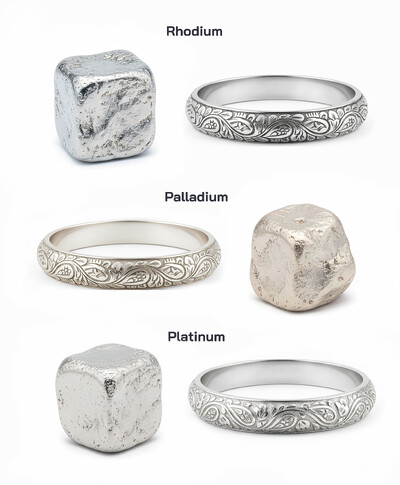
One major process of ore formation is igneous activity. When molten magma rises from deep within the Earth and begins to cool, different minerals crystallize at different temperatures. Heavy and dense minerals may settle at the bottom of a magma chamber, forming concentrated ore bodies. This process leads to the formation of magmatic ores, which are often rich in iron, chromium, nickel, and platinum. These ores are commonly associated with igneous rocks and are found deep within the crust or exposed through erosion.
Another important method of ore formation is hydrothermal activity. In this process, hot, mineral-rich fluids move through cracks and fractures in rocks. These fluids dissolve metals from surrounding rocks and transport them until changes in temperature or pressure cause the metals to precipitate and form ore deposits. Hydrothermal ores are among the most economically valuable and include deposits of copper, lead, zinc, silver, and gold. These ores often occur in veins or lodes and are closely associated with volcanic and tectonic activity.
Sedimentary processes also play a significant role in ore formation. In sedimentary environments, ores may form through chemical precipitation from water bodies or through mechanical accumulation. For example, iron ores can form when dissolved iron precipitates from seawater under specific chemical conditions. Placer deposits form when heavy minerals such as gold, tin, or diamonds are concentrated by the action of flowing water. These heavy minerals settle in riverbeds, beaches, or alluvial plains due to gravity, forming economically valuable deposits.
Metamorphic processes can further modify existing ore deposits. When rocks are subjected to high temperature and pressure during tectonic movements, minerals can recrystallize and become more concentrated. Metamorphism can improve ore quality by increasing purity or changing mineral form, making extraction easier. Some valuable graphite and garnet ores are associated with metamorphic rocks.
Based on composition, ores are broadly classified into metallic ores and non-metallic ores. Metallic ores contain metals that can be extracted and used for various applications. These ores are further divided into ferrous ores, which contain iron, and non-ferrous ores, which contain metals other than iron. Iron ore is one of the most important ferrous ores and is the primary raw material for steel production. Non-ferrous ores include copper ore, bauxite, lead ore, zinc ore, and precious metal ores such as gold and silver.
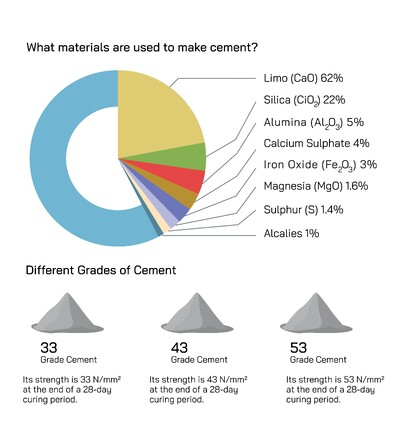
Non-metallic ores do not yield metals but are still economically important. These include ores used for cement, glass, fertilizers, and chemicals. Examples include limestone, gypsum, phosphate rock, and potash. Although they do not produce metals, these ores are essential for construction, agriculture, and chemical industries.
Ores can also be classified based on the type of mineral compounds they contain. Oxide ores contain metals combined with oxygen and are often easier to process. Sulfide ores contain metals combined with sulfur and usually require more complex extraction methods. Carbonate ores contain metals combined with carbonate groups and are often intermediate in processing difficulty. The chemical nature of the ore determines the method used for metal extraction.
The uses of ore are extensive and form the backbone of modern civilization. Iron ore is used to produce steel, which is essential for buildings, bridges, vehicles, machinery, and tools. Copper ore is used in electrical wiring, electronics, plumbing, and renewable energy systems due to its excellent conductivity. Bauxite ore is the primary source of aluminum, which is used in transportation, packaging, construction, and aerospace industries because of its lightweight and corrosion resistance.
Precious metal ores such as gold and silver are used in jewelry, electronics, medical equipment, and financial reserves. Lead and zinc ores are used in batteries, coatings, construction materials, and protective alloys. Non-metallic ores such as limestone are used in cement manufacturing, while phosphate ores are essential for fertilizer production, supporting global agriculture and food security.
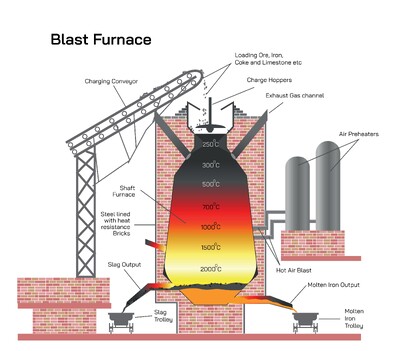
Before ores can be used, they must undergo several processing steps. Mining is the first stage, involving the extraction of ore from the Earth through surface or underground methods. After mining, the ore is crushed and concentrated through processes such as beneficiation to increase the proportion of valuable material. The concentrated ore is then subjected to smelting or chemical processing to extract the metal. Refining further purifies the metal to achieve the required quality for industrial use.
The value of an ore deposit depends on several factors, including ore grade, size of the deposit, ease of extraction, market demand, and environmental considerations. Advances in technology can turn previously uneconomic mineral deposits into valuable ores, while changes in market conditions can reduce the viability of others.
Beyond basic classification and formation, ores exhibit distinctive internal structures and textures that strongly influence how they are mined and processed. Ore texture refers to the size, shape, and arrangement of mineral grains within the host rock. Some ores are massive, meaning the valuable mineral dominates the rock with little waste material, while others are disseminated, where metal-bearing minerals are scattered as tiny grains throughout a large volume of rock. Disseminated ores often require large-scale mining and extensive processing but can still be economically viable due to their sheer size. Vein-type ores occur when minerals fill fractures in rocks, forming narrow but often high-grade deposits. Understanding ore texture is essential because it determines crushing requirements, grinding fineness, and separation efficiency during processing.
Ore grade is another critical concept that extends beyond simple metal presence. Grade refers to the concentration of valuable material within the ore, usually expressed as a percentage or grams per tonne. High-grade ores contain a greater proportion of valuable elements and are generally more profitable to mine, but they are increasingly rare. Modern mining often relies on lower-grade ores made economical through advanced processing techniques and economies of scale. The relationship between ore grade and mining cost is dynamic, meaning deposits once considered waste can later become valuable resources as technology improves or prices rise.
Beneficiation is the scientific process of improving ore quality by removing unwanted material, known as gangue. This stage bridges mining and metal extraction and plays a decisive role in ore utilization. Beneficiation techniques include gravity separation, magnetic separation, froth flotation, and chemical leaching. Each method exploits physical or chemical differences between valuable minerals and waste rock. For example, magnetic separation is widely used for iron ores, while flotation is essential for sulfide ores of copper, lead, and zinc. Efficient beneficiation reduces energy consumption in later stages and minimizes environmental waste.
Ore exploration is a highly specialized discipline combining geology, geophysics, geochemistry, and remote sensing. Modern exploration begins with regional geological mapping to identify favorable rock types and structures. Geophysical surveys detect variations in magnetic, electrical, or gravitational properties that may indicate hidden ore bodies. Geochemical sampling analyzes soil, rock, or water for trace amounts of metals that signal deeper mineralization. Satellite imagery and aerial surveys further enhance exploration accuracy by revealing alteration zones and structural features invisible at ground level. These advanced tools reduce uncertainty and lower the risk associated with mining investment.
The spatial distribution of ores across the planet is uneven, giving rise to economic and geopolitical significance. Certain countries possess vast reserves of specific ores, shaping global trade and industrial power. Iron ore reserves dominate regions such as Australia and Brazil, while copper ores are concentrated in South America. Rare metal ores critical for modern electronics and renewable energy technologies are geographically limited, making supply security a major concern for many nations. As a result, ore availability influences international relations, strategic planning, and technological development.
Environmental considerations have become inseparable from modern ore extraction. Mining alters landscapes, generates waste rock and tailings, and can affect water and air quality if not managed responsibly. Sustainable ore management emphasizes minimizing environmental impact through careful planning, waste recycling, water treatment, and land restoration. Advances in ore processing aim to reduce chemical usage and energy demand, while mine closure plans focus on ecosystem recovery. Responsible ore utilization ensures long-term availability while protecting natural systems.
The concept of ore is also evolving with technological progress. Materials once ignored due to low concentration or processing difficulty are now being reconsidered. For example, electronic waste and industrial residues are increasingly viewed as secondary ores because they contain valuable metals in recoverable quantities. Urban mining, which involves extracting metals from discarded products, reflects a modern extension of the ore concept beyond natural deposits. This shift highlights how economic and technological factors redefine what qualifies as ore over time.
Future ore exploration is expected to move deeper underground and into more remote environments as surface deposits become depleted. Advances in drilling technology, automation, and artificial intelligence are improving the efficiency and safety of ore discovery and extraction. At the same time, growing demand for metals used in renewable energy systems, electric vehicles, and advanced electronics is reshaping exploration priorities. Ores containing lithium, cobalt, nickel, and rare earth elements are becoming increasingly important to support global energy transitions.
In a broader sense, ores represent the interface between Earth’s geological processes and human technological development. They embody stored geological energy and chemical potential accumulated over millions of years. The ability to identify, extract, and transform ores into useful materials has driven industrial progress, urbanization, and modern infrastructure. As society advances, the challenge lies not only in finding new ores but also in using existing resources more efficiently and responsibly.
Ore deposits are not only geological features but also economic assets whose value changes over time. One of the most important aspects of ore utilization is reserve estimation, which involves determining how much ore is present, how much of it can be extracted, and at what cost. Geological surveys, drilling data, sampling, and statistical modeling are used to calculate ore reserves and resources. Resources represent the total amount of mineral material present, while reserves are the portion that can be mined economically under current conditions. Changes in metal prices, mining technology, or environmental regulations can convert resources into reserves or render reserves uneconomic, highlighting the dynamic nature of ore valuation.
Mining methods are selected based on the depth, shape, and grade of an ore body. Surface mining is used when ores are located near the Earth’s surface and includes methods such as open-pit and strip mining. These techniques allow large volumes of ore to be extracted efficiently but often result in significant landscape alteration. Underground mining is employed when ore bodies lie deep beneath the surface. This method requires shafts, tunnels, and ventilation systems and is generally more expensive but causes less surface disturbance. The choice of mining method directly affects ore recovery, cost, worker safety, and environmental impact.
Ore processing presents numerous technical challenges, especially as high-grade deposits become scarcer. Modern industries increasingly rely on complex ores containing multiple metals interlocked at microscopic scales. Separating these minerals requires fine grinding, precise chemical control, and advanced separation technologies. Processing such ores consumes large amounts of energy and water, making efficiency improvements essential. Research into low-energy grinding, bio-processing, and selective leaching aims to make ore extraction more sustainable and economically viable.
Waste management is a major concern in ore-based industries. For every unit of metal produced, several units of waste material may be generated. This waste includes overburden, tailings, and slag, which must be stored or treated safely. Improper waste handling can lead to soil contamination, water pollution, and long-term environmental damage. Modern ore management strategies emphasize waste reduction, reuse, and recycling. Some waste materials are repurposed for construction, land reclamation, or secondary metal recovery, transforming by-products into useful resources.
The chemical complexity of ores also influences extraction strategies. Some ores contain metals in chemically resistant forms that require aggressive treatment, while others release metals more readily. Advances in hydrometallurgy, which uses aqueous solutions to extract metals, are enabling the recovery of metals from low-grade and complex ores. These techniques often operate at lower temperatures than traditional smelting, reducing energy consumption and emissions. As environmental standards tighten, hydrometallurgical processes are gaining importance in ore utilization.
Ore deposits are also closely linked to tectonic activity and planetary evolution. The distribution of ores reflects ancient plate movements, volcanic activity, and ocean chemistry. Certain metals are concentrated in specific geological settings, such as convergent plate boundaries or ancient seabeds. Studying ores therefore provides insight not only into resource availability but also into Earth’s geological history. Ore studies help reconstruct past environments, climatic conditions, and crustal evolution, making them valuable beyond their economic importance.
The global demand for ores continues to grow as populations increase and technology advances. Modern electronics, renewable energy systems, electric vehicles, and communication networks rely on a wide range of metals sourced from ores. This demand is driving exploration into deeper crustal levels and more remote regions, including polar areas and the ocean floor. Marine ores, such as polymetallic nodules and seafloor sulfides, represent a potential future resource, though their extraction raises complex environmental and ethical questions.
Recycling and circular economy principles are reshaping the future of ore usage. Instead of relying solely on newly mined ores, industries are increasingly recovering metals from discarded products. Recycling reduces pressure on natural ore deposits, conserves energy, and lowers environmental impact. However, recycled materials cannot yet fully replace primary ores, making continued exploration and responsible mining essential for meeting global demand.
Technological innovation is redefining what constitutes an ore. Artificial intelligence, machine learning, and automation are improving ore exploration accuracy and mining efficiency. Sensors and real-time data analysis allow operators to distinguish ore from waste more precisely, increasing recovery rates. These technologies reduce costs, enhance safety, and extend the life of existing ore deposits. As a result, the concept of ore is becoming more closely tied to technological capability than ever before.
From a societal perspective, ores influence economic development and regional prosperity. Mining regions often depend heavily on ore extraction for employment and infrastructure. Responsible management of ore resources includes ensuring worker safety, supporting local communities, and planning for economic transition after mine closure. Sustainable ore development balances economic benefits with social responsibility and environmental protection.
Ultimately, ores represent a finite but adaptable resource shaped by both natural processes and human ingenuity. Their importance extends far beyond metal production, influencing technological progress, energy systems, and global economies. As easy-to-access deposits decline, the future of ore utilization will depend on innovation, efficiency, recycling, and sustainable practices. Understanding ores in this broader context highlights their enduring significance in shaping human civilization while underscoring the need for careful stewardship of Earth’s geological wealth.
In summary, ore is a naturally occurring material that contains valuable elements in concentrations suitable for economic extraction. It forms through a variety of geological processes including igneous, hydrothermal, sedimentary, and metamorphic activity. Ores are classified based on composition, metal content, and chemical nature, and they serve as essential raw materials for construction, manufacturing, energy, and technology. Understanding ore and its formation highlights the deep connection between Earth’s geological processes and human development, making ore one of the most critical resources supporting modern society. Ore is not merely a rock containing metal but a dynamic concept shaped by geology, technology, economics, and environmental responsibility. Its significance extends from microscopic mineral grains to global industrial systems. Understanding ore in this expanded context reveals its central role in sustaining modern life while highlighting the need for innovation and stewardship in resource use.