Advanced Insights Into the Science, Technology, and Evolution of Glass Manufacturing.
Glass is one of the most widely used materials in the modern world, found in windows, bottles, laboratory equipment, electronic devices, and countless everyday products. Although it appears simple and transparent, the process of making glass involves carefully controlled steps, precise raw materials, and extremely high temperatures. Understanding how glass is made reveals a fascinating transformation in which solid materials are melted, shaped, and cooled into a strong, durable, and transparent substance.
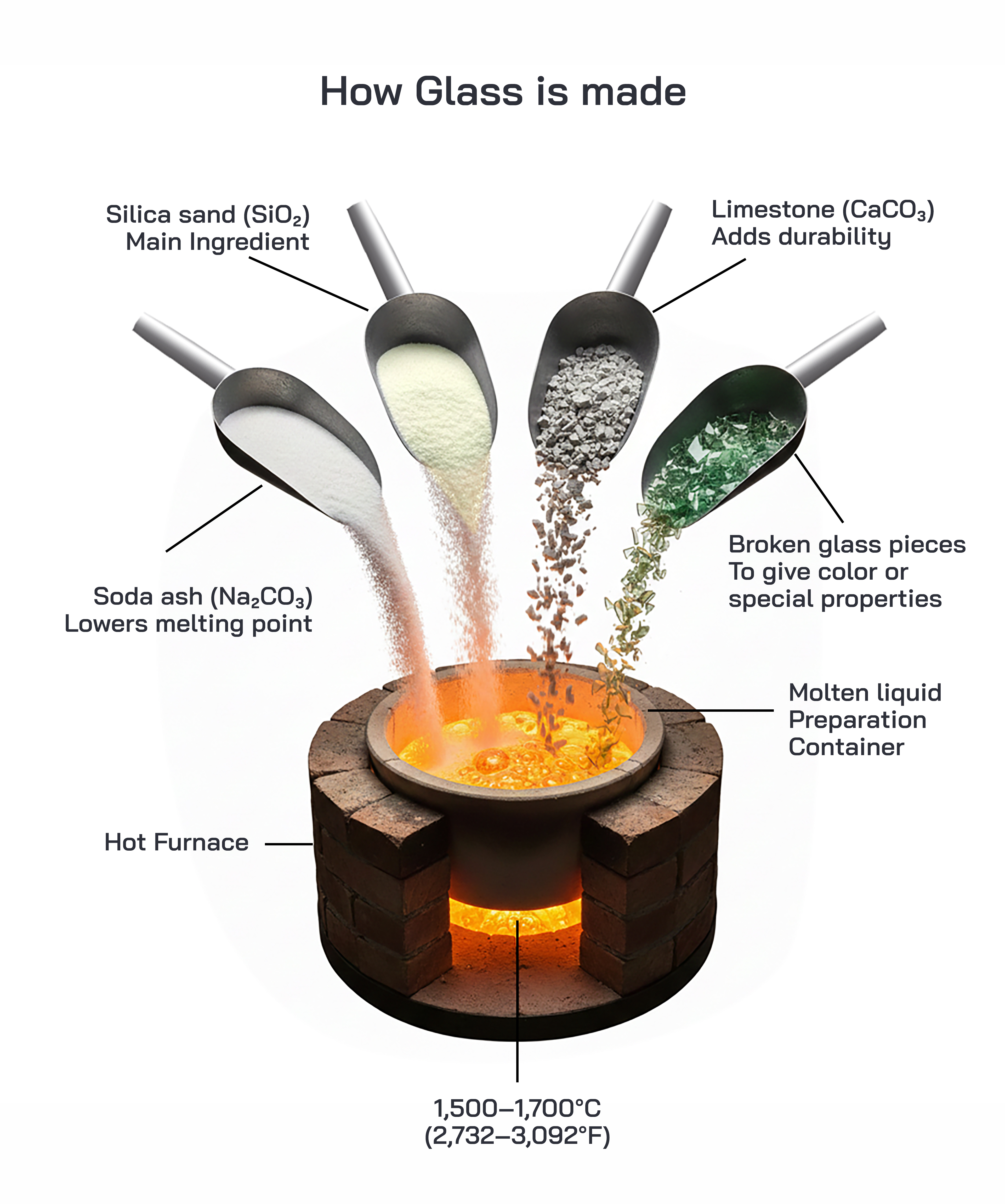
The basic ingredients used to make glass are naturally occurring raw materials. The primary component is silica sand, which provides the structural foundation of glass. Silica is abundant in nature and has a high melting point, making it ideal for producing a stable and durable material. However, silica alone requires extremely high temperatures to melt, so additional materials are added to make the process more efficient.
Soda ash is another essential raw material in glass production. It lowers the melting temperature of silica, allowing the mixture to melt more easily inside industrial furnaces. By reducing the required heat, soda ash improves energy efficiency and makes large-scale glass production practical. Limestone is also added to the mixture to improve the chemical stability of glass. It helps make the final product more resistant to water, chemicals, and environmental wear.
Once the raw materials are carefully measured, they are thoroughly mixed to ensure uniform composition. This mixture is often referred to as the glass batch. In many modern factories, recycled glass is added to the batch. Using recycled glass reduces energy consumption and raw material demand, making the glass-making process more sustainable. Recycled glass melts more easily than raw silica, improving efficiency.
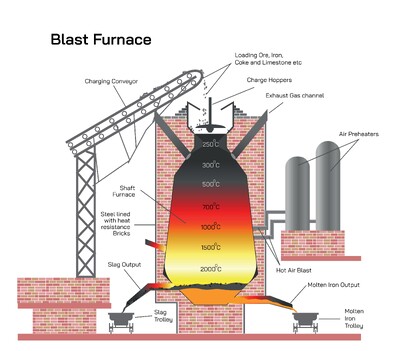
The prepared batch is then fed into a high-temperature furnace. Inside the furnace, temperatures rise to extremely high levels, causing the solid materials to melt and combine. As the mixture heats, it gradually transforms into a thick, glowing liquid known as molten glass. During this stage, chemical reactions occur that remove impurities and bubbles, ensuring clarity and uniformity in the final product.
As the molten glass forms, it becomes a homogeneous liquid with a smooth, flowing consistency. The viscosity of the molten glass is carefully controlled by adjusting temperature. At higher temperatures, the glass flows easily, while lower temperatures make it thicker and more resistant to movement. This control is essential for shaping the glass accurately during the next stage of production.
Once the glass reaches the desired consistency, it is shaped into products using various forming methods. One common method is the float glass process, used to make flat glass sheets for windows and mirrors. In this process, molten glass is poured onto a bath of molten metal, where it spreads evenly to form a smooth, flat surface. The glass gradually cools while floating, creating uniform thickness and clarity.
For container glass, such as bottles and jars, molding techniques are used. Molten glass is poured or dropped into molds, where air pressure or mechanical force shapes it into the desired form. Glass blowing, a traditional technique, involves inflating molten glass into a mold or shaping it by hand. This method is still used for artistic glass and specialized products.
After shaping, the glass enters the cooling stage, which is one of the most critical steps in glass manufacturing. Rapid cooling can cause internal stresses that weaken the glass. To prevent this, the glass undergoes a controlled cooling process known as annealing. During annealing, the glass is gradually cooled in a temperature-controlled environment, allowing internal stresses to relax and the structure to stabilize.
The unique structure of glass sets it apart from other solids. Unlike crystalline materials, glass does not have a regular atomic arrangement. Instead, its atoms are arranged randomly, giving glass its characteristic transparency and brittleness. This amorphous structure forms as the molten glass cools without crystallizing, locking the atoms in a disordered state.
Once cooled, the glass may undergo additional treatments to enhance its properties. These treatments can include strengthening processes, surface finishing, or coating. Some glass products are heat-treated to increase durability, while others are chemically treated to improve resistance to impact or temperature changes. These processes allow glass to be customized for specific applications.
Quality control is an important part of glass production. Finished glass products are inspected for clarity, thickness, strength, and surface defects. Advanced inspection techniques ensure that the glass meets safety and performance standards before reaching consumers. Any defective glass is often recycled back into the production process.
Glass is valued for its versatility and sustainability. It can be recycled repeatedly without losing quality, making it an environmentally friendly material. The ability to reuse glass reduces waste and conserves natural resources. Modern glass manufacturing increasingly emphasizes energy efficiency and environmental responsibility.
In everyday life, glass plays a crucial role in construction, transportation, healthcare, and technology. From protecting buildings to preserving food and enabling scientific research, glass is an essential material that supports modern civilization. Its production combines ancient knowledge with advanced industrial technology.
Glass is not merely a manufactured material; it is a carefully engineered substance whose properties can be adjusted at the atomic level to suit an extraordinary range of human needs. Beyond the basic steps of melting and shaping, modern glass production involves deep scientific understanding, precise thermal control, and decades of innovation that have transformed glass from a simple utility into a high-performance material essential to advanced technology and modern infrastructure.
One of the most fascinating aspects of glass is the way its properties can be altered by small changes in composition. By adding trace amounts of different metal oxides, manufacturers can dramatically change glass behavior. For example, boron oxide produces borosilicate glass, which has exceptional resistance to thermal shock and is widely used in laboratory equipment and cookware. Aluminum oxide increases hardness and durability, making glass more resistant to scratches and wear. Lead oxide, historically used in crystal glass, increases density and refractive index, producing brilliance and sparkle, though its use has declined due to health concerns. These compositional adjustments allow glass to be tailored for optical clarity, heat resistance, electrical insulation, or mechanical strength.
Color in glass is another area where chemistry plays a crucial role. Glass can be colored naturally by impurities in raw materials or intentionally by adding specific elements. Iron impurities can give glass a greenish tint, while cobalt produces deep blue hues. Chromium yields green shades, manganese can neutralize unwanted coloration, and selenium produces red or pink tones. These colors are not surface coatings but are embedded within the glass structure itself, making them permanent and resistant to fading. This characteristic is particularly valuable for architectural glass, decorative applications, and signal lighting.
The melting stage of glass production involves more than simply reaching a high temperature. Inside industrial furnaces, temperature zones are carefully controlled to manage melting, refining, and homogenization. Refining is the stage in which gas bubbles and impurities rise to the surface and escape, resulting in clear, defect-free glass. This process may take several hours or even days depending on the glass type and furnace size. Advanced furnaces use sensors, automated controls, and computer modeling to maintain optimal conditions and ensure consistent quality across large production volumes.
Energy management is one of the most significant challenges in glass manufacturing. Glass furnaces operate continuously for years, consuming enormous amounts of energy. To improve efficiency, modern facilities use regenerative or recuperative furnace designs that capture heat from exhaust gases and reuse it to preheat incoming air or raw materials. This significantly reduces fuel consumption and emissions. Some manufacturers are also experimenting with electric and hybrid furnaces powered partly by renewable energy sources, marking a shift toward lower-carbon glass production.
The forming stage has evolved dramatically with automation and precision engineering. In flat glass production, thickness can be controlled to fractions of a millimeter, allowing glass to meet strict architectural and automotive standards. In container manufacturing, high-speed machines can produce thousands of bottles per hour with remarkable uniformity. Robotics and automated inspection systems now handle much of the shaping and handling process, reducing human error and improving workplace safety.
Annealing deserves special attention because it determines the long-term performance of glass. During controlled cooling, the temperature of glass is reduced slowly through a critical range where internal stresses are most likely to form. If this step is rushed or uneven, the glass may appear normal but fail unexpectedly later. Advanced annealing systems monitor temperature gradients in real time, ensuring uniform stress distribution throughout the product. Properly annealed glass is more reliable, durable, and resistant to cracking under everyday use.
In addition to annealed glass, specialized strengthening methods are used for applications requiring higher safety and performance. Thermal strengthening involves reheating glass and rapidly cooling its surface, creating compressive stress layers that increase strength. Chemical strengthening replaces smaller ions in the glass surface with larger ones, creating internal compression without altering thickness. This technique is commonly used in smartphone screens and high-end display glass, where thinness and strength must coexist.
The microscopic structure of glass continues to be an area of active scientific research. While glass is amorphous, meaning it lacks long-range atomic order, its short-range structure influences properties such as hardness, transparency, and thermal behavior. Advances in materials science have allowed researchers to design glass compositions with specific atomic arrangements that enhance performance without crystallization. This research has led to innovations such as ultra-clear glass, self-cleaning glass, and glass with improved UV or infrared control.
Environmental considerations are increasingly shaping the future of glass manufacturing. In addition to recycling, manufacturers are focusing on reducing raw material extraction, lowering emissions, and minimizing waste. Glass recycling is particularly effective because recycled glass integrates seamlessly into new production without quality loss. Higher recycled content also lowers melting temperatures, further reducing energy use. Some regions now require minimum recycled content in glass products, encouraging circular production systems.
Glass also plays a vital role in emerging technologies. In renewable energy, specialized glass is used in solar panels to protect photovoltaic cells while allowing maximum light transmission. In telecommunications, glass fibers form the backbone of global data networks, transmitting information as light signals across vast distances. In medicine, glass is used for sterile containers, optical instruments, and advanced diagnostic equipment. These applications demand extreme precision and reliability, highlighting the importance of advanced glass engineering.
Historically, glassmaking is one of humanity’s oldest technologies, yet it remains one of the most modern. From ancient hand-blown vessels to today’s ultra-thin display panels, the core principles of glassmaking have remained consistent while the science behind them has become increasingly sophisticated. This blend of tradition and innovation is what makes glass unique among materials.
Glass is often perceived as a finished, static material, yet in reality it represents a continuously evolving class of materials whose properties can be engineered with remarkable precision. Beyond conventional manufacturing steps, the science of glass extends into atomic behavior, industrial optimization, cultural history, and future technological potential. Exploring these dimensions reveals how glass remains one of the most adaptable and strategically important materials in the modern world.
One of the lesser-known aspects of glass is that it exists in a state between a solid and a liquid from a scientific perspective. Although glass behaves like a rigid solid at room temperature, its atomic structure resembles a frozen liquid. This unusual state explains why glass does not have a sharp melting point like crystalline solids. Instead, it softens gradually over a temperature range. This property allows manufacturers to manipulate glass viscosity with extreme accuracy, enabling fine control during shaping, stretching, and forming processes that would be impossible with traditional crystalline materials.
The purity of raw materials plays a critical role in determining final glass quality. Even trace contaminants can alter color, strength, or optical clarity. For high-performance applications such as optical lenses, fiber optics, and scientific instruments, raw materials are refined to exceptionally high purity levels. In some cases, synthetic silica produced through chemical processes is used instead of natural sand to eliminate impurities entirely. This ultra-pure glass allows light to pass with minimal distortion or loss, which is essential for precision optics and long-distance data transmission.
Another important but often overlooked factor in glass production is atmosphere control within furnaces. The presence or absence of oxygen can influence oxidation states of elements in the melt, directly affecting color and chemical stability. Controlled atmospheres are used to maintain consistency and prevent unwanted reactions. Advanced furnace designs incorporate real-time monitoring systems that adjust airflow and fuel ratios automatically, ensuring stable conditions throughout long production cycles.
Surface behavior is a defining characteristic of glass products. Although glass may appear smooth to the naked eye, microscopic examination reveals variations that influence strength and performance. Tiny surface flaws can act as stress concentrators, reducing durability. To address this, manufacturers employ polishing, coating, and surface-treatment techniques that strengthen glass at the microscopic level. Some modern coatings can repel water, reduce glare, block ultraviolet radiation, or even break down organic dirt when exposed to sunlight, making glass both functional and low-maintenance.
Glass also demonstrates exceptional chemical resistance, which is why it is widely used for storing pharmaceuticals, chemicals, and food products. Unlike metals or plastics, glass does not react with most substances, preserving purity and taste. Specialized glass formulations are designed to withstand aggressive chemicals or repeated sterilization cycles, making them indispensable in medical and laboratory environments. This inert nature is one of glass’s most valuable but least visible qualities.
In industrial design, glass has become a structural material rather than merely a transparent barrier. Advances in engineering have enabled the use of laminated and reinforced glass in load-bearing applications such as facades, floors, staircases, and bridges. These systems rely on multiple layers and interlayers that hold fragments together if breakage occurs, ensuring safety while maintaining transparency. Such developments have reshaped modern architecture, allowing buildings to incorporate light, openness, and visual continuity without compromising strength.
The relationship between glass and light is central to many advanced applications. Glass can be engineered to transmit, reflect, diffuse, or filter specific wavelengths of light. This capability is essential in energy-efficient buildings, where specialized glass controls heat gain while allowing natural daylight. In electronics, display glass must balance transparency, durability, and touch sensitivity. These requirements have driven innovations in ultra-thin, flexible, and chemically strengthened glass used in smartphones, tablets, and wearable devices.
From a sustainability perspective, glass offers long-term environmental advantages that extend beyond recyclability. Glass products often have long service lives, reducing the need for frequent replacement. Architectural glass contributes to energy savings by improving insulation and reducing reliance on artificial lighting. In packaging, glass protects contents without leaching harmful substances, supporting health and environmental safety. As environmental standards tighten, glass continues to gain importance as a responsible material choice.
Culturally and historically, glass has played a unique role in human development. Ancient civilizations valued glass for its rarity and beauty, using it for ornaments, vessels, and trade goods. Over centuries, glassmaking knowledge spread and evolved, eventually supporting scientific revolutions through lenses, telescopes, and laboratory equipment. Today, glass remains closely linked to scientific progress, enabling discoveries in physics, chemistry, biology, and astronomy.
Looking toward the future, research into glass continues to expand into new frontiers. Scientists are developing glass with enhanced toughness, self-healing properties, and improved resistance to extreme environments. Novel glass compositions are being explored for use in space exploration, nuclear waste containment, and next-generation electronics. These innovations suggest that glass will remain not only relevant but essential in addressing future technological and environmental challenges.
Glass is far more than a transparent material shaped by heat. It is a dynamic and highly engineered substance whose behavior can be precisely controlled from atomic structure to large-scale architecture. Its ability to combine transparency, strength, chemical stability, and sustainability makes it unique among materials. As industries evolve and new demands emerge, glass will continue to adapt, reflecting humanity’s capacity to transform simple natural resources into tools of extraordinary complexity and value.
In conclusion, glass is made through a carefully controlled process that transforms simple raw materials into a transparent and durable material. Silica sand, soda ash, and limestone are melted at high temperatures to form molten glass, which is then shaped and slowly cooled to achieve strength and clarity. The precise control of heat, composition, and cooling allows glass to be produced in many forms and applications. Understanding how glass is made highlights the remarkable science and engineering behind a material that is both ancient and indispensable in the modern world. Glass manufacturing is far more complex than it appears on the surface. It is a discipline that combines chemistry, physics, engineering, and environmental science to transform simple raw materials into one of the most versatile substances known to humanity. As technology advances and sustainability becomes more critical, glass will continue to evolve, maintaining its essential role in construction, science, communication, and daily life while adapting to the demands of the future.