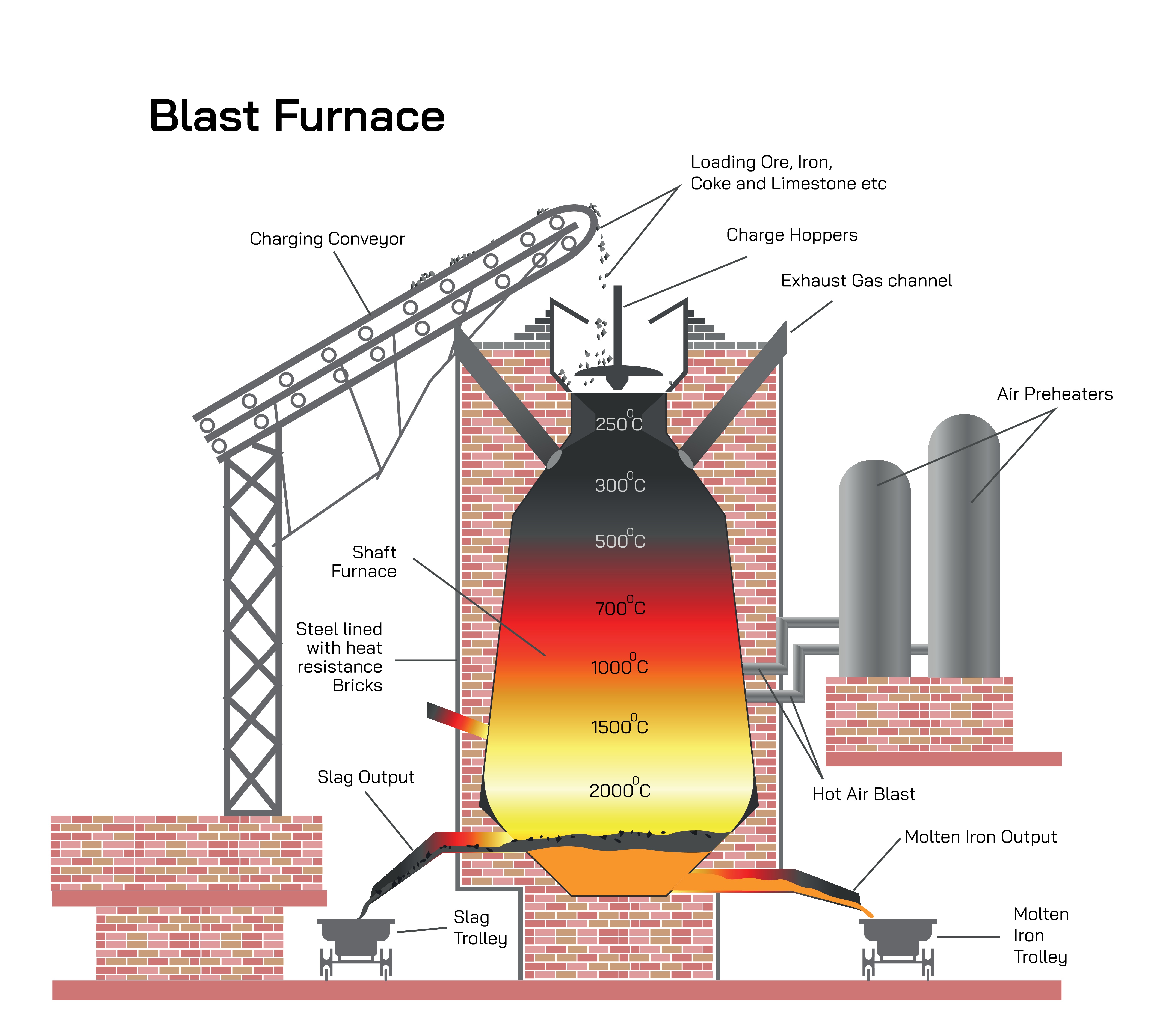
A blast furnace is one of the most important industrial structures ever developed by human civilization, forming the foundation of large-scale iron production and modern metallurgy. It is a massive, continuously operating furnace designed to extract iron from its ores through high-temperature chemical reactions. The blast furnace has played a central role in technological progress, industrial growth, and infrastructure development, making it a cornerstone of modern society.
The basic purpose of a blast furnace is to convert iron-bearing ores into molten iron by removing oxygen and other impurities. This transformation is achieved through a carefully controlled combination of heat, fuel, and chemical reactions. The process takes place inside a tall, vertical structure built to withstand extreme temperatures and mechanical stress. The internal surfaces are lined with refractory materials that resist heat and chemical corrosion, allowing the furnace to operate continuously for years without shutdown.
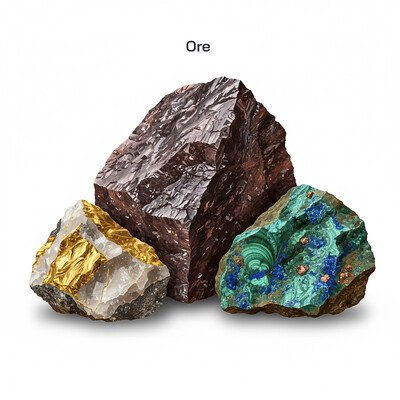
The raw materials used in a blast furnace are introduced from the top in a specific order and proportion. Iron ore serves as the primary source of iron and typically exists in the form of naturally occurring mineral compounds. Coke, derived from processed coal, functions both as a fuel and a reducing agent. Limestone acts as a flux, helping to remove impurities from the molten metal. Together, these materials form the furnace burden and move slowly downward as the process progresses.
Air heated to very high temperatures is forced into the furnace through openings near the bottom. This hot air supply supports intense combustion of coke, generating the enormous heat required for smelting. As coke burns, it produces gases that rise upward through the furnace, reacting with the descending iron ore. These reactions strip oxygen from the ore, leaving behind liquid iron. This process of chemical reduction is fundamental to ironmaking and represents one of the most important applications of industrial chemistry.
As temperatures increase inside the furnace, different zones form, each serving a specific function. In the upper region, raw materials are preheated and begin to undergo initial reactions. In the middle section, intense heat drives chemical transformations and melting. At the bottom, molten iron collects in the hearth, while lighter impurities combine with flux to form slag. Because slag is less dense than iron, it floats on top of the molten metal, allowing the two substances to be separated efficiently.
Periodically, molten iron is released from the furnace through a controlled tapping process. The glowing liquid flows into channels or containers, where it is shaped or transported for further processing. This product, commonly known as pig iron, serves as a raw material for steelmaking and foundry applications. Slag is also removed and repurposed in construction, cement production, and road building, demonstrating the efficiency and resource utilization of the blast furnace system.
The continuous nature of blast furnace operation is one of its defining characteristics. Once ignited, a furnace can run uninterrupted for many years, producing vast quantities of iron day and night. This consistency is essential for meeting industrial demand and maintaining economic stability in steel-dependent sectors. The scale of production achieved by blast furnaces made mass manufacturing possible and supported the growth of railways, bridges, ships, machinery, and urban infrastructure.
Historically, the development of the blast furnace marked a turning point in human progress. Early forms appeared centuries ago, but technological refinements during the industrial era dramatically increased efficiency and output. Innovations such as the hot blast method reduced fuel consumption and improved thermal performance, making iron production more economical and accessible. These advancements fueled industrial expansion and reshaped global economies.
From an engineering perspective, the blast furnace is a remarkable achievement. Its design integrates principles of thermodynamics, materials science, and mechanical engineering. Engineers must carefully manage temperature gradients, gas flow, and structural integrity to ensure safe and efficient operation. Even small variations in raw material quality or airflow can affect productivity, highlighting the precision required in furnace management.
The importance of blast furnaces extends beyond iron production alone. They serve as the backbone of steel manufacturing, which in turn supports construction, transportation, energy generation, and countless consumer goods. Without blast furnaces, modern cities, industrial equipment, and large-scale infrastructure would not be possible in their current form. Their role in shaping the physical world is unmatched by most other industrial systems.
In recent years, environmental considerations have influenced blast furnace operation and development. Traditional ironmaking is energy-intensive and associated with significant emissions. As a result, industries are exploring ways to improve efficiency, recover waste heat, and reduce environmental impact. Recycling metal, optimizing fuel use, and integrating cleaner technologies are increasingly important strategies for ensuring the long-term sustainability of blast furnace-based production.
Despite emerging alternatives, the blast furnace remains a dominant and indispensable technology. Its ability to produce large volumes of iron reliably and cost-effectively ensures its continued relevance. Ongoing research and innovation aim to refine this centuries-old process while adapting it to modern environmental and economic demands.
Beyond its fundamental ironmaking role, the blast furnace represents one of the most complex examples of large-scale chemical reactors ever engineered. Inside the furnace, hundreds of reactions occur simultaneously, involving solid, liquid, and gaseous phases interacting under extreme temperatures and pressures. These reactions are not isolated events but part of a dynamic equilibrium that must be carefully balanced to maintain stable operation. The ability of a blast furnace to sustain such a chemically intense environment for years highlights the sophistication of its design and operational control.
A crucial but often underemphasized aspect of blast furnace operation is gas management. The gases produced during smelting are not merely waste products; they are valuable secondary resources. Blast furnace gas, rich in carbon monoxide and nitrogen, is captured, cleaned, and reused as a fuel within the steel plant. It commonly powers hot blast stoves, boilers, and power generation units. This internal recycling significantly improves overall energy efficiency and reduces reliance on external fuel sources, making the blast furnace a partially self-sustaining system.
Thermal efficiency within a blast furnace is enhanced by elaborate heat recovery mechanisms. Hot blast stoves, which preheat incoming air using waste heat, operate in cycles that maximize temperature transfer. These stoves are massive structures in their own right, designed with intricate checker-brick arrangements that store and release heat efficiently. The coordination between furnace and stoves requires precise timing and control, reflecting the high level of integration present in modern ironmaking facilities.
The materials used to construct blast furnaces are themselves products of advanced materials science. Refractory linings must endure extreme thermal shock, chemical attack, and mechanical wear. Different regions of the furnace use specialized refractory compositions tailored to local conditions, such as carbon-based linings in the hearth and alumina or silicon carbide materials in high-temperature zones. Continuous monitoring of lining wear is essential, as failure can lead to catastrophic damage and long shutdowns.
Automation and digital control systems have transformed blast furnace operation in recent decades. Modern furnaces rely on real-time data from thousands of sensors measuring temperature, pressure, gas composition, and material flow. Advanced software models simulate internal conditions that cannot be directly observed, allowing operators to predict and correct inefficiencies before they escalate. Artificial intelligence and machine learning are increasingly used to optimize burden distribution, fuel rates, and airflow patterns, pushing productivity and stability beyond what was previously possible.
Another advanced dimension of blast furnace technology lies in raw material preparation. Iron ore is rarely fed into the furnace in its natural form. Instead, it is processed into sinter or pellets to ensure uniform size, composition, and permeability. Proper preparation improves gas flow and reaction efficiency inside the furnace, reducing fuel consumption and increasing output. This upstream processing is tightly linked to furnace performance, demonstrating that blast furnace efficiency depends on the entire production chain rather than the furnace alone.
From a mechanical standpoint, the scale and durability of blast furnaces are extraordinary. These structures must withstand immense internal pressure from expanding gases, the weight of thousands of tons of raw materials, and continuous thermal cycling. Structural steel shells, cooling systems, and support frameworks are engineered with large safety margins. Water-cooled elements embedded in the furnace walls help regulate temperature and extend lining life, illustrating the blend of brute strength and precise engineering that defines blast furnace construction.
The workforce expertise required to operate blast furnaces adds another layer to their importance. Skilled operators, metallurgists, and engineers develop deep experiential knowledge of furnace behavior. Subtle changes in sound, vibration, or output quality can signal underlying issues long before instruments detect them. This combination of human expertise and technological monitoring creates a robust operational culture that has been refined over generations.
In the global industrial landscape, blast furnaces influence regional development patterns. Steel plants are often economic anchors, supporting supply chains that include mining, transportation, energy production, and manufacturing. Entire cities and industrial regions have grown around blast furnace complexes, shaping social structures, employment patterns, and regional economies. Even as industries modernize, the legacy of blast furnace-based development remains deeply embedded in many parts of the world.
Looking toward the future, blast furnaces are undergoing gradual transformation rather than abrupt replacement. Research focuses on reducing carbon intensity through alternative reducing agents, improved process efficiency, and partial integration with low-emission technologies. Hybrid systems that combine traditional blast furnace principles with modern energy management strategies are being explored to bridge the gap between existing infrastructure and future sustainability goals.
In a broader philosophical sense, the blast furnace embodies humanity’s ability to control natural forces at an immense scale. It represents the transition from small-scale craftsmanship to industrial mastery, enabling societies to reshape landscapes, build megastructures, and sustain complex economies. Even as new technologies emerge, the blast furnace stands as a testament to engineering ingenuity, adaptability, and the enduring relevance of foundational industrial systems in an evolving technological world.
A lesser-discussed yet critically important dimension of blast furnace technology is the science of burden distribution. The way iron ore, coke, and flux are layered and spread across the furnace top has a profound impact on internal gas flow and reaction efficiency. Modern furnaces use sophisticated charging systems that rotate, tilt, and sequence material delivery with high precision. Proper burden distribution ensures uniform permeability, allowing gases to rise evenly through the furnace rather than channeling through weak zones. Poor distribution can lead to irregular temperature profiles, unstable operation, and reduced productivity, making this aspect central to furnace performance.
Closely linked to burden control is the phenomenon of internal gas dynamics. Inside the furnace, gases do not simply rise vertically; they follow complex paths influenced by material size, shape, and density. Engineers study these gas flow patterns using mathematical modeling and physical simulations to prevent problems such as gas bypassing or dead zones where reactions slow down. Maintaining optimal gas-solid contact is essential for complete reduction of iron oxides and efficient fuel usage, highlighting the furnace’s nature as a highly dynamic internal environment rather than a static structure.
Another advanced operational challenge is the management of molten phases within the hearth. The behavior of liquid iron and slag is influenced by temperature gradients, chemical composition, and tapping schedules. If slag viscosity becomes too high or separation between metal and slag is incomplete, tapping efficiency suffers. Operators carefully adjust flux composition and temperature control to maintain fluidity. The chemistry of slag is also engineered to protect furnace linings, as certain slag compositions can either erode or preserve refractory materials depending on their balance.
Cooling technology plays a decisive role in extending blast furnace lifespan. Modern furnaces are equipped with elaborate cooling systems using copper or steel staves embedded in the furnace walls. These staves circulate water to extract excess heat and prevent refractory failure. The interaction between cooling intensity and furnace efficiency is delicately balanced; excessive cooling can reduce thermal efficiency, while insufficient cooling risks structural damage. Continuous monitoring ensures that cooling systems respond dynamically to changing furnace conditions.
The tuyere zone, where hot air enters the furnace, is one of the most extreme environments in industrial operations. Temperatures in this region reach extraordinary levels, and materials are subjected to intense chemical and mechanical stress. The design of tuyeres, including their angle, size, and cooling method, directly affects combustion intensity and fuel utilization. Advanced tuyere designs also allow for the injection of supplementary materials, such as pulverized fuels or gases, providing flexibility in energy management and resource use.
An often-overlooked aspect of blast furnace operation is vibration and mechanical stress monitoring. The constant movement of materials, expansion from heat, and pressure from gases place significant stress on the furnace shell and supporting structures. Engineers use sensors to detect minute structural changes that could indicate fatigue or deformation. Early detection allows maintenance interventions before damage becomes critical, reinforcing safety and reliability in continuous operations.
The slag produced by blast furnaces represents a major example of industrial byproduct optimization. Beyond basic reuse in construction, granulated blast furnace slag is processed into materials with specialized properties, including cement additives that improve strength and durability. The controlled cooling of slag alters its internal structure, enabling applications that go far beyond waste disposal. This transformation of byproducts into valuable resources exemplifies the industrial philosophy of maximizing output efficiency.
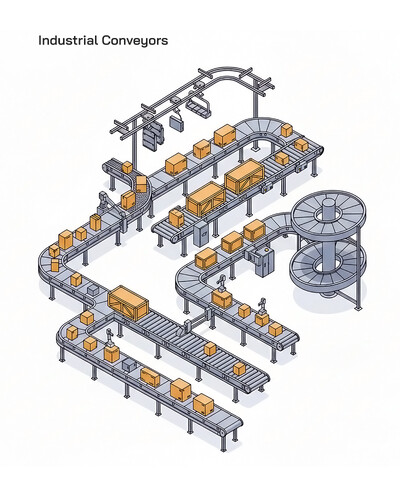
Blast furnaces also present complex logistical challenges. Continuous operation requires uninterrupted supply chains for raw materials, energy, and maintenance support. Any disruption in ore delivery, fuel quality, or infrastructure can impact furnace stability. As a result, blast furnace operations are closely integrated with transportation networks, storage facilities, and scheduling systems, demonstrating how metallurgical processes influence broader industrial logistics.
From a technological evolution standpoint, blast furnaces have become platforms for incremental innovation. Rather than complete redesign, most improvements involve optimizing existing systems through better sensors, control algorithms, and materials. This evolutionary approach allows industries to enhance performance while preserving massive capital investments. Each improvement, though subtle on its own, contributes to significant gains when applied over years of continuous operation.
In the context of global industrial heritage, blast furnaces are also recognized as symbols of engineering culture. Many historic furnaces are preserved as educational and cultural landmarks, illustrating the scale and ambition of early industrial engineering. These preserved structures help modern societies understand the physical realities of industrialization and the technological foundations upon which modern manufacturing was built.
Ultimately, the blast furnace remains not just a machine, but an ecosystem of interconnected systems involving chemistry, physics, materials science, logistics, and human expertise. Its continued evolution reflects humanity’s ability to refine powerful technologies over time, adapting them to changing economic, environmental, and technological landscapes. Even as alternative ironmaking methods develop, the blast furnace endures as a living example of industrial complexity, resilience, and the cumulative progress of engineering knowledge.
In summary, the blast furnace is far more than an industrial machine. It is a symbol of human ingenuity, industrial strength, and technological evolution. By transforming raw minerals into usable metal, the blast furnace has enabled progress across civilizations and continues to support the foundations of modern life.