Cement is one of the most essential construction materials used worldwide and serves as the binding agent that holds concrete and mortar together. The performance of cement in any structure depends largely on its composition, the way it is manufactured, and the grade selected for a specific application. Cement grades represent the compressive strength achieved by cement mortar after a standard curing period, usually twenty-eight days. Understanding the types of cement grades, how cement is made, and how each grade is used is crucial for ensuring structural safety, durability, and cost efficiency in construction projects.
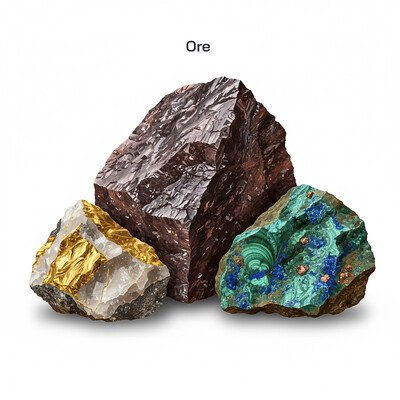
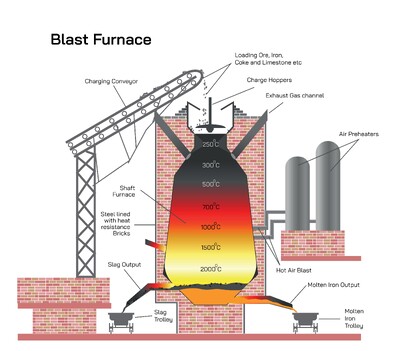
The manufacturing of cement begins with carefully selected raw materials. The primary ingredient is limestone, which provides calcium oxide, the main compound responsible for strength development. Silica, alumina, and iron oxide are added in controlled proportions to help form the complex compounds that give cement its binding properties. Small quantities of gypsum are introduced during grinding to regulate setting time. These materials are crushed, blended, and heated in a rotary kiln at extremely high temperatures. During this process, chemical reactions occur that form clinker, which is then cooled and ground into a fine powder to produce cement. The fineness of grinding and the chemical composition play a major role in determining the final strength and performance of the cement.
Cement grades are classified mainly based on their compressive strength measured in newtons per square millimeter after twenty-eight days of curing. The most commonly used grades in construction are 33 grade, 43 grade, and 53 grade cement. Each grade has distinct characteristics that make it suitable for specific types of construction work.
Thirty-three grade cement is an older and relatively low-strength grade that develops a compressive strength of thirty-three newtons per square millimeter after twenty-eight days of curing. This grade gains strength more slowly compared to higher grades, which makes it suitable for simple and non-structural works. It is commonly used in masonry work, plastering, flooring, and small residential constructions where heavy load-bearing capacity is not required. Due to its slower strength development, it offers better workability and reduced risk of cracking in low-stress applications. The curing time for 33 grade cement is generally longer, and proper moist curing is essential to achieve its intended strength.
Forty-three grade cement is a widely used grade that offers a balanced combination of strength, durability, and cost. It achieves a compressive strength of forty-three newtons per square millimeter after twenty-eight days of curing. This grade develops strength at a moderate rate, making it suitable for both structural and non-structural works. It is commonly used in residential buildings, reinforced concrete structures, slabs, beams, columns, and foundations. Forty-three grade cement provides good resistance to environmental stress and is ideal for general-purpose construction. The curing period remains twenty-eight days, but noticeable strength is achieved earlier compared to 33 grade cement, allowing faster progress in construction schedules.
Fifty-three grade cement is a high-strength cement designed for modern construction needs where early strength and high load-bearing capacity are required. It achieves a compressive strength of fifty-three newtons per square millimeter after twenty-eight days of curing. This grade gains strength very rapidly, making it suitable for large-scale infrastructure projects such as bridges, flyovers, highways, high-rise buildings, and industrial structures. The rapid strength development allows faster removal of formwork and quicker construction cycles. However, due to its high heat of hydration, careful curing and temperature control are essential to prevent shrinkage cracks. Proper curing practices, including continuous moisture retention, are critical during the early stages to ensure durability and long-term performance.
The strength development of cement is closely linked to the hydration process. When cement is mixed with water, chemical reactions occur between water and cement compounds, forming a hardened mass that binds aggregates together. This process continues over time, with strength gradually increasing as hydration progresses. The standard curing time of twenty-eight days is used as a benchmark because most cement achieves a significant portion of its ultimate strength within this period. However, curing does not stop after twenty-eight days; strength development continues at a slower rate for months or even years, provided adequate moisture is available.
The selection of cement grade depends on the purpose of construction, structural design requirements, environmental conditions, and economic considerations. Using a higher grade cement than necessary does not always result in better performance and may lead to issues such as cracking or increased cost. Conversely, using a lower grade cement in high-load applications can compromise structural safety. Engineers carefully evaluate the type of structure, load conditions, and exposure environment before selecting the appropriate cement grade.
Cement plays a vital role in determining the durability and lifespan of concrete structures. Proper curing is essential regardless of the cement grade used. Curing helps maintain moisture and temperature conditions that allow hydration to continue effectively. Inadequate curing can lead to reduced strength, surface cracks, and poor resistance to weathering. Water curing, membrane curing, and curing compounds are commonly used methods to ensure optimal strength development.
In modern construction, cement grades are selected not only based on strength but also on sustainability and performance considerations. Efficient use of cement reduces material wastage, lowers construction costs, and minimizes environmental impact. Advances in manufacturing technology and quality control have improved the consistency and reliability of cement grades, making them suitable for a wide range of engineering applications.
Cement remains the backbone of modern construction, forming the fundamental binding material that enables the creation of concrete, mortar, and a wide range of structural components. Its importance extends far beyond simply holding aggregates together; cement directly influences the strength, durability, workability, and long-term performance of buildings and infrastructure. As urbanization and industrial development continue to expand globally, understanding cement grades, their manufacturing process, strength behavior, and curing requirements becomes increasingly important for engineers, builders, and construction planners.
At the heart of cement manufacturing lies a carefully controlled chemical process. Limestone, the primary raw material, is quarried and crushed into smaller fragments before being blended with silica-rich materials such as clay or shale. Alumina and iron oxide are introduced to facilitate the formation of essential clinker compounds. These raw materials are proportioned with great precision because even slight variations can significantly alter the performance characteristics of the final product. The blended material is fed into a rotary kiln, where it is exposed to extremely high temperatures that cause partial melting and complex chemical reactions. This process results in the formation of hard nodules known as clinker, which contain compounds responsible for strength development. Once cooled, clinker is ground into a fine powder along with gypsum, which plays a critical role in controlling the setting time and preventing flash setting.
The fineness of cement particles is one of the key factors influencing strength and hydration rate. Finer cement has a larger surface area available for chemical reaction with water, which accelerates strength gain. However, excessive fineness can increase water demand and heat of hydration, potentially leading to cracking. Manufacturers therefore aim for an optimal balance that provides adequate early strength without compromising long-term durability. Modern quality control techniques ensure consistency in particle size distribution, chemical composition, and performance across different batches of cement.
Cement grades are primarily defined by their compressive strength after a standard curing period of twenty-eight days. This classification helps engineers select the appropriate grade based on structural requirements and expected loads. While strength is a key parameter, it is not the only consideration. Workability, setting time, heat of hydration, and resistance to environmental factors also play vital roles in determining suitability for specific applications.
Thirty-three grade cement, though less commonly used today, still finds relevance in low-stress construction scenarios. Its slower rate of strength development makes it easier to handle and finish, particularly in plastering and masonry work. Because it generates lower heat during hydration, it is less prone to thermal cracking in thin sections. This grade is often preferred for small residential buildings, flooring, and repair works where high early strength is not a priority. Extended curing is especially important for this grade to ensure adequate strength and surface durability.
Forty-three grade cement represents a versatile option suitable for a wide range of construction activities. It strikes a balance between strength and workability, making it ideal for reinforced concrete elements such as beams, slabs, columns, and footings. This grade develops sufficient early strength to support faster construction progress while maintaining good long-term performance. Its moderate heat of hydration reduces the risk of cracking compared to higher grades, especially in mass concrete applications. As a result, forty-three grade cement is widely used in residential, commercial, and small-scale industrial projects.
Fifty-three grade cement is designed to meet the demands of modern, fast-paced construction. Its rapid strength gain allows early removal of formwork, which significantly reduces construction time and labor costs. This makes it particularly suitable for large infrastructure projects, high-rise buildings, and precast concrete elements. However, the higher heat of hydration associated with this grade requires careful attention to curing practices. Without proper moisture control, the risk of shrinkage cracks and thermal stresses increases. Engineers often use controlled curing methods and admixtures to manage these challenges and ensure long-term durability.
The process of strength development in cement is governed by hydration, a series of chemical reactions between cement compounds and water. During hydration, calcium silicate compounds react with water to form calcium silicate hydrate, which is primarily responsible for strength, and calcium hydroxide, which contributes to alkalinity. This process begins immediately after mixing and continues over an extended period. The initial stages determine setting time and early strength, while long-term hydration contributes to durability and resistance to environmental factors. The standard twenty-eight-day curing period is used as a benchmark because it captures the most significant phase of strength development, although hydration continues well beyond this timeframe.
Curing is a critical aspect of cement performance that directly affects strength and durability. Proper curing maintains adequate moisture and temperature conditions, allowing hydration to proceed without interruption. Inadequate curing can result in surface cracks, reduced compressive strength, and increased permeability, making structures more vulnerable to weathering and chemical attack. Common curing methods include continuous water curing, wet coverings, curing compounds, and membrane-forming techniques. The choice of method depends on environmental conditions, structural design, and project constraints.
Environmental exposure also plays a significant role in cement selection and performance. Structures exposed to aggressive conditions such as high humidity, temperature fluctuations, or chemical attack require careful consideration of cement grade and curing practices. In such cases, the durability characteristics of cement become as important as its strength. Proper mix design, adequate curing, and quality control help ensure that concrete structures withstand these challenges over their intended lifespan.
From an economic perspective, selecting the appropriate cement grade is essential for cost efficiency. Using a higher grade cement than required can increase material costs and raise the risk of cracking due to excessive heat generation. On the other hand, using a lower grade cement in load-bearing applications can compromise safety and lead to costly repairs or structural failure. Engineers therefore evaluate design loads, construction timelines, and environmental conditions to determine the most suitable grade for each project.
In recent years, sustainability has become an important consideration in cement production and usage. Cement manufacturing is energy-intensive and contributes significantly to carbon emissions. Advances in technology, improved kiln efficiency, and the use of supplementary materials have helped reduce the environmental footprint of cement. Efficient use of cement through proper grade selection, optimized mix design, and effective curing practices not only enhances structural performance but also supports sustainable construction goals.
Ultimately, cement grades are more than just numerical classifications; they represent a carefully engineered balance of strength, durability, workability, and performance. Understanding how cement is made, how different grades behave, and how curing influences strength development enables construction professionals to make informed decisions that ensure safety, longevity, and efficiency. As construction demands continue to evolve, the role of cement and its grades remains central to shaping resilient and sustainable built environments.
In conclusion, cement grades represent a critical classification system that guides the selection of cement for various construction purposes. Thirty-three grade cement is suitable for basic and low-stress applications, forty-three grade cement serves as a versatile choice for general construction, and fifty-three grade cement meets the demands of high-strength and fast-paced infrastructure projects. Understanding how cement is made, how strength develops, and how curing influences performance ensures safer, stronger, and more durable structures in civil engineering and construction practices.