A periscope is a simple yet highly effective optical instrument designed to allow observation from a concealed or protected position. It enables a person to see objects that are not in their direct line of sight by redirecting light using reflective surfaces. Periscopes have been used for centuries in various forms, evolving from basic optical devices into advanced instruments used in science, engineering, and defense. Understanding how a periscope is built and the purposes it serves reveals the practical application of fundamental optical principles.
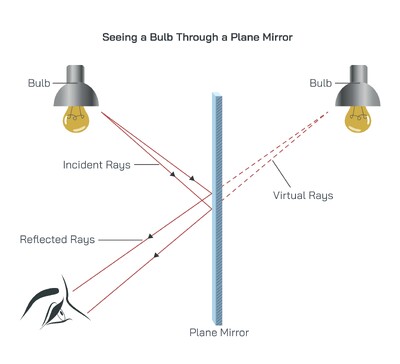
At its core, a periscope works on the principle of light reflection. Light travels in straight lines, but when it strikes a reflective surface at an angle, it changes direction. A periscope uses this behavior to bend light so that an observer can see over, around, or beyond obstacles. This principle makes the periscope an excellent demonstration of applied physics and optical engineering.
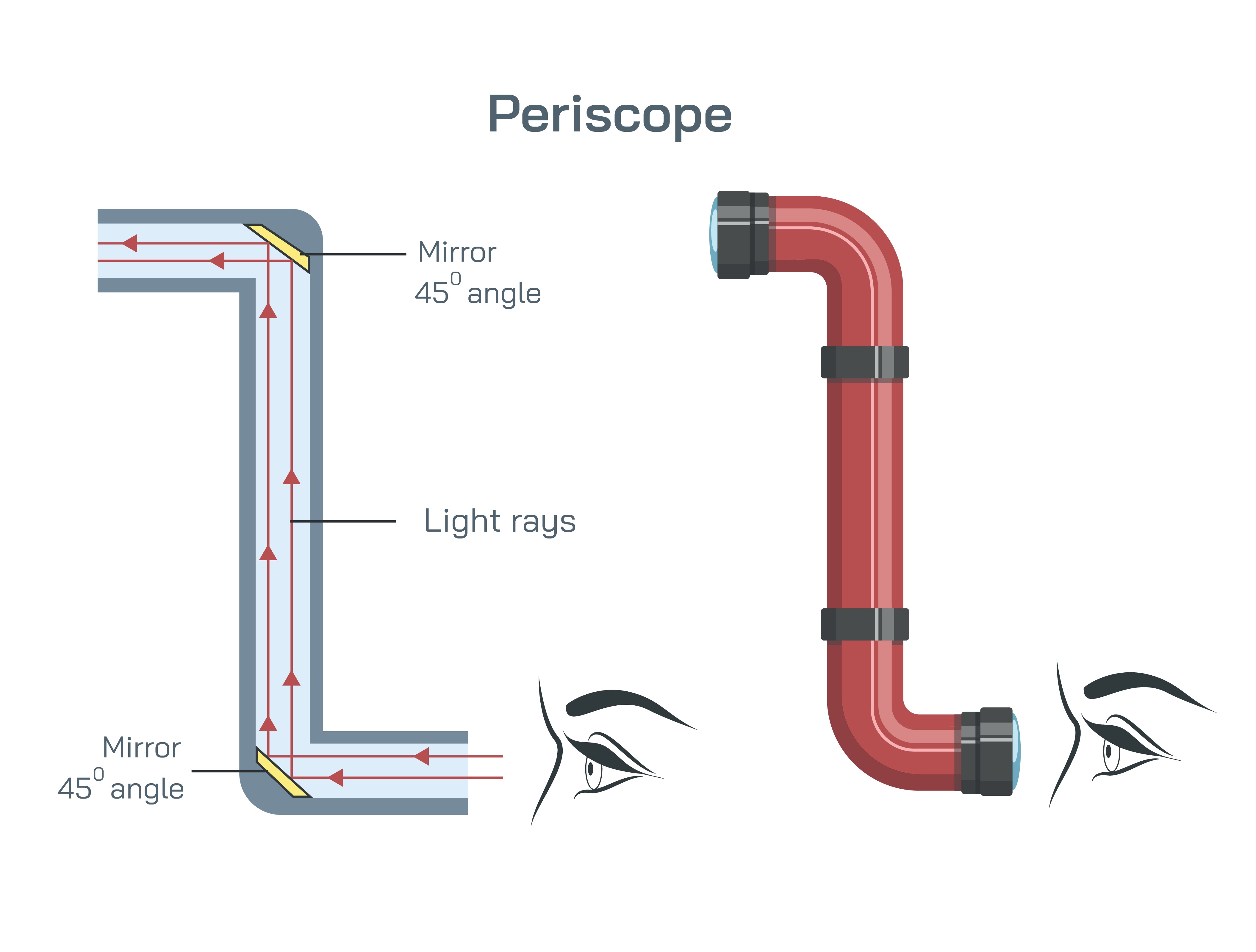
The basic structure of a periscope consists of a long vertical tube. This tube acts as the body of the instrument and holds all internal components in alignment. The length of the tube determines how far above or around an obstacle the observer can see. In simple designs, the tube may be made of metal, plastic, or rigid cardboard, while advanced versions use reinforced materials for durability and precision.
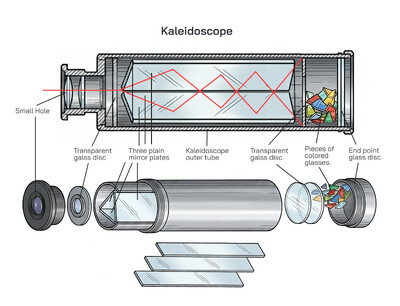
Inside the periscope, two reflective surfaces are positioned at opposite ends of the tube. These surfaces are typically mirrors or prisms placed at specific angles. The most common configuration uses two mirrors set at forty-five-degree angles relative to the tube. The upper mirror captures incoming light from the target object and reflects it downward through the tube. The lower mirror then redirects this light horizontally into the observer’s eye.
In more advanced periscopes, prisms replace mirrors. Prisms are solid optical components that use internal reflection to redirect light. They are more durable than mirrors and provide clearer images because they reduce light loss. Prism-based designs are commonly used in professional and military-grade periscopes due to their reliability and optical clarity.
The top of the periscope contains an opening known as the objective end. This opening allows light from the environment to enter the instrument. The bottom contains the eyepiece, where the observer looks into the device. Proper alignment between the objective opening, reflective elements, and eyepiece is essential for producing a clear and accurate image.
The construction of a periscope begins with assembling the tube and securing it to prevent internal movement. Reflective components are then mounted at precise angles inside the tube. Accuracy during this stage is critical, as even small misalignments can distort the image or reduce visibility. Once the reflective elements are positioned correctly, the eyepiece is installed to allow comfortable viewing.
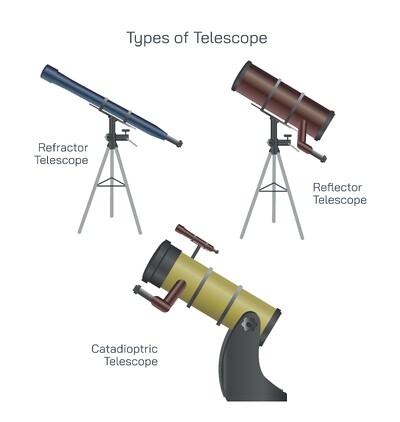
Some periscopes include additional optical elements such as lenses. These lenses can magnify the image or improve focus. In submarine periscopes, complex lens systems are used to provide zoom capability, image stabilization, and clarity over long distances. These advanced designs require precise engineering and calibration to function effectively.
The purpose of a periscope is closely tied to its ability to provide indirect vision. One of the most well-known uses of the periscope is in submarines. Submarines operate below the surface of the water, and the periscope allows crew members to observe the surface without exposing the vessel. This capability is essential for navigation, surveillance, and safety.
In military applications, periscopes have been used for observation in trenches, armored vehicles, and defensive positions. They allow soldiers to monitor surroundings while remaining protected. This use of the periscope significantly reduces risk by minimizing exposure to danger.
Periscopes also play an important role in education. Simple periscope models are commonly built in classrooms to teach students about reflection, angles, and light behavior. Constructing a periscope helps learners visualize abstract optical concepts and understand how basic scientific principles are applied in real-world devices.
In engineering and science, periscopes demonstrate how mechanical design and optics work together. The device shows how careful placement of components can manipulate light effectively. This makes the periscope a valuable teaching tool in physics, optics, and mechanical design studies.
Another purpose of the periscope is observation in restricted environments. In industrial or research settings, periscopes can be used to inspect areas that are difficult or unsafe to access directly. This indirect viewing capability supports safety and efficiency in controlled environments.
Historically, the invention of the periscope marked a significant advancement in observational technology. Early versions were simple, but their impact was profound. Over time, improvements in materials and optics expanded their functionality. Modern periscopes may include digital sensors, cameras, and electronic displays, extending their usefulness beyond traditional optical viewing.
Despite technological advances, the fundamental design of the periscope remains unchanged. It still relies on controlled light reflection to transmit images from one point to another. This simplicity is part of its enduring value. The periscope demonstrates how basic scientific principles can solve practical problems effectively.
From a safety perspective, periscopes allow observation without physical exposure. Whether used in defense, education, or industry, this feature protects users while maintaining situational awareness. This combination of safety and functionality explains why the periscope remains relevant even in modern technological contexts.
A periscope is more than a simple viewing tube; it is a refined example of how fundamental optical laws can be transformed into a practical instrument with wide-ranging applications. While the basic explanation of mirrors reflecting light explains how a periscope works at a surface level, a deeper understanding reveals the careful balance between geometry, materials, human vision, and mechanical stability that makes the device reliable and effective in real-world conditions.
One of the most important yet often overlooked aspects of a periscope is geometric alignment. The internal reflective components must be positioned with precise angular accuracy so that the light path remains continuous and undistorted. Even a slight deviation from the ideal angle can cause image displacement, partial image loss, or unwanted reflections. In professional periscopes, this alignment is achieved using calibrated mounts and rigid internal frames that prevent movement due to vibration, pressure, or temperature changes. This requirement highlights how periscopes combine optical science with mechanical engineering.
The tube of a periscope is not merely a container; it serves a structural and optical purpose. Internally, the tube must be darkened or coated with non-reflective material to prevent stray light from bouncing inside and degrading image quality. External light leakage can wash out the image, especially in bright environments. For this reason, high-quality periscopes use matte black interiors or specialized coatings to absorb excess light and preserve contrast.
Another critical design consideration is the optical path length. As the tube becomes longer, light must travel a greater distance, increasing the chances of image dimming or distortion. Advanced periscopes compensate for this by using high-reflectivity mirrors or total internal reflection prisms, which maintain brightness and clarity over longer distances. This is especially important in naval and scientific applications, where the periscope may extend several meters.
The choice between mirrors and prisms reflects a trade-off between simplicity and performance. Mirrors are easier to manufacture and replace, making them ideal for educational and low-cost designs. However, mirrors are exposed surfaces and can degrade due to dust, moisture, or scratches. Prisms, on the other hand, are solid optical blocks that protect reflective surfaces internally. This makes them more durable and stable, especially in harsh environments such as underwater or industrial settings. The use of prisms also ensures consistent image orientation and minimal light loss.
Image orientation is another subtle but important aspect of periscope design. A basic two-mirror periscope produces an upright image, which is intuitive for the observer. However, when additional lenses or reflective elements are introduced, designers must carefully manage image inversion and lateral reversal. In complex periscopes, multiple optical stages are arranged specifically to ensure that the final image matches natural human perception.
Human ergonomics also influence periscope construction. The eyepiece must be positioned at a comfortable height and angle, particularly in prolonged observation scenarios. Some designs include adjustable eyepieces, rotating heads, or flexible mounts that allow users to adapt the periscope to their posture. These considerations are vital in military and research applications, where continuous observation may be required.
Beyond optical performance, environmental protection plays a major role in periscope design. In outdoor or underwater use, periscopes must be sealed against moisture, dust, and pressure. Submarine periscopes, for example, are engineered to withstand water pressure while maintaining optical clarity. They often include protective housings, pressure-resistant seals, and drainage systems to prevent fogging or internal condensation.
Modern periscopes often integrate optical systems with electronic components. Cameras, sensors, and digital displays can be combined with traditional optics to extend functionality. This hybrid approach allows images to be recorded, transmitted, or enhanced digitally. Despite these advancements, the optical core remains essential, ensuring that the periscope can function even if electronic systems fail.
The purposes of a periscope extend well beyond simple observation. In scientific research, periscopes are used to study confined environments such as reaction chambers, vacuum systems, or hazardous zones where direct viewing would be unsafe. In these contexts, the periscope becomes a tool for risk reduction, allowing observation without physical exposure.
In industrial maintenance, periscopes assist in inspecting machinery interiors, pipelines, and structural cavities. Their ability to provide visual access without disassembly saves time and reduces operational downtime. This practical advantage demonstrates how a device rooted in basic physics continues to offer economic and safety benefits.
Educational use remains one of the most impactful roles of the periscope. Building a periscope encourages hands-on learning and fosters an intuitive understanding of light behavior. Students can directly observe how angles affect reflection and how alignment influences image quality. This experiential learning strengthens comprehension far more effectively than theoretical explanation alone.
From a historical perspective, the periscope represents a milestone in observational technology. It exemplifies how a simple concept can evolve through refinement rather than reinvention. While materials, precision, and applications have advanced dramatically, the underlying idea has remained stable for generations.
The enduring relevance of the periscope lies in its elegance. It solves a complex problem—seeing without being seen—using minimal components and no reliance on power. This independence from electricity makes it reliable in emergencies and extreme conditions, reinforcing its value in both traditional and modern contexts.
Ultimately, the periscope stands as a powerful example of applied science. It shows how understanding natural laws enables humans to overcome physical limitations safely and efficiently. Its continued use across education, defense, industry, and research underscores the timeless practicality of well-designed optical instruments.
In conclusion, a periscope is a carefully constructed optical instrument that redirects light to provide indirect vision. It is built using a vertical tube, reflective surfaces such as mirrors or prisms, and precise alignment to ensure clear image transmission. The purposes of a periscope range from military and naval observation to education, engineering, and safety inspection. By applying simple principles of reflection and optics, the periscope transforms limited visibility into clear observation, demonstrating the power of basic science in practical design.