Thallus: Structure, Types, and Functions in Algae, Fungi, and Non-Vascular Plants
A thallus is the undifferentiated vegetative body of certain plants, algae, fungi, and non-vascular plants such as bryophytes, which lacks true stems, roots, and leaves. Unlike higher plants with specialized tissues and organs, a thallus performs all essential life functions, including photosynthesis, nutrient absorption, reproduction, and structural support, through its simple, multicellular or sometimes unicellular organization. Understanding thallus is essential for studying lower plant forms, aquatic biology, mycology, and evolutionary botany.
Structure and Types of Thallus:
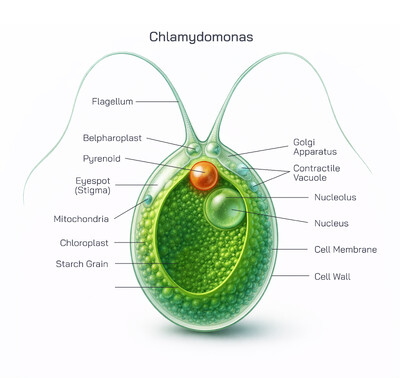
The thallus exhibits diverse forms depending on the organism. In algae, it can be filamentous, tubular, membranous, or thalloid, adapting to aquatic environments for optimal light capture and nutrient absorption. Fungal thalli, such as mycelium, consist of networks of hyphae that grow into substrates to absorb nutrients efficiently. Bryophyte thalli are typically flattened, green, and photosynthetic, providing a foundation for gametophyte and sporophyte development. Some thalli are simple and microscopic, while others are macroscopic and multicellular, forming large colonies visible to the naked eye.
Functions of Thallus:
Despite its simplicity, the thallus carries out vital functions for survival and reproduction. Photosynthesis occurs in the chlorophyll-containing regions of algal or bryophyte thalli, producing energy for growth and development. Nutrient and water absorption occur directly through the surface cells or specialized structures like rhizoids in bryophytes. Reproduction can be both asexual and sexual; asexual reproduction may involve fragmentation, spores, or gemmae, while sexual reproduction involves gametes produced on specialized regions of the thallus. Additionally, in fungi, thalli support growth and nutrient absorption via mycelial networks, enabling decomposition and symbiotic relationships with plants.
Significance in Biology:
Studying thallus provides insights into the evolution of multicellularity, adaptation to aquatic and terrestrial environments, and the origin of differentiated plant tissues. It serves as a model for understanding simple plant structures, reproduction strategies, and ecological roles. Thalli of algae contribute to oxygen production and form the base of aquatic food chains, while fungal thalli play crucial roles in nutrient cycling and symbiotic interactions.
In conclusion, a thallus is a multifunctional, undifferentiated body that enables lower plants, algae, and fungi to perform essential life processes efficiently. Its simplicity, adaptability, and diversity make it a fundamental concept in botany, mycology, and ecological studies. Understanding thallus structure, types, and functions enriches our knowledge of plant evolution, physiology, and the critical roles these organisms play in ecosystems.