Branching in Plants Showing Types of Plant Branching, Growth Pattern, and Stem Development Structure
Branching is one of the most defining characteristics of plant architecture, shaping the way a plant occupies space, competes for sunlight, supports reproductive structures, and responds to its environment throughout its lifespan. Whether viewed in a garden landscape or under scientific observation, plant branching represents a complex developmental program organized around growth hormones, meristematic tissues, and environmental cues. The size, symmetry, and density of a plant canopy all depend on how branches originate and extend from the main axis. Because the branching pattern determines how efficiently a plant captures light, disperses seeds, withstands wind, and maximizes photosynthesis, it becomes a key trait in ecology, agriculture, forestry, and horticulture. Each branching type—from single-point symmetry to irregular networks—reveals a biological strategy for survival.
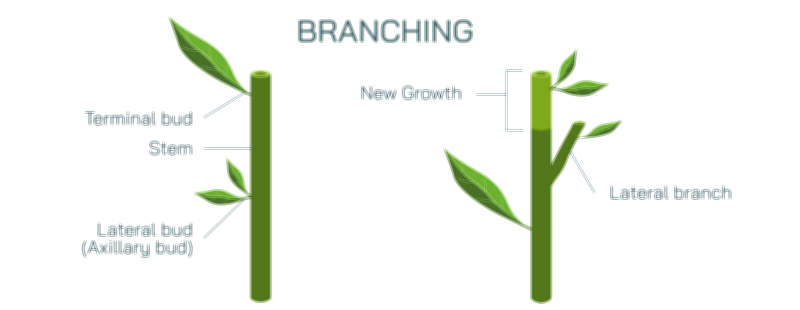
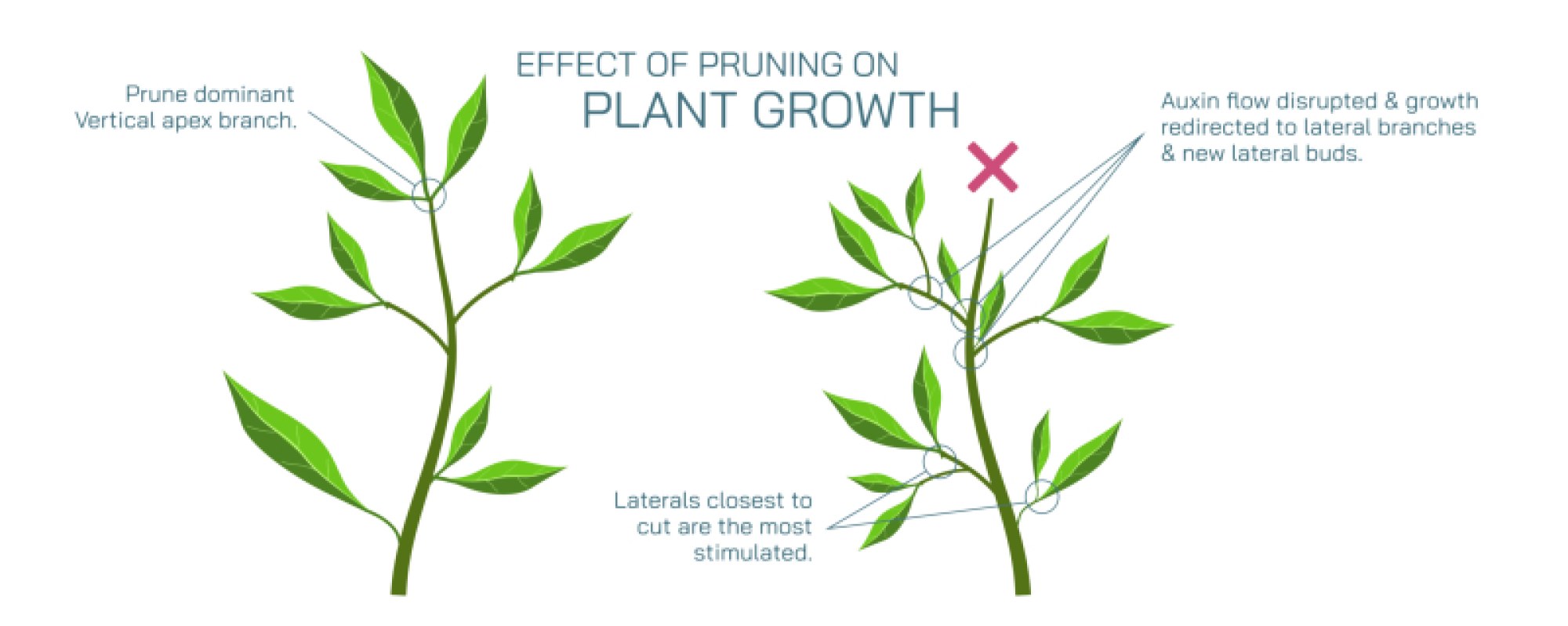
The foundation of branching begins at the shoot apical meristem, the growth tip at the end of the primary stem. This region produces new cells that elongate the main axis, extending the plant upward toward light. Along the stem, axillary buds form at the junction between the main stem and each leaf. These buds remain dormant at first but possess the potential to develop into branches. Whether an axillary bud stays inactive or becomes a branch depends on a phenomenon known as apical dominance, controlled by the hormone auxin produced by the apical meristem. As long as the main stem is actively growing and producing auxin, branch growth is suppressed to favor vertical elongation. When the apical meristem slows, is damaged, or is pruned, auxin levels decrease, and axillary buds awaken, giving rise to new branches. In this way, branching reflects a dynamic balance between upward growth and outward expansion.
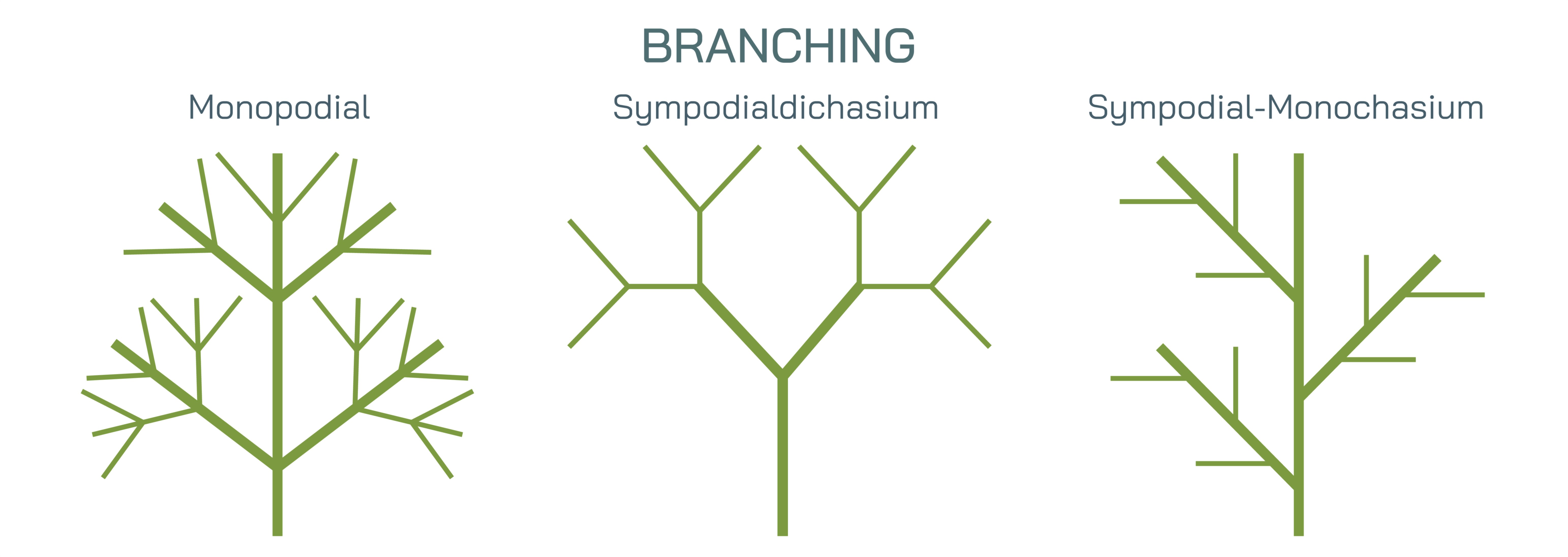
Plants express several major branching patterns, each representing a different developmental strategy. In monopodial branching, the main stem continues to grow indefinitely, producing a clear central axis from which lateral branches emerge. The primary stem remains dominant throughout the plant’s life, resulting in a strong vertical structure. Many conifers—such as pine, cedar, and spruce—demonstrate this form, creating tall, spire-like silhouettes ideal for capturing sunlight in dense forests. In contrast, sympodial branching occurs when the main growing point ceases activity and lateral buds take over, producing a sequential, zigzagging growth pattern. Orchids, tomatoes, grapes, and many flowering plants exhibit this type, where the main axis is actually a series of successive stems. Sympodial branching gives rise to wider plant forms and often supports abundant flowering or fruiting clusters because many branch tips become reproductive sites.
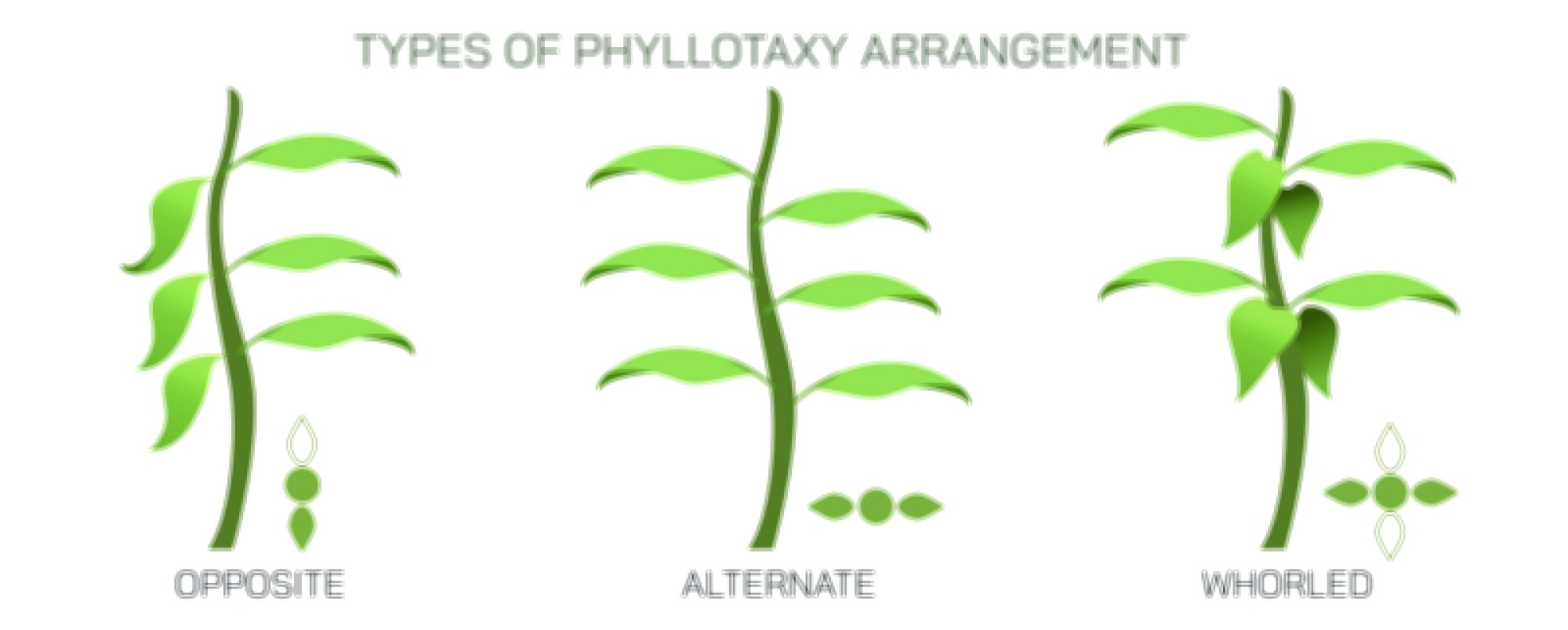
Another way to classify branching is based on the position and synchrony of lateral growth. Dichotomous branching, though rare in modern plants, occurs when the growing tip splits into two equal parts repeatedly, forming forked or Y-shaped structures. This pattern appears in cycads, bryophytes, and some early vascular plants and reflects an ancient developmental blueprint. Whorled branching, by comparison, features three or more branches emerging from the same node simultaneously, forming a radial arrangement around the stem. Plants such as Nerium oleander and some palm species exhibit this geometry, which distributes foliage evenly for balanced light capture. Opposite branching, seen in maples and jasmine, produces branches in pairs across from each other at each node. Alternate branching, common in oak, birch, and many shrubs, staggers branches along the stem so they emerge singly at different heights. Each branching style defines the plant’s outline, light exposure pattern, and foliage density.
Branching is also a central component of growth habit, shaping the appearance of shrubs, trees, climbers, and herbaceous plants. Some species develop a columnar habit, with branches held close to the trunk, maximizing height while minimizing spread—an adaptation to crowded habitats. Others develop spreading or lateral branching, creating broad canopies that shade large areas and maximize photosynthetic area under open sky. Weeping growth forms feature pendulous branches that hang downward due to flexible tissue structure and gravitational influence, as seen in willows and some ornamental cherries. Climbing plants such as vines and creepers rely on modified branching mechanisms in which secondary stems extend long internodes to seek physical support before branching further where light conditions are favorable.
The internal structure of stems plays an essential role in branching strength and formation. Once a bud develops into a branch, vascular cambium connects the new structure to the parent stem’s transport system. Xylem conducts water and minerals upward from the roots, while phloem distributes sugars and hormones throughout the plant. The junction where a branch meets the stem—known as the branch collar—forms compact, reinforced wood that strengthens the mechanical connection. This reinforcement allows branches to withstand wind, snow load, and mechanical stress. However, improper attachment angles or disease at the branch base can create structural weakness, demonstrating why pruning practices in horticulture focus on protecting the collar region to ensure long-term stability.
Environmental conditions influence branching throughout plant life. Abundant sunlight encourages lateral branching, while shaded conditions promote elongation of the main stem to reach better light. Nutrient availability also regulates branching; nitrogen excess often promotes leafy branch growth, while deficiency reduces it. Wind, temperature, and mechanical touch stimulate thigmomorphogenesis, altering branching thickness and flexibility. Furthermore, agricultural techniques such as pruning, staking, topping, and training deliberately manipulate branching patterns to increase flowering, balance crop load, or improve aesthetic form. For example, fruiting trees undergo selective pruning to ensure energy is directed toward fewer, stronger branches capable of supporting heavier fruit.
Branching ultimately serves reproductive goals as well. Many plants allocate the terminal tips of branches to flowering sites, making branching density crucial for reproductive success. In grasses and cereals, the number of tillers — basal branches — directly determines yield potential. In forest ecology, the branching density of trees influences leaf area index, canopy cover, and habitat structure for wildlife. Even desert plants, which must conserve water, use compact and reduced branching forms to minimize exposure, illustrating the adaptability of branching to extreme environments.
A structural diagram of plant branching therefore offers more than a botanical outline; it serves as a lens into plant strategy and evolution. Each branching pattern reflects a solution to challenges of light acquisition, climate survival, pollination, and space competition. Every node represents a crossroad between vertical and lateral growth, every branch embodies a hormonal decision controlled by the apical meristem, and every canopy shape reflects the cumulative effect of genetics and environment.
To observe the branching of a plant is to see a living record of its developmental choices. Growth patterns establish mechanical stability, optimize the capture of sunlight, determine flowering positions, and define reproductive success. The three-dimensional shape that results — whether towering, spreading, symmetrical, forked, or cascading — reveals the blueprint of plant survival. Through branching, the stem becomes not just a support structure but the architectural foundation of life above ground, illustrating how plants build form, function, and resilience one node at a time.