Common Leaf Types Showing Shapes, Margins, Venation Patterns, and Botanical Classification
Leaves are among the most recognizable and informative structures in the plant kingdom, and their shapes, margins, and venation patterns serve as biological signatures that help botanists classify species, understand evolutionary lineage, and evaluate how plants are adapted to their environments. At first glance, a leaf appears to be a simple green surface that captures sunlight for photosynthesis, but closer observation reveals that the form of a leaf embodies a history of ecological pressures, growth habits, and structural optimization. Whether long and narrow, broad and lobed, heart-shaped, serrated, or needle-like, each leaf type reflects how a plant balances energy capture, water retention, defense, and environmental survival. A visual illustration showing common leaf types — including general shapes, edge structures, and internal vein organization — becomes a map of plant diversity and a powerful guide for botanical identification.
Leaf shapes provide the first major pattern used for classification, since the overall contour of a leaf is often consistent within a species or family. The ovate leaf, rounded at the base and tapering toward the tip, represents one of the most widespread forms among trees and shrubs due to its efficient light-collecting surface and aerodynamic tolerance to wind. Elliptical leaves extend this form symmetrically, with both ends gradually tapering, creating an elegant elongated oval found in many tropical and temperate species. Lanceolate leaves, narrow and pointed in the manner of a spearhead, appear on grasses and herbaceous plants where narrow surfaces reduce drag and water loss in wind-prone environments. The cordate or heart-shaped form, with a deep notch at the base, has a distinctive profile commonly associated with shade-tolerant plants that need broad surfaces to capture diffused light. Linear leaves, extremely long and narrow like blades, exemplify adaptations seen in grasses and conifers, where minimizing surface area protects against desiccation in open or dry habitats. In contrast, lobed leaves — such as the deeply sculpted divisions of oak or maple — are highly irregular in outline but functionally strategic, improving airflow through the canopy and reducing tearing under strong winds. Each general shape tells a silent story about the environment in which the plant evolved, whether damp forest understory, windy mountainside, or sun-exposed savanna.
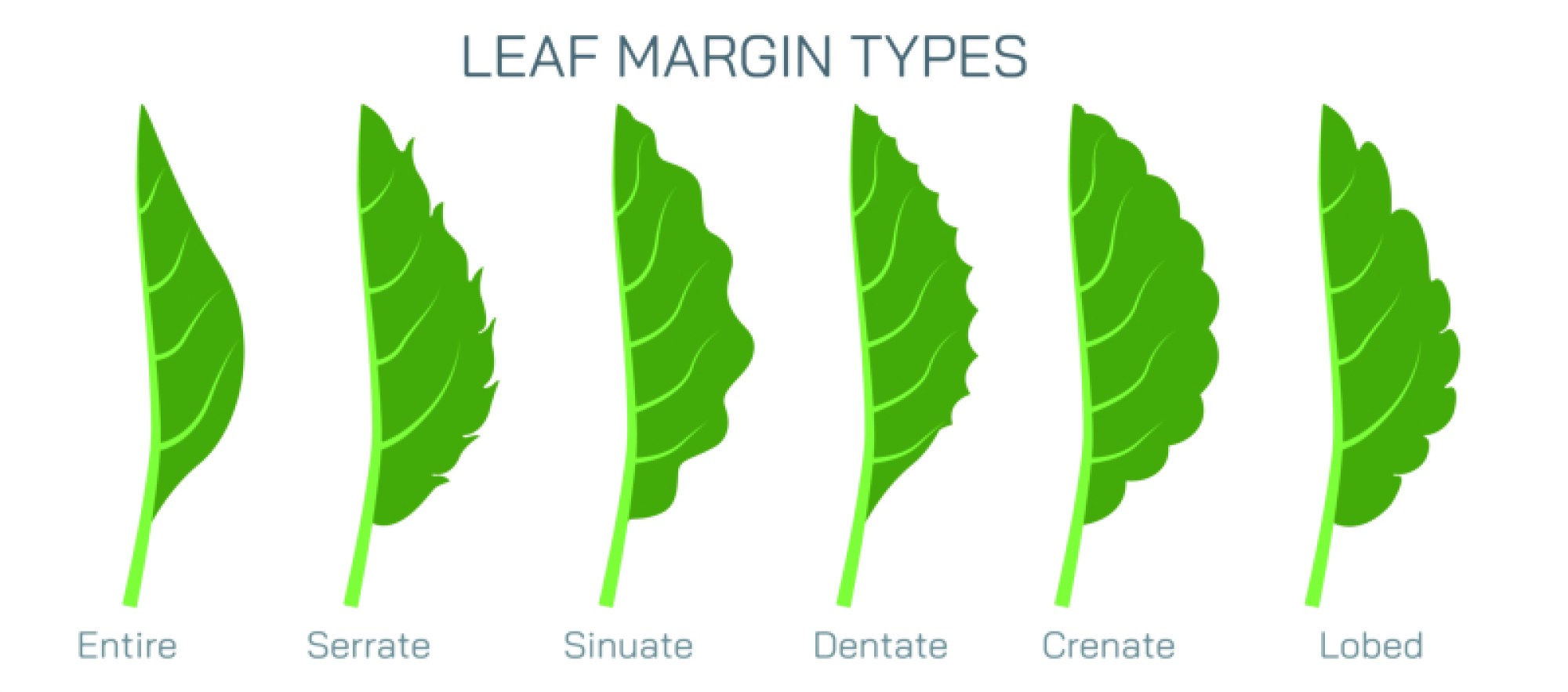
Beyond shape, the leaf margin, or edge of the blade, expresses another vital element of classification and adaptation. A smooth margin (entire) creates a continuous unbroken line that supports water runoff and reduces vulnerability to herbivory in soft-tissued species. A serrated margin, marked with saw-tooth-like projections, exemplifies many fast-growing temperate species — these tiny points help accelerate leaf expansion by distributing growth pressure across multiple tips while also discouraging grazing. Crenate margins, scalloped with rounded waves, soften the serration pattern and appear in species with moderate environmental defenses. Dentate margins, featuring sharp outward-pointing teeth, create a more aggressive defensive shape that makes leaves physically difficult for herbivores to consume. Then there are lobed margins, where divisions cut deeply into the leaf blade without fully separating into leaflets. These lobes — whether palmate like a maple or pinnate like an oak — contribute to airflow, reduce overheating, and allow large leaves to withstand wind pressure without tearing. Even without knowing the identity of a plant, observing its margins provides meaningful insight into its ecological strategy, rate of growth, and anatomical robustness.
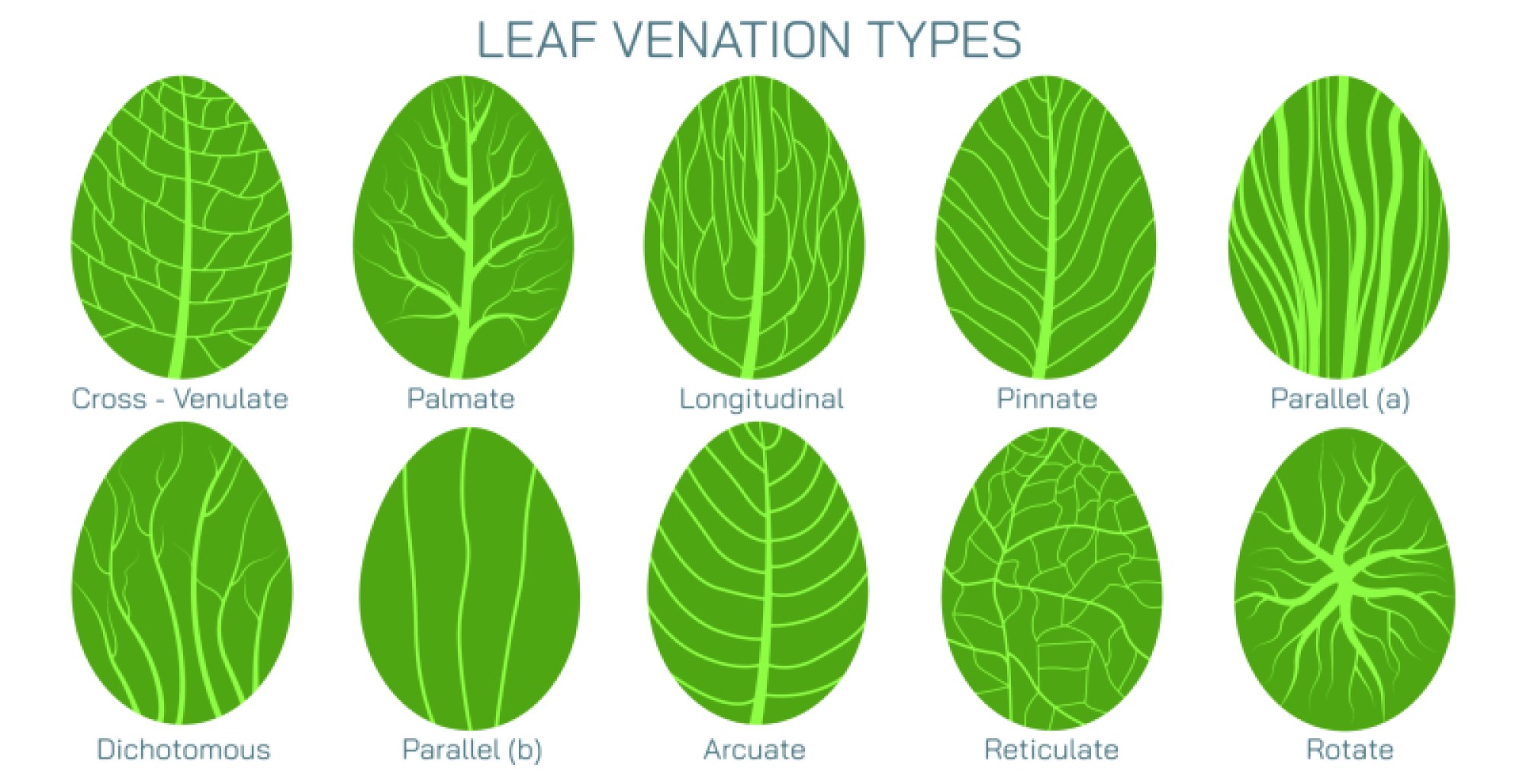
A defining feature within any leaf illustration is its venation pattern, an internal network of vascular conduits that transport water, nutrients, and sugars throughout the leaf. The two most widely recognized venation systems are parallel venation, in which veins run side by side along the length of the leaf, and reticulate venation, in which veins form an interwoven mesh pattern. Parallel venation is characteristic of monocots such as grasses, lilies, and palms, where long linear leaves benefit from strong longitudinal support. Reticulate venation dominates in dicots, creating a branching system that distributes nutrients evenly across broad, irregular surfaces. Within reticulate venation, pinnate patterns feature a central midrib with smaller lateral veins branching from it like the feathers of a bird, while palmate patterns radiate multiple primary veins directly from the base of the leaf, resembling the fingers of a hand. These structural differences reveal evolutionary divergence and help botanists identify plants even when flowers or fruits are absent. From an adaptive perspective, venation plays a major role in leaf durability, since strong networked veins help resist tearing and ensure that damaged regions do not interrupt the entire flow of resources.
Together, leaf shape, margin, and venation support formal botanical classification, providing a vocabulary through which plant structure becomes systematic and comparative. When classifying leaves, botanists often begin by determining whether the leaf is simple — a single, uninterrupted blade — or compound, composed of multiple leaflets attached to a single stalk. Compound leaves may arrange leaflets in a palmate pattern, radiating from a central point like the spokes of a wheel, or in a pinnate arrangement, with leaflets aligned along a central rachis. The distinction is ecologically meaningful: compound leaves disperse mechanical strain across multiple segments, reducing damage from wind or impact, while simple leaves maximize unbroken sunlight absorption. Even when leaves vary slightly in shape due to light, soil, or moisture, their classification features remain stable enough to help identify species in the field or laboratory.
What makes leaves even more remarkable is how every visual characteristic integrates physical function with biological adaptation. The broad surface of an ovate or cordate leaf maximizes solar capture but requires thick venation to distribute pressure and prevent collapse. The narrow lanceolate or linear leaf sacrifices surface area for resilience against drought and wind, reflecting an environmental trade-off where survival takes precedence over maximum photosynthetic gain. Lobes allow large leaves to occupy air-turbulent landscapes while freeing lower foliage from deep shade. Smooth margins streamline water shedding during rainfall, serrated margins accelerate early growth, and thick, leathery margins slow dehydration in arid climates. Venation supports not just transport but internal reinforcement — functioning like a skeleton within the leaf, providing both flexibility and strength. Thus, a viewer observing a leaf illustration is not just seeing variations in outline and texture but witnessing a matrix of survival strategies forged by evolution.
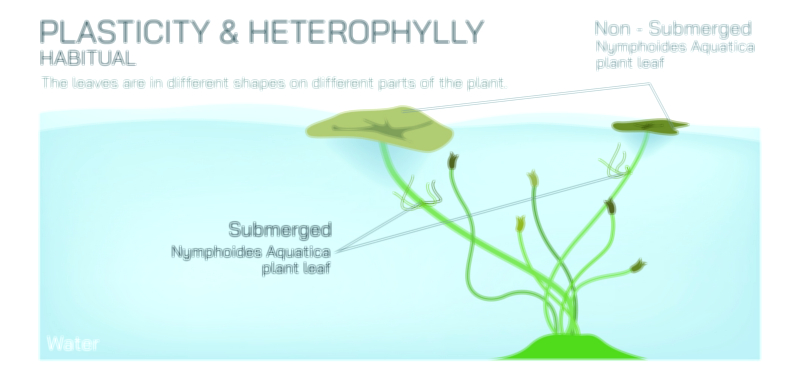
In addition to ecology and survival, leaf features can reflect seasonal and developmental change. Juvenile leaves may differ from mature forms, producing exaggerated serrations or elongated tips before transitioning to the adult shape that is more functionally stable. Shade-grown leaves often become broader and thinner to capture dispersed sunlight, while sun-grown leaves of the same species turn smaller, thicker, and more heavily veined to withstand direct radiation. These developmental differences highlight the plasticity of plant growth — showing that while classification categories are genetically rooted, structural expression can still shift depending on environmental need. For botanists and horticulturists, recognizing the range of plasticity within leaf traits helps avoid misidentifying young or environmentally stressed plants.
At the macroscopic scale, leaves also reveal patterns of ancestry and species relationship. Palmately lobed leaves appear in plant families with shared phylogenetic heritage, while parallel venation is a consistent marker for monocots and thus a reliable discriminator between major evolutionary branches. Learning to read leaf features becomes an entry point to understanding plant evolution, biogeography, and physiology. Even without flowers or fruits — the most definitive reproductive organs — a leaf can provide enough structural clues to place a plant within its taxonomic context.
A detailed illustration of common leaf types therefore creates a visual bridge between the microscopic processes happening inside the leaf — photosynthesis, water transport, nutrient cycling — and the external signature that each plant presents to the world. Shapes, margins, and venation patterns together express the personality of the plant: its ancestry, its survival strategies, and its structural priorities. Leaves stand as a living record of adaptation — a portrait of how plants respond to wind, water, sunlight, herbivory, climate, and competition. Every contour and vein tells a story about place, environment, and evolution.
By bringing these features together into a single conceptual image, the illustration becomes not only a botanical reference but a celebration of plant diversity. It emphasizes that leaves are not simply passive solar panels; they are adaptive forms sculpted by ecological pressures and biological design. Through shape, edge, and venation, nature writes the history of each species into its foliage, turning every leaf into a symbol of identity, survival, and connection between the plant and its world.