Branching in Plants Illustration: Types, Patterns, and Growth Mechanisms Explained
Branching in plants is one of the most characteristic and visually expressive features of botanical growth, and an illustration dedicated to branching patterns captures the evolutionary strategy that plants use to expand their surface area, reach for sunlight, enhance structural stability, and maximize reproductive opportunities. Although branching appears simple on the surface—stems dividing into smaller stems that divide again—its underlying logic is governed by biological signals, hormones, competition, and environmental pressures. A realistic illustration reveals that branching is not random; it is a highly organized architectural plan by which plants distribute resources, shape their appearance, and determine how effectively they compete in their habitat. Each branching type creates a particular silhouette, and those shapes tell a story about the species, climate, habitat challenges, and functional priorities that define the plant’s life strategy. Whether the subject is a towering oak, a conifer with perfect symmetry, a spreading shrub, a grass-like herb, or a climbing vine, the way branches emerge and arrange themselves reflects both genetic control and environmental response.
In an illustration that compares the major types of branching, monopodial and sympodial branching often appear first because they represent fundamental organizational patterns. Monopodial branching features a single dominant main stem—the central axis—growing continuously upward while lateral branches emerge from its sides. This pattern creates a pyramidal or conical appearance, as seen in conifers like pines and spruces, where the central leader remains taller and stronger than the branches emanating from below. In a diagram, the main vertical shoot is clearly highlighted as uninterrupted, with smaller lateral shoots arranged in whorled or spiral patterns around it. Sympodial branching, by contrast, shows an early termination of the main axis followed by lateral branches that take over as successive leaders. Each new branch grows outward and upward in turn, creating spreading structures like those of many deciduous trees including maples or cherry species. In an illustration, the central axis appears fragmented or shortened at each stage while the emerging side branches dominate the next phase of growth. The difference between these two branching strategies reflects a deeper difference in plant hormonal regulation and ecological strategy—one prioritizing vertical dominance, the other emphasizing distribution of growth and canopy spread.
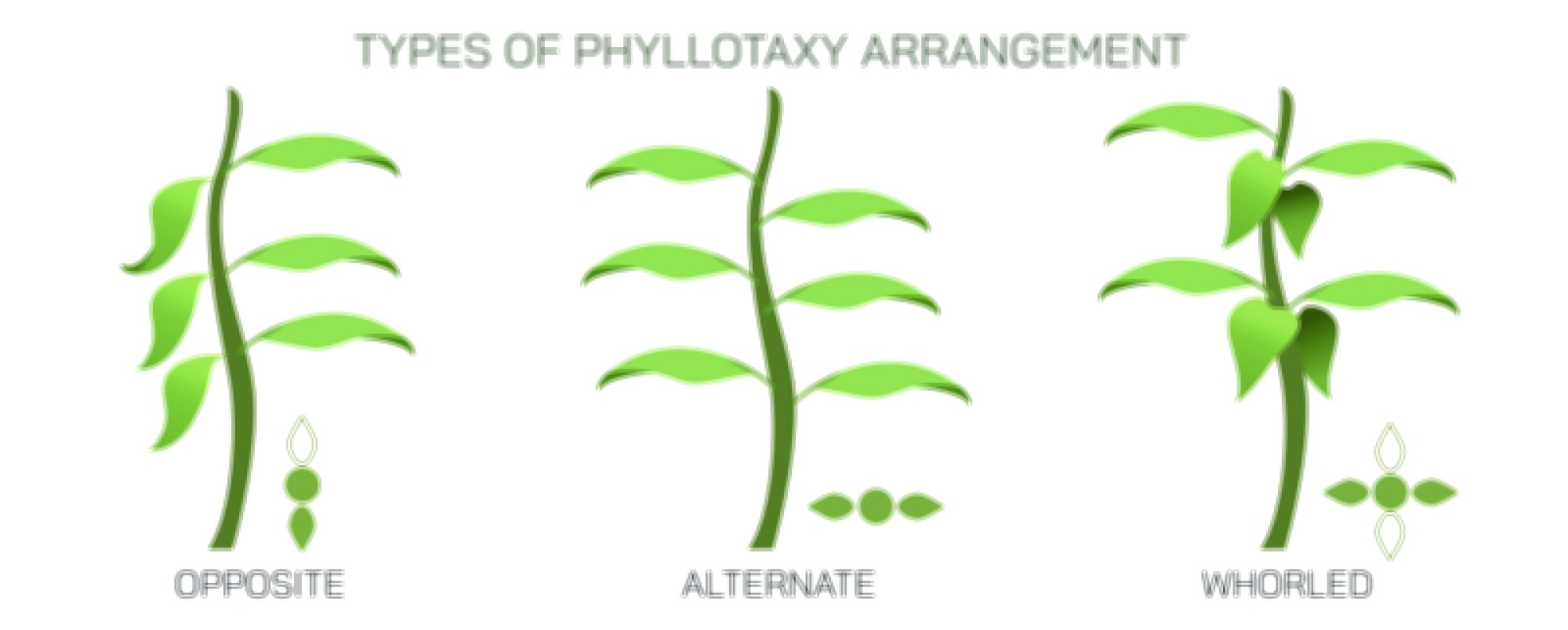
Beyond these foundational divisions, illustrations expand into familiar visual patterns used by botanists to describe branching appearance. Dichotomous branching shows a stem splitting evenly into two equivalent parts repeatedly, forming a forked pattern like a branching road. This pattern occurs in some primitive vascular plants and algae, and a diagram communicates the symmetry by showing each split dividing growth energy equally, creating geometric regularity. Lateral branching is depicted by a main stem producing smaller side shoots at intervals—a pattern common in herbs, shrubs, and flowering plants. Each lateral branch originates from an axillary bud located where a leaf meets the stem, and an illustration emphasizes this anatomical point by showing buds resting in the axils until activated. Opposite branching shows two branches emerging directly opposite each other at the same node, creating paired symmetry as seen in plants like mint or maple. Whorled branching portrays three or more branches emerging at the same height on the stem, a distinctive but less common pattern represented by species such as Nerium oleander. By presenting these branching styles side by side, illustrations reveal how simple differences in bud position generate immense morphological diversity.
The mechanism behind branching activates through the behavior of apical dominance, a regulatory system driven largely by plant hormones. At the tip of each shoot resides the apical meristem, a region of actively dividing cells that generates vertical growth. This tip produces the hormone auxin, which travels downward and suppresses the growth of axillary buds located further down the stem. In a diagram, the leading shoot appears bathed in auxin signals, marked by arrows showing downward suppression of lateral growth. When the apical meristem becomes damaged, pruned, or shaded, auxin distribution declines, permitting axillary buds to activate and grow outward as new branches. This process explains why pruning encourages bushier growth and why plants in shaded environments grow branches rapidly on the side facing sunlight. Illustrations of pruning experiments highlight how removal of the apical shoot reduces hormonal dominance, allowing multiple side shoots to take over, giving gardeners and horticulturists insight into shape control and canopy density.
Branching patterns also relate closely to phyllotaxis—the arrangement of leaves and buds along the stem. A spiral arrangement leads to evenly spaced branches and leaves around the stem, maximizing light capture by avoiding shadow overlap. Opposite arrangement pairs leaves and buds across from each other, generating mirrored branching. Whorled arrangement groups three or more leaves per node, allowing multiple branch options but requiring strong spacing control. An illustration overlaying leaf placement and branching origin demonstrates that leaves are not simply light collectors, but indicators of where new branches may emerge. This connection explains why areas with large leaf scars or multiple axillary buds often become future sites of branching, forming structural layers essential to the plant’s overall architecture.
Environmental factors add further meaning to illustrations of branching. Plants experiencing high light intensity tend to produce short internodes and dense branching, creating compact forms. Shade-grown plants exhibit elongated internodes with fewer branches, channeling energy toward height to escape low-light environments. Wind-prone trees develop reinforced lower branches and flexible tips, while high competition in forests pushes trees toward vertical branching with limited lateral spread. In drought-adapted species, branching is often minimized to reduce water loss, and illustrations show compact bushes with thick stems rather than wide-spreading forms. Climbing plants and vines display a radically different branching approach illustrated by long slender stems that prioritize length over thickness until they find support; once anchored, lateral branching accelerates to expand leaf area quickly. By presenting these adaptive differences visually, illustrations convey that branching is an outcome of ecological pressure rather than random growth.
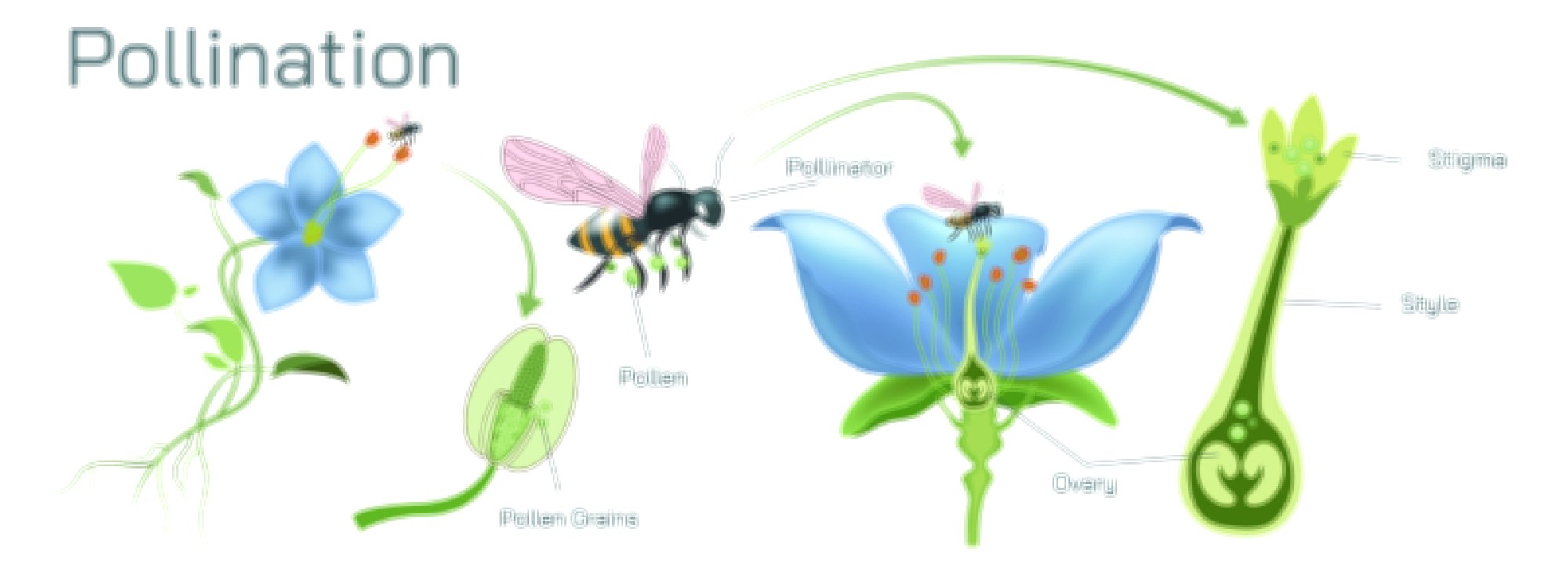
The distribution and density of branching also affect reproduction and survival. Flowering occurs on specific branch types in many species—sometimes only on current-year growth and sometimes only on older wood. Illustrations used in horticulture highlight the branches productive for flowering versus those that do not contribute to fruiting, helping gardeners understand how pruning affects harvest. Some fruit trees bear on short spur branches; others develop fruit at the tips of long lateral shoots. A diagram comparing these flowering positions shows why improper pruning can reduce production dramatically while thoughtful pruning can maximize yields. Similarly, branching affects seed dispersal and pollination: a wide crown provides space for thousands of reproductive units in wind-pollinated trees, whereas flexible branching enables trees in windy environments to avoid structural breakage during stormy conditions. The shaping of branches therefore reflects not only nutrient transport and light capture but reproductive success over generations.
Branching at the microscopic level deepens the story still further. Inside each branch junction, vascular tissues split and reconnect to maintain water and nutrient transport between roots and leaves. Cross-section illustrations reveal bundles of xylem and phloem dividing at branching points, ensuring that every new branch receives water from below and returns sugars from photosynthesis back into the plant’s metabolic pool. This vascular logistics forms the living infrastructure of plant architecture. In woody plants, these tissues become reinforced with secondary growth, developing annual rings and thick bark for support, whereas herbaceous plants maintain a flexible vascular core without heavy reinforcement. The difference is visible in cutaway illustrations that show large woody stem cross-sections contrasting with slender herbaceous ones. These depictions underscore that branching is not merely surface form but an extension of interior anatomy.
Over long periods of growth, branching patterns become identity markers for plant species. Even when leaves have fallen, the silhouette of a tree is often enough for botanists to identify it from a distance. The rigid symmetry of conifers, the spreading dome of oaks, the fountain-like shape of willow branches, and the tiered horizontal layers of dogwoods are all outcomes of branching patterns. Illustrations comparing winter silhouettes help observers understand how structure persists even without foliage, reinforcing that branching is the backbone of plant form.
Ultimately, branching in plants demonstrates the harmony between biological programming and environmental feedback. The blueprint for branching exists in every plant embryo, in genetic instructions that determine where buds will form, how hormones will distribute, and how signals will travel through the vascular network. Yet the final form reflects the story of the plant’s experiences: where it found sunlight, where pruning occurred, where wind applied pressure, where competition forced adaptation, and where resources supported growth. A branching illustration therefore becomes not just a diagram of shape, but a visual biography of the plant’s life.
Understanding branching gives insight into ecology, agriculture, forestry, gardening, and landscape design. It explains why pruning shapes growth; why trees stand as strong, self-reinforcing structures; why vines adapt to climb; why shrubs take on spherical forms; and why every forest shows a mosaic of distinct silhouettes shaped by evolution and survival. When branching is illustrated with attention to anatomical origin, growth mechanism, and ecological context, it transforms from a simple observation of plant structure into a profound expression of how living organisms adapt to energy, environment, and time through patterns written into both genes and sunlight.