Solar Eclipse and Lunar Eclipse – Understanding Celestial Phenomena
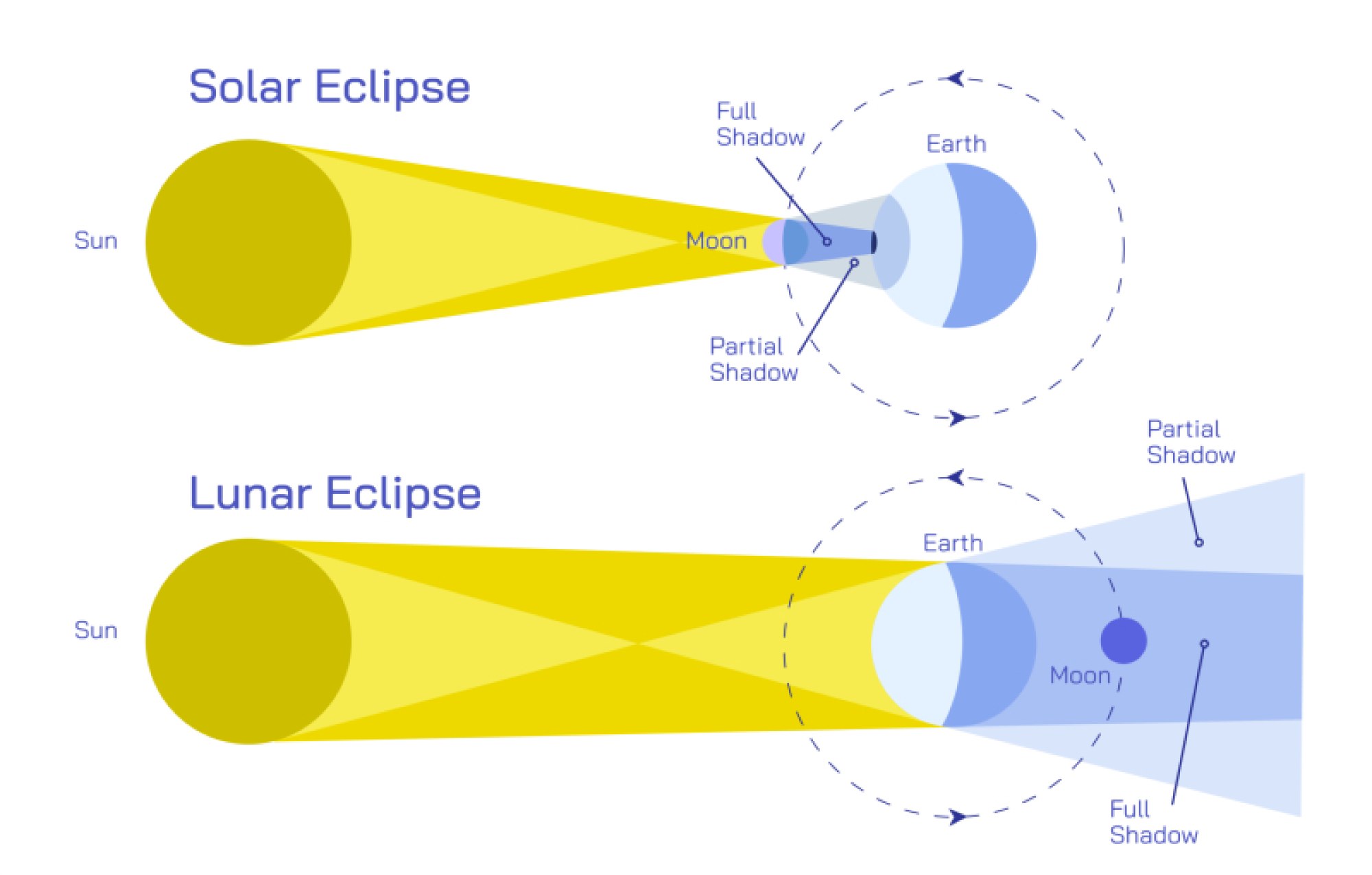
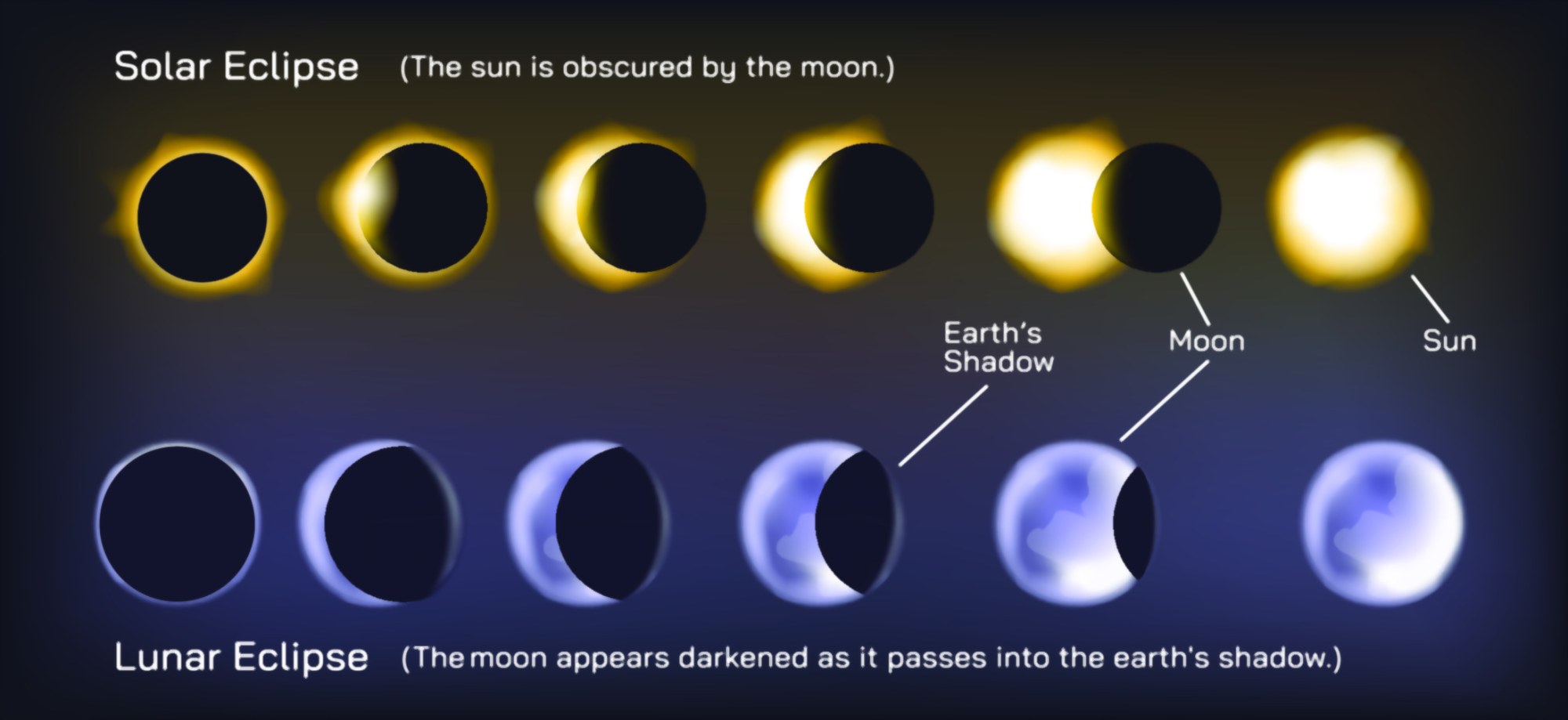
Solar and lunar eclipses are among the most fascinating celestial events visible from Earth, captivating both scientists and the general public. A solar eclipse occurs when the Moon passes between the Sun and Earth, temporarily blocking the Sun’s light and casting a shadow on the Earth. This can result in a total, partial, or annular solar eclipse, depending on the alignment and distances of the Sun, Moon, and Earth. Observing solar eclipses requires protective equipment due to the intensity of sunlight, and they offer a dramatic view of celestial mechanics in action.
In contrast, a lunar eclipse happens when the Earth comes between the Sun and the Moon, causing the Moon to pass through the Earth’s shadow. Lunar eclipses can be total, partial, or penumbral, with the total lunar eclipse giving the Moon a distinctive reddish hue due to sunlight bending through the Earth’s atmosphere. Unlike solar eclipses, lunar eclipses are safe to view directly with the naked eye and can be observed over a wider area, making them more accessible for casual observation.
Visual illustrations of these eclipses are highly effective for education, helping learners understand alignment, shadow formation, and the phases of eclipses. Diagrams typically show the Sun, Earth, and Moon in precise positions, the umbra and penumbra shadows, and the types of eclipses. These visuals make abstract astronomical concepts tangible, enhancing comprehension of the mechanics behind each event.
Eclipses have fascinated humans for centuries, influencing cultural myths, scientific discovery, and astronomical research. They help scientists study the Sun’s corona during solar eclipses, measure lunar motion, and refine our understanding of celestial orbits. Educators use illustrations and vector diagrams to teach students about astronomical alignment, gravitational interaction, and the periodic nature of eclipses, providing insight into how celestial bodies move and interact in our solar system.
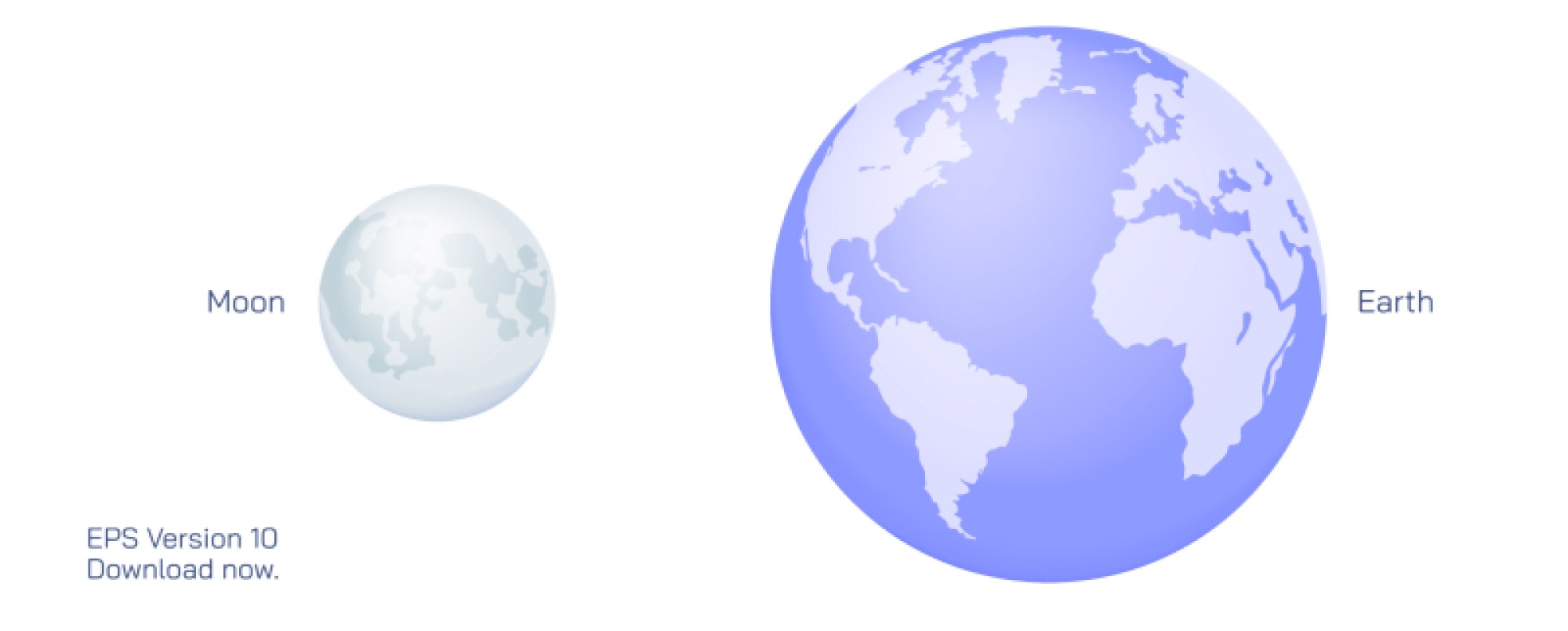
From a scientific perspective, solar and lunar eclipses demonstrate the principles of light, shadow, and orbital dynamics. Solar eclipses highlight the interplay of the Moon’s apparent size and distance from Earth, while lunar eclipses showcase the effect of the Earth’s shadow on the Moon’s surface. Illustrations showing both phenomena side by side provide a comparative understanding, emphasizing the difference in visibility, duration, and global impact.
In conclusion, solar and lunar eclipses are visually stunning and scientifically significant events that help explain celestial alignment, shadow formation, and orbital mechanics. Educational diagrams, vector illustrations, and 3D visualizations enhance understanding, making these phenomena accessible and engaging. By studying eclipses, learners can appreciate the interplay between the Sun, Moon, and Earth, deepening knowledge of astronomy and the dynamic nature of our solar system.