Protoplanetary Disks Explained: Formation of Planets from Cosmic Dust and Gas Around Young Stars
Protoplanetary disks represent one of the most enchanting stages in the life cycle of stars and planetary systems, offering a window into how worlds like Earth originate from the raw materials of the cosmos. When a young star is born from the collapse of a cloud of gas and dust within a nebula, not all of the surrounding material becomes part of the new stellar body. Instead, a significant portion of this leftover matter flattens into a vast, rotating disk encircling the newborn star. This swirling mixture of microscopic dust grains, frozen ices, and gases such as hydrogen, helium, and traces of heavier elements becomes the foundation from which planets, moons, asteroids, and comets eventually emerge. Although protoplanetary disks appear serene from afar, they are dynamic, high-energy environments filled with collisions, chemical reactions, gravitational disturbances, and intense stellar radiation. Over millions of years, these forces transform a cloud of disorganized particles into complex planetary systems, demonstrating that the birth of planets is not instantaneous but a gradual evolution governed by physics and cosmic timing. By studying these disks, astronomers can look back in time to glimpse the early conditions that shaped our own solar system and the countless planetary systems scattered across the galaxy.
The formation of a protoplanetary disk begins during the star-birth phase when gravity pulls a region of a molecular cloud inward until it forms a dense core. As this core collapses and spins faster due to conservation of angular momentum, material falls toward the center while flattening into a disk around the protostar at its heart. Temperatures near the star soar, vaporizing ices and heating gases, while cooler outer regions allow ices and heavier compounds to remain solid. This thermal gradient sets the stage for the distribution of future planetary types: rocky Earth-like planets tend to form in the warmer inner disk, while gas giants and icy bodies appear farther out where temperatures are lower. During this stage, dust grains interact on microscopic scales, sticking together through static electric forces, forming clusters that gradually accumulate into pebble-sized objects. These pebbles collide and merge repeatedly in an environment where motion never ceases. The constant impacts among countless particles drive the growth of larger aggregates called planetesimals, which can range from a few kilometers to hundreds of kilometers across. With growing mass comes greater gravitational influence, allowing planetesimals to attract additional material and accelerate their growth. This marks the shift from simple physical collisions to gravitational competition, as the largest bodies become dominant, evolving into planetary embryos that shape the future layout of the developing solar system.
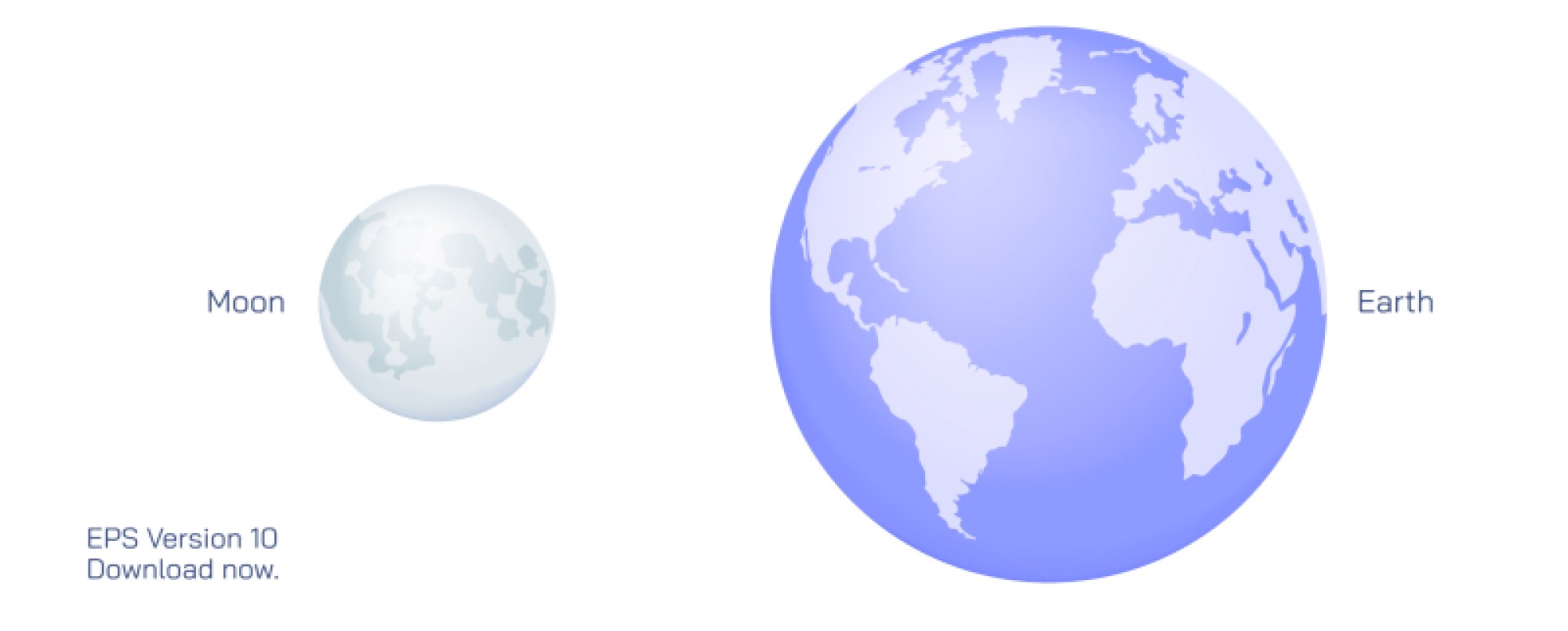
As planetary embryos grow, competition for resources intensifies within the disk, and gravitational interactions among these growing bodies reshape orbital paths, clear debris, and trigger new collisions. In the inner regions of the disk, the scarcity of volatile gases and the abundance of metals and silicate minerals support the buildup of rocky planets with dense structures capable of resisting intense radiation from the star. In the outer regions, where ices remain stable and gas is plentiful, the embryos can grow rapidly enough to accumulate thick atmospheres dominated by hydrogen and helium, giving rise to gas giants and ice giants. Meanwhile, leftover materials and smaller clumps of debris become asteroids, dwarf planets, and comets that preserve the unaltered chemistry of the early disk. The final arrangement of planetary orbits, moon formation, and asteroid belts is influenced by countless gravitational events, some gentle and others catastrophic. A single impact can transform a world in formation, as illustrated by theories about the Moon’s origins resulting from a collision between early Earth and a Mars-sized body. Each planetary system, whether around our Sun or a distant star, becomes a unique outcome of countless variables, from disk mass and chemical composition to the speed of star formation and the interplay of gravity between emerging bodies.
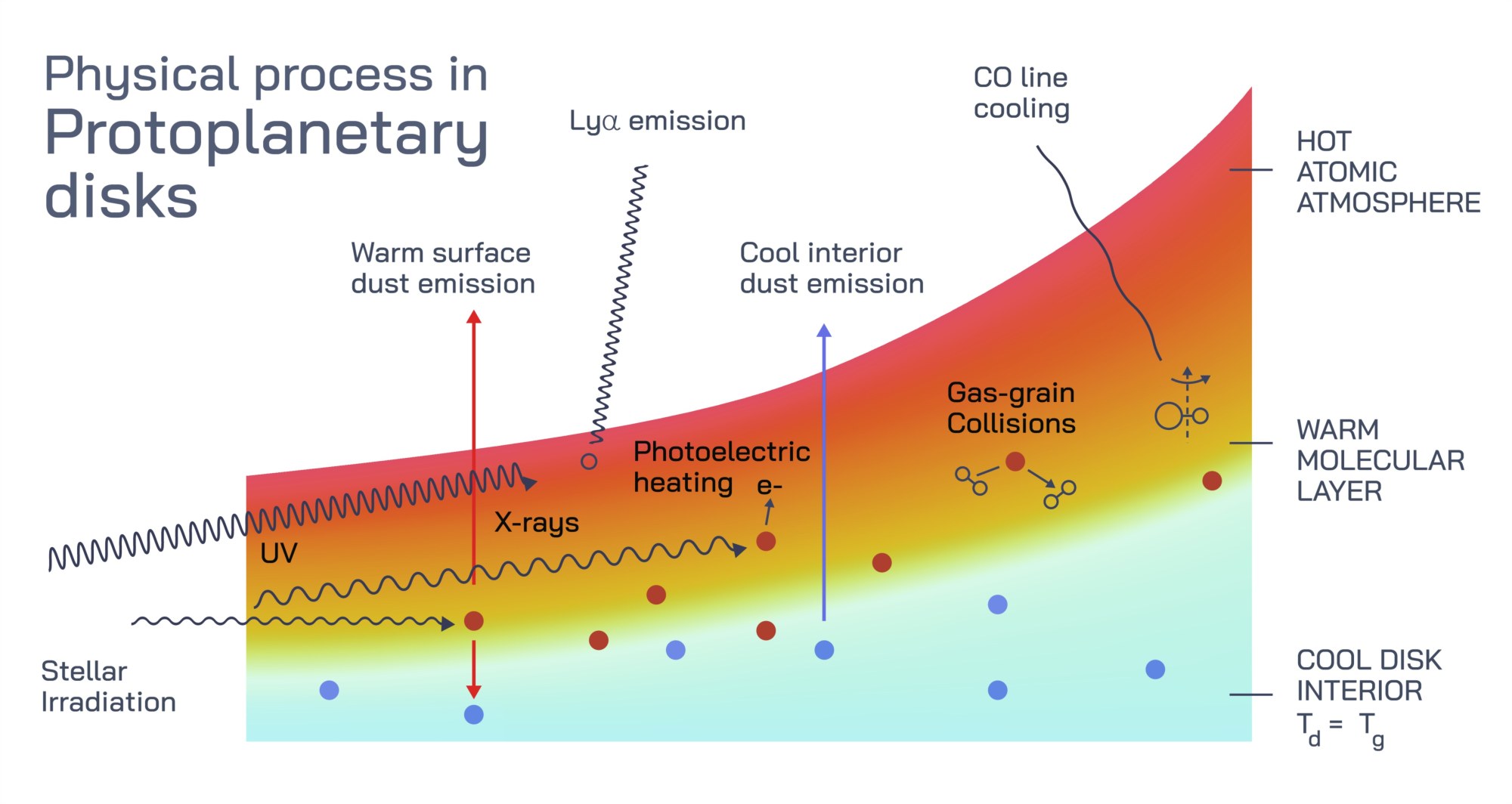
Throughout this process, the central young star plays a dual role: it nurtures the birth of planets by acting as the gravitational anchor of the disk, yet it also attempts to destroy the very environment that sustains planetary growth through intense radiation and stellar winds. These winds gradually blow away gas in the disk, decreasing the available material for forming gas giants and signaling the countdown for planetary formation. If a forming planet does not grow quickly enough to capture a massive gaseous envelope, it may remain rocky despite being located in a region where gas giants could otherwise exist. As the star matures and its radiation sweeps the disk clean, what remains are the fully formed planets and smaller bodies that survived the competitive growth phase. The once-dense disk of dust and gas becomes a largely empty space dotted with stable planets in long-term orbits. In the final stage, what lingers in the outer regions of the system may become a reservoir of comets and icy bodies, similar to the Kuiper Belt and the Oort Cloud in our own solar system, storing clues about the chemical heritage of the early disk that produced the planets.
The study of protoplanetary disks has become one of the most exciting areas of modern astronomy because technological advances now allow scientists to observe these systems in remarkable detail. Telescopes equipped with advanced sensors can capture images of disks around young stars, revealing rings, cavities, and spirals caused by planets that have not yet finished forming. These real-time glimpses into cosmic nurseries confirm that planet formation is not hypothetical but ongoing across the universe, providing evidence that solar systems like ours may be common rather than exceptional. The chemical composition of disks further reveals the building blocks of life, as organic molecules and water are detected in significant quantities in many systems. Such discoveries open profound questions about whether habitable planets and potentially life itself may emerge frequently in the galaxy as a natural consequence of planetary development.
Understanding protoplanetary disks thus illuminates the origin story not just of Earth but of all planetary systems. They demonstrate how gravity, motion, and chemistry transform raw cosmic matter into worlds capable of oceans, atmospheres, weather, geology, and perhaps even living organisms. Every mountain range, drop of water, and biological cell on Earth can trace its existence back to this distant phase of cosmic construction, when microscopic dust and gas gradually united to form a planet capable of supporting life. The transformation from a swirling disk of debris into a structured and stable planetary system is one of the universe’s greatest architectural achievements, showing that creation unfolds over millions of years through processes of accumulation, collision, erosion, and equilibrium. Through the lens of protoplanetary disks, we see not only how planets are built but also how the universe continuously recycles and reshapes matter into new forms, turning the chaos of stardust into structured worlds with the potential to host life and meaning.