Perihelion and Aphelion – Understanding Earth’s Orbit, Solar Distance Variation, Gravitational Dynamics, Seasonal Influence, Astronomical Observation, and the Broader Role of Orbital Mechanics in Planetary Science
Perihelion and aphelion are two of the most meaningful and scientifically rich concepts in astronomy because they describe the changing distance between Earth and the Sun as our planet travels along its orbital path. Although many people imagine Earth’s orbit as a perfect circle, it is actually an ellipse—slightly stretched rather than perfectly round—and this elliptical shape means that the distance between Earth and the Sun is constantly changing throughout the year. The point at which Earth is closest to the Sun is called perihelion, while the point at which Earth is farthest from the Sun is called aphelion. Both terms originate from Greek, where “helios” means Sun, “peri” means near, and “apo” means far away. These orbital positions are not simply distances written in textbooks; they are expressions of deep physical principles such as gravity, momentum, orbital energy, and the dynamic nature of celestial motion. Understanding perihelion and aphelion allows learners to see that space is not static or mechanically simple, but governed by constant motion and subtle variations that shape climate, seasons, and the rhythm of the Earth–Sun system.
Despite what intuition might suggest, Earth’s seasons are not caused by perihelion and aphelion. Perihelion occurs in early January, when it is winter in the Northern Hemisphere and summer in the Southern Hemisphere, while aphelion occurs in early July, when Northern Hemisphere summer and Southern Hemisphere winter are underway. This observational fact teaches one of the most important lessons in astronomy: seasons are driven by Earth’s axial tilt, not by its distance from the Sun. Earth is tilted by about 23.5 degrees relative to the plane of its orbit, and this tilt determines how much sunlight each hemisphere receives throughout the year. When the Northern Hemisphere leans toward the Sun, it receives more direct sunlight and longer days, producing summer—even though the planet as a whole is farther from the Sun during that time. Conversely, when the Northern Hemisphere leans away, sunlight is spread over a larger area and days are shorter, producing winter—even though Earth is closer to the Sun then. Perihelion and aphelion therefore provide an opportunity to correct common misunderstandings and appreciate how multiple astronomical factors interact rather than oversimplifying the universe to just one cause or variable.
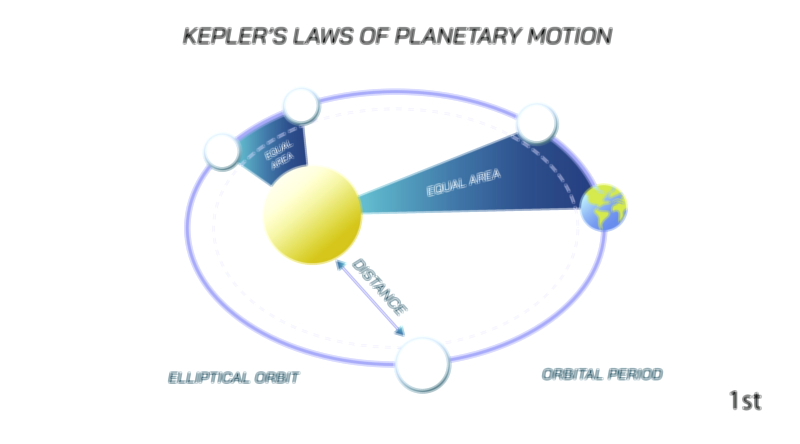
The physical reason Earth has perihelion and aphelion lies in Kepler’s First Law of Planetary Motion, which states that planets travel in elliptical orbits with the Sun at one of the foci. In such an orbit, the planet sweeps through space in a path that is neither circular nor centred exactly around the Sun. The difference between perihelion and aphelion distance is a product of Earth’s orbital eccentricity—the degree of “stretch” in the ellipse. Earth’s orbit is only mildly eccentric, meaning its shape is very close to circular compared with some planets and many comets. Nevertheless, the distance variation is significant enough to influence the amount of solar energy Earth receives. At perihelion, Earth is roughly about 5 million kilometres closer to the Sun than at aphelion. However, this difference only changes the incoming solar energy by about seven percent, which by itself is insufficient to govern the seasons but does contribute to climatic patterns in more subtle ways.
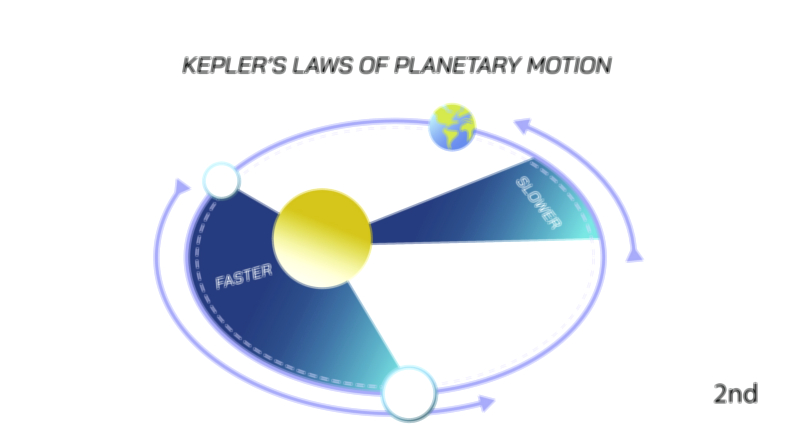
One of the fascinating consequences of elliptical orbits is that Earth’s orbital speed changes throughout the year according to Kepler’s Second Law, which states that a line joining a planet and the Sun sweeps out equal areas in equal times. To satisfy this constant sweeping area, Earth must move faster when it is near the Sun and slower when it is far from the Sun. Thus, Earth moves fastest at perihelion and slowest at aphelion. This difference in speed has measurable effects on the length of the seasons. Because Earth moves faster around the Sun when it is near perihelion in January, the Northern Hemisphere’s winter and the Southern Hemisphere’s summer are slightly shorter than their opposite seasons. When Earth approaches aphelion in July and travels more slowly, the Northern Hemisphere summer and Southern Hemisphere winter are slightly longer. This subtle but real asymmetry in seasonal duration illustrates how orbital mechanics shape the rhythm of time on Earth even though most people do not notice the effect directly.
The causes of perihelion and aphelion lie deep in the long-term evolution of the solar system. Earth’s orbital eccentricity is not fixed; it varies gradually over cycles lasting tens of thousands of years due to gravitational interactions with other bodies, including the Moon, Jupiter, and other planets. These slow oscillations form part of the Milankovitch cycles, which have been linked to historical ice ages and long-term climate patterns on Earth. When Earth’s orbit becomes slightly more elliptical, the difference between perihelion and aphelion increases, amplifying the seasonal contrast between hemispheres. When the orbit becomes more circular, Earth–Sun distance varies less, moderating these effects. Thus, perihelion and aphelion are not only immediate astronomical phenomena but also components of long-term climate regulation on geologic time scales.
Perihelion and aphelion also influence solar energy distribution across the globe in ways that contribute to atmospheric and oceanic circulation. Because Earth receives slightly more solar radiation at perihelion, the global atmosphere and oceans absorb extra heat, which can alter wind belts, monsoon strength, and seasonal storm patterns. These influences do not change temperature in a single region drastically, but they participate in the energy balance that drives climate systems across decades and centuries. Meteorologists and climate scientists account for these orbital variations when modelling global weather patterns and studying long-term shifts in climate.
Beyond Earth, the concepts of perihelion and aphelion apply to every planet, moon, comet, asteroid, and artificial satellite orbiting the Sun or another body. Mars experiences a much larger difference between perihelion and aphelion than Earth does, which means its Southern Hemisphere seasons are more extreme than those in the Northern Hemisphere. Mercury, with the most eccentric planetary orbit, undergoes particularly dramatic changes in solar distance. Comets provide the most spectacular example: they travel from aphelion regions far beyond the outer planets to perihelion passages close to the Sun, generating bright tails as solar heat vaporizes their icy surfaces. These examples reveal that perihelion and aphelion are universal orbital principles rather than terms limited to Earth.
For human space exploration, understanding perihelion and aphelion is also practical. Satellite trajectories, interplanetary travel, launch windows, and fuel calculations depend on precise modelling of gravitational forces and orbital speed changes that arise from elliptical motion. Even Earth’s artificial satellites experience changes in speed and altitude when their orbits are elliptical, meaning that periapsis (closest approach) and apoapsis (farthest approach) must be monitored to maintain stable communication and navigation systems. Perihelion and aphelion therefore form the astronomical subset of a larger conceptual framework that applies across space science: orbiting bodies move in response to the combined influence of inertia and gravity, and stable motion requires constant geometric and energetic balance.
In an educational context, the study of perihelion and aphelion helps learners develop a realistic understanding of how the solar system works. It corrects the widespread but incorrect belief that seasons are caused by varying Earth–Sun distance, and it strengthens conceptual learning by connecting geometry, physics, climate science, and observation. It shows that orbital motion is not a simple circle but an ongoing negotiation between pull and momentum. It reveals how scientific reasoning relies on models that are accurate but also flexible enough to explain exceptions and variations. And perhaps most importantly, it allows students to see that even something as familiar as a year—a cycle nearly all cultures use to organize time—emerges from a complex ballet of planetary motion.
Ultimately, perihelion and aphelion serve as gateways into the beauty of astronomy. They demonstrate that the Earth is not static but part of a dynamic celestial system ruled by gravity and motion. They remind us that the Sun, far from being a stationary point in the sky, is a gravitational centre around which our world constantly travels. They show that mathematical patterns govern even the most distant regions of the universe. And they deepen appreciation for the precision of science, which can measure, predict, and explain planetary distances across millions of kilometres with extraordinary accuracy.
By understanding perihelion and aphelion in depth, learners gain more than knowledge of astronomical terminology—they gain insight into the mechanisms that give rise to seasons, shape climate, regulate orbital timing, and anchor Earth within the larger architecture of the solar system. Through these concepts, astronomy becomes not only the study of distant space but a way of understanding the daily and yearly experience of life on our own planet.