Comprehensive Overview of Solar and Lunar Eclipse Phenomena
Solar and lunar eclipses are spectacular celestial events created through the natural motion of the Sun, Earth, and Moon. Though both phenomena involve shadow formation and orbital alignment, each eclipse occurs under different geometric conditions. Understanding these events requires a close look at how the positions of these three bodies shift during regular orbital cycles and how light behaves when one object blocks or filters illumination from another. By exploring both types of eclipses together, the overall structure of their motion becomes clearer and easier to visualize.
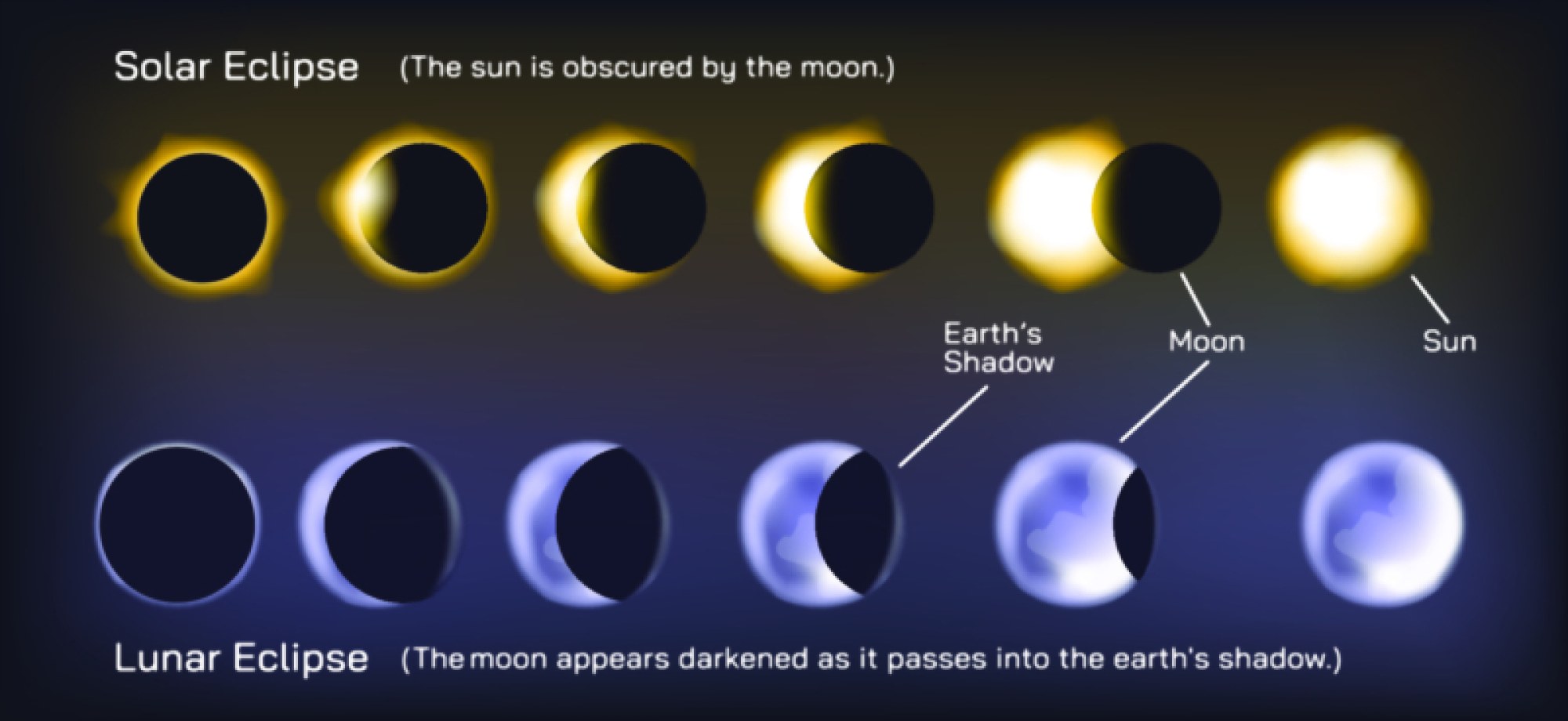
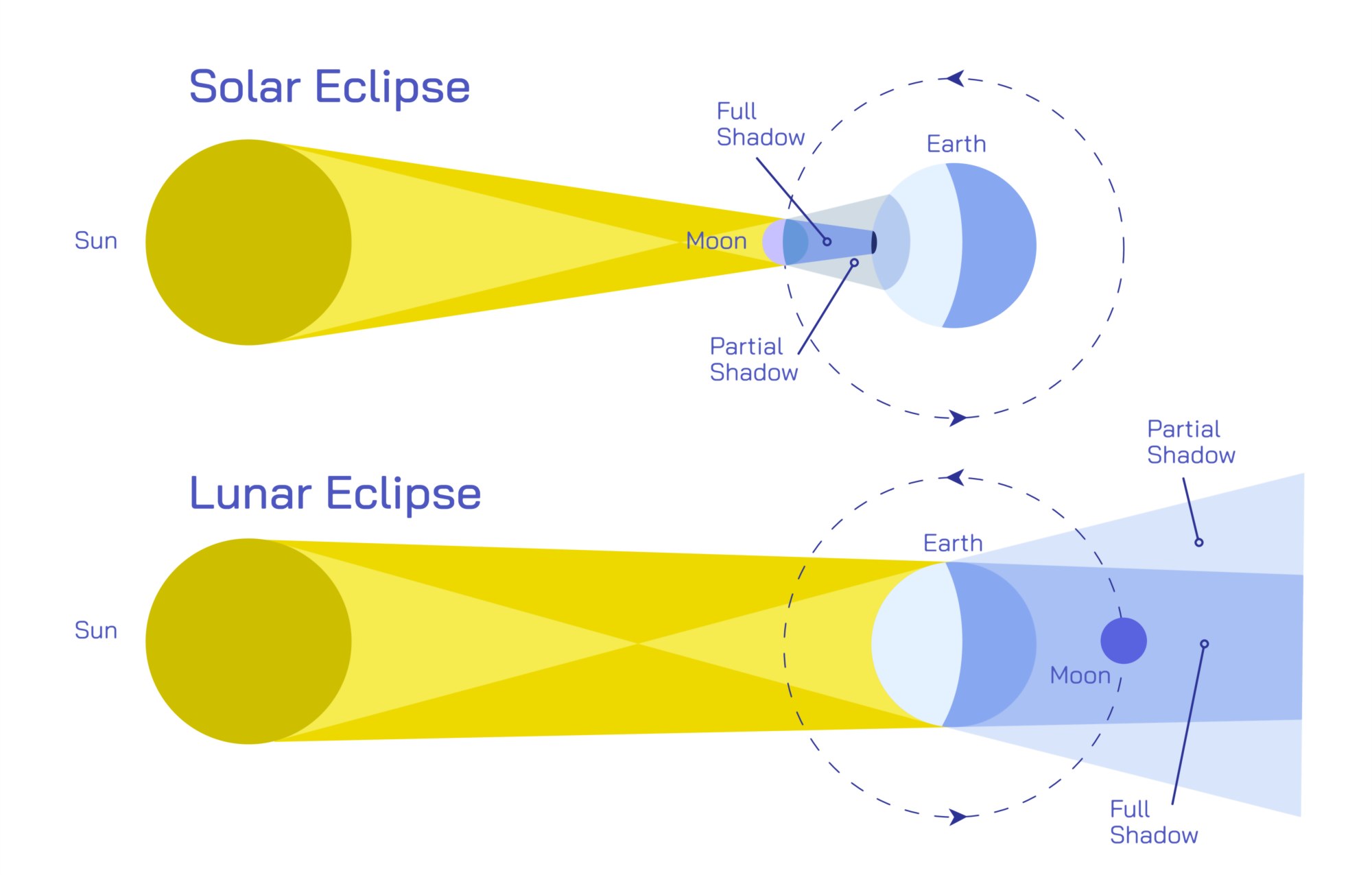
A solar eclipse takes place when the Moon moves between the Earth and the Sun, blocking sunlight either fully or partially depending on the alignment. In the moment of perfect alignment, the Moon casts a sharp shadow on a small region of Earth’s surface. This creates distinct zones such as the umbra, which produces a total eclipse, and the penumbra, where only part of the Sun’s disc is obscured. Because the Moon is much smaller than Earth, this shadow covers only a narrow band, making the event visible from limited locations. The passing shadow moves quickly due to the combined motion of the Moon’s orbit and Earth’s rotation, creating a dynamic experience for observers. Variants such as total, partial, and annular eclipses emerge when the Moon’s distance from Earth changes, altering its apparent size and the way it covers the Sun.
A lunar eclipse, on the other hand, happens when the Earth moves between the Sun and the Moon, causing the Earth’s shadow to fall across the lunar surface. Unlike solar eclipses, these events are visible from anywhere on Earth’s night side because the Earth’s shadow is much larger than the Moon. As the Moon passes into the umbra, its surface darkens gradually, often taking on a reddish tone due to sunlight bending through Earth’s atmosphere. This filtered light creates the distinctive copper glow observed during a total lunar eclipse. Partial and penumbral versions occur when only part of the lunar surface enters the shadow, producing more subtle visual shifts.
Though both eclipse types depend on alignment, they do not occur every month because the Moon’s orbit is slightly tilted. This tilt means the shadows usually pass above or below their targets during regular cycles. Only when the Moon is near its orbital nodes, where its path intersects Earth’s orbital plane, can solar or lunar eclipses occur. These moments create predictable seasons during which several eclipse events may happen within a short period.
Comparing both phenomena reveals how the geometry of the system determines visibility, duration, and appearance. Solar eclipses depend on the Moon blocking sunlight and therefore affect smaller regions for shorter times. Lunar eclipses rely on Earth’s large shadow reaching the Moon and are visible to far more observers. Each type provides unique scientific insights, from atmospheric behavior to orbital variation. Understanding them together offers a complete picture of how celestial bodies interact through motion, light, and shadow, shaping some of the most impressive events visible in the sky.