Malaria Transmission Cycle – Understanding How Malaria Spreads
The malaria transmission cycle is a complex biological process that describes how the malaria parasite moves between human hosts and mosquito vectors. Malaria is caused by Plasmodium parasites, which rely on female Anopheles mosquitoes to transmit the disease. Understanding this cycle is crucial for education, public health awareness, and the development of prevention strategies, as it reveals how the disease spreads and how it can be controlled.
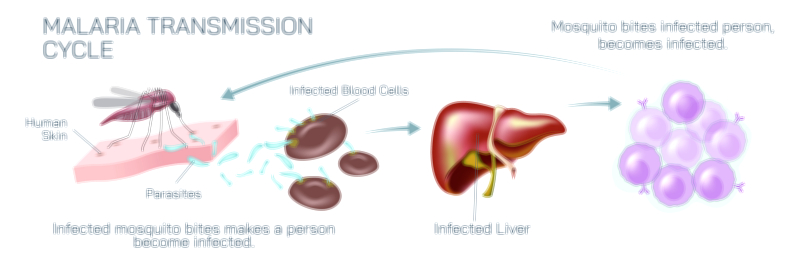
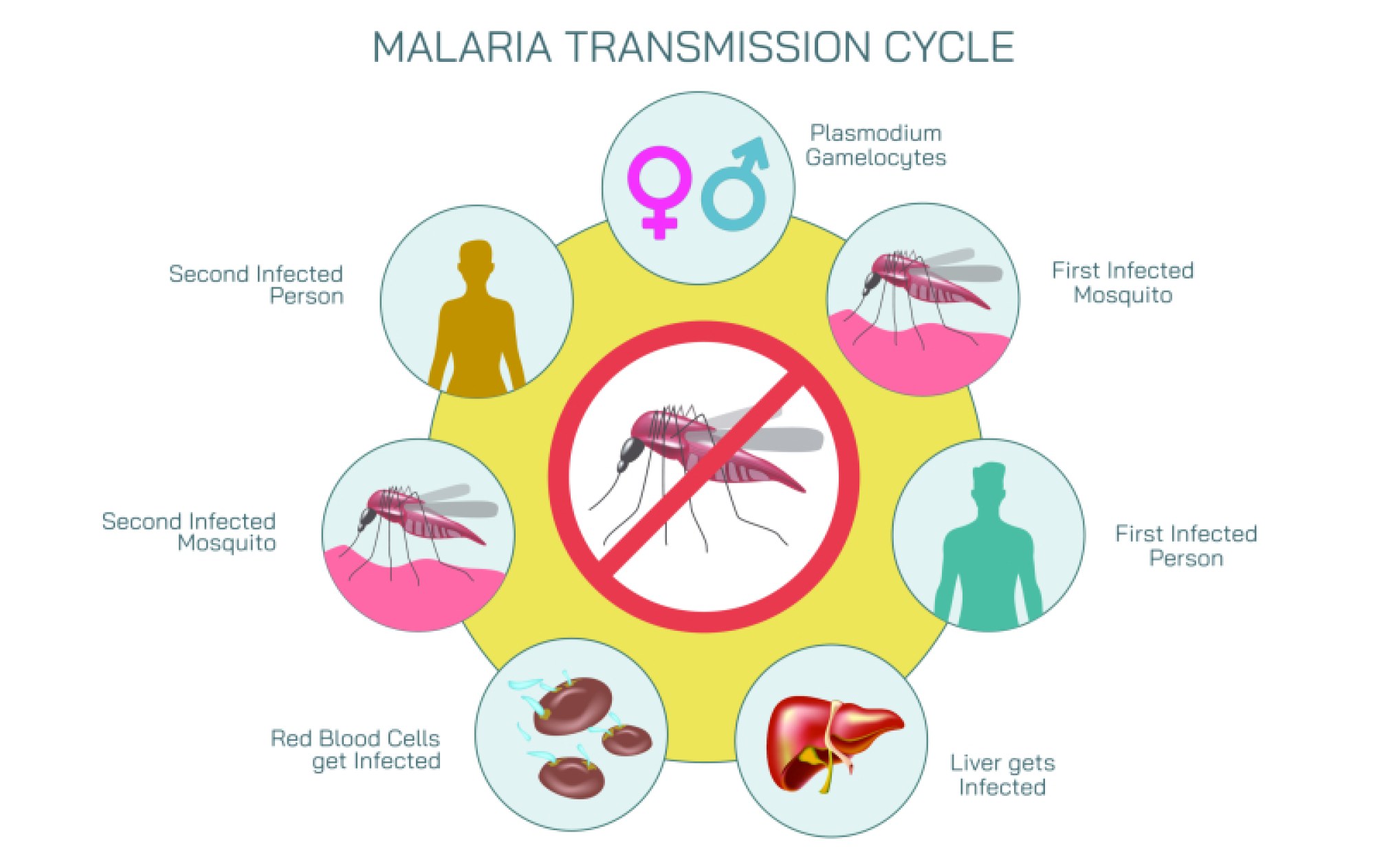
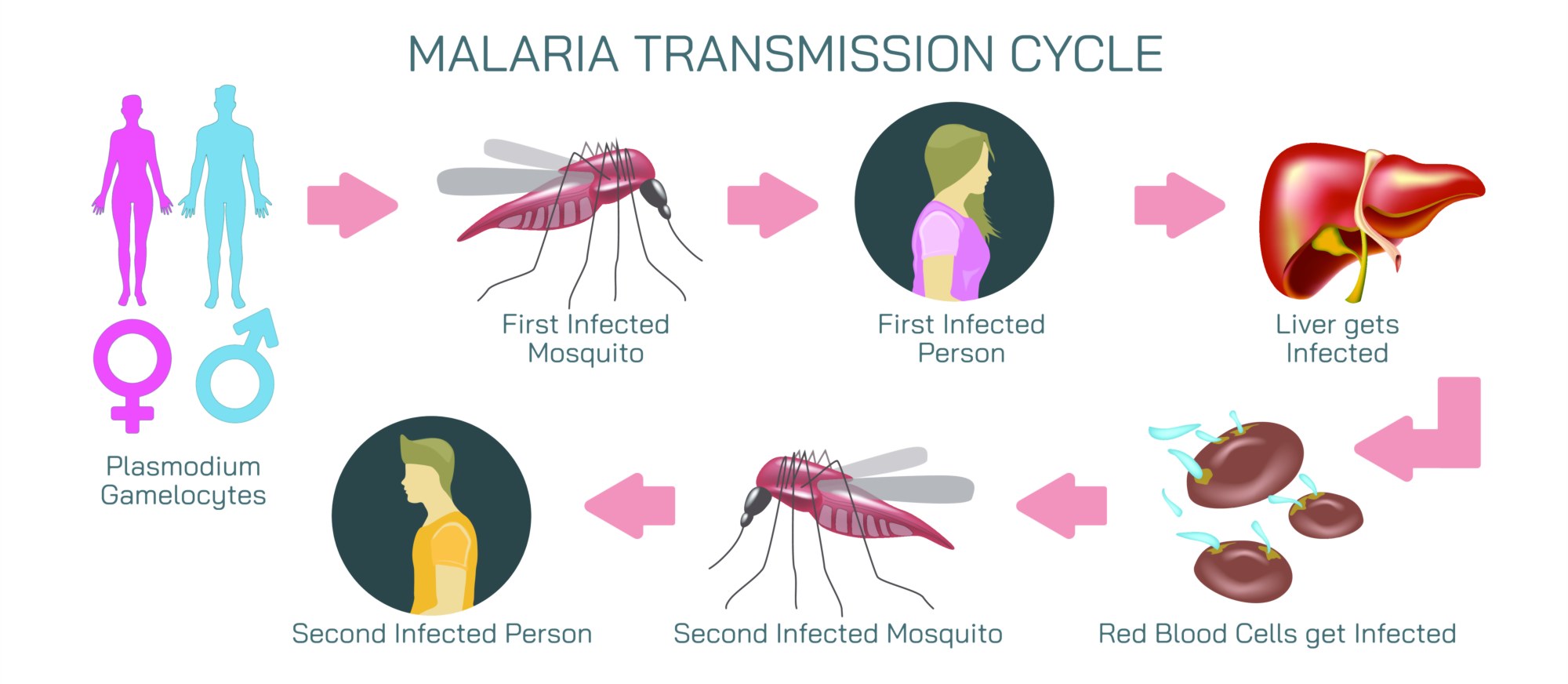
The cycle begins when a female Anopheles mosquito, carrying the Plasmodium parasite, bites a human to obtain a blood meal. During the bite, the parasite enters the human bloodstream and travels to the liver, where it multiplies and matures. Once matured, the parasites re-enter the bloodstream and infect red blood cells, leading to the common symptoms of malaria such as fever, chills, and fatigue.
Infected humans become a source of the parasite for mosquitoes. When another mosquito bites the infected person, it ingests the parasite along with the blood. Inside the mosquito, the parasite undergoes further development and multiplication in the mosquito’s gut and salivary glands. This prepares the parasite to infect the next human host during subsequent bites, completing the transmission cycle.
The malaria transmission cycle can be visually represented in a step-by-step illustration, showing the interaction between mosquitoes, humans, and the parasite. Such illustrations are highly effective for educational purposes, helping students, healthcare workers, and the public understand the stages of infection, the role of mosquitoes as vectors, and the importance of preventive measures. By understanding this cycle, communities can implement targeted interventions such as mosquito control, use of bed nets, indoor spraying, and early diagnosis and treatment.
Malaria transmission also highlights the importance of environmental factors, as mosquito breeding depends on water sources, temperature, and humidity. Public health campaigns often use visualizations of the cycle to emphasize these aspects, encouraging people to eliminate stagnant water and reduce mosquito populations. Educational illustrations of the malaria cycle provide clarity on how human and mosquito behavior influences disease spread, making preventive actions more tangible and actionable.
In conclusion, the malaria transmission cycle is a continuous process involving humans and Anopheles mosquitoes. Illustrating this cycle helps in raising awareness, understanding the spread of malaria, and implementing effective control strategies. By visually representing each stage—from mosquito bite to parasite multiplication in humans and back to mosquito infection—educators and public health officials can communicate the importance of prevention, early treatment, and environmental management in combating malaria.