Healthy and Unhealthy Thyroid – Anatomy, Hormone Regulation, Metabolic Balance, Structural Changes, Disease Impact, and How Thyroid Health Shapes the Function of the Entire Body
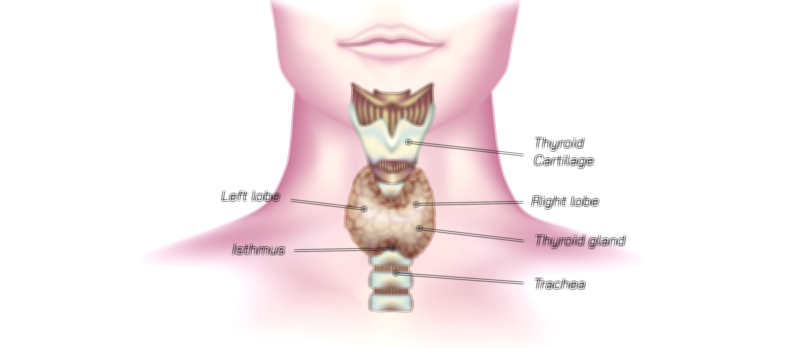
The thyroid gland is one of the most influential organs of the human endocrine system, and comparing its healthy anatomy with its unhealthy or diseased states demonstrates how small changes in structure and hormone production can trigger wide-ranging systemic effects throughout the body. A healthy thyroid sits gracefully in the front of the neck, wrapped around the trachea like a shield, with two smooth, symmetrical lobes connected by a slender isthmus. Its tissue is soft, uniform, and packed with microscopic follicles that efficiently produce and store thyroid hormones—primarily thyroxine (T4) and triiodothyronine (T3). These hormones circulate in the bloodstream and regulate metabolism, temperature control, heart rate, oxygen use, digestion speed, reproductive function, and brain development. When the thyroid is healthy, hormone release remains balanced through a feedback system involving the hypothalamus and pituitary gland, allowing metabolism to operate at a steady pace, neither excessively fast nor abnormally slow. A healthy thyroid neither presses against neighboring structures nor alters the natural shape of the neck, and its vascular network supplies just the right level of blood flow required to support steady hormone synthesis.
What Happens Inside a Healthy Thyroid and How It Maintains Metabolic Stability
The anatomical beauty of a healthy thyroid lies in its consistency and cellular organization. Each follicle behaves like a miniature hormone factory, storing colloid in its core and surrounding it with follicular cells that absorb iodine, synthesize T3 and T4, and release them into circulation when stimulated by thyroid-stimulating hormone (TSH). In a healthy state, the thyroid adapts to the body’s needs—releasing more hormones during times of growth, cold exposure, or pregnancy, and reducing output during rest or low caloric intake. Parafollicular cells are also present, discreetly contributing to calcium regulation through calcitonin. The thyroid does not become enlarged, nodular, stiff, or painful when functioning correctly, and neck tissues move freely during swallowing without obstruction. Healthy thyroid hormone levels support energy, mental clarity, emotional balance, and stable weight because metabolism runs efficiently without extremes.
How an Unhealthy Thyroid Alters Anatomy and Disrupts the Body
When the thyroid becomes unhealthy, visible and microscopic changes develop that affect hormonal output and sometimes the physical structure of the neck. One of the most common deviations is an imbalance in hormone production. In hypothyroidism, the gland becomes underactive and produces too little T3 and T4, leading to slower metabolism, fatigue, weight gain, depression, cold intolerance, and slowed digestion. In hyperthyroidism, the gland becomes overactive, releasing excessive hormones and accelerating metabolism, resulting in weight loss despite normal appetite, heat intolerance, irritability, fast heartbeat, sweating, and muscle weakness. Both conditions may stem from autoimmune disorders—Hashimoto’s thyroiditis in underactive glands and Graves’ disease in overactive glands—which trigger chronic inflammation that reshapes the thyroid’s internal and external structure.
Structural and Visual Changes in an Unhealthy Thyroid
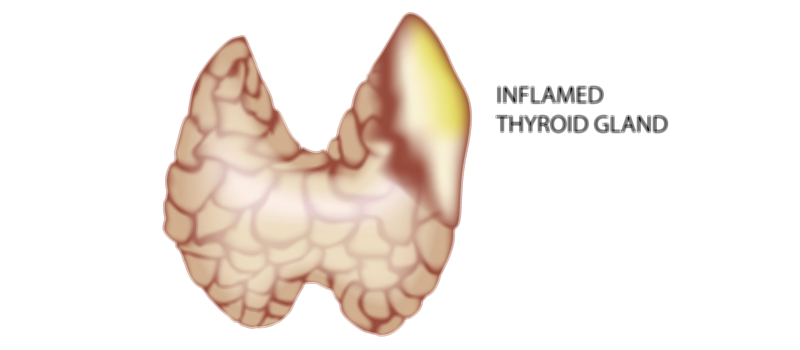
One of the most noticeable structural alterations that accompany thyroid disease is the development of a goiter—an enlarged thyroid that thickens the front of the neck even when hormone levels may not be extremely abnormal. A goiter can be smooth or irregular, firm or soft, and may grow symmetrically or unevenly. Depending on its size, it can press on the trachea or esophagus, causing breathing difficulty, chronic cough, voice changes, or trouble swallowing. Nodules, another sign of unhealthy thyroid anatomy, are areas of tissue overgrowth that form discrete lumps within the gland. Most nodules are benign, but some can produce excess thyroid hormone or, more rarely, evolve into cancer. Thyroid cancer changes the gland even more significantly, forming firm masses that do not move freely with surrounding tissue and may spread to nearby lymph nodes. Inflammation, common in autoimmune attacks, can make the thyroid swollen, painful, and uneven, and over time can scar and shrink the gland, leaving it incapable of producing adequate hormones.
Microscopic Changes Underlying Thyroid Disease
Even before visible anatomical alterations develop, unhealthy thyroid tissue undergoes distinct microscopic changes. In Hashimoto’s thyroiditis, immune cells infiltrate the thyroid and destroy follicles, gradually reducing hormone production and leading to hypothyroidism. In Graves’ disease, immune antibodies stimulate thyroid receptors excessively, causing unregulated enlargement and hormone output. In multinodular goiter, follicles grow irregularly due to inconsistent stimulation over time, leading to lumps and uneven architecture. Cancer alters the microscopic organization even further by replacing follicular structure with uncontrolled cellular clusters. These transitions illustrate how disease disrupts not only function but anatomical harmony down to the cellular level, eventually manifesting as systemic hormonal imbalance.
System-Wide Effects of Unhealthy Thyroid Function
Whether producing too much or too little hormone, an unhealthy thyroid affects the entire body because it controls the speed of metabolism. In hypothyroidism, every system slows—fatigue emerges from decreased cellular energy production, weight increases because calorie burning slows, the skin becomes dry, the pulse becomes slower, and thinking becomes sluggish. In hyperthyroidism, everything accelerates—rapid heartbeat, anxiety, trembling, warm skin, unexplained weight loss, and excessive hunger emerge because the body burns energy too quickly. Bones may weaken if chronic hormonal imbalance interferes with calcium regulation, and reproductive hormones can be disrupted, causing menstrual irregularities or fertility challenges. This wide spectrum of effects demonstrates that thyroid disease is not simply an anatomical problem but a metabolic one that ripples throughout the entire body.
Why Understanding Healthy vs. Unhealthy Thyroid Anatomy Matters
Learning the differences between a healthy and unhealthy thyroid illustrates the interconnected nature of anatomy, hormones, and physiology. It shows how the same organ, when functioning properly, maintains equilibrium silently and effortlessly, yet when impaired, impacts physical appearance, cognitive function, metabolism, emotional well-being, and the health of many other organs. It also teaches that early symptoms of thyroid disease often appear subtle—fatigue, mood changes, weight fluctuations, or temperature sensitivity—because the gland influences processes that are gradual and persistent rather than sudden. Understanding anatomy helps us recognize how structural issues like goiter or nodules coexist with hormonal imbalance, while understanding hormone function helps explain why thyroid diseases cause such diverse physical sensations and symptoms.
Ultimately, the comparison between healthy and unhealthy thyroid anatomy underscores a core lesson in human physiology: small endocrine glands can exert massive influence over daily life. The thyroid achieves balance when its structure remains intact, its cells produce the correct amount of hormone, and its regulation system responds appropriately to feedback signals. When any part of this system falters—from microscopic cellular damage to whole-tissue enlargement—metabolism loses equilibrium and the effects spread far beyond the gland itself. Appreciating this relationship deepens understanding of both thyroid health and the essential role of the endocrine system in sustaining overall well-being.