Peripheral Vestibular System — Ampulla, Cupula, and Balance Mechanism
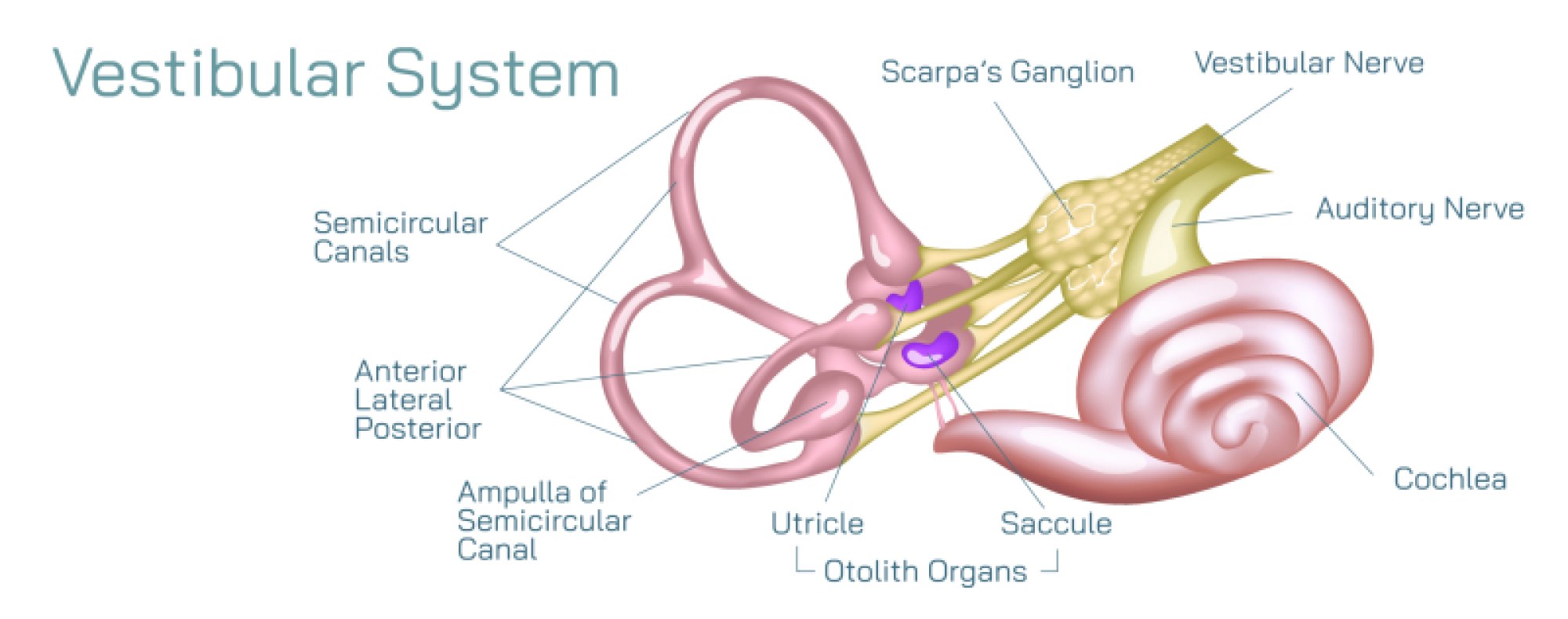
The peripheral vestibular system of the human ear is crucial for detecting head motion and maintaining balance. Located in the inner ear, this system includes the semicircular canals, ampullae, cupulae, utricle, saccule, and vestibular nerve. The semicircular canals detect rotational movements, while the ampulla and cupula within each canal play a key role in sensing angular acceleration and ensuring equilibrium.
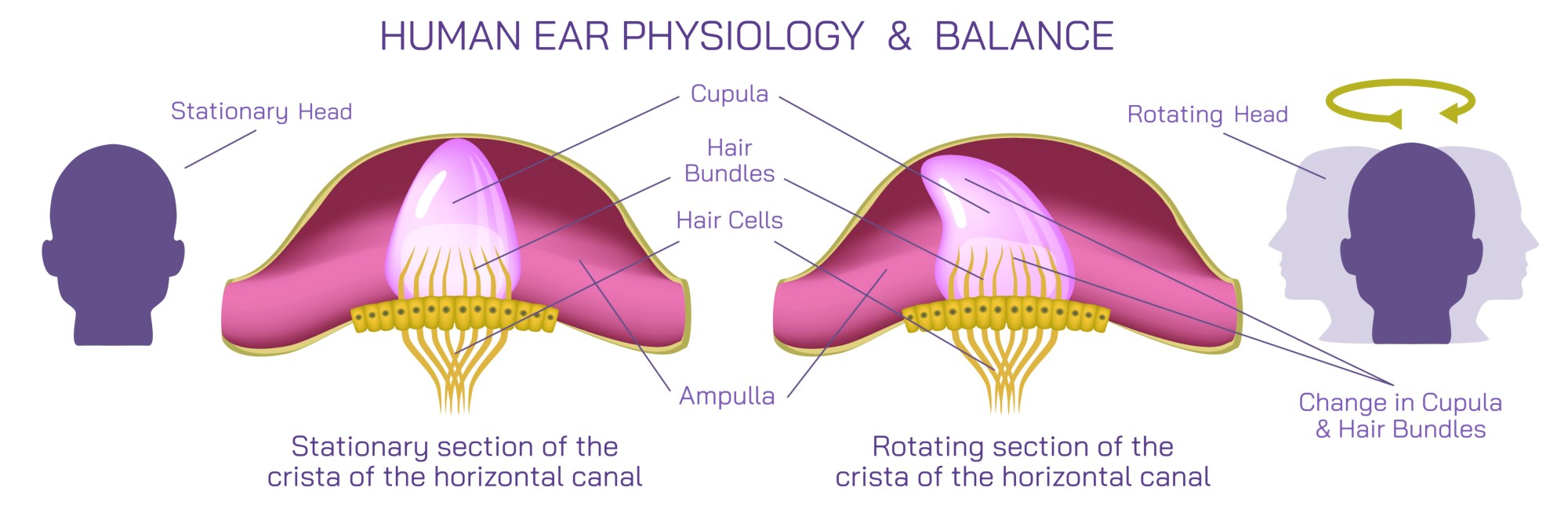
Each semicircular canal contains an enlarged region called the ampulla, which houses sensory structures known as the cristae ampullares. Within the ampulla, hair cells are embedded in a gelatinous structure called the cupula. When the head rotates, the fluid inside the semicircular canals, called endolymph, moves due to inertia. This movement causes the cupula to bend, deflecting the hair cells. The hair cells then convert this mechanical deflection into electrical signals that are transmitted via the vestibular nerve to the brain, providing information about the speed and direction of head rotation.
The ampulla and cupula work in close coordination with other vestibular organs, such as the utricle and saccule, which detect linear motion and head position relative to gravity. Together, these structures allow the brain to integrate sensory inputs for maintaining balance, posture, and spatial orientation. This integration is essential for stabilizing vision, coordinating body movements, and preventing falls during motion. The vestibulo-ocular reflex is a prime example of this coordination, producing compensatory eye movements that stabilize vision when the head moves.
Disruption of the ampulla, cupula, or other peripheral vestibular structures can lead to dizziness, vertigo, imbalance, or motion sickness. Understanding the physiology of these structures is vital for diagnosing vestibular disorders, designing rehabilitation therapies, and enhancing human performance in sports, navigation, and daily activities. Research on the ampulla and cupula also informs medical interventions for inner ear diseases and balance-related conditions.
In conclusion, the ampulla and cupula within the peripheral vestibular system are central to detecting head rotation and maintaining human balance. By bending hair cells in response to endolymph movement, they transmit vital information to the brain, enabling precise spatial orientation and coordination. Studying these structures deepens our understanding of inner ear physiology, balance mechanisms, and clinical approaches to vestibular disorders, highlighting their essential role in equilibrium and everyday human movement.