Types of Brackets in Mathematics — Usage and Examples in Calculations
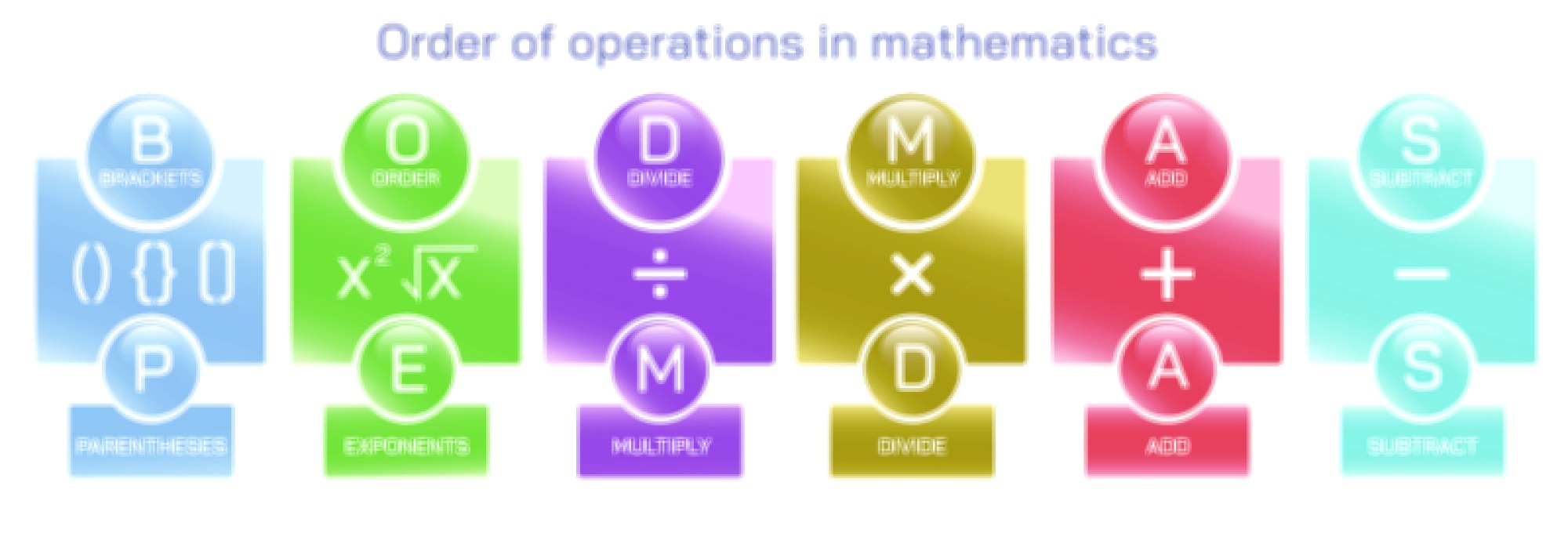
In mathematics, brackets are essential symbols used to group parts of expressions, clarify order of operations, and ensure accurate calculations. There are three primary types of brackets: parentheses ( ), square brackets [ ], and curly braces { }. Each type has specific applications and rules, and understanding their use is fundamental for solving algebraic expressions, equations, and complex calculations.
Parentheses ( ) are the most commonly used brackets and are primarily employed to indicate operations that should be performed first in accordance with the order of operations. They help separate terms within an expression, making calculations clear and unambiguous. Parentheses can also be nested, allowing multiple layers of operations to be performed in a structured manner. For example, in algebraic expressions, parentheses define which terms should be added, subtracted, multiplied, or divided before applying other operations.
Square brackets [ ] are often used to group expressions that already contain parentheses. They provide an additional level of organization, especially in complex expressions with multiple nested operations. Square brackets help avoid confusion by clearly distinguishing different parts of the calculation. They are commonly used in higher-level mathematics, including algebra, calculus, and matrix operations, where multiple grouping symbols are necessary to maintain clarity.
Curly braces { }, also known as braces or set brackets, are primarily used to represent sets, sequences, or collections of elements. They are often applied in set theory, combinatorics, and probability to define specific groups of numbers or objects. Curly braces can also be used in combination with parentheses and square brackets for complex mathematical notations, such as piecewise functions, where different rules apply to different intervals or conditions.
Proper understanding of bracket usage ensures mathematical expressions are interpreted correctly. The hierarchy of brackets—parentheses first, followed by square brackets, and then curly braces—helps in systematically solving problems. Misplacement or incorrect nesting of brackets can lead to calculation errors, making it essential for students and professionals to use brackets accurately.
In conclusion, parentheses, square brackets, and curly braces are fundamental types of brackets in mathematics. They serve to organize expressions, indicate the correct order of operations, and define sets or collections. Mastery of bracket usage is crucial for accurate calculations, clear mathematical communication, and understanding complex algebraic and analytical concepts. Proper use of brackets ensures clarity, reduces errors, and facilitates effective problem-solving in various branches of mathematics.