Compton Effect — Understanding Photon Scattering and Energy Redistribution
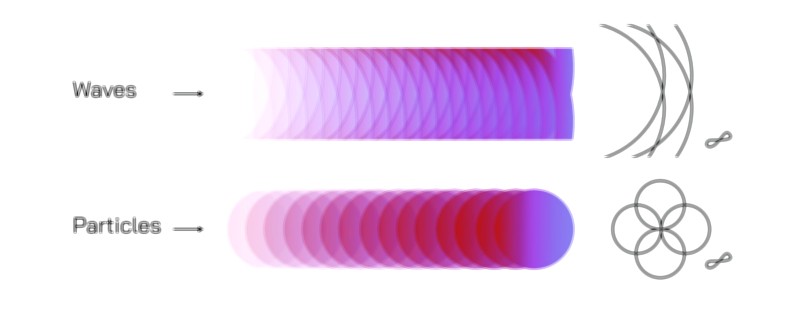
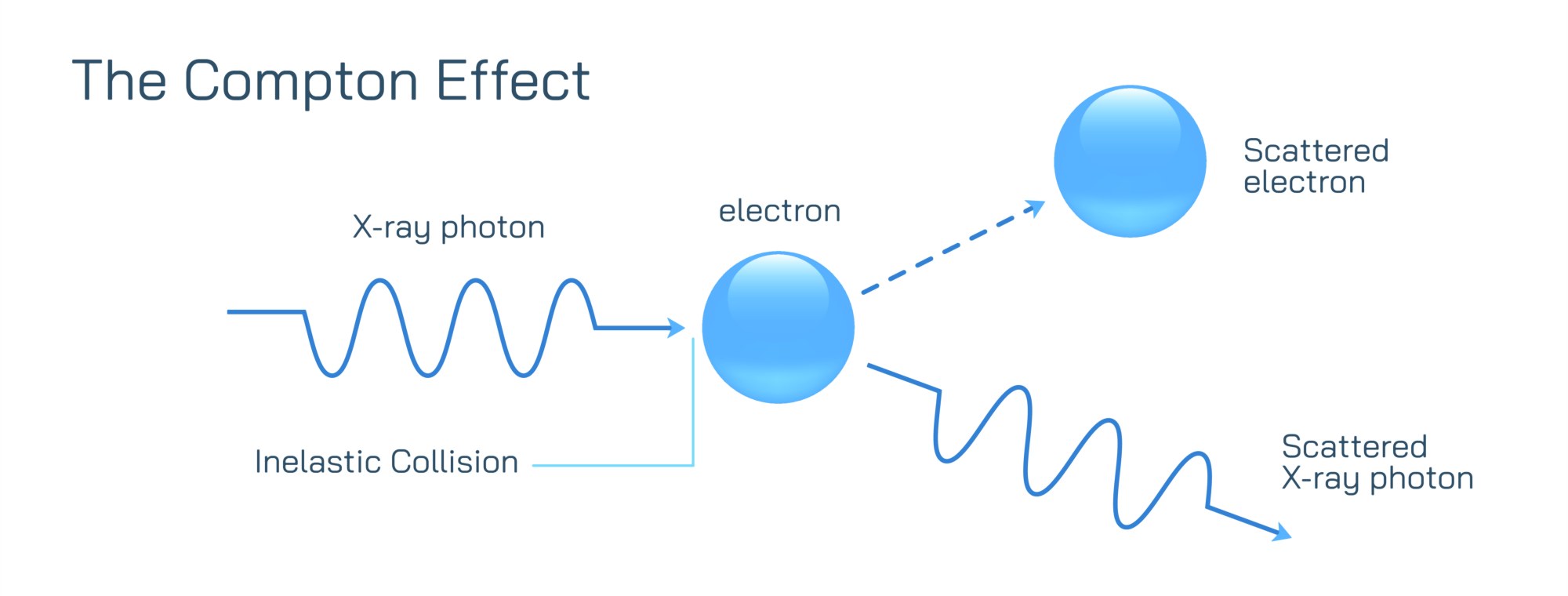
The Compton effect is a fundamental process that demonstrates the particle nature of light by showing how a photon interacts with an electron. When a high energy photon strikes an electron, the collision transfers part of the photon energy to the electron. As a result, the photon changes direction and emerges with reduced energy and a longer wavelength. This change reveals that light can behave like a particle carrying momentum.
This scattering event provides strong evidence for quantum behavior because classical wave ideas cannot fully explain the shift in wavelength. The interaction displays how energy and momentum are conserved during the collision, confirming that electrons can gain kinetic energy from the incoming photon. The scattered photon always shows a predictable increase in wavelength, and this increase depends on the angle at which it leaves the interaction point.
The Compton effect is important across many branches of physics. It helps explain how radiation interacts with matter and contributes to the understanding of particle behavior at small scales. The concept is also used in medical imaging, radiation safety, astrophysics, and materials research, where photon scattering patterns reveal key details about structure and composition. Through this effect, scientists gained deeper insight into the nature of light and the dual behavior of photons in both wave and particle form.