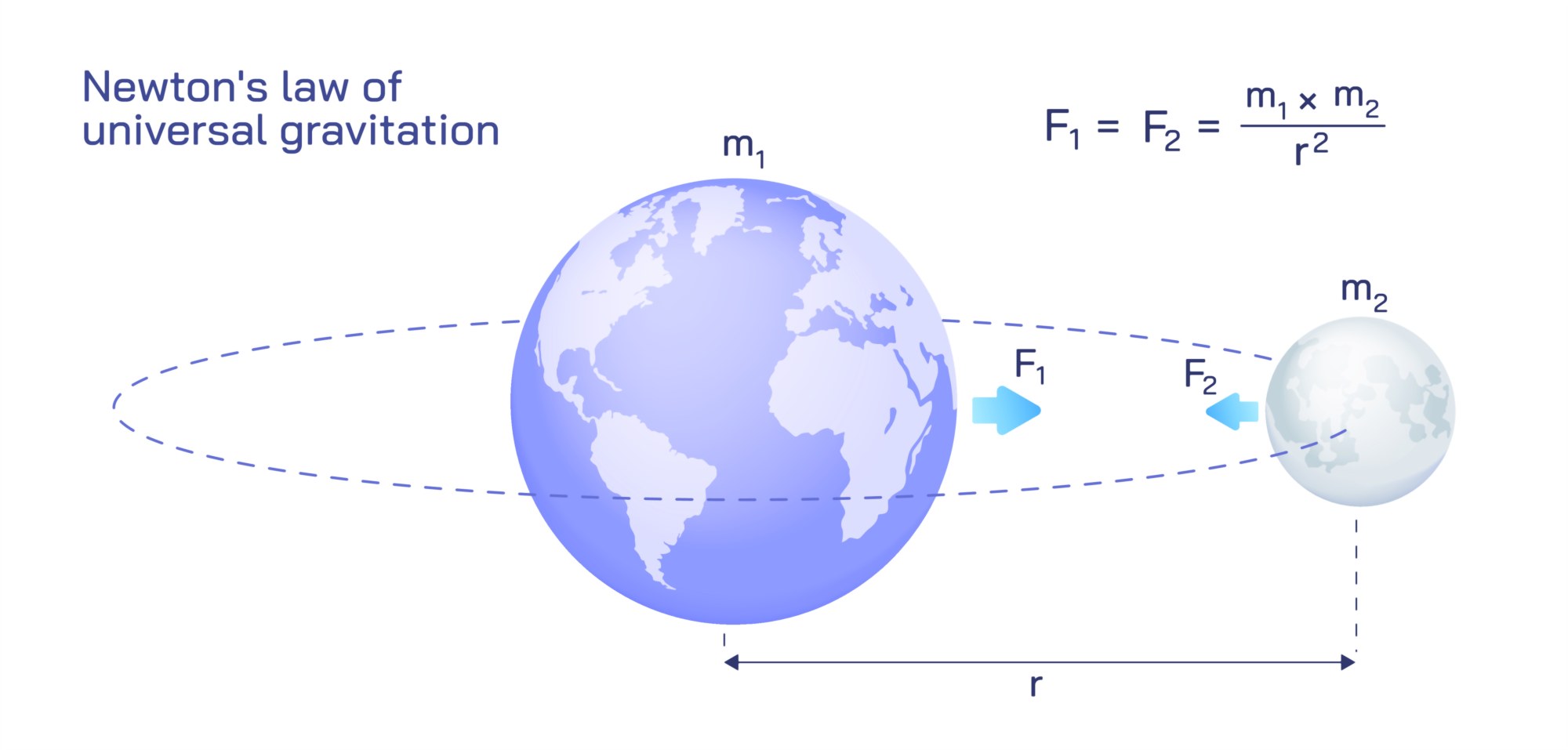
Newton’s Law of Universal Gravitation — Foundations of Mass Interaction and Cosmic Force Behavior
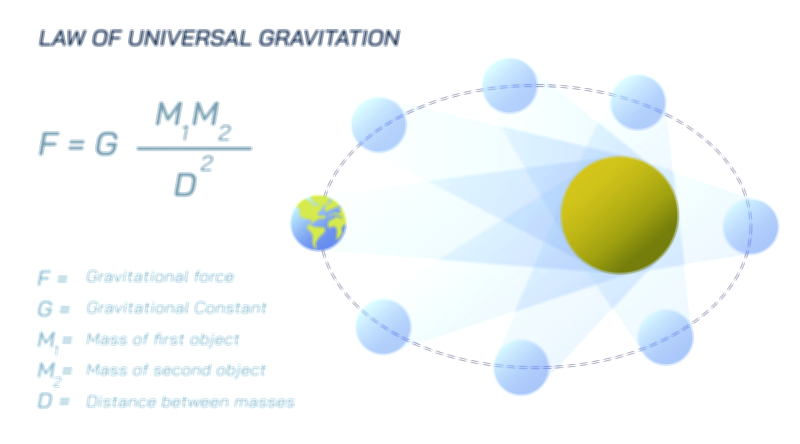
Newton’s law of universal gravitation provides a fundamental explanation of how objects attract each other throughout the universe. This principle states that every mass pulls on every other mass with a force determined by the size of each body and the distance between them. When the separation increases, the pulling effect weakens, and when the masses are larger, the effect becomes stronger. This simple yet powerful idea helps describe how planets remain in their paths, how moons circle their hosts, and how stars influence the patterns seen in expansive regions of space.
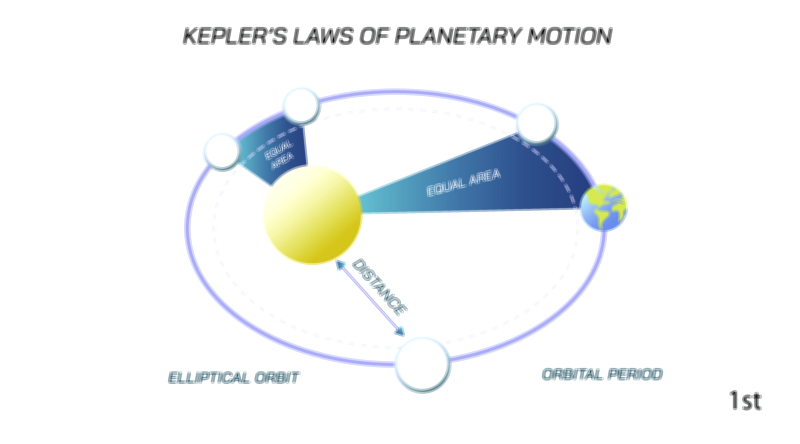
The law expresses this attraction through a mathematical relation that links force to mass and distance. In this relation, the force grows in direct proportion to the masses involved, showing that heavier objects create stronger mutual pull. At the same time, the force decreases rapidly as the gap between bodies becomes wider, following a squared dependence. This creates a delicate balance in natural systems, allowing stable circular or elongated paths to form around central objects. Such behavior shapes patterns across sky regions, guiding paths of planets, comets, stars, and even clusters of larger structures.
This gravitational attraction also provides insight into many motions observed in everyday surroundings. Falling objects move toward the ground because they are pulled by the large mass beneath them. The same interaction keeps tides shifting, ocean levels rising and falling in response to the pull of the moon and the sun. On larger scales, this attraction helps explain how galaxies hold their structure, preventing stars from drifting away into empty regions of space. It also contributes to the organization of gas clouds, star birth regions, and long-term evolution of cosmic systems.
By revealing a clear connection between mass and motion, Newton’s law establishes a framework that supports many areas of physical study. It lays the foundation for orbital predictions, space exploration planning, and analytical methods used to determine masses of planetary bodies. Even though modern physics has expanded this view through deeper understanding of space and energy, the original law remains essential for understanding force interactions throughout many environments. Its clarity and predictive power continue to shape how scientists interpret patterns of motion across our universe.