Amplitude — Understanding Wave Height and Energy in Physics
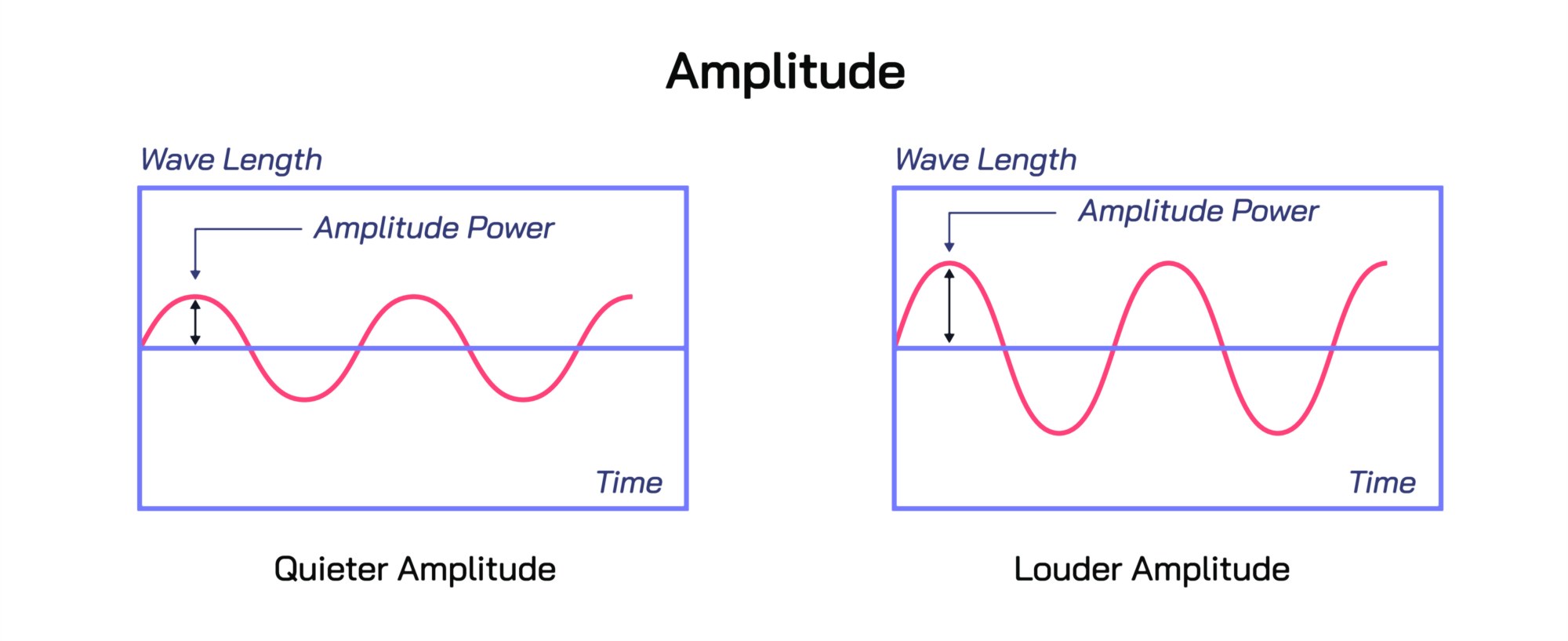
Amplitude is a key idea in the study of waves and motion. It describes the maximum distance a vibrating object or wave moves from its central or resting position. When a wave rises above or falls below its middle line, that highest displacement reflects its amplitude. This idea appears in various branches of physics, including sound, light, energy transfer, and mechanical vibration. Understanding amplitude helps learners interpret how waves behave, how energy travels, and how different signals appear in natural and technological systems.
In sound, amplitude is connected to the loudness we experience. When a sound wave has a larger rise and fall from its middle point, the sensation becomes stronger. A gentle sound carries a small amplitude, while a powerful one carries a larger value. This difference reveals how energy is packed inside the wave as it moves through air or another medium. Even though the frequency sets the pitch, the amplitude shapes the intensity, making it an essential element for understanding sound behavior.
In light and electromagnetic waves, amplitude affects brightness. A wave with a greater rise from the central line delivers a stronger effect on the eye or sensing device. This principle plays a role in astronomy, imaging, communication signals, and even daily viewing experiences. The change in amplitude helps identify variations in energy carried by the wave and can be observed in different natural settings, including sunlight, reflections, and artificial lighting.
Mechanical systems also display amplitude through oscillations. When a pendulum swings, the distance it moves away from its resting point reflects its amplitude. A small push results in a small displacement, while a stronger push produces a wider swing. This same principle applies to springs, strings, and countless objects that move back and forth. The amplitude describes the strength of the motion, allowing easier comparison of different movements, forces, and energy flow.
Amplitude is therefore closely linked to the idea of intensity in many physical systems. A larger amplitude suggests that more energy is involved in the motion or wave pattern. This connection makes it an important measure when analyzing natural events, designing machines, creating sound systems, or studying signals used in technology. Whether observed in music, ocean waves, mechanical tools, or scientific instruments, amplitude continues to be a central idea that helps explain how movement and energy appear in different forms.
For learners, recognizing amplitude makes it easier to interpret diagrams, signals, and patterns found in physics study. By identifying how far a wave or object moves from its calm point, one gains insight into the strength and behavior of the system. This understanding forms the basis for deeper exploration of wave patterns, mechanical motion, and energy transfer in the world around us.