Pull and Push Learning — Clear Force Ideas for Young Students
Young learners often understand scientific ideas best through familiar objects and simple scenes. Pull and push actions offer an ideal introduction to force and motion because they can be demonstrated with toys, classroom items, and everyday situations. These actions show how movement begins, changes, or stops when an object is acted upon by a directed effort.
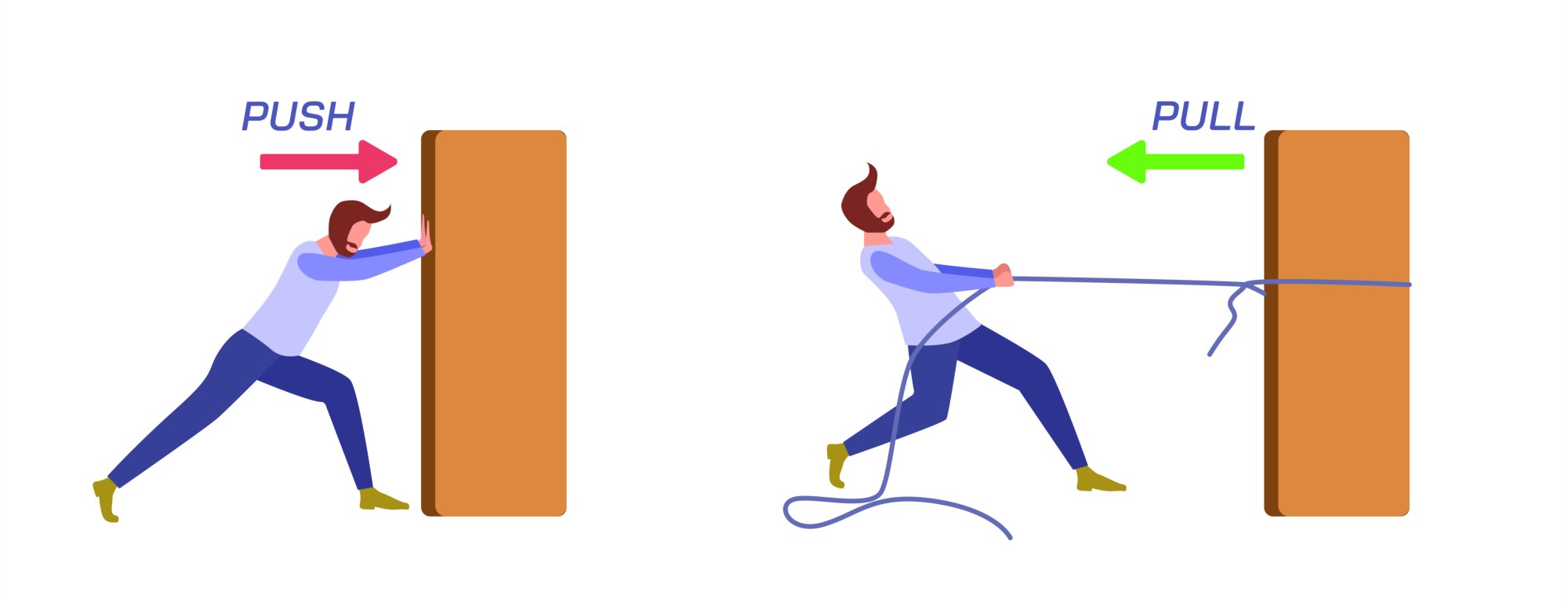
A pull action helps students see how motion can be created toward the body. Examples such as sliding a chair closer or drawing a toy with a string make the idea easy to grasp. These moments help children notice how direction affects the movement and how strength influences the speed of the object.
Push action, on the other hand, helps children learn how movement can occur away from the body. Rolling a ball forward, moving a box, or gently sliding a book across a table lets students explore this idea through hands-on activities. They learn that a push can start motion, slow an object, or stop it depending on the amount of effort used.
Using colorful scenes, playful sketches, and relatable tasks allows children to connect the idea of force with objects they use every day. When they see characters pulling ropes or pushing blocks, they naturally understand how actions create movement. These visual tools strengthen early science learning and support a deeper understanding of how objects behave under different types of forces.