Universal Gravitational Law — Force of Attraction Between Masses
The Universal Gravitational Law stands as one of the most profound and far-reaching principles in all of physics, describing a simple but powerful relationship that governs the motion of planets, the structure of galaxies, the behavior of falling objects, and the very shape of the universe itself. At its core, this law states that every mass in the universe attracts every other mass with a force whose strength depends on their masses and the distance between them. Although the statement appears straightforward, its implications are vast, influencing both cosmic and everyday phenomena. The universality of this law is what makes it so extraordinary: it applies equally to stars and satellites, to apples falling from trees, to ocean tides, and to the gravitational dance between galaxies millions of light-years apart. Exploring the Universal Gravitational Law reveals not only how matter interacts with matter but how these interactions shape the dynamic architecture of the cosmos and our understanding of physical reality.
The conceptual foundation of the law arose from the work of Isaac Newton in the seventeenth century, who sought to understand why planets followed precise, predictable orbits around the Sun. By recognizing that the same force causing an apple to fall to Earth might also be responsible for celestial motions, Newton unified terrestrial and cosmic phenomena under a single principle. This revolutionary idea bridged the gap between Earth and the heavens, establishing the notion that one set of physical laws governs the entire universe. According to Newton, the force of gravity acts between any two objects that possess mass, no matter how far apart they are. This force grows stronger as the masses increase and weaker as the distance between them grows. The inverse relationship with distance, one of the key conceptual elements in Newton’s law, means that gravitational influence never fully disappears; it only becomes weaker with increasing separation. Even across the immense gulfs of outer space, gravity continues to shape cosmic structures through its subtle but persistent influence.
At the everyday scale of human experience, gravity manifests as the familiar force that pulls objects downward. It maintains the structure of our bodies by ensuring that we remain grounded on Earth, governs the paths of thrown objects, and shapes the behavior of fluids, weather systems, and atmospheric layers. Everything from the way we walk to the way buildings are designed reflects the omnipresent pull of Earth’s gravitational field. The force we commonly call “weight” is simply the gravitational attraction between our bodies and the planet beneath us. Yet weight varies based on location because the strength of gravity changes slightly with altitude, latitude, and planetary rotation. These local variations hint at the underlying complexity of gravitational interactions that the Universal Gravitational Law elegantly captures.
Moving beyond the terrestrial environment, gravity shapes the motions of planets, moons, and artificial satellites. The Earth remains in orbit around the Sun because gravitational attraction continuously pulls it inward while its forward motion carries it along a curved path. The Moon, held by Earth’s gravitational pull, follows its orbit, generating tides through the uneven distribution of gravitational forces across our planet’s surface. Satellites launched into space must be placed in precise orbits that balance gravitational attraction and forward velocity. If their speed is too slow, they fall back to Earth; if too fast, they escape into space. These orbital mechanics arise naturally from the universal law, revealing how it governs motion across scales far beyond what is immediately visible.
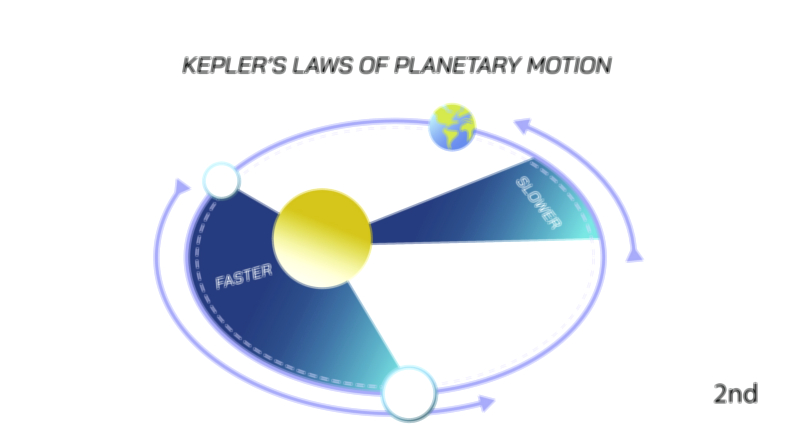
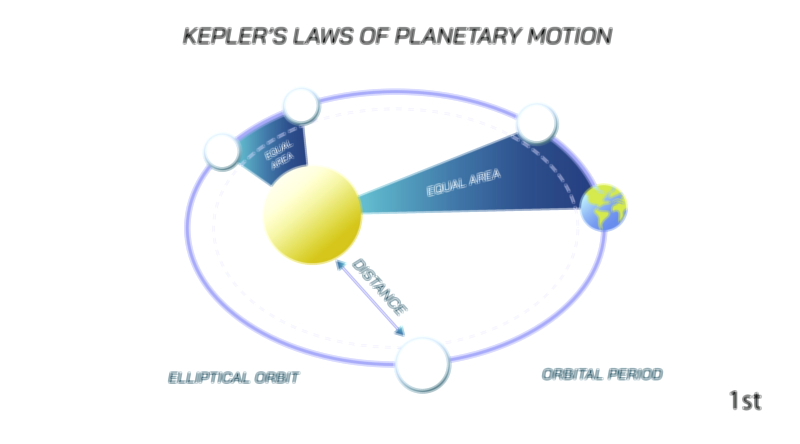
One of the remarkable features of Newton’s law is its ability to predict the behavior of celestial bodies with astonishing accuracy. Using this law, astronomers can calculate planetary positions, predict eclipses, guide spacecraft, and explain the elliptical orbits identified by Johannes Kepler. As astronomers observed planets more precisely, small deviations from predicted motions led to discoveries such as the planet Neptune, whose existence was inferred before it was seen. These successes demonstrated the predictive power of gravitational theory and its central role in scientific inquiry.
The influence of gravity extends further still, shaping the structure of galaxies and clusters of galaxies. Stars orbit within galaxies because of the combined gravitational pull of billions of other stars, gas clouds, and invisible dark matter. Galaxies themselves orbit and interact under the influence of gravity, sometimes merging in colossal cosmic collisions that reshape their structure over millions of years. These interactions reveal the immense reach of gravitational forces, capable of influencing the movement of objects separated by thousands or millions of light-years. Even the large-scale structure of the universe—the web-like distribution of galaxies and clusters—is governed by gravity pulling matter together into dense regions while cosmic expansion stretches the space between them.
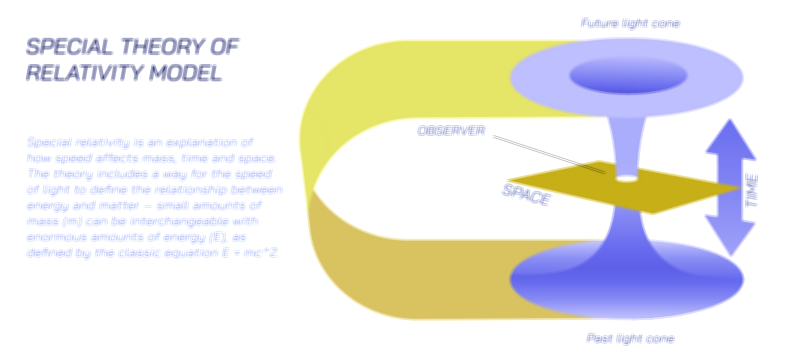
Yet the Universal Gravitational Law also highlights intriguing limitations of Newtonian understanding. Newton described how gravity acts but not why it acts. The idea of action at a distance—where one object exerts force on another across empty space—raised philosophical questions that persisted for centuries. In the twentieth century, Albert Einstein offered a deeper perspective through general relativity, interpreting gravity not as a force but as the curvature of spacetime caused by mass and energy. This modern interpretation replaced Newton’s instantaneous attraction with a geometric picture where objects follow curved paths in a distorted spacetime landscape. Massive bodies warp the space around them, and smaller objects follow trajectories determined by this warping. The Earth orbits the Sun not because it is pulled by an invisible force but because it moves along the curved structure of spacetime itself. Yet even though Einstein reframed gravity, Newton’s Universal Law remains extraordinarily accurate for most practical purposes. Engineers, astronomers, pilots, and physicists still rely on Newton’s gravitational equations to launch rockets, calculate trajectories, build bridges, and analyze orbital systems because the differences between Newtonian and relativistic predictions become significant only under extreme conditions such as near black holes or at speeds approaching that of light.
The universality of gravitational attraction also shapes the behavior of materials and structures on Earth. The strength of gravity influences how tall mountains can be, how deep oceans settle, and how Earth’s interior behaves. Gravity drives convection currents in the mantle, helping to power plate tectonics and volcanic activity. It governs atmospheric pressure gradients and thus influences climate and weather systems. Without gravity, Earth would not hold an atmosphere, oceans would not remain bound to the surface, and the cycles that support life—from rainfall to nutrient circulation—would collapse.
In space exploration, the Universal Gravitational Law serves as the foundation for maneuvering through the solar system. Spacecraft use gravity-assist maneuvers, or “gravity slingshots,” to gain speed by passing near planets. These maneuvers rely on precise calculations of gravitational interactions to accelerate spacecraft without using additional fuel. This elegant technique exemplifies how gravitational attraction can be harnessed productively to explore worlds beyond our own. The trajectories of interplanetary probes, the deployment of satellites, and the operation of space stations all depend on the predictive framework provided by Newton’s law.
On a grander scale, gravity orchestrates the life cycles of stars. During star formation, gravity pulls together vast clouds of gas and dust until they collapse under their own weight, initiating nuclear fusion in the core. Throughout a star’s life, gravity balances the outward pressure from nuclear reactions. When a star exhausts its fuel, gravity once again dominates, causing collapse that may lead to a white dwarf, neutron star, or black hole depending on the initial mass. These dramatic endpoints of stellar evolution illustrate gravity’s role as both a creative and destructive force in the cosmos.
Even time itself is influenced by gravitational effects. Although this understanding comes from Einstein’s theory, it reinforces the profound significance of gravitational interactions. In stronger gravitational fields, time passes more slowly than in weaker fields—a phenomenon called time dilation. This effect must be considered in technologies like GPS systems, where satellites experience slightly weaker gravity and thus faster time flow compared to clocks on Earth’s surface. Without adjusting for gravitational time differences, GPS navigation would quickly become inaccurate.
Ultimately, the Universal Gravitational Law represents a cornerstone of human understanding of the physical world. It reveals that matter is not passive but engaged in an ongoing network of mutual attraction. This constant interplay shapes everything from the smallest falling pebble to the largest galaxies, forging order in the universe through simple, predictable relationships. Gravity connects all objects, binds solar systems, sculpts galaxies, influences the fate of stars, and orchestrates the motion of the cosmos. By studying this law, we gain insight not only into how the universe behaves but into the elegance of natural laws that unify diverse phenomena under a single guiding principle.