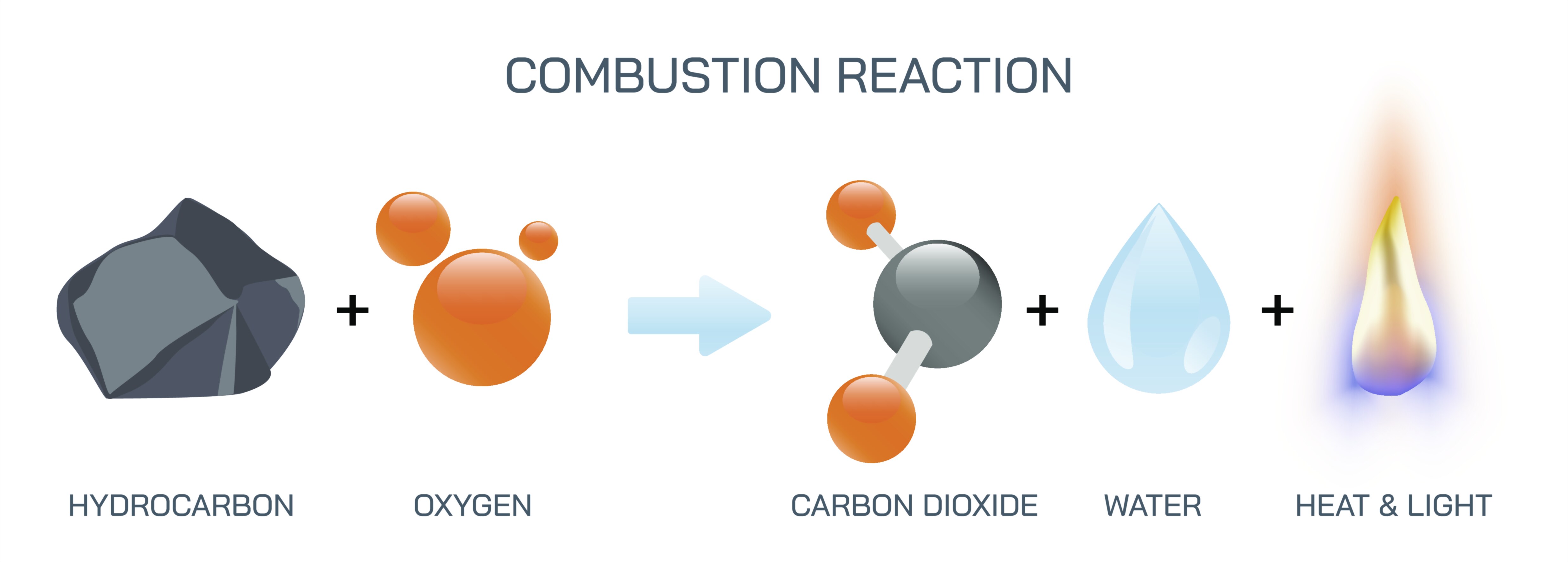
Combusttion Reaction Showing Chemical Equation, Heat Release, and Oxygen–Fuel Interaction in Chemistry
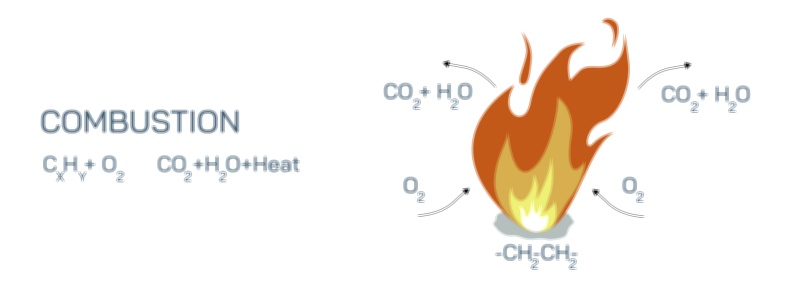
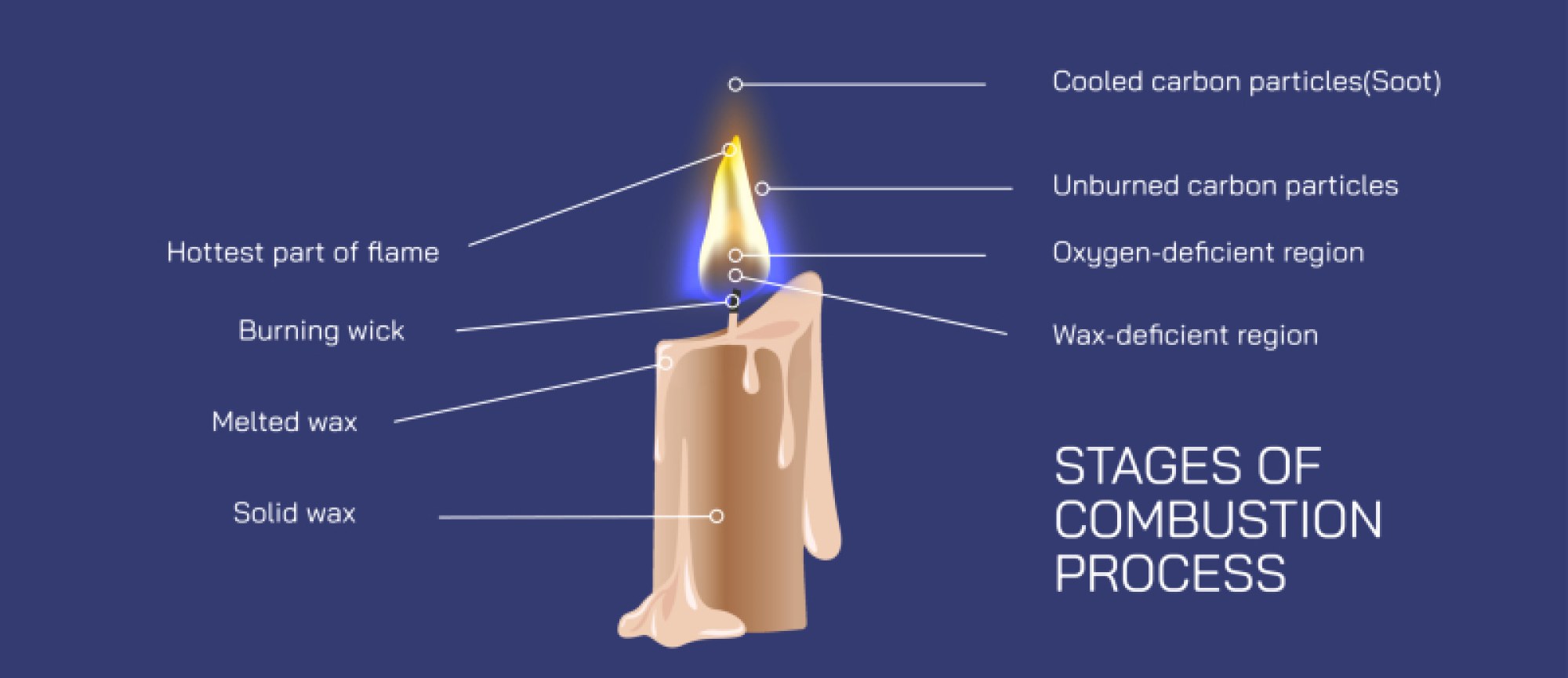
A combustion reaction is one of the most familiar and dramatic chemical transformations in the natural world, yet its apparent simplicity—fire appearing when fuel meets oxygen—conceals a complex molecular sequence driven by energy exchange and chemical rearrangement. A vector illustration that depicts combustion usually highlights three core elements: the chemical equation representing how reactants transform into products, the oxygen–fuel interaction that serves as the driving force of the reaction, and the release of heat and light that gives combustion its visible and energetic signature. Whether the diagram shows a burning candle, a gas flame, or a hydrocarbon molecule reacting with air, the underlying concept is always the same: combustion is the rapid reaction of a substance with oxygen that produces new chemical products and liberates stored energy.
At the heart of any combustion reaction lies a fuel, typically a carbon- and hydrogen-containing compound such as a hydrocarbon. Examples include methane in natural gas, propane in household heaters, octane in gasoline, and countless organic substances in wood, coal, and biomass. In a vector illustration these fuels may be represented by molecular formulas such as CH₄ for methane or C₈H₁₈ for octane, symbolizing the atoms that will rearrange when the reaction begins. The fuel contains chemical energy stored in the bonds between its atoms, energy accumulated over geological or biological time. That energy remains locked in the fuel until the reactants encounter an activating event that triggers combustion, such as a flame, spark, friction, or sufficient heat from the surroundings.
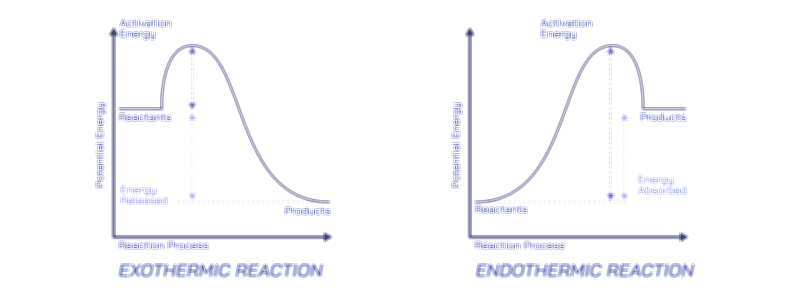
The second key component in combustion is oxygen, the indispensable reactant that accepts electrons in the process and enables the transformation of the fuel. Oxygen molecules in the air, represented in the illustration as O₂, collide with fuel molecules under the right physical conditions. Before the reaction can begin, the fuel must absorb activation energy—a temporary input of energy that weakens existing chemical bonds, allowing atoms to rearrange. The visual representation of this step in a diagram may show a small flame or spark symbolizing the minimum energy required to overcome the chemical inertia that keeps the fuel stable. Once this activation threshold is crossed, the bonds in the fuel break and new bonds begin forming rapidly with oxygen atoms, setting off a chain reaction that continues as long as fuel, oxygen, and heat remain available.
The chemical equation in a combustion illustration reflects this transition from reactants to products, translating the molecular details into symbolic form. In the complete combustion of methane, for example, the equation is often written:
CH₄ + 2O₂ → CO₂ + 2H₂O + energy
The diagram typically shows this equation alongside arrows to emphasize the direction of transformation. The products of complete combustion are carbon dioxide (CO₂) and water (H₂O), substances that contain new bonds formed during the reaction. Importantly, the products form only after the original chemical structure of the fuel has been dismantled molecule by molecule. Combustion is often described casually as “burning,” but chemically it is a sequence of bond-breaking and bond-forming events unfolding in fractions of seconds. The chemical equation is therefore not merely a summary; it is a map of how the atoms are recombined during the reaction.
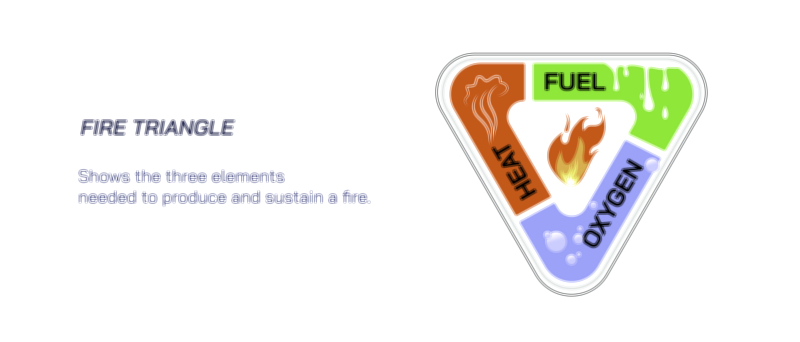
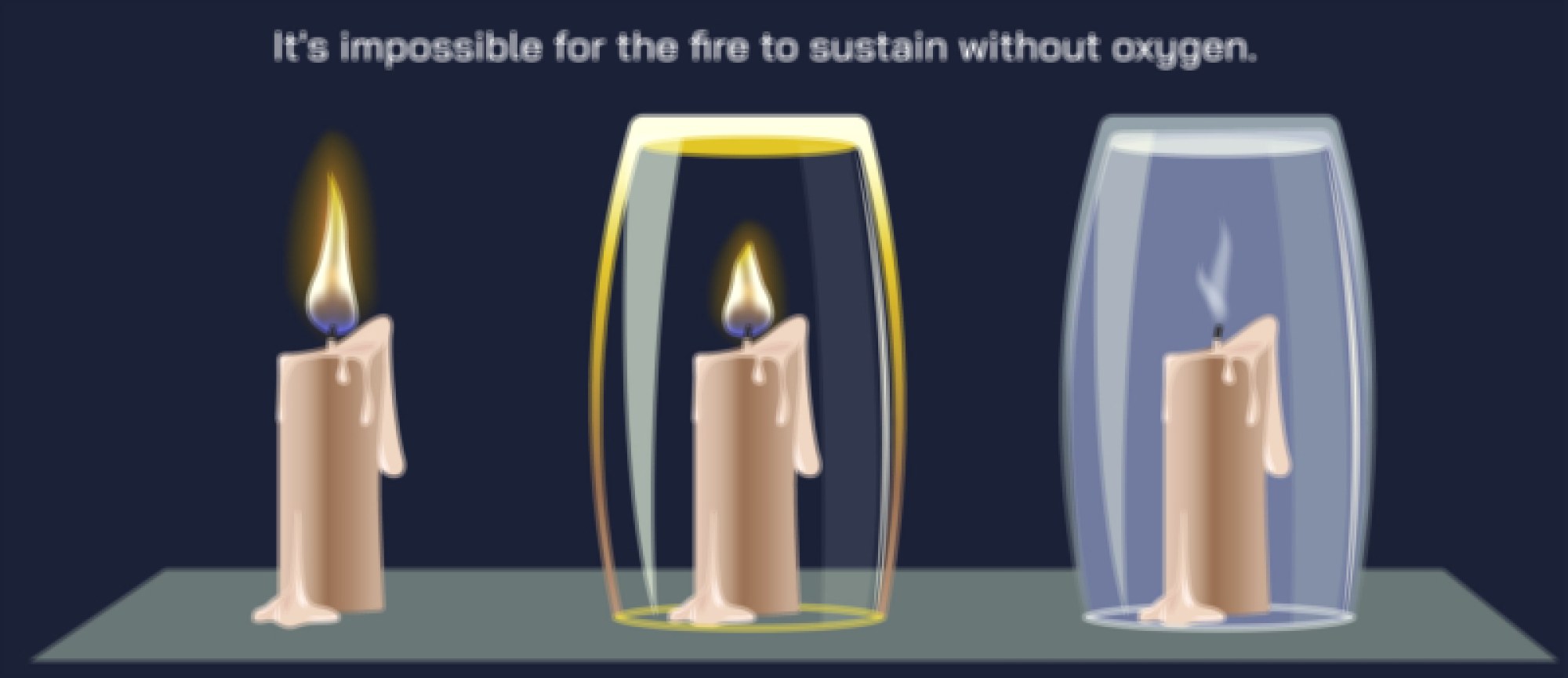
One of the most important characteristics emphasized in combustion illustrations is the release of heat, and sometimes light, which accompanies the reaction. These are not by-products but the essence of combustion: when the atoms in the fuel form new bonds with oxygen atoms, the resulting bonds in CO₂ and H₂O contain lower potential energy than the original bonds in the fuel. The excess energy does not disappear — it is released into the surroundings in the form of heat. If the reaction is rapid enough and sufficiently exothermic, some of the energy is emitted as visible light, creating flame. The arrows radiating outward in a vector illustration communicate this energy release, showing how combustion warms the environment, powers engines, drives turbines, heats buildings, and cooks food. Heat feeds back into the system to sustain the reaction by keeping the fuel above ignition temperature, creating the well-known combustion triangle: fuel, oxygen, and heat must all be present, and removing any one of the three extinguishes the reaction.
While complete combustion produces CO₂ and H₂O as shown in textbook diagrams, many real-world combustion systems experience incomplete combustion when oxygen supply is limited. In such cases, the fuel does not fully oxidize, producing undesirable products such as carbon monoxide (CO), soot, unburned hydrocarbons, and smoke. A vector diagram might show these extra products branching off the chemical pathway when oxygen input is insufficient. Incomplete combustion wastes energy, reduces efficiency, and increases pollution, which is why engines, burners, and heating systems are designed to optimize air-to-fuel ratios. The same oxygen–fuel balance that determines industrial efficiency also determines whether a house holds clean or smoky air and whether a car emits mostly CO₂ and H₂O or a mixture of exhaust contaminants.
Combustion is not only a chemical reaction but also a practical energy technology that supports modern life. In internal combustion engines, the chemical energy released during fuel–oxygen interaction pushes pistons and produces mechanical work. In jet engines, combustion forces high-temperature gases out the back of the engine, propelling aircraft forward. In power plants, burning coal, natural gas, or biomass converts water into high-pressure steam that turns turbines and generates electricity. In the home, combustion in heaters and stoves releases heat that keeps living spaces warm and food cooked. The useful output always originates from the same principle illustrated in the combustion diagram: chemical energy stored in fuel bonds becomes thermal energy during oxidation.
Combustion also plays a role in environmental and atmospheric chemistry, making vector diagrams important in ecological education. The release of CO₂ contributes to global carbon cycling and climate change when emitted in large quantities. The production of pollutants from incomplete combustion affects air quality and health. Understanding the combustion diagram helps clarify why clean energy innovations often focus on improving combustion efficiency, recycling carbon emissions, or replacing combustion as a power source entirely with renewable energy methods that do not depend on fuel oxidation.
On the other side of the spectrum, controlled combustion is essential to fire safety and hazard management. Training resources often use similar diagrams to explain how interrupting any side of the fuel–oxygen–heat triangle extinguishes a fire: smothering reduces oxygen, cooling removes heat, and fuel removal stops the supply of reactants. The same chemical foundation behind gentle candlelight becomes the basis for wildfire control and industrial safety planning.
Thus, a vector illustration of combustion showing a fuel interacting with oxygen through a chemical equation and releasing heat is not simply a picture of fire; it is a condensed visual expression of energy conversion, molecular transformation, atmospheric chemistry, industrial process engineering, and safety science. Combustion is both a fundamental natural reaction and a driver of human civilization. The arrow linking fuel and oxygen to heat, light, and chemical products stands for the ancient warmth of flames, the power of engines, the innovation of modern heating systems, and the challenges of environmental responsibility. In understanding the structure of a combustion reaction, we understand how matter stores energy — and how chemistry releases it to shape the world.