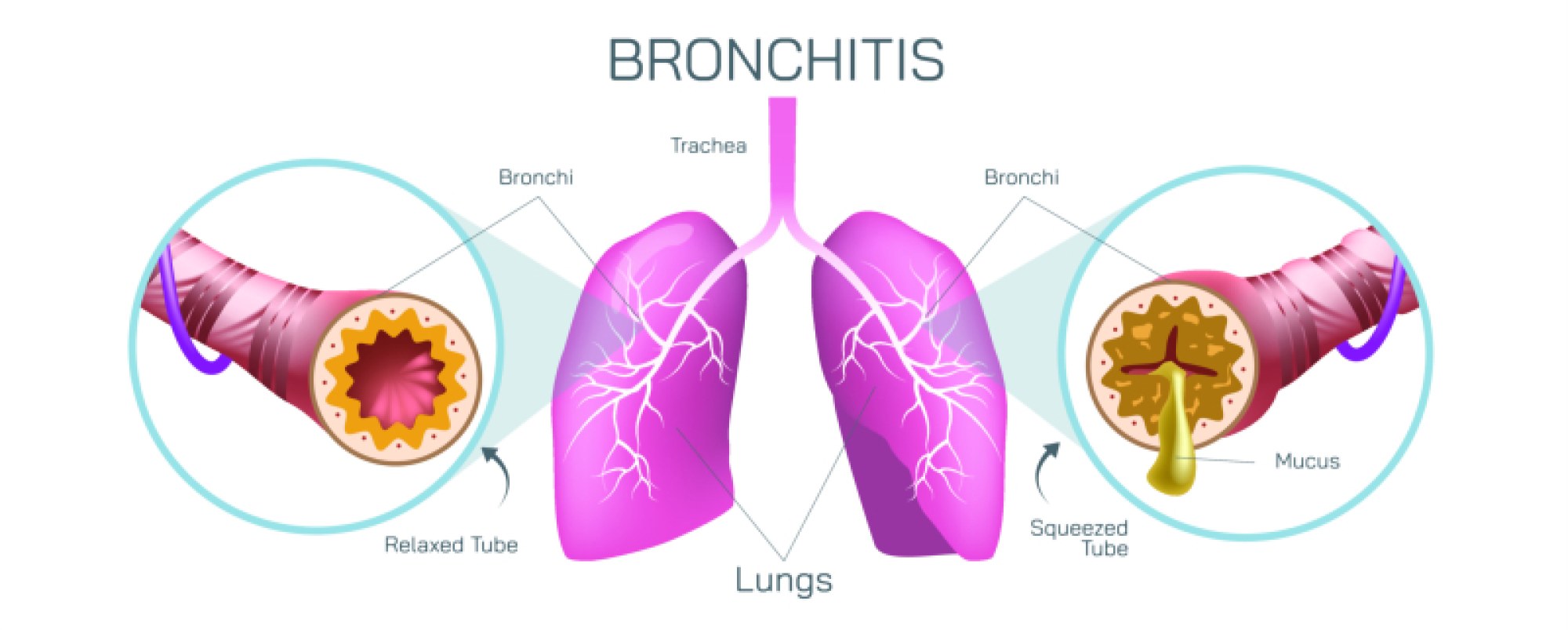
Bronchitis Showing Inflammation of Bronchial Tubes, Mucus Production, and Breathing Difficulty in Human Lungs
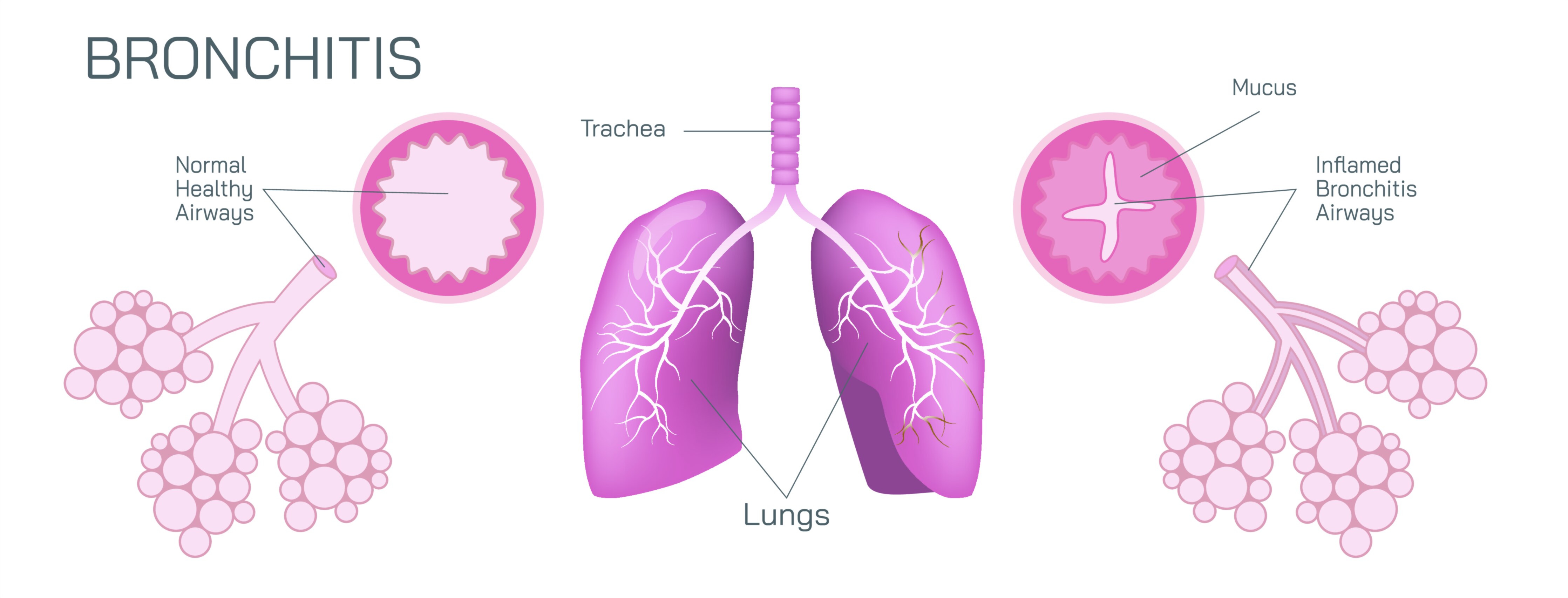
Bronchitis is a condition in which the bronchial tubes—the branching airways that carry air from the trachea into the lungs—become inflamed, swollen, and irritated, disrupting the smooth flow of air and altering the normal rhythm of breathing. Under healthy conditions, the bronchi act as open, flexible passageways lined with a thin mucus layer that humidifies inhaled air and traps irritants before they enter the delicate alveoli, where gas exchange occurs. Air moves freely during inhalation and exhalation, and the coordinated motion of the diaphragm and intercostal muscles supports effortless breathing. The natural structure of the airway walls allows a balance between protection and ventilation. With bronchitis, however, this protective system becomes overwhelmed by inflammation and abnormal mucus production, turning the bronchi into constricted and congested tubes that struggle to handle the demand for oxygen. The stark contrast between a healthy airway and a bronchitic airway becomes clear in visual representations, where smooth, open tubes transform into thickened, reddened passages filled with mucus and tight muscular tension.
The first defining feature of bronchitis is the inflammation of the bronchial lining. When the body is exposed to viruses, bacteria, smoke, pollutants, dust, or chemical irritants, the immune system responds as if defending against invasion. This defense response recruits inflammatory cells to the bronchial membranes and triggers the release of chemical mediators that widen blood vessels and increase tissue permeability. As a result, fluid leaks into the airway membrane, causing swelling and redness. The smooth interior that once allowed free airflow becomes narrowed and irritated. Even mild inflammation limits air movement, but when the lining thickens dramatically, airflow resistance rises sharply, forcing the lungs to work harder. People experiencing bronchitis often notice discomfort in the chest, soreness around the sternum, and a heavy or raw sensation when breathing deeply, all of which stem from this localized inflammatory response.
A second hallmark of bronchitis is excessive mucus production, which significantly worsens breathing impairment. In a normal bronchial tube, mucus exists in small quantities to catch dust, pathogens, and debris. Cilia—tiny, hairlike structures on the airway surface—sweep this mucus upward to the throat for disposal, keeping the lungs clean and clear. During bronchitis, mucus glands react to inflammation by overproducing secretions, and the composition of the mucus becomes thicker and stickier than usual. The cilia slow down or become damaged by persistent irritation, trapping mucus in the airways rather than clearing it. The combination of swollen tissue and accumulated mucus reduces the effective opening of the airway to a fraction of its normal size. People with bronchitis often experience frequent coughing, not as a sign of illness spreading, but as the body’s attempt to forcibly expel mucus that obstructs ventilation. The cough may begin dry and harsh but soon becomes productive, with mucus that may range from clear to yellow or green depending on the presence and extent of infection or inflammation.
Breathing difficulty during bronchitis arises from multiple forces acting at once. As the bronchi become narrower and filled with mucus, inhalation requires greater effort, and exhalation becomes even more difficult, similar to pushing air through a partially blocked tube. When inflammation affects the deeper bronchioles, air can become trapped inside the lungs, causing fatigue during breathing, a sensation of incomplete exhalation, and shortness of breath during minimal exertion. Although bronchitis does not always trigger smooth muscle constriction as dramatically as asthma, the inflammation can still provoke some degree of muscular tightening around the airways, adding another layer of resistance. Wheezing, crackling sounds, and rattling breaths may accompany the condition as trapped air struggles to move around mucus-filled passages. The body attempts to compensate by increasing respiratory rate, but faster breathing can lead to exhaustion and worsening irritation of the bronchi.
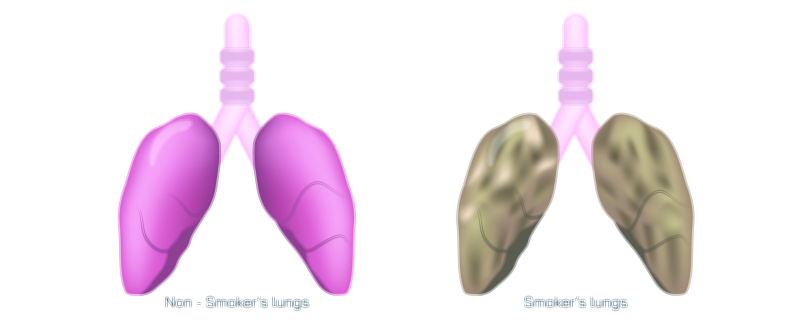
Bronchitis appears in two major forms: acute and chronic, both sharing similar mechanisms but differing in duration and long-term impact. Acute bronchitis develops rapidly, typically following a respiratory infection such as a cold or flu. The viral illness damages the bronchial lining and leaves it vulnerable to inflammation, leading to persistent coughing, fatigue, mild fever, and temporary breathing difficulty that lasts days to weeks. This form usually resolves once the infection clears and the bronchial tissue heals, though the cough may linger while the airway lining repairs itself. Chronic bronchitis, by contrast, evolves slowly and persists for months or years, most commonly in individuals exposed to long-term irritants such as cigarette smoke, indoor pollutants, dust, or industrial chemicals. In chronic bronchitis, the airway tissues remain in a constant state of inflammation, mucus glands become enlarged, and the structure of the bronchi begins to change permanently. This persistent structural alteration reduces airflow even during symptom-free periods and gradually impairs lung function. Chronic bronchitis is classified as part of chronic obstructive pulmonary disease (COPD) and requires long-term management to prevent progressive respiratory decline.
The discomfort associated with bronchitis extends beyond physical breathlessness. Reduced oxygen exchange at the alveoli can lead to fatigue, weakness, and difficulty concentrating. Sleep is frequently disrupted due to nighttime coughing and breathing discomfort. Repeated bouts of coughing can strain the chest muscles, diaphragm, and abdominal wall, leaving the body sore. Even speaking for long periods may trigger coughing fits when inflamed bronchi are sensitive. In severe cases or prolonged inflammation, the condition can sometimes advance downward into the lower respiratory tract, increasing the risk of pneumonia. Inflammation also affects the immune system’s workload, causing the body to remain in a state of heightened alert long after the initial trigger has passed.
Despite the challenges it causes, bronchitis is treatable, and the airways possess a remarkable capacity to recover once inflammation subsides and irritants are removed. Rest, hydration, and humidified air support the thinning and loosening of mucus, allowing cilia to clear secretions more effectively. For viral bronchitis, symptom management is the primary approach, since antibiotics do not affect viruses. In cases involving bacterial infection or chronic forms complicated by recurrent flare-ups, medications may include antibiotics, bronchodilators to relax airway muscles, and steroids to reduce inflammation. Avoiding tobacco smoke and pollutants is one of the most crucial steps in both prevention and recovery, as continued exposure interferes with healing and weakens respiratory defenses over time.
A vector illustration of bronchitis often highlights the sequence of internal changes: the walls of the bronchial tubes thickening and reddening with inflammation, mucus accumulating inside the narrowed passage, and arrows demonstrating the restricted or turbulent airflow. Such images show not just a visual obstruction but a physiological struggle that many patients feel intensely. The narrowing of bronchi becomes a visual metaphor for the difficulty of breathing, where air that once flowed freely now travels through congested tunnels that resist every breath.
Understanding bronchitis through both biological explanation and anatomical visualization underscores an essential truth: the smallest airways of the body can dramatically influence the experience of life itself. Breathing, normally automatic and effortless, becomes a constant task during inflammation. A condition that begins within microscopic tissues and mucus glands can ripple outward into fatigue, sleeplessness, and anxiety, reminding us how closely respiratory function is tied to overall well-being. Bronchitis, in its simplest form, is inflammation—but in its fullest reality, it is a temporary disruption of one of the most vital rhythms of human existence: the breath.