Calcium Supplement Vector Illustration Showing Elemental Calcium Percentage and Nutrient Composition
Calcium supplements are widely used to support skeletal health, prevent bone loss, and ensure that the body receives enough calcium to perform the countless physiological functions that depend on this essential mineral. Although the term “calcium supplement” sounds straightforward, not all products contain the same form of calcium, nor do they deliver the same percentage of elemental calcium—the actual usable calcium content that the body can absorb and utilize. A vector illustration designed to show the elemental calcium percentage and nutrient composition is therefore incredibly valuable because it transforms a confusing subject into a clear, visually organized map of what the consumer or patient is truly getting from each supplement. Many people are unaware that the supplement label may list the total compound weight rather than the true elemental calcium content, meaning the figure on the bottle may not correspond directly to the bioavailable calcium the body receives. A highly detailed illustration helps bridge that knowledge gap by comparing different calcium compounds side-by-side, breaking down their molecular content, showing the elemental calcium percentage they offer, and indicating which supporting nutrients improve absorption and bone metabolism.
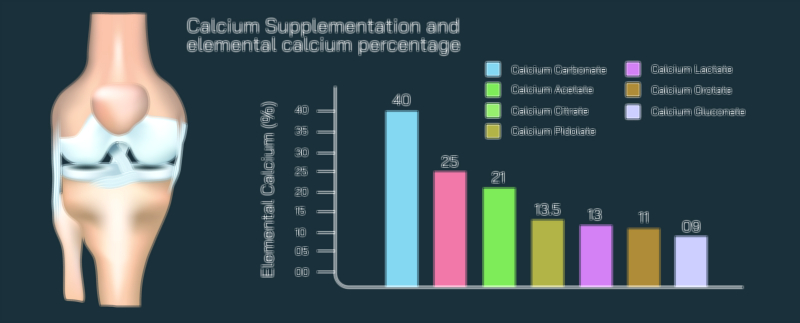
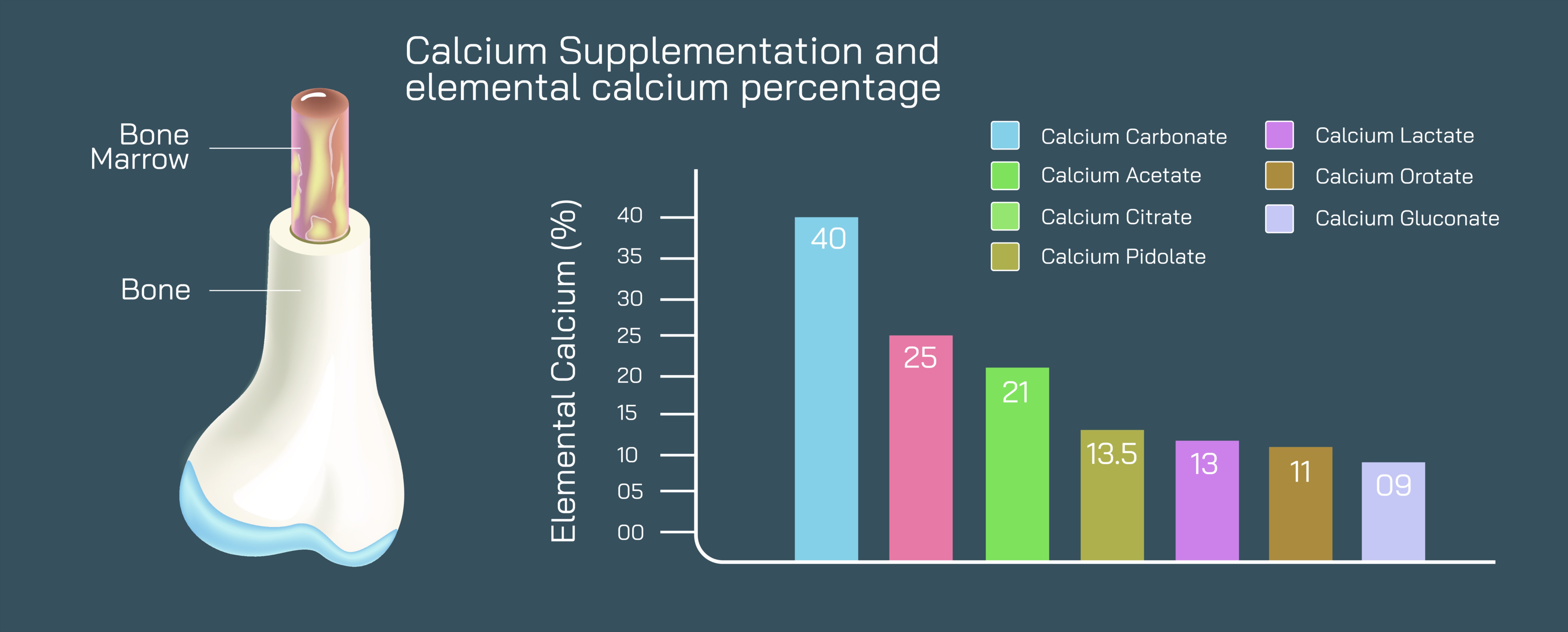
The concept of elemental calcium percentage is central to understanding supplement quality. When calcium occurs as part of a compound—such as calcium carbonate or calcium citrate—it is chemically bound to other molecules. Only a fraction of the weight is actual calcium; the rest comes from the compound that delivers it. For example, calcium carbonate contains approximately 40% elemental calcium, meaning a 1,250 mg tablet contains about 500 mg of usable calcium for the body. Calcium citrate, on the other hand, contains only about 21% elemental calcium, so more material must be consumed to reach the same calcium intake. However, calcium citrate has better absorption in people with low stomach acid, making it preferred in aging adults and those with digestive concerns. A vector illustration can bring this complexity to life by visually displaying bars, pie charts, molecular comparisons, or labeled compound-to-element ratios that show exactly how much elemental calcium comes from each calcium source. With a clean and intuitive graphic design, viewers quickly understand why two supplements of equal pill size may deliver dramatically different calcium amounts.
The most widely used calcium forms—carbonate, citrate, phosphate, lactate, gluconate, and hydroxyapatite—differ not just in elemental calcium percentage but also in absorption rate, digestive comfort, and suitability for different age groups or medical conditions. A vector breakdown of each form offers clarity. Calcium carbonate has the highest percentage of elemental calcium but requires sufficient stomach acid for absorption, making it ideal for younger adults or those taking supplements with meals. Calcium citrate may provide less elemental calcium per dose but offers superior absorption regardless of stomach acidity, reducing digestive discomfort and making it suitable for older adults. Calcium phosphate supports bone mineralization strongly but tends to be more expensive and usually contains a lower elemental percentage. Hydroxyapatite supplements mimic the natural mineral matrix in bone and contain trace minerals alongside calcium, often highlighted in sports nutrition or orthopedic recovery settings. Meanwhile, calcium lactate and gluconate have lower elemental calcium percentages but are easily digested, making them suitable for individuals who are sensitive to concentrated calcium forms. A well-designed vector illustration incorporates these differences into a single cohesive image, enabling comparison at a glance.
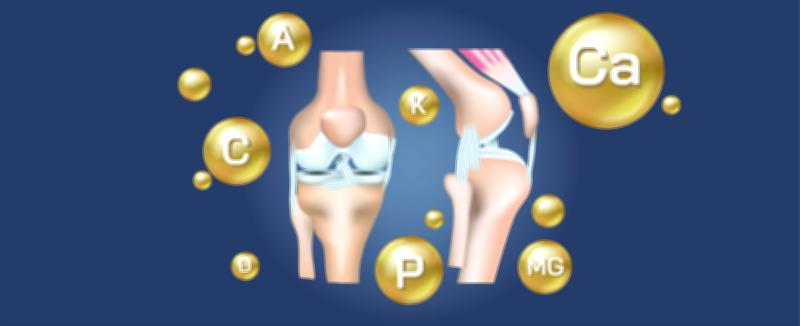
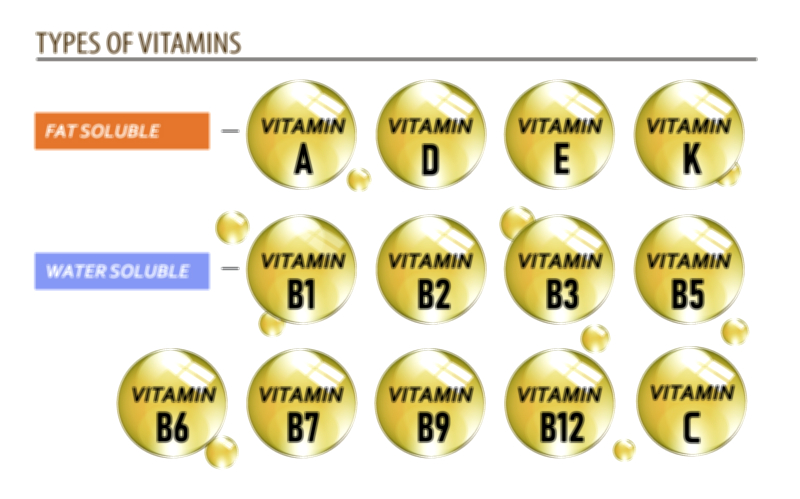
Calcium supplementation becomes even more effective when paired with supporting nutrients, and a vector illustration of nutrient composition typically highlights this complementary synergy. Vitamin D is essential because it allows calcium to be absorbed from the intestines into the bloodstream. Without sufficient vitamin D, even the highest calcium intake brings little benefit to the skeleton. Vitamin K2 plays another crucial role by directing calcium to the bones and helping prevent calcium from settling in soft tissues or arteries where it does not belong. Magnesium assists in activating vitamin D and forming a stable calcium-phosphate matrix within the bone. Phosphorus—another major component of bone—must remain in balance with calcium for proper mineral hardness. A vector illustration often places icons of these nutrients around a detailed calcium diagram, with arrows showing how each nutrient supports the chemical pathway of bone formation, absorption, transport, and storage. This approach allows viewers to understand that calcium works as part of a network rather than as a standalone solution.
An educational diagram of calcium supplements also conveys the difference between total calcium intake and absorption efficiency. Taking in a certain number of milligrams does not automatically equate to that amount entering the bones. Absorption rates depend on age, digestive health, hormonal environment, dietary composition, and the presence of competing substances. For example, excessive sodium, caffeine, or high-phosphate soda intake can counter calcium absorption, and oxalates and phytates in certain foods temporarily bind calcium in the gut. A vector-based educational layout that visualizes these interactions helps learners understand why absorption cannot be predicted purely from pill size or dosage.
Different age groups also have different calcium needs, and vector illustrations are often used to communicate these distinctions clearly. Children require calcium for rapid skeletal growth, adults need it to maintain stable bone mass, and older adults—especially women after menopause—need more calcium to counter the natural decline in bone density driven by hormonal changes. Athletes, individuals healing from fractures, and those with chronic disorders affecting nutrient absorption may also benefit from targeted supplementation. When a vector template places recommended intake values beside supplement breakdowns and nutrient synergies, it encourages viewers to think about calcium strategically rather than generically.
Another practical component of a calcium supplement illustration is demonstrating the timing and method of consumption. Calcium carbonate absorbs best with food due to its reliance on stomach acid, while calcium citrate can be taken anytime. The intestine can only absorb a limited dose of calcium at once, so very large doses must be split across the day for optimal benefit. A vector diagram can show the difference between a saturated and unsaturated absorption period, making absorption timing easier to comprehend. A single diagram conveying these relationships can dramatically improve compliance and understanding among beginner learners, nursing students, fitness professionals, and patients.
In clinical use, calcium supplements interact with various health concerns and medications. People with kidney disease, parathyroid disorders, or a history of calcium-based kidney stones must choose calcium types carefully. Individuals taking thyroid medication or certain antibiotics need to space calcium apart from their prescriptions because calcium can block absorption. Patients recovering from osteoporosis or at risk of bone loss frequently need a combination of calcium, vitamin D, vitamin K2, and magnesium, rather than calcium alone. A vector illustration that includes safety highlights and compatibility notes can support safe, informed supplementation without overwhelming the viewer.
Ultimately, a calcium supplement vector illustration showing elemental calcium percentage and nutrient composition is much more than a decorative anatomical drawing. It serves as a comprehensive educational blueprint, tying together chemistry, nutrient bioavailability, bone metabolism, digestive physiology, and wellness decision-making. It visually communicates why some supplements deliver more usable calcium than others, why supporting nutrients must be present for calcium to do its job, and why supplement choice depends on physiology rather than advertisement claims. By translating numerical labels and molecular ratios into a readable, intuitive format, the illustration empowers clinicians to teach patients more effectively, supports students in learning complex nutrition science, and helps individuals make informed choices about maintaining lifelong bone health.