Vitamin B12 — Nutritional Sources and Health Benefits Explained Through a Vector Illustration of Energy, Nerve Strength, and Cellular Vitality
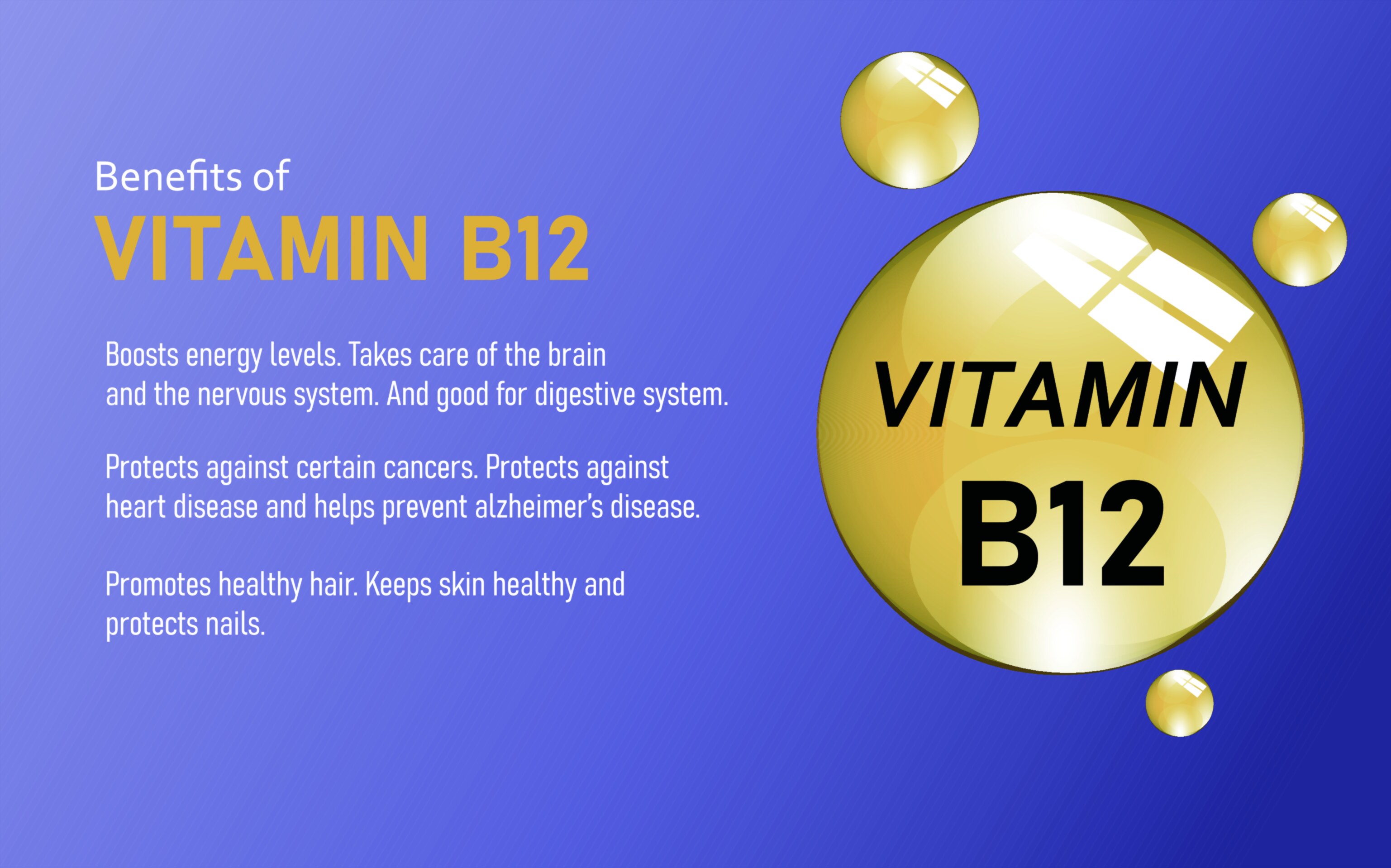
A Vitamin B12 Nutritional Source and Health Benefits Vector Illustration transforms a scientific nutrient into a visually understandable story of how the body generates energy, protects the nervous system, and builds blood cells that carry oxygen to every tissue. Vitamin B12, also known as cobalamin, is one of the most crucial compounds in human nutrition because it supports systems responsible for vitality, mental clarity, and physiological endurance. A detailed vector illustration captures the message that B12 is deeply connected to daily functionality rather than being just another entry on a nutrition label. Instead of presenting the vitamin as a clinical numerical value, the illustration connects bright imagery to recognizable foods, glowing metabolic icons, and symbols of neural and blood health that allow even individuals unfamiliar with biochemistry to grasp its significance instantly. With its polished gradients and scalable vector format, the artwork highlights B12 as a life-sustaining nutrient that must be consumed regularly for the body to function at its best.
A major component of the illustration is the depiction of natural nutritional sources rich in Vitamin B12, presented in a circular or radiant pattern to visually emphasize abundance and accessibility. Since Vitamin B12 is found primarily in animal-based foods, the image typically features icons of fish such as salmon, tuna, mackerel, and sardines; seafood such as clams, oysters, shrimp, and crab; and meat sources including beef, lamb, chicken, and turkey. Eggs and dairy products like milk, cheese, and yogurt are also frequently highlighted, illustrating that regular meals can provide meaningful amounts of the vitamin. The placement of fortified foods such as breakfast cereals, nutritional yeast, and plant-based milk alternatives may also appear to reflect the needs of vegetarians and vegans who cannot rely solely on animal sources. Through strategic color choices like deep blues, ocean hues, warm browns, and golden yellows, the illustration communicates that B12 is a nutrient tied to nourishment, protein density, and natural vitality. Viewers can identify foods instantly, forming a mental association between familiar meals and the biological importance of B12.
Beyond food sources, the illustration expresses the physiological benefits of Vitamin B12 through pictorial symbols that outline its primary functions within the human body. The most prominent of these typically include energy icons associated with metabolism, glowing red blood cell graphics symbolizing oxygen transport, nerve fiber structures related to neurological function, and DNA helix animations representing cellular replication and repair. These symbols connect B12 directly to systems that people care about every day even if they do not articulate them scientifically: whether one feels energetic or chronically fatigued, mentally sharp or cognitively foggy, stable or anxious, physically active or sluggish. The red blood cell icons emphasize that a deficiency of Vitamin B12 can lead to megaloblastic anemia, which manifests through exhaustion, weakness, paleness, and shortness of breath. The neural pathways demonstrate that B12 plays a crucial role in maintaining the myelin sheath, the protective layer around nerves that ensures fast and accurate signal transmission. The DNA symbols visually imply that the vitamin is necessary for the reproduction of cells throughout the body, reinforcing that B12 is essential to life at the most fundamental biological level.
A strong vector illustration also highlights the connection between Vitamin B12 and brain function, using silhouettes of the brain surrounded by glowing neural circuits, concentration symbols, memory icons, or stress-relief waves. These features convey that sufficient B12 supports neurotransmitter balance, psychological resilience, and cognitive performance, while deficiency may lead to depression, irritability, memory impairment, or difficulty focusing. Even without text, the visual language communicates that mental clarity cannot exist independently of nutrient balance. It makes viewers aware that what happens in the digestive system influences the brain, and that nutrition shapes emotions and thoughts. This connection allows the illustration to communicate a deeper truth—that health is holistic and interconnected, and that vitamins fuel psychological stability as much as physical performance.
Many templates include an emphasis on muscle support and long-term vitality, showing athletic silhouettes or graceful motion effects around the Vitamin B12 icon. This visual element speaks to the idea that the vitamin assists stamina through sustained energy release rather than sudden spikes, helping the body convert food into usable cellular fuel. Whether the viewer is an athlete, a working professional, a student, or an older adult, the imagery communicates that B12 is necessary for everyone because energy metabolism operates constantly regardless of age or physical routine. The illustration suggests that persistent fatigue is not a permanent condition but often a sign of nutritional imbalance that can be corrected through proper intake.
The vector artwork indirectly educates viewers on absorption and risk groups through subtle visual cues. For example, icons of the digestive system or stomach may appear to reflect that absorption of Vitamin B12 requires intrinsic factor, a protein produced in the stomach lining. Older adults, people with digestive disorders, and individuals following vegan or vegetarian diets may therefore need fortified foods or supplements to maintain adequate levels. These visual suggestions do not frighten viewers but instead empower them through awareness. They communicate that B12 support is not only important for those who eat animal products regularly but also for those who may unknowingly be at risk of deficiency, reminding people to evaluate their nutrition thoughtfully.
The reason vector format works so well for such learning material is that it allows unlimited scalability and adaptability without sacrificing sharpness or detail. Whether displayed as a poster in a school classroom, printed on supplement packaging, uploaded to a nutrition-focused website, incorporated into a medical presentation, or posted as part of a social health campaign, the illustration retains its crisp lines and geometric order. Designers can update colors, rearrange icons, include dosage recommendations, or add branding without damaging the structure of the illustration. This flexibility makes the template suitable for dietitians, educators, supplement manufacturers, healthcare institutions, food companies, and fitness trainers seeking to communicate nutrition science clearly and visually.
Yet beyond the education and commercial value, the illustration also carries an emotional message: it inspires viewers to care for their energy, their mind, and their long-term well-being. It shows that vitality is not random but can be nourished. It subtly encourages people to eat intentionally, not through fear or restriction, but through self-respect and a desire to feel their best. It portrays Vitamin B12 not as a technical requirement but as an everyday ally that protects the brain, blood, cell structure, and quality of life. Even without biochemical terminology, the design communicates that health is within reach of anyone who understands their body’s needs.
In its fullest purpose, a Vitamin B12 Nutritional Source and Health Benefits Vector Illustration turns microscopic biological processes into a narrative of strength, clarity, and endurance. It celebrates the role of nutrition in shaping mood, cognitive performance, stamina, and overall resilience. It empowers the viewer to link the foods they eat to the way their body functions and reminds them that small nutritional decisions build the foundation of lifelong wellness. Through bright visuals, symbolic clarity, and scientific accuracy, the illustration serves as a guide to understanding how Vitamin B12 supports human potential and how daily nourishment can protect the mind and body from fatigue, imbalance, and preventable decline.