PAN Card in India – Complete Educational Summary on Structure, Purpose, Legal Importance, Financial Identification, Taxation, Verification, Digital Usage, Compliance, and its Expanding Role in Modern Indian Economy
The Permanent Account Number, more commonly known as the PAN Card in India, has evolved into one of the most critical identity instruments for financial and administrative systems across the country. Introduced by the Income Tax Department, it was originally created as a unique alphanumeric code assigned to individuals and entities for the primary purpose of taxation. Over time, however, its role has expanded beyond the boundaries of income assessment and revenue administration to become a core tool for national financial identification, regulatory monitoring, and fraud prevention. The PAN Card sits at the confluence of personal identity, fiscal accountability, digital governance, and secure transactions, making it inseparable from modern economic life in India. For students, professionals, business owners, analysts, and anyone interested in understanding economic infrastructure, a detailed study of the PAN Card reveals how a simple identification system can influence banking, investment, employment, property ownership, compliance, and even social welfare architecture.
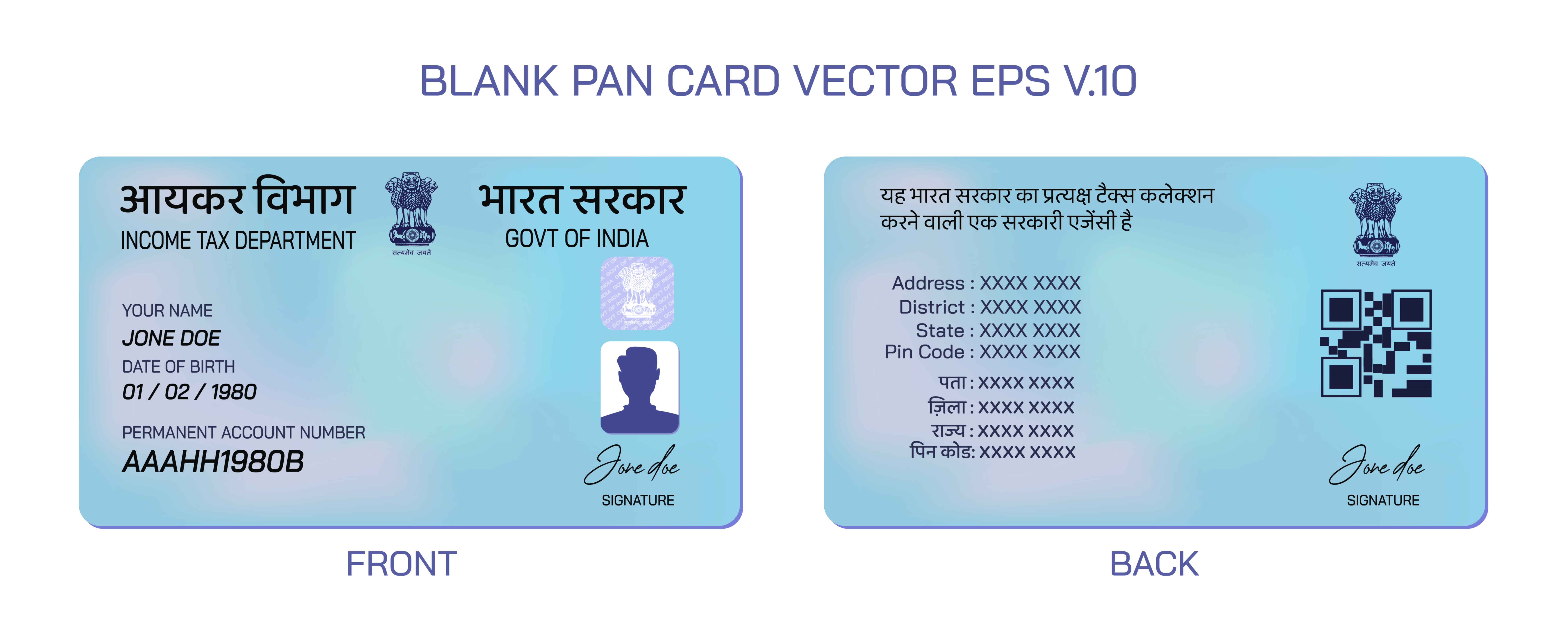
At its foundational level, a PAN Card is characterized by its unique ten-character alphanumeric format, combining letters and numbers in a pattern that encodes information about the cardholder. The first three letters are alphabetic sequences, the fourth letter reflects the category of the holder such as an individual, company, trust, or firm, and the fifth letter corresponds to the first letter of the cardholder’s last name or entity name in case of individuals. The remaining characters include a series of digits and a terminating alphabetic checksum used to verify the validity of the number. This structured design ensures that no two individuals or organizations share the same number and that duplicate PANs can be prevented. Beyond the physical card, PAN functions as a digital, lifelong identifier that does not change regardless of relocation, shifting employment, upgrading citizenship status, or modifying professional circumstances. Unlike other identity formats that may require periodic renewal or modification, the PAN remains constant throughout a person’s lifetime, ensuring continuity and traceability across financial activities.
The legal importance of the PAN Card emerges most visibly in its mandatory role in taxation. The Income Tax Department uses PAN to track all taxable financial actions undertaken by individuals and institutions, including earnings, investments, business operations, property transactions, and capital gains. By linking financial activities to a unique number, the system enables transparency in tax computation, prevents concealment of income, and discourages unreported earnings. Tax returns cannot be filed without PAN, and all taxable entities must quote their PAN for compliance purposes. This direct integration of PAN with national tax administration highlights one of its most important social functions: maintaining fairness and accountability in the economic system. When incomes, gains, and business transactions are linked to verifiable identity, the tax burden can be distributed more equitably across society, reinforcing public revenue and supporting national development programs.
However, the PAN Card extends far beyond the domain of income tax returns. It has become an essential requirement for a wide array of financial operations that define modern life in India. Opening a bank account, whether savings or current, ordinarily requires PAN to verify identity and financial credibility. The transfer of large sums of money, fixed deposits of significant size, issuance of credit cards, purchase of securities such as stocks and mutual funds, and investment in gold bonds all require PAN details. The investment sector relies heavily on PAN because it prevents individuals from creating multiple identities to circumvent regulatory screening. The linking of PAN with the securities market ensures that buying and selling of shares, mutual fund units, or derivatives occurs with full auditability. As India’s financial markets mature, PAN continues to serve as the backbone of investor protection and risk mitigation because it helps authorities detect fraudulent practices, insider trading, and money laundering before they escalate.
In addition to banking and investment, the PAN Card plays a major role in property transactions. Real estate purchases and sales involve high-value assets, and historically this area has been vulnerable to tax evasion and black money circulation. Making PAN mandatory for property transfers enforces transparency and reduces the possibility of misreporting asset values. Furthermore, PAN is required when purchasing vehicles, securing loans, paying high-value insurance premiums, or applying for business registrations. Even everyday financial activities such as cash deposits above a certain threshold, hotel bills exceeding designated limits, or air travel expenditures may prompt PAN disclosure. These regulations are not designed to interfere with everyday life but to promote legal compliance and discourage attempts to disguise the source of significant financial flows. As India aims for a modern formal economy, the PAN system becomes a silent yet effective instrument that promotes financial discipline nationwide.
The digital transformation of India has enhanced the relevance of PAN even further. Today PAN is routinely linked to Aadhaar, mobile numbers, bank accounts, insurance policies, provident fund accounts, and investment platforms. This interconnected system simplifies verification and allows individuals to authenticate financial identity securely without physical documentation. PAN has become deeply integrated into e-governance processes such as online tax filing, KYC verification for digital services, quick bank onboarding, and automated investment activation. The increasing penetration of digital payments—from UPI transactions to online shopping—requires back-end identity architecture, and PAN is among the foundational elements that support this framework. With technological expansion, the PAN system has transitioned from a physical card to a digitized credential that can be validated electronically within seconds, making it one of the core pillars of India’s digital economy.
Despite its wide usage, PAN remains equally accessible across the population. It is issued not only to income earners but to all Indian residents, including minors, homemakers, retirees, and students, as well as to businesses, trusts, NGOs, and foreign nationals engaged in income-generating or investment activities in India. The application process has become increasingly streamlined through online portals, digital document submission, and simplified identity authentication. The intent behind broad availability is that financial inclusion should not be limited to individuals with significant income. Rather, everyone should have entry into the formal financial ecosystem, and PAN is an instrument that reinforces this accessibility. By ensuring that every citizen or legal entity can hold a PAN number, the government encourages participation in regulated financial activities rather than informal cash-based transactions that offer no legal protection.
From a social governance perspective, PAN plays another subtle yet crucial role—protection of individuals’ financial identity. Securely documented financial identity is a powerful safeguard against exploitation, fraud, misuse of personal details, impersonation, and unauthorized financial activity. When accounts, investments, tax filings, and property transactions are tied to a unique PAN number, individuals have clear proof of ownership, accountability, and control. This structure enhances financial rights and legal protection because records cannot easily be tampered with or reassigned without traceability. At the same time, strict regulations govern data privacy, ensuring that PAN information is handled with confidentiality while being accessible only for authorized verification and compliance processes.
In economic terms, the PAN Card contributes directly to the growth of a transparent, well-regulated financial system. It enables authorities to map money trails efficiently, identify suspicious or disproportionate accumulation of wealth, and prevent tax evasion. On the other hand, it grants ordinary citizens and businesses a stable identity framework that supports participation in loans, investments, insurance, entrepreneurship, and global trade. It anchors financial identity to a permanent, standardized reference, contributing simultaneously to individual empowerment and national economic growth.
Ultimately, the PAN Card in India signifies much more than a document. It reflects the evolution of an economy that values transparency alongside opportunity, responsibility alongside accessibility, and regulation alongside personal freedom. It enables individuals to build financial identity, create wealth through legitimate channels, safeguard assets, and participate confidently in modern banking and investment systems. It supports businesses in compliance, expansion, and cross-border engagement. It strengthens the nation by ensuring that growth is traceable, credible, and inclusive. Understanding PAN is not merely an exercise in learning about a government document but in appreciating how identity, economy, law, and technology converge to build a society where financial systems function with trust, clarity, accountability, and fairness.